
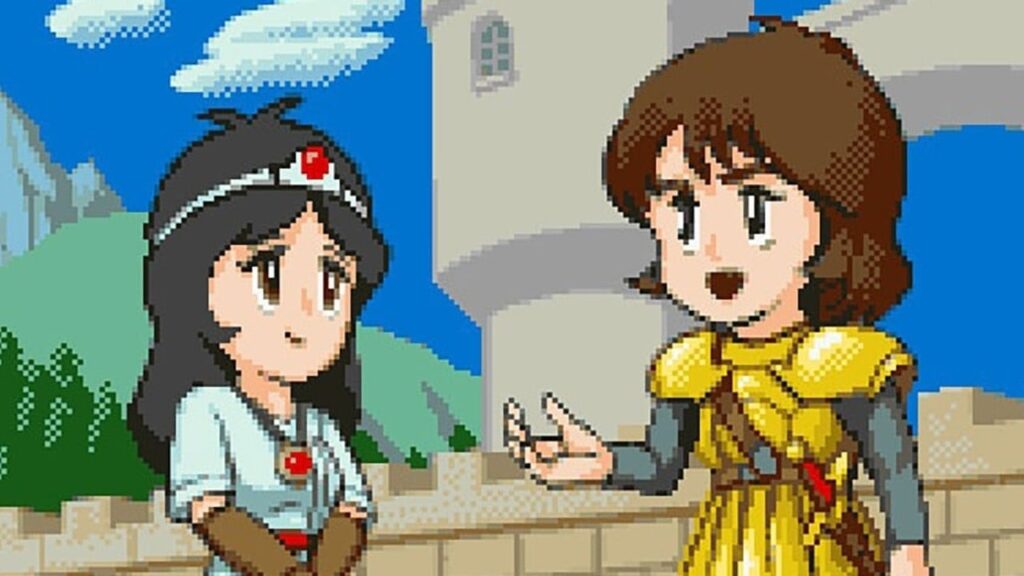
At a glance — Game: G-MODE Archives+ The Labyrinth of Druaga · Launch: November 19, 2026 (Nintendo Switch); December 2, 2026 (Steam) · Platforms: Nintendo Switch, PC (Steam) · Price: ¥800 · Players: 1. The re-release is Japanese text only. The original game was released by Bandai Namco Games for Japanese feature phones on January 13, 2011.
Today, the sequel nobody outside Japan could play is a download. G-MODE Archives+ The Labyrinth of Druaga is out now on Nintendo Switch for ¥800 — a straight rescue of Bandai Namco’s 2011 feature-phone sequel to The Tower of Druaga. The original spent its whole life on i-Mode, Yahoo Mobile! and EZWeb handsets, then spent fifteen more years locked to carrier networks that no longer exist. A Steam version follows on December 2, also ¥800. There is no English translation in either version; that part of the story has not changed. Almost everything else about its availability just did.
What Labyrinth of Druaga actually is
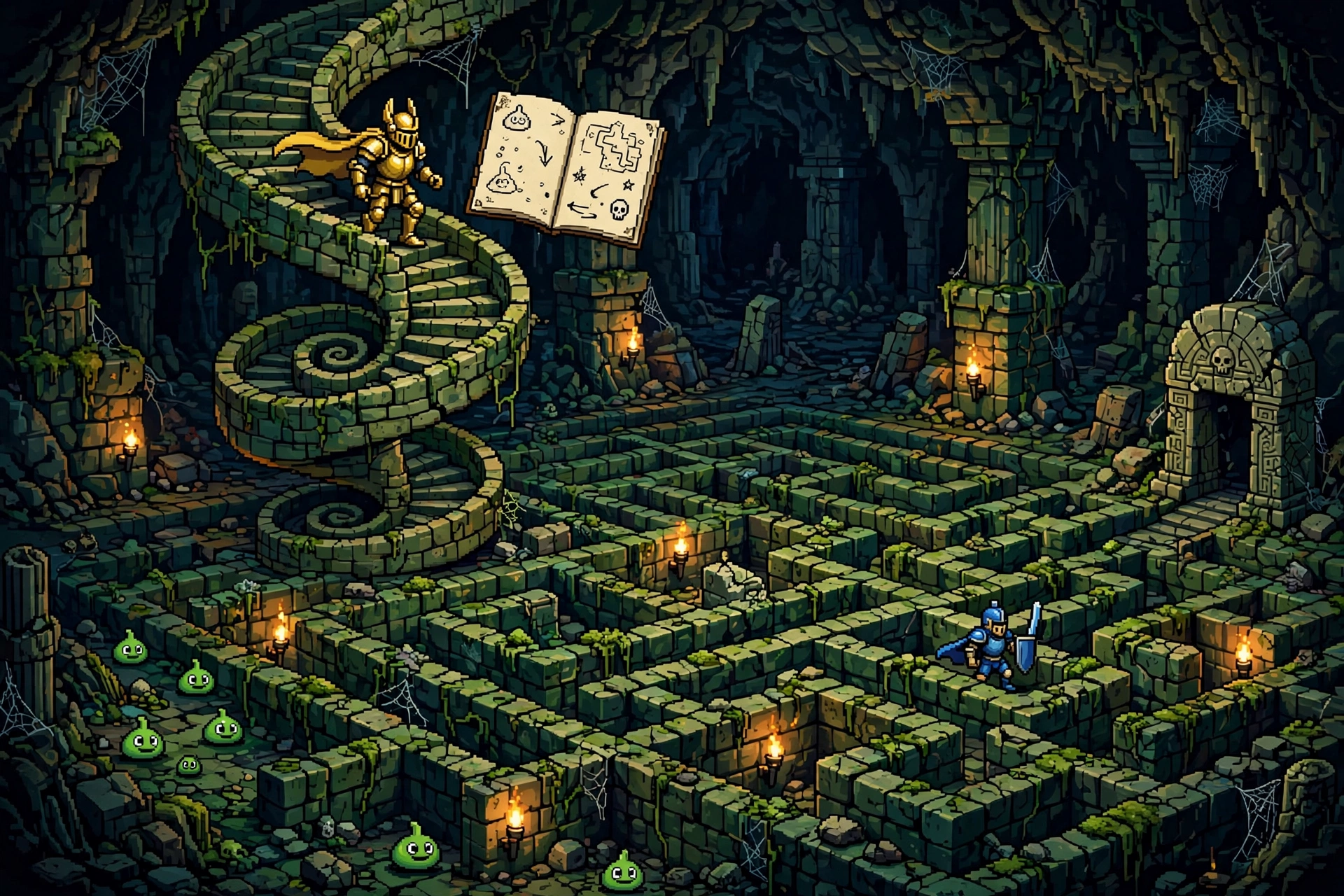
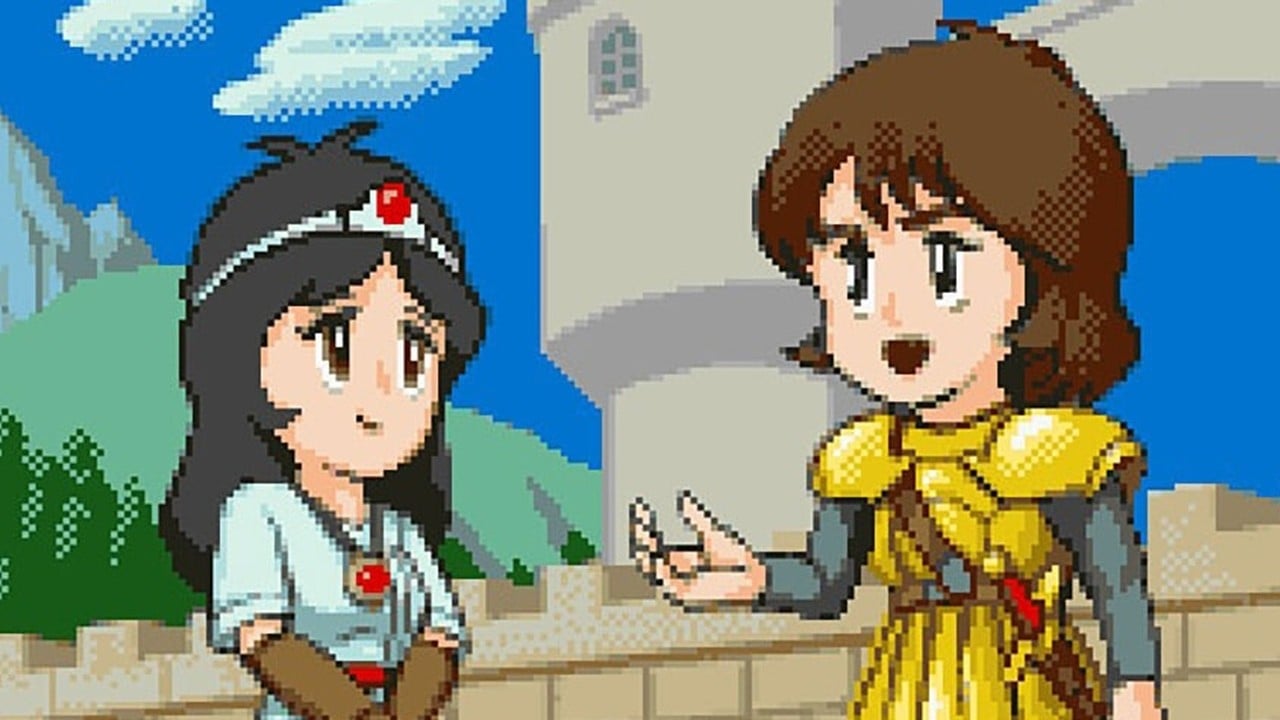
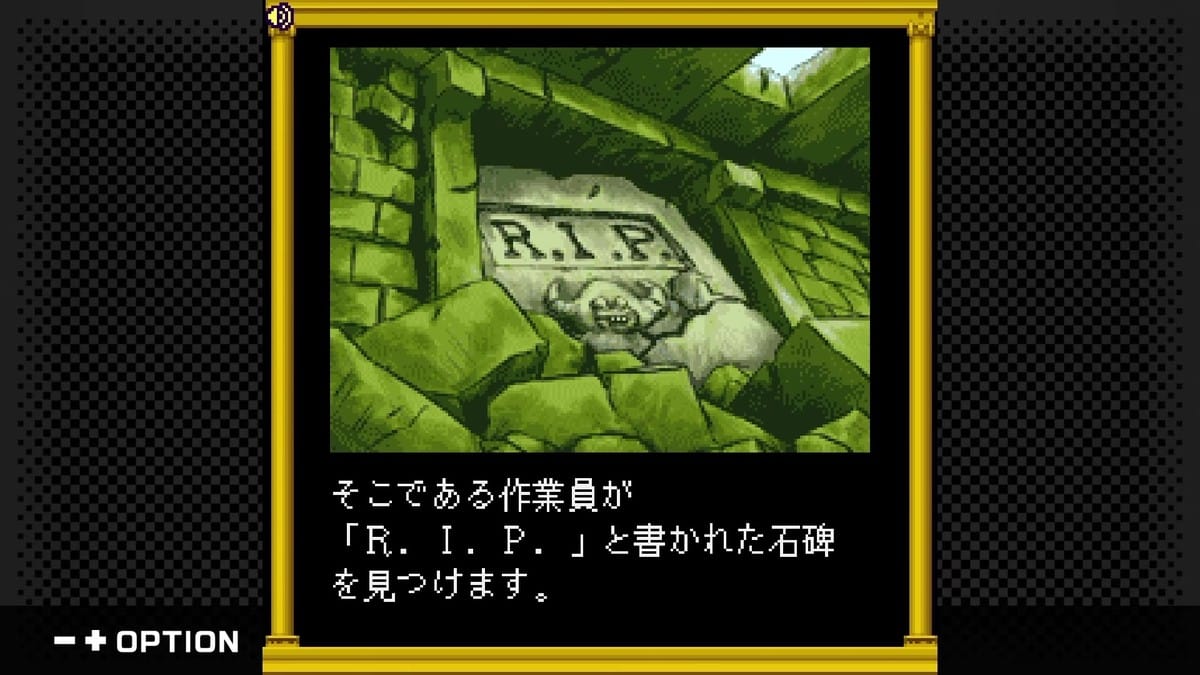
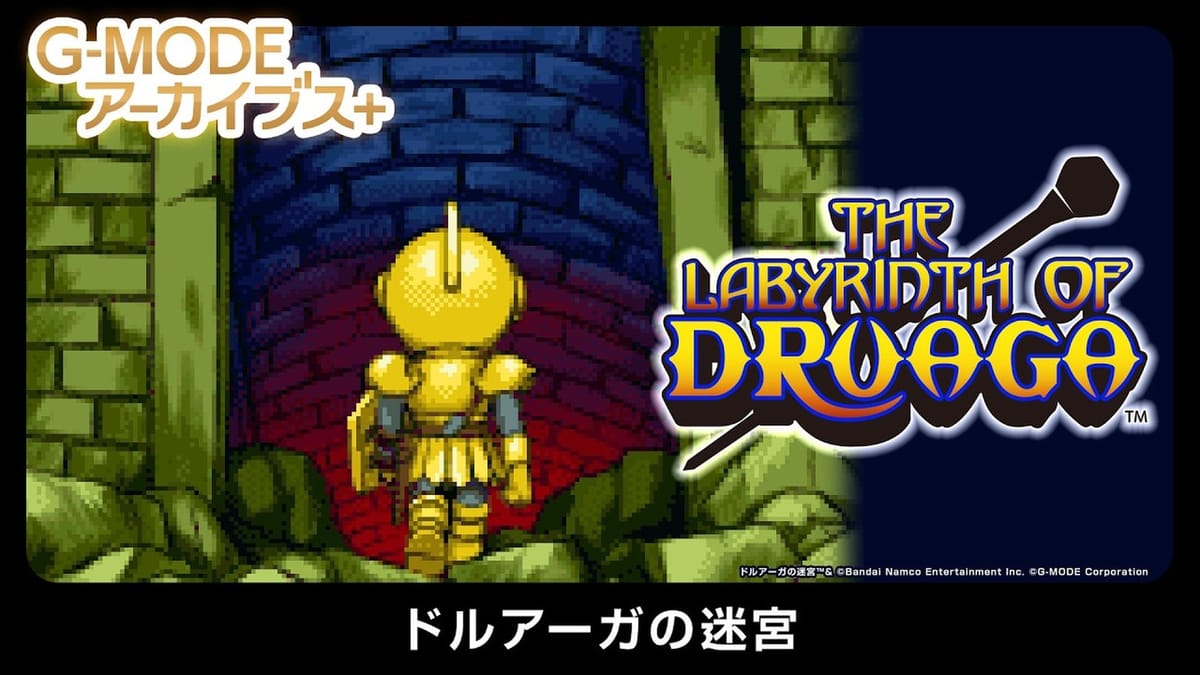
First, the pedigree, because “mobile sequel from 2011” undersells it. The Labyrinth of Druaga is an official sequel in Namco’s Babylonian Castle Saga, following on from the fourth game in the series, The Blue Crystal Rod. The story picks up half a year after Gil and Ki escaped the collapsing tower and restored peace to the Kingdom of Babylim. Workers clearing the rubble find a stone monument stamped “R.I.P.” with a staircase behind it, leading down into a monster-filled underground labyrinth. Then a hooded figure promptly abducts Ki all over again. So Gil puts the golden armour back on and heads down. Sixty basement floors of it, in two movements: a Rescue chapter, fighting down to the lowest floor to reach Ki and beat the boss, and then an Escape chapter, climbing back to the surface together.
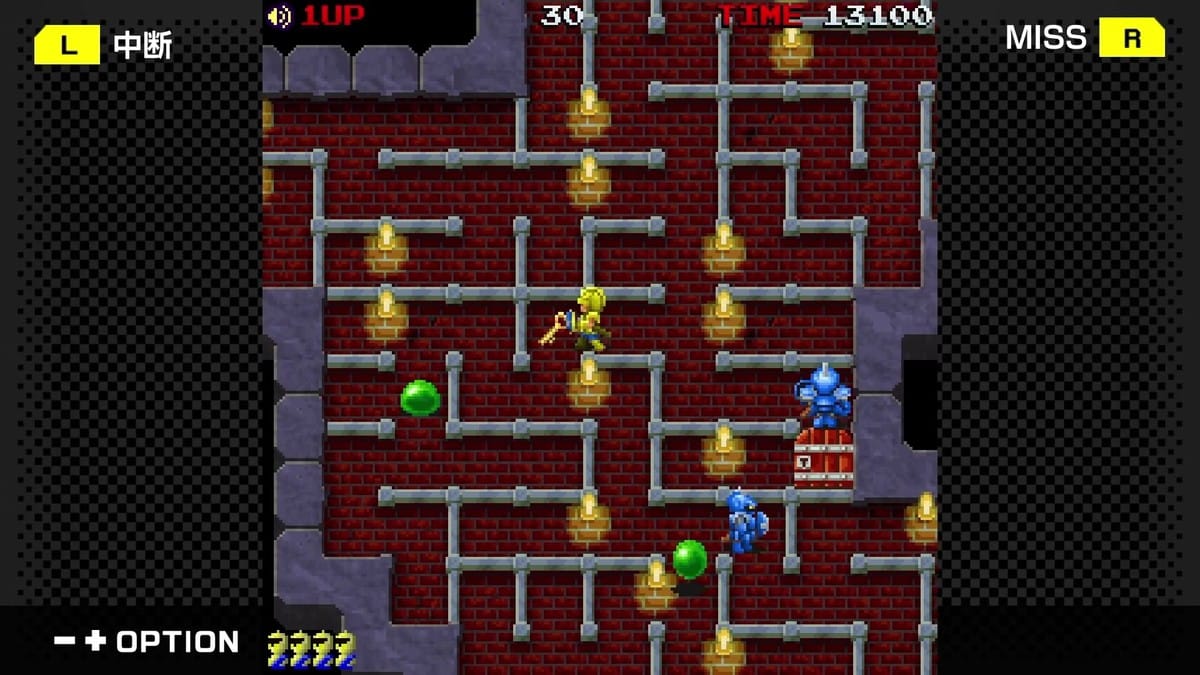
Underneath the new direction of travel, it is recognisably Druaga. Keys and doors. Slimes and magicians. Treasure chests on every floor, with chest conditions every bit as obtuse as 1984’s — kill monsters in a set order, perform odd actions in specific corridors. The soundtrack is by Junko Ozawa, the original game’s composer, which is not a nostalgia garnish so much as a certificate of authenticity. And the Switch version keeps the phone original’s tall, narrow aspect ratio in the centre of the screen, with side borders carrying quick controls for suspending play or taking an intentional retry — the two buttons a Druaga player actually needs.
Where the Labyrinth sits in the saga
Context helps, because the Babylonian Castle Saga is not a straight line of sequels. The arcade got The Return of Ishtar in 1986, a two-player descent with Gil and Ki together. Ki then headlined her own prequel, The Quest of Ki, in 1988. In 1994 the series changed shape entirely with The Blue Crystal Rod, a Super Famicom graphical adventure — and it is that game’s ending the Labyrinth follows on from, which makes this phone title, improbably, the saga’s chronological next chapter. After it came experiments: the PlayStation 2 roguelike The Nightmare of Druaga in 2004, an online arcade game, an MMO. The Labyrinth, arriving in 2011, is the last time the series played it straight — top-down mazes, keys, chests, secrets — and it did so on the least durable hardware imaginable. That is the whole preservation argument in one sentence. The most traditional Druaga since 1984 was published on phones designed to be thrown away.
The Labyrinth of Druaga notebook is built in this time
The best decision in this port is a historical joke that is also a feature. The 1984 original’s treasure conditions were so unreasonable that Japanese arcades kept physical notebooks beside the cabinets, where players pooled their discoveries — the original crowd-sourced guide. The Labyrinth’s own chests are just as cryptic, so G-MODE has built the notebook into the game: a Game Center Note feature that unlocks chest hints as you progress. You can toggle a full notebook reveal when a floor beats you, and there is an invincibility mode you can switch on at any time. Purists can leave all of it off and suffer authentically. In 2026, suffering is opt-in — and that is exactly right for a rescue release. The point is that the game survives and can be played, not that it re-fights 1984’s battles on 1984’s terms.
Locked to dead networks, then locked in a ¥27,500 box
Until this week there were exactly two ways to play this game, and both were bad. The first was a Japanese feature phone on a carrier network that has been shut down — which is to say, no way at all. The second arrived in March 2025, when Bandai Namco included a Windows CD-ROM port of the game (also developed by G-MODE) as a bonus inside The Tower of Druaga 40th Anniversary Official Complete Works: a four-volume, roughly 1,200-page archive set weighing 4.6 kilograms, priced at ¥27,500, sold through limited preorders that have long since closed. A wonderful object. A terrible distribution strategy for a small action RPG.
This release is the seventh Bandai Namco title rescued under the G-MODE Archives+ banner, following fellow feature-phone exiles such as Xenosaga Pied Piper and the mobile Ridge Racer. That series is doing the least glamorous and most necessary work in game preservation. Japan’s feature-phone era produced real games by real studios — in this case a canonical sequel with the original composer — on hardware and networks designed to vanish. Every one of these ¥800 downloads is a small argument that “it was only a phone game” is not the same as “it did not matter.”
Should you buy a Japanese-only maze?
Honest answer: it depends on your Japanese and your patience, in that order. The moment-to-moment play — mazes, keys, sword work — crosses the language barrier fine, and the built-in notebook exists precisely to carry you over the cryptic parts. But the hints, the story and the menus are Japanese only, and Druaga has never been a series that forgives guessing. At ¥800, though, the risk is priced correctly. This is a cheap ticket into a sealed room of gaming history, and for anyone who has climbed the 1984 original — our Vault piece on the tower and its famous arcade notebooks is today’s companion read — the descent is close to mandatory. Everyone else can wait for the Steam version on December 2 and decide then. The game waited fifteen years. It can wait two more weeks.
— June