At a glance — Game: Mario Party: Island Tour · Developer: NDcube · Publisher: Nintendo · Original release: November 22, 2013 (North America) · Original platforms: Nintendo 3DS · Genre: Party
A bubble floated down in front of Peach’s castle, and inside it was a party invitation. That is the whole setup. Mario and his friends ride bubbles up to islands in the clouds, and the party starts. Mario Party: Island Tour came out on November 22, 2013, thirteen years ago today, and it was a strange day to launch anything. The Legend of Zelda: A Link Between Worlds arrived for the Nintendo 3DS on the same day. Super Mario 3D World arrived for the Wii U. Island Tour was the third handheld entry in the Mario Party series and the first on the 3DS, and it got a fraction of the attention the other two games did. Fair enough, maybe. But it tried things.
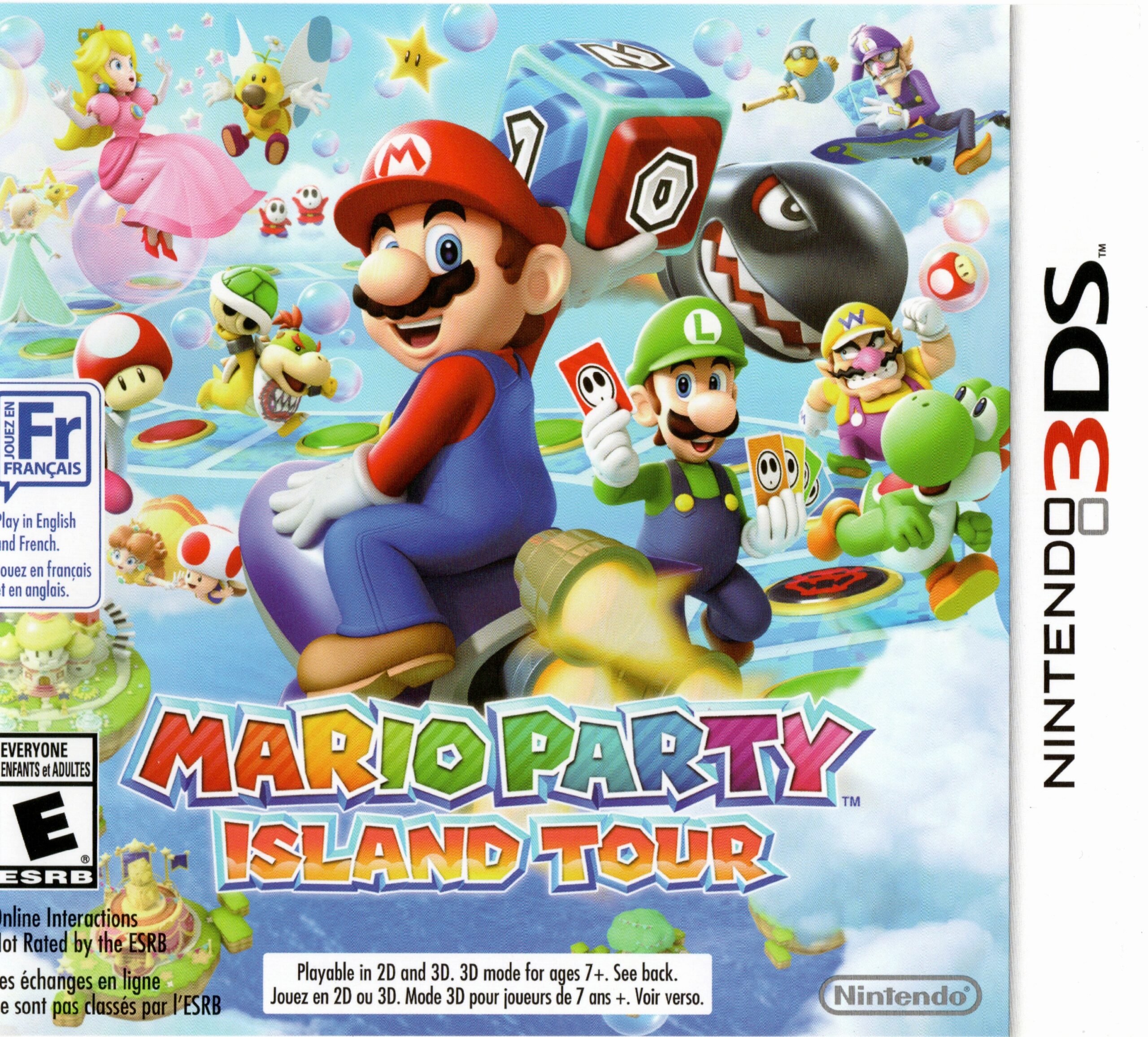
NDcube developed it. The studio had taken over the series with Mario Party 9 in 2012, and Nintendo published. Satoru Iwata announced the game in a Nintendo Direct on April 17, 2013, back when it was just called Mario Party, as a tentative title. 2013 was the Year of Luigi, and there Luigi is on the box, holding his cards, looking like he knows something. Ten characters are playable: Mario, Luigi, Princess Peach, Princess Daisy, Wario, Waluigi, Yoshi, Boo, Toad, and Bowser Jr. People or computer can run any of them, and a party holds two to four players.
Mario Party Island Tour Rewrote the Board Rules
Start with what is missing. Stars. Coins. The thing Mario Party had been about since the beginning — circle the board, get rich, buy Stars, win — is gone. None of the seven game boards in Island Tour use it. Not one. Every board has its own objective instead, its own length, its own little cruelty. Most are races to a finish line. Getting sent backwards hurts more than any lost coin ever did.
Banzai Bill’s Mad Mountain makes you climb, then hide in caves when a Banzai Bill launches, because whoever is in its path loses their ground. Kamek’s Carpet Ride swaps dice for cards. Now you are choosing your move, and choosing wrong is your own fault. Bowser’s Peculiar Peak flips the whole idea over: finish last. Win by losing. The Mini Star system from Mario Party 9 shows up on exactly one board, and everyone moves on their own again, the old way. Before a game starts, the board tells you its ratings — skill, luck, minigames — and how long it should take. On a handheld, that matters. You can pick a board that fits a bus ride.
Some boards take minutes. That is the point of them, and it is also the trade: a short game means fewer minigames along the way. One board unlocks after you complete five of the others. Another one needs three or four human players in the room. The game saves things for people who show up with friends.
81 Minigames, and the Whole 3DS Put to Work
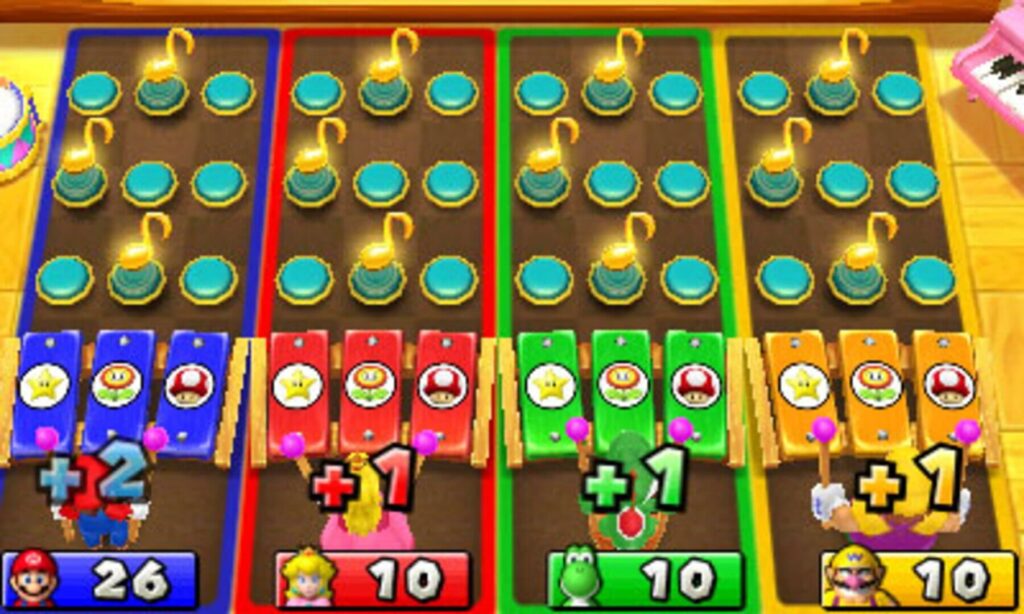
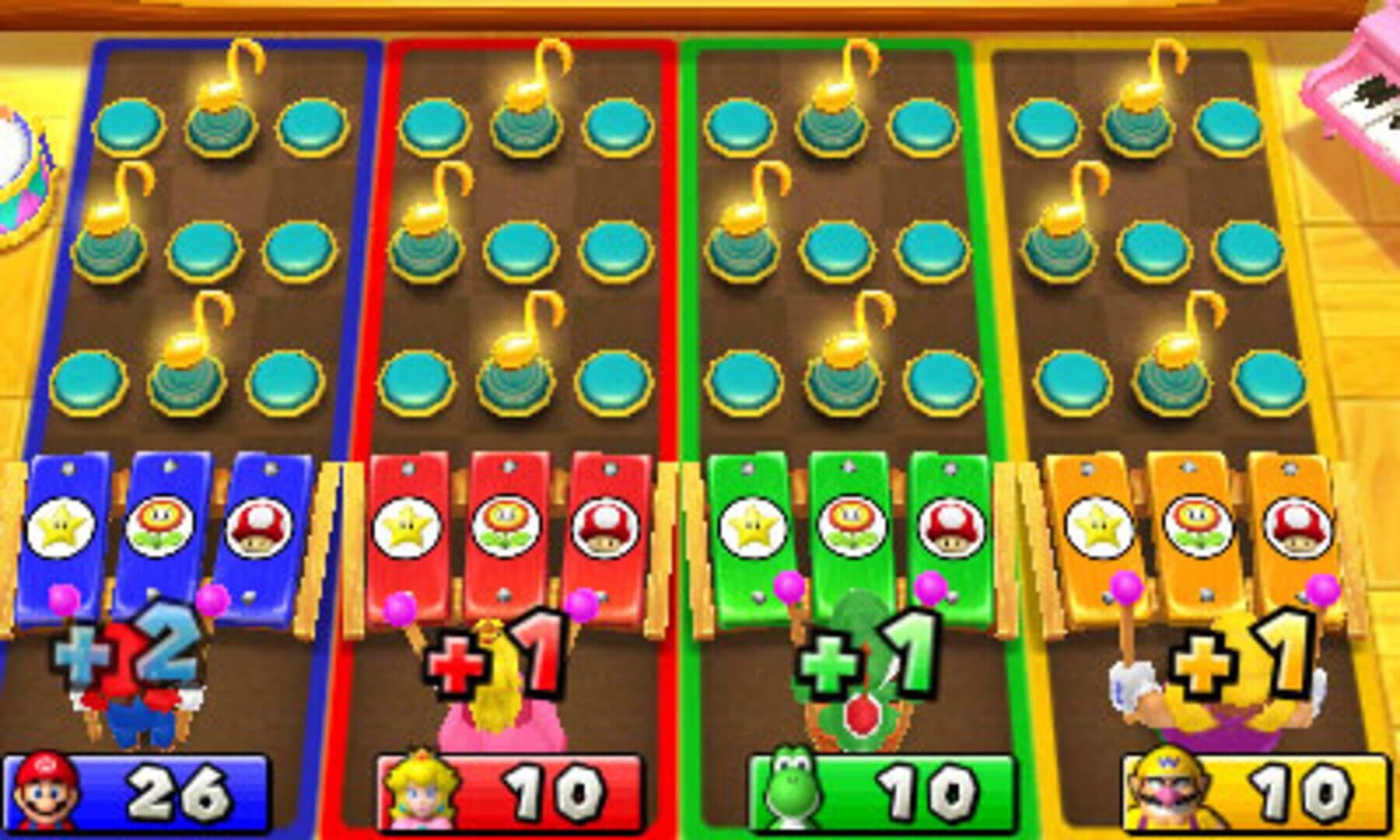
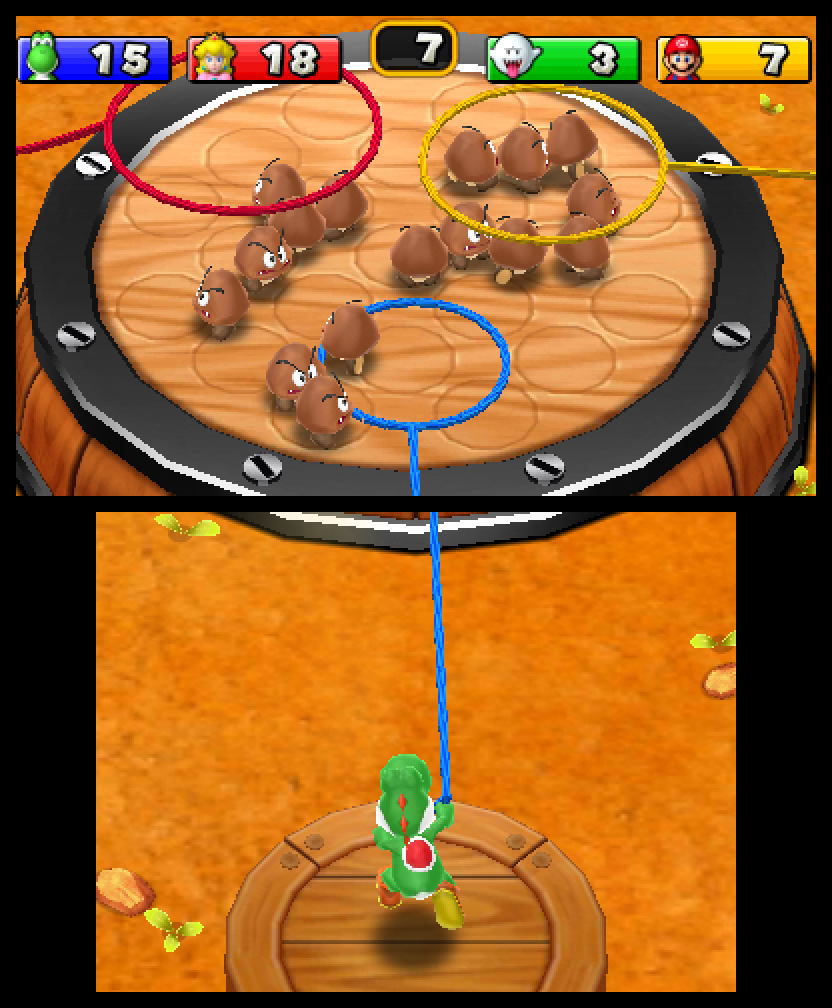
The minigames carry this game, the way they always have to in Mario Party. There are 81 of them. All new. All four-player free-for-alls. Nintendo’s store pages say 80 new minigames, or 80-plus, which is close enough for a store page, but the count is 81. They use the lot: touchscreen, gyroscope, microphone, StreetPass, even the AR cards packed in with every 3DS. One AR game has you shooting Goombas. Another makes you climb a tower that is sinking into lava, which concentrates the mind.
You do not need a board to play them. Time Attack runs you through the same set of 10 minigames against the clock. Hot-Air Hijinks is a race to win three, five, or seven minigames first. Free play is there for favourites. The puzzle modes mess with falling items, sliding panels, and stars that need boxing in. For a game that gets skipped in most series retrospectives, it is not short of things to do.
Bowser’s Tower Gave Solo Players a Mountain to Climb
Bowser was not invited. So he built a tower next door, out of spite, and started stealing the party’s fun with bubbles full of clones. That is Bowser’s Tower, the single-player campaign. 30 floors. Each floor offers two randomly chosen minigames; pick one, then beat three ghostly doppelgangers of your own character. Every fifth floor, a boss from Bowser’s crew. At the top, Bowser.
It is long. The boss fights are the best of it, honestly, and the floors in between can run together, not helped by computer opponents who never really push you. But look at what it was trying to do. Mario Party alone had always been a sad little arrangement, you against the machine, pretending. Island Tour built solo players a tower of their own. Playing earns Mario Party Points, spent on collectibles — figurines, music tracks, character voice recordings — and StreetPass opponents you beat pay out more.
One Game Card, Four Players, No Online
Here is the contradiction at the centre of the game. There is no online multiplayer. None. Critics said so in 2013, loudly, and they were right to. But the local setup is lovely. Download Play lets four people play together off one Game Card, as long as each of them has their own 3DS system. One copy of the game, four players, full party. If you grew up passing a single cartridge around, you know what that was worth. Reviewers at the time called it robust, quick, and easy, and it was where the game shone.
StreetPass did the rest. Walk past another player somewhere out in the world, and their data waits for you at home: a head-to-head minigame battle, whenever you want it. You could store up to ten players at once. It belongs to a particular moment — everybody carrying a 3DS, everybody watching for the green light — and that moment is gone, which makes the feature feel almost tender now.
A Mixed Welcome, and 2.95 Million Copies
The reviews split, and they split hard. Metacritic has it at 57 out of 100 from 47 critic reviews: mixed or average. Nintendo World Report went to 8.5 out of 10, praising how crisp it looked and how well it balanced old and new. GameSpot gave 7 out of 10. Then it drops. IGN, 5.5 out of 10. Destructoid, 4 out of 10. Game Informer, 4 out of 10. Famitsu’s four critics in Japan each scored it 8 out of 10, which adds up to 32 out of 40 and a very different mood.
Read them together and a pattern forms. The boards and their different win conditions got praised. So did the luck and skill ratings, and a minigame collection a few reviewers called one of the tightest in the series. The complaints repeat too: luck doing too much of the work, boards ending before they got going, soft computer opponents, and the empty space where online play should have been. Then people went out and bought 2.95 million units of it. That made Island Tour the 24th-best-selling game on the Nintendo 3DS, and it later came back as a Nintendo Selects reissue. Mario Party 10 followed on the Wii U in 2015.
So, thirteen years on. Island Tour is the Mario Party that stopped counting Stars. The one where you hide from a Banzai Bill, where finishing last can be the smart play, where 81 new minigames rode around in a single cartridge that four friends could share. It floated in on a bubble. Bubbles pop. The ideas in this one mostly did not.
— June
For more launches from this date, see This Day in Gaming History: November 22.