
At a glance — Game: Master of Orion II: Battle at Antares · Developer: Simtex · Publisher: MicroProse · Original release: November 22, 1996 (North America) · Original platforms: PC (MS-DOS and Windows 95) · Genre: 4X turn-based strategy
There is a moment in every long game of Master of Orion II when the galaxy stops feeling like a map and starts feeling like a problem you personally created. Your freighters are feeding colonies you founded on a whim. A rival ambassador is smiling at you through a screen while his fleet masses two systems away. And somewhere beyond the edge of everything you have explored, the Antarans are about to come through and wreck a world you actually care about. Thirty years on, that moment still works. Nostalgia is not doing that work. Design is.
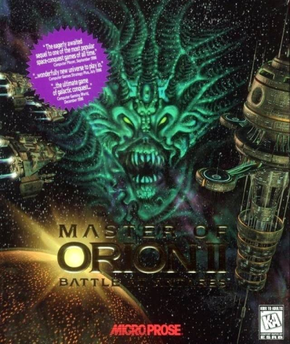
Master of Orion II built you an empire, then let you ruin it your way
The first Master of Orion, released in 1993, had already shown how good space strategy could feel when it stayed lean. The sequel, designed by Steve Barcia and Ken Burd at Simtex, took the opposite bet. It got bigger in almost every direction, borrowing ideas from Simtex’s own Master of Magic and layering them onto the old frame. Star systems that once held a single planet now held several, and you could share a system with a rival and glare at his colony every single turn. Food became a real part of the economy, moved between worlds by freighters, which meant a hungry colony was a planning failure and not just a number going down.
On paper, none of this should have held together. More systems usually just means more chores. Here it meant more stories. A shared system was a border dispute waiting for an excuse. A food shortage was a reason to colonise the lush world you had been putting off. The game kept handing you small decisions with long shadows, and it trusted you to remember making them when the bill arrived twenty turns later.
Thirteen races, and then the one you built yourself
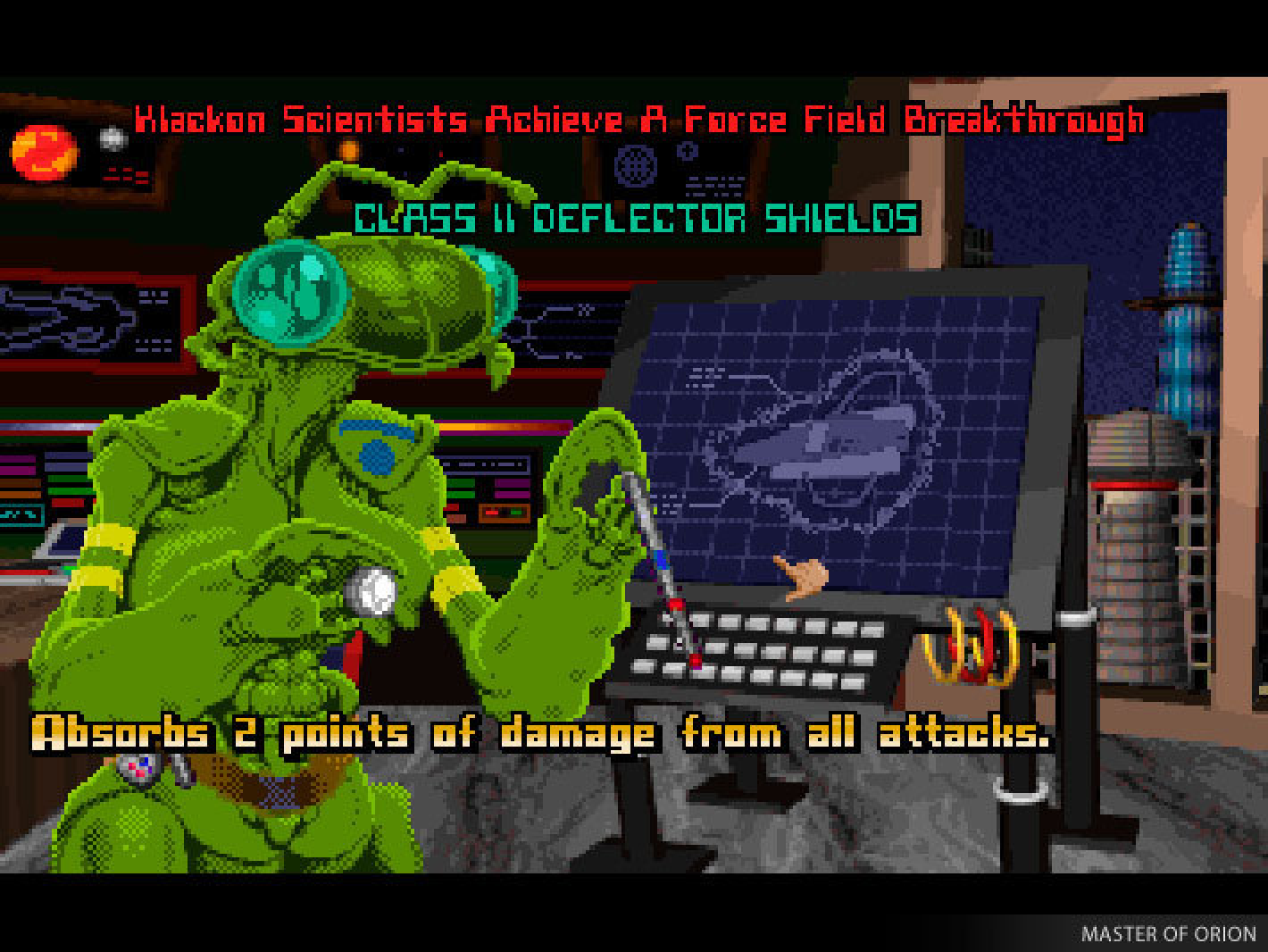
Master of Orion II ships with 13 pre-defined playable races, three of them new to the sequel. The Psilons think faster than everyone else. The Klackons build and breed like the galaxy is ending tomorrow. The Darloks spy, because of course they do. Each race plays differently enough that picking one is a real opening move, not a coat of paint.
Then there is the custom race screen, which is where a lot of us quietly lost our first evening with the game. You spend a budget of picks on strengths — better farming, better research, a tougher fleet — and you pay for them with weaknesses, because the points have to come from somewhere. Governments sit in the same system, running from dictatorship through democracy, unification and feudalism, each bending the economy in its own direction. Call a custom race what it is: a hypothesis. The next six hours run the experiment. You were clever about one thing, usually. And completely wrong about two others.
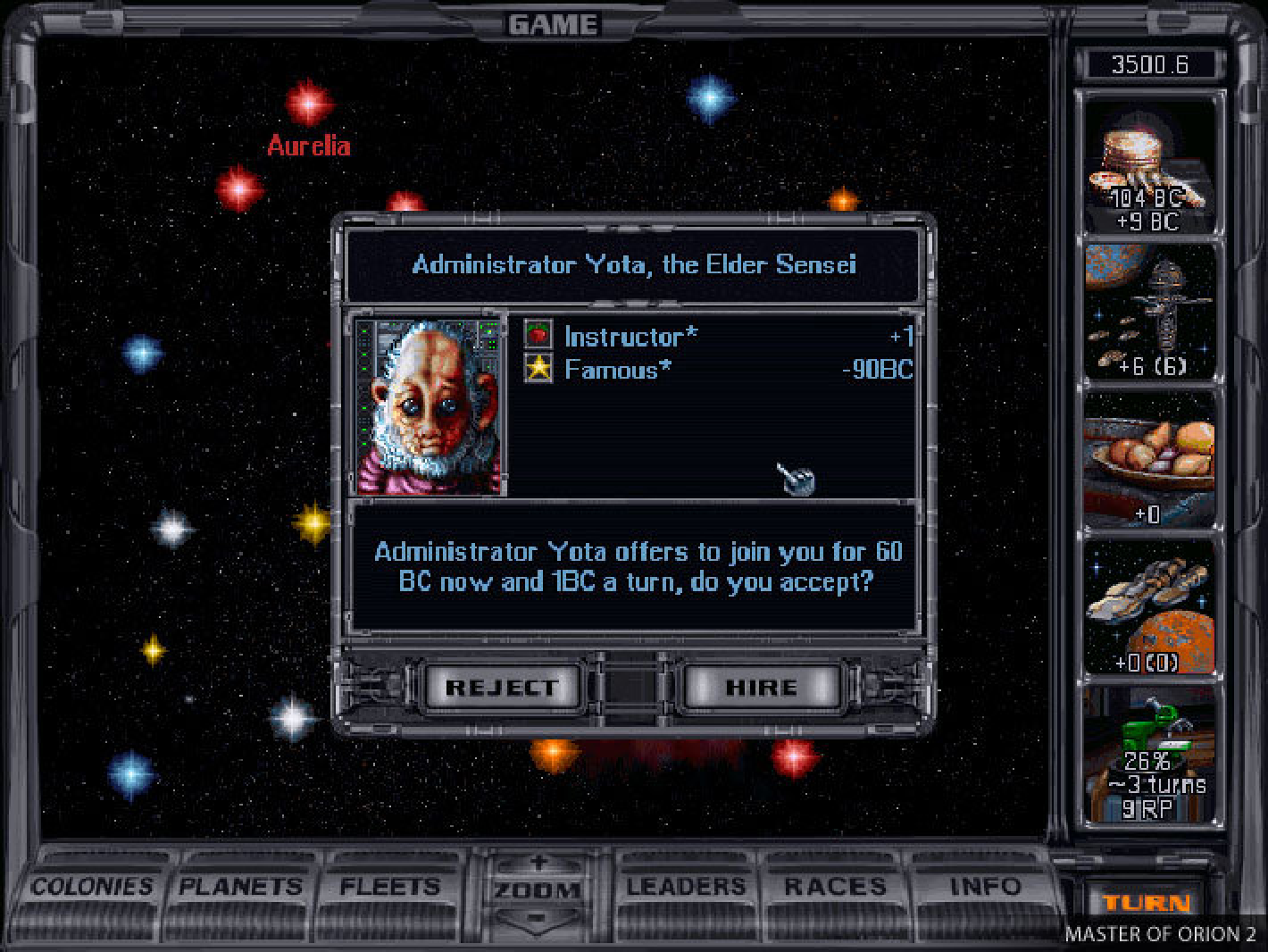
Leaders deepen it further. Colony leaders and ship officers offer their services for a fee, bringing bonuses that can reshape a young empire — an instructor who lifts research, a famous name who costs a fortune because everyone knows what he is worth. Turning one down because the treasury is thin, then watching a rival hire him, is a small pain this game specialises in.
The Guardian, the Antarans, and three ways to win
The backstory is simple and it does real work in play. Long ago the Orions fought the Antarans across the galaxy, won, and — instead of finishing them — locked them in a pocket dimension. Then the Orions left, leaving one very powerful robotic warship, the Guardian, watching over their homeworld of Orion. Every empire in the game knows what sits at Orion. Beating the Guardian does not win the game on its own, but it hands you the Avenger starship and Antaran technologies you cannot research any other way, and that prize has ended more friendships than any border war.
The Antarans do not stay locked up. Partway into a game they start breaking out, sending fleets that get stronger over time against your colonies, smashing what they can and vanishing again. Think of them as a clock. One hanging over the whole map. You can be winning your local argument with the Sakkrans and still be nowhere near ready for what is coming through that portal.
Victory itself comes three ways. Conquer everyone. Get elected supreme leader of the galaxy, which takes two-thirds of the total votes, with each empire’s votes based on its population. Or build the Dimensional Portal, take the fight to the Antaran homeworld, and end the threat at the source. Three endings pulling in three directions — growth, popularity, and one enormous military gamble — is a big part of why campaigns stay tense into the late game instead of coasting.
Ships you designed, fights you had to fly
Ship design is the other half of the reputation, and it starts with a refusal: you do not buy a cruiser off a shelf. You choose the hull, the weapons, the shields and the odd special system, and as research advances and components shrink through miniaturisation, you refit and rethink. Research runs across eight areas, and in most of them you cannot simply have everything — choices close doors, which makes trading, spying and plain conquest into ways of getting what your scientists skipped.
When fleets meet, tactical combat puts those designs on a grid and asks you to fly them. Ships can turn and manoeuvre, marines can board an enemy vessel and try to take it home as a prize, and with the right technology you can destroy a planet outright. A design that looked brilliant in the shipyard can fall apart in its first real fight, and a humble hull with the right special system can punch far above its size. The game also lets up to eight players take part in multiplayer, which turned all of this into a very slow, very personal argument between friends.
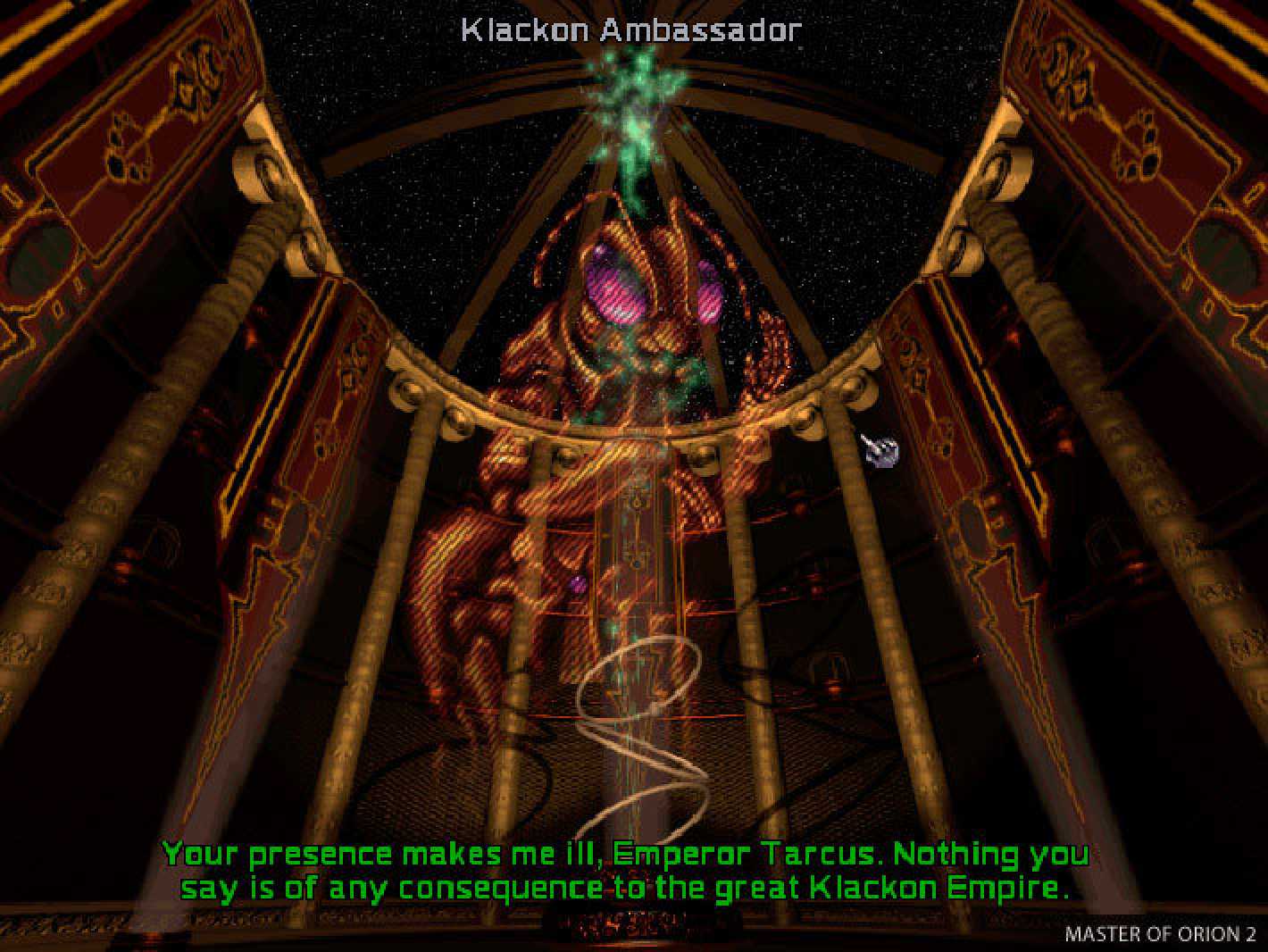
What thirty years have done to Master of Orion II
The reception at the time was strong, and the game took the Origins Award for Best Fantasy or Science Fiction Computer Game of 1996. The longer view has been kinder still. Master of Orion II is now routinely described as a defining benchmark of the space 4X genre — the game later space strategy is measured against, with a fan base that never really went away and modders who are still patching and polishing it decades later.
The sequel casts the longest shadow over that legacy. Master of Orion III arrived in 2003, six years later, and landed badly — critics called out its complexity, its interface and its weak AI, and players who had waited years mostly walked away disappointed. The contrast did something unexpected. It froze the second game in place as the one to play. When people say the series peaked, they mean this one, and the third game’s failure is a large part of why the second game’s reputation never had to share the stage.
So here is the honest anniversary verdict, thirty years after November 22, 1996. Master of Orion II is not a museum piece. It is a working machine for generating the exact feeling modern 4X games keep chasing: an empire that feels like yours because you made its people, designed its ships, fed its colonies and picked its fights. With this game, one more turn was never a slogan. It was a warning.
— Chip
For more launches from this date, see This Day in Gaming History: November 22.