At a glance — Game: Unreal Tournament · Developer: Epic Games and Digital Extremes · Publisher: GT Interactive · Original release: November 22, 1999 (North America) · Original platforms: PC (Windows) · Genre: First-person shooter
Late 1999. If you played shooters on a PC, you had picked a side. Unreal Tournament or Quake III Arena — two arena games, both built for online play, out within days of each other, and people argued about them the way they argue about football teams. They still do, twenty-seven years later, which says plenty about how good both games were. This is Epic’s side of it. The one that landed on November 22, 1999 with bots that could actually play, weapons with tricks built into them, and more modes than a game that started as an expansion pack had any right to carry.
Unreal Tournament started as an add-on and refused to stay one
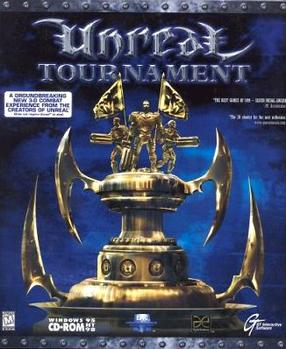
Unreal came out in 1998 as a single-player shooter. Multiplayer was in there, but it was the side dish. Epic Games and Digital Extremes got to work on a multiplayer expansion — and then, in a meeting with publisher GT Interactive, Epic’s Mark Rein suggested they release the thing as a standalone game instead. Good call. Freed up from expansion-pack thinking, the team built a proper tournament around the fighting: a televised blood sport, structured as a ladder. You start as a nobody. You climb. At the top waits the reigning champion, Xan Kriegor, for one final duel.
The demo sold it before the box did. A playable demo landed in September 1999, Glide cards first, then an updated version on September 28 with OpenGL and Direct3D support. For two months, that demo was everywhere — people fragging bots, learning the maps, getting hooked. The full game went gold on November 16 and hit shelves on November 22 at $54.95. Half the audience had already decided by then.
The bots were the real headline act
Bots existed in 1999. Good ones mostly didn’t. These were good, and the name behind them was Steven Polge — the same Steven Polge who had built the Reaper Bot mod for Quake. His bots navigated each map on a network of path nodes the level designers had placed by hand. They hunted down weapons and armour. They dodged. They picked the right gun for the range. And in team games they took orders — attack, defend, hold position, cover me — and followed them, which at the time felt faintly like witchcraft.
Skill ran from Novice to Godlike. You could tune individual bots, too: accuracy, aggression, favourite weapons. None of this was decoration. Plenty of players in 1999 were on dial-up. Plenty had no internet at all. A ladder full of bots that played something like people meant the box on your shelf was the whole game, online or off — and the ladder taught you every mode against rising opposition, so when you finally stood in front of Xan, you had earned being there.
Assault, Domination and the modes Quake did not bother with
Deathmatch and Team Deathmatch did the basics, and did them well. Capture the Flag was better than well — the Translocator, a teleport disc you throw and then jump to, turned flag runs into improvisation. Get inventive or get shot. Domination scattered control points around the map and paid points for every second you held them, so positioning was a permanent argument. Last Man Standing handed everyone limited lives and punished the careful.
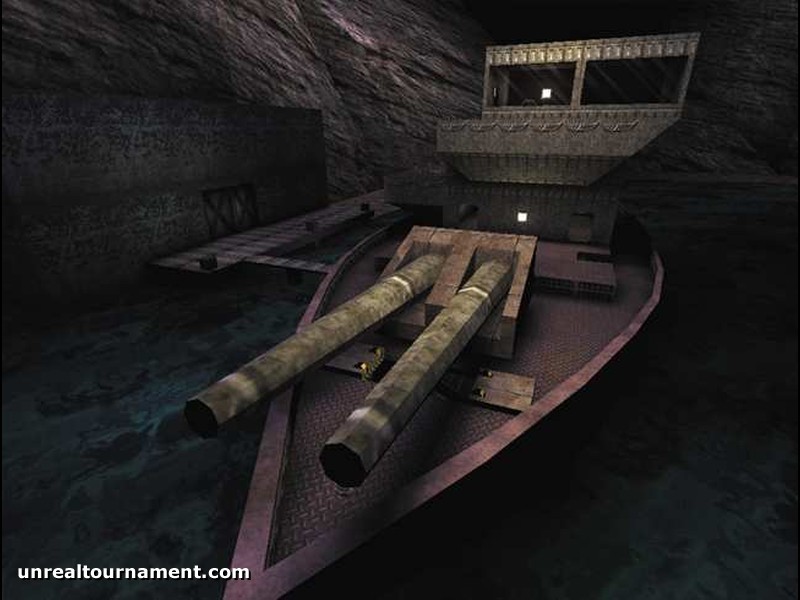
Assault, though. Assault was the keeper, the mode that became a series trademark. Attackers work through a sequence of objectives — breach the doors, wreck the installation, take the ship — while defenders dig in and bleed the clock. Then you swap. Faster attackers win. AS-Frigate, an assault on a naval vessel, told a little story with its objectives instead of handing you another room to fight in. Quake III Arena followed in December 1999 and it was the purer duelling game, no question. But Unreal Tournament was the one with more in the box, and reviewers said so: 92 on Metacritic, Game of the Year awards, and a Game of the Year Edition re-release from GT Interactive in 2000 to put the honours on the cover.
Every weapon had a second idea built in
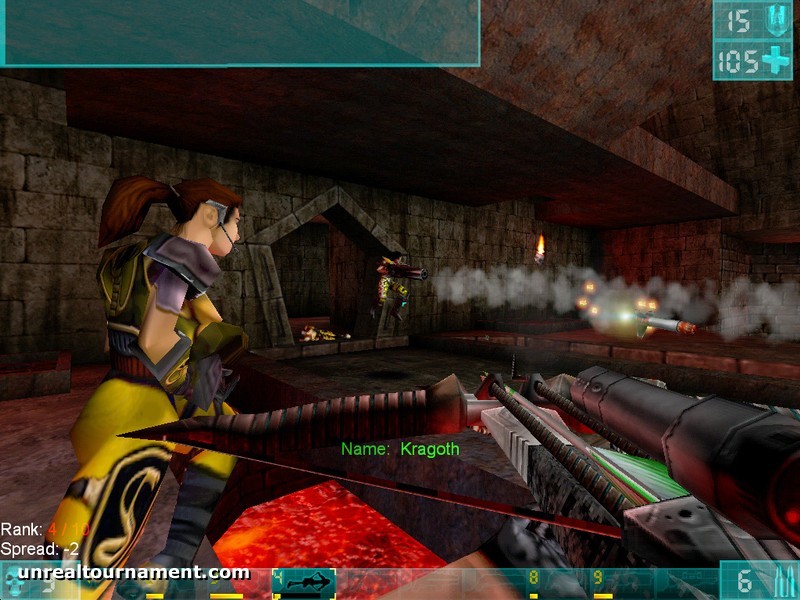
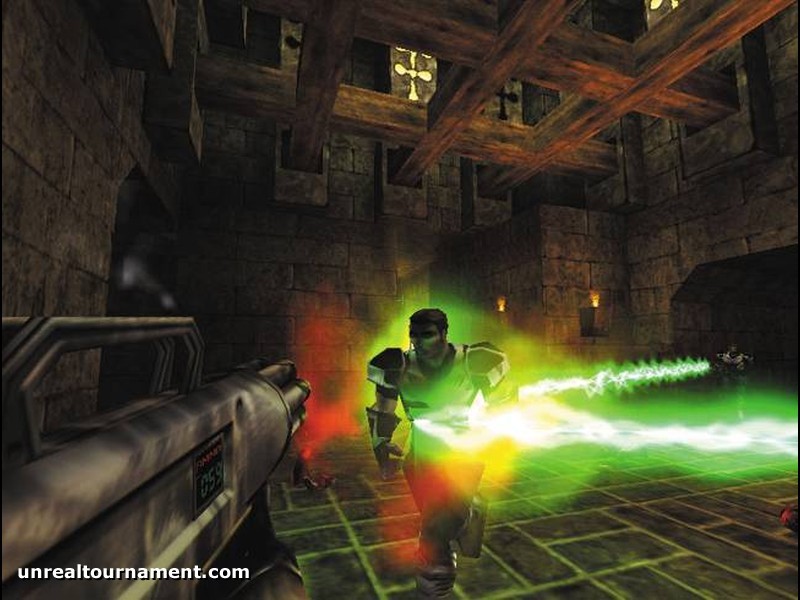
Ask an old player about this game and the guns come up first. Every weapon had two fires — a primary and an alternate — so every fight had twice as much thinking in it. The Shock Rifle: a beam, or a slow energy orb. Shoot your own orb with the beam and it detonates — the shock combo, heavy damage, and landing one mid-fight felt like a card trick you’d taught yourself. The Flak Cannon sprayed bouncing shards point-blank or lobbed a shell that burst over a crowd. The Rocket Launcher loaded up to six rockets before letting go, or spat them out as grenades instead.
Then the supporting cast, none of it filler: the Minigun, the Pulse Gun with its green stream, the Ripper’s bouncing blades, the Bio Rifle’s sludge, a Sniper Rifle that paid out for headshots, the Impact Hammer for close work and hammer jumps. And the Redeemer. One shot. A slow, steerable warhead you flew by camera into the enemy base while your character stood off somewhere, defenceless, waiting to be found. Ridiculous weapon. Perfect weapon. On top of all that sat the mutators — little rule-changers you could stack onto any match. Low gravity. Instagib. Fatboy. A whole generation quietly learned that a shooter could be a toybox as well as a sport.
Facing Worlds, and the engine underneath it all
One map name comes back more than any other: Facing Worlds. CTF-Face. Two towers on a small asteroid, one narrow bridge between them, and Earth hanging enormous in the sky. Snipers owned the rooftops. The bridge was where flag runs went to die. It wasn’t the biggest map in the game, or the cleverest. It was simply the one nobody ever left, and anyone who played it has a bridge story. Ask them.
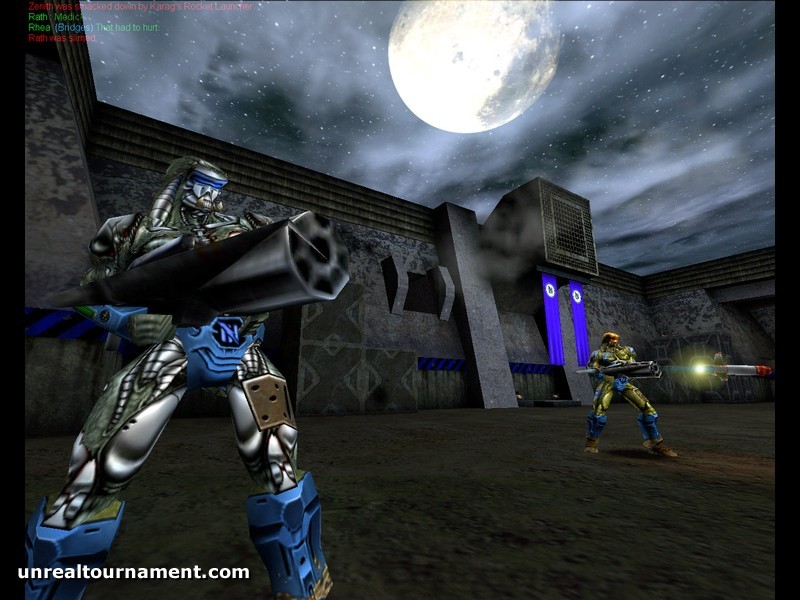
Underneath it all ran the Unreal Engine, the technology Epic had debuted with Unreal the year before. It gave Unreal Tournament bigger, moodier spaces than most shooters of the day managed — gothic stone, industrial metal, those open skyboxes — and the game travelled on it: Linux a day after Windows, on November 23, 1999, then Mac OS, PlayStation 2 and Dreamcast versions later. The engine matters to the legacy as much as the game does. It’s a large part of why the word Unreal ended up attached to so much of the next two decades.
Twenty-seven years on
The rivalry isn’t really what lasted. Quake III Arena was magnificent; admitting that costs this game nothing at all. What lasted is how finished Unreal Tournament felt on day one. A real single-player ladder. Bots worth your time. Six modes deep. An arsenal where every single gun had a trick in it, and maps people still name from memory without prompting. It treated the offline player and the online player as the same person, and trusted both with options. Arena shooters have been faster since. Generous ones like this are rarer.
— Sal
For more launches from this date, see This Day in Gaming History: November 22.