
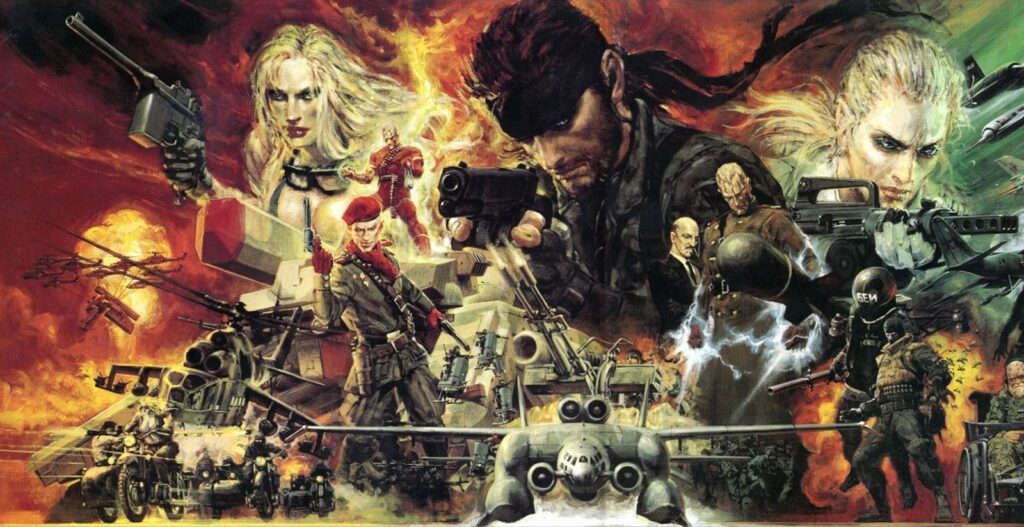
At a glance — Game: Metal Gear Solid 3: Snake Eater · Developer: Konami Computer Entertainment Japan · Publisher: Konami · Original release: November 17, 2004 (North America) · Original platforms: PlayStation 2 · Genre: Action-adventure, stealth · Director: Hideo Kojima · Metacritic (PS2): 91
Twenty-two years ago today, Konami shipped the strangest gamble of the PlayStation 2 era. The autumn of 2004 was not short of competition: Grand Theft Auto: San Andreas was three weeks old, Halo 2 was eight days old, Half-Life 2 was one day old. Into the loudest release window of the generation came a new Metal Gear with no Solid Snake in it — a prequel set in 1964, in a Soviet jungle, where the hero’s first job is to catch and eat a snake.
It sounded like a sidestep. It turned out to be the best story the series ever told, the origin point every later Metal Gear hangs from, and the game that turned Hideo Kojima from a respected director into something closer to an auteur. One warning before we start: this is a retrospective, and the ending of this game is the reason it matters, so the finale gets discussed in full below. If you have somehow kept it unspoiled for 22 years, go and play it first. We’ll wait.
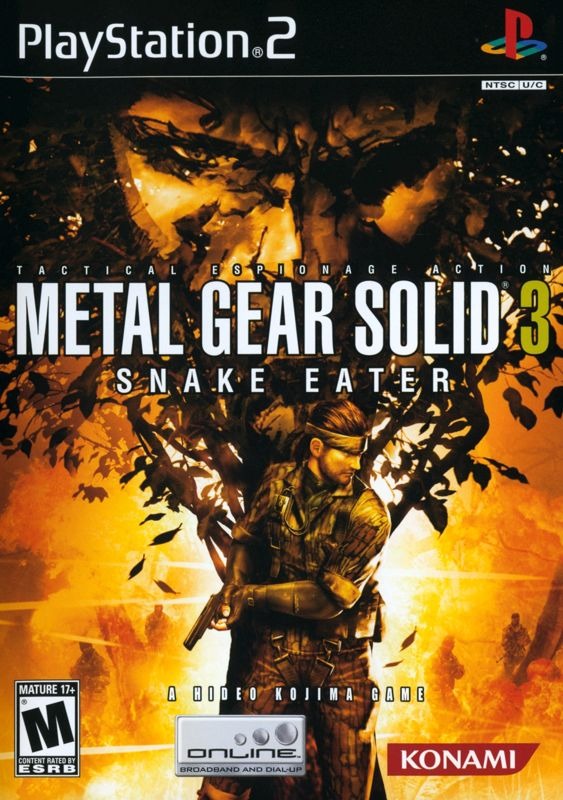
Back to 1964: a Metal Gear without Solid Snake
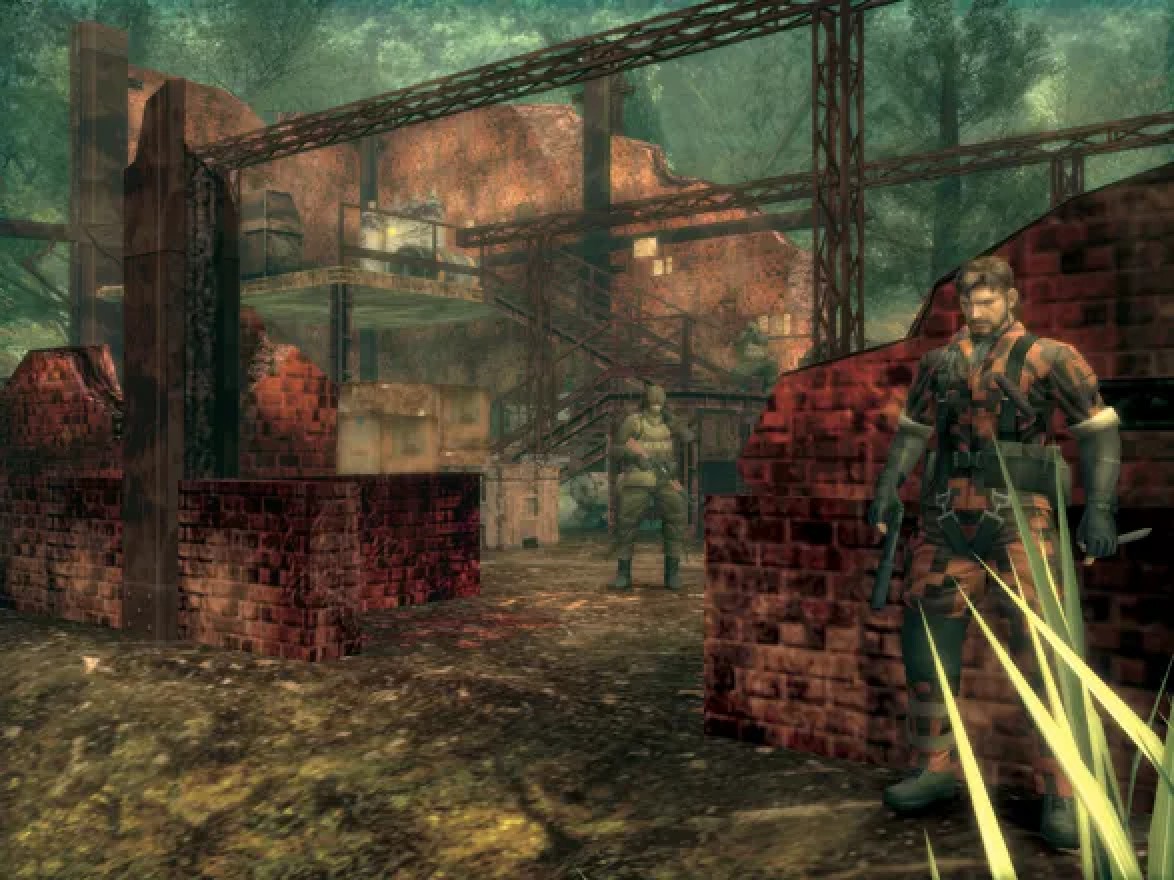
Metal Gear Solid 3 is the fifth mainline entry in the series, and the first in its internal chronology. Kojima took the series back to the height of the Cold War — 1964, two years after the Cuban Missile Crisis — and handed the lead to a man who is not yet a legend. Naked Snake is a FOX operative working under Major Zero, with Para-Medic and Sigint on the radio, and his mentor is the greatest soldier alive: The Boss, the woman who taught him everything, whose defection to the Soviet Union opens the game.
The setup is pure Cold War thriller. The Virtuous Mission — a rescue of the defecting scientist Sokolov — collapses when The Boss switches sides and gifts Colonel Volgin a Davy Crockett launcher and its nuclear shells, one of which Volgin fires at a Russian research facility. America gets the blame. Snake gets a second mission, Operation Snake Eater, with three orders: kill The Boss, destroy Volgin’s new superweapon, the Shagohod, and prove America’s innocence. Along the way he crosses a young, preening Ocelot — all revolver flourishes and wounded pride — and EVA, an operative whose loyalties nobody should take at face value.
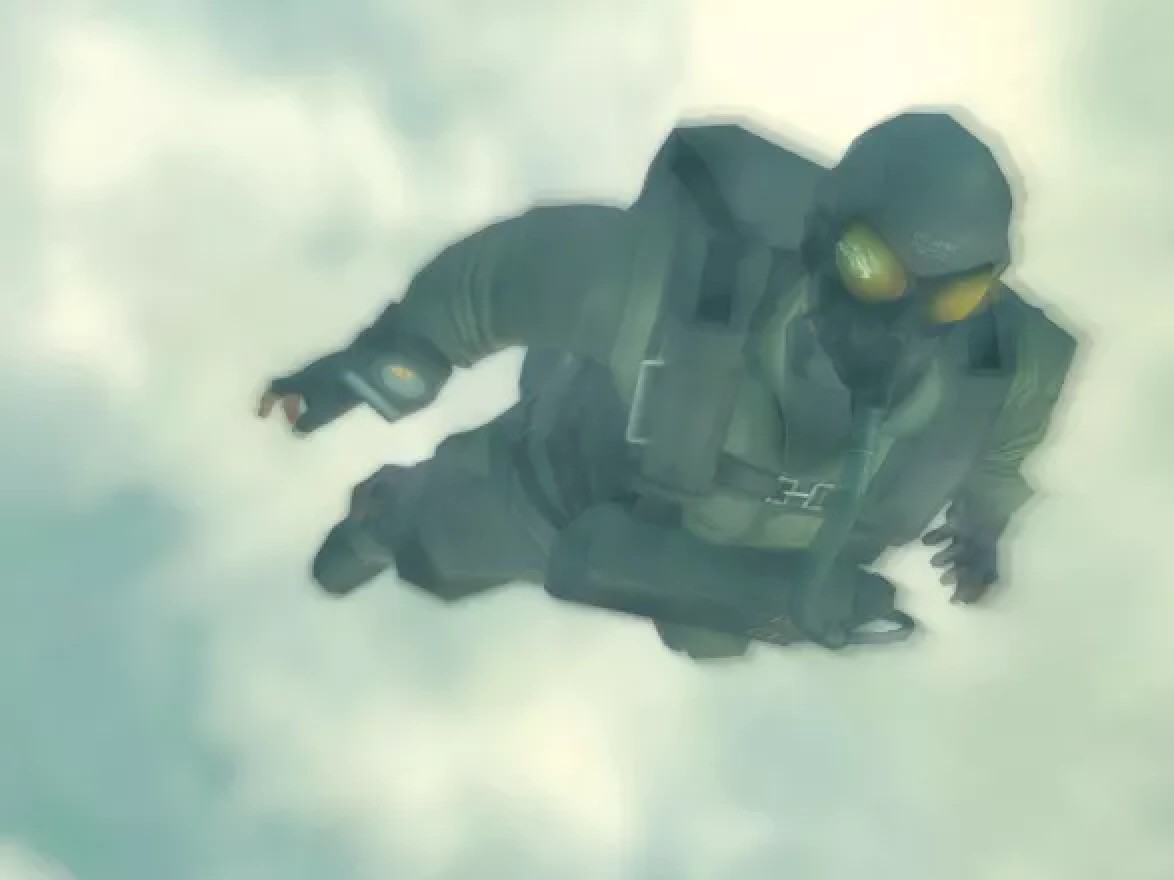
Metal Gear Solid 3 eats first, sneaks second
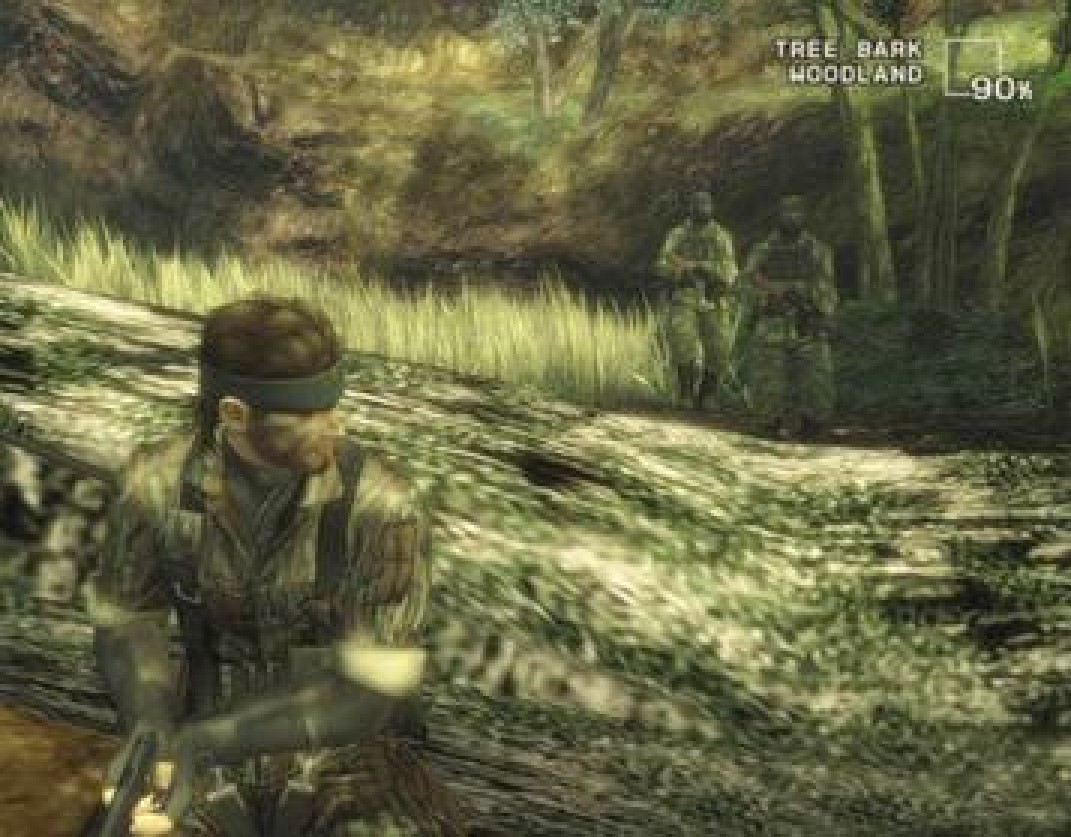
The earlier games were about sightlines and radar. Snake Eater is about a body in a jungle. The soliton radar is gone. In its place: a camouflage index that scores, as a percentage, how well your uniform and face paint match the ground you are lying on. Wear woodland camo against tree bark and you sit at 90 percent, effectively invisible to a patrol walking past your nose. Wear the wrong pattern and you are a man-shaped announcement.
Then there is the survival layer, the part that made 2004 reviewers raise an eyebrow and players fall in love. Snake runs on stamina, and stamina runs on food — snakes, frogs, crabs, mushrooms, fruit, whatever Tselinoyarsk offers. Food rots in your backpack. Eat the wrong mushroom and you will be treating food poisoning from the cure menu, the same menu where broken bones get splints, cuts get stitched and burns get ointment. Let Snake’s stomach growl within earshot of a guard and your perfect camouflage is worthless. Close-quarters combat — CQC, the system The Boss taught him — folds grabs, throws, throat-held interrogations and human shields into the same buttons as the shooting, which takes some learning. It is a lot of systems. It is also why the game still feels physical in a way its sequels, for all their polish, never quite matched.
The Boss, and the hardest order in games
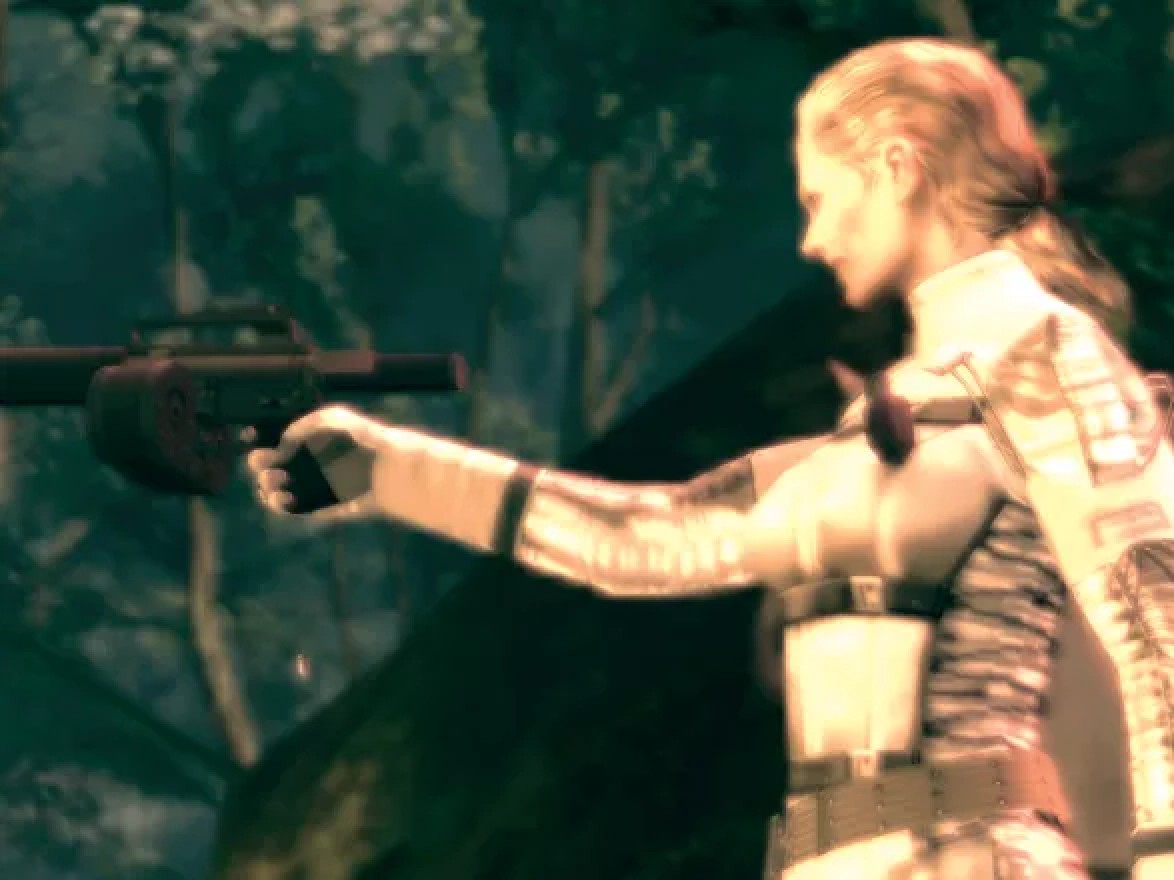
Every Metal Gear has a plot. This one has a wound at the center of it. The Boss is not a villain in any useful sense — she is Snake’s teacher, surrogate mother and the living standard he measures himself against, and the game spends its length making you understand what it costs him to pull the trigger he has been ordered to pull. When it comes, in a field of white flowers, the game does something quietly cruel: it makes you press the button. Nothing fires until you do.
And then the debrief pulls the floor away. The defection was the mission. The Boss let herself be branded a traitor, let Snake kill her, and died knowing history would remember her as a war criminal — because her country asked it of her, and because the alternative was nuclear war. Lori Alan’s performance in that final briefing, and David Hayter’s unraveling as he listens, is still the high-water mark for acting in this series. Snake salutes her grave, accepts the title Big Boss from a president he can no longer respect, and walks out of the ceremony a different man. The villain of the original Metal Gear is born in that room, and the game makes you grieve for him.
Built for the PS3, finished for the PS2
Snake Eater was supposed to be a PlayStation 3 game. Kojima planned it for Sony’s next hardware, then realized the machine was years away and brought the project back to the PS2 — where the jungle he wanted simply did not fit the old engine. The team built a new collision detection system from scratch so Snake could press against trees, sink into mud and crawl through grass that behaved like grass. What they shipped pushed the PS2 about as hard as it ever got pushed, at 30 frames per second where Metal Gear Solid 2 had run at 60.
Some choices were deliberate and divisive. The camera stayed fixed, MGS2-style, because Kojima wanted the original trilogy to play as a matching set — a decision critics were already calling dated in 2004, and the one real mark against the game on release. And the voice of Snake nearly changed: Kojima, a lifelong film obsessive, wanted Kurt Russell — Snake Plissken himself — for the role. Russell turned it down, and confirmed in 2024 that it was nothing to do with the game; he simply does not revisit old characters. David Hayter kept the bandana, and it is hard to imagine the ending landing with anyone else.
The ladder, the theme song, and the long climb
The music is a two-hander: Harry Gregson-Williams brought the Hollywood score, and Norihiko Hibino brought the soul. Hibino wrote the title theme, “Snake Eater,” and Cynthia Harrell sang it like a Bond theme that had wandered into the jungle and decided to stay — all brass, drama and wounded romance. It is the series’ signature song, and the game knows exactly when to spend it.
You know the moment. Hours in, Snake reaches a ladder up a cliff face — an absurdly, famously long ladder — and as he climbs, with nothing on screen but rungs and rock, Harrell’s voice fades in a cappella and the whole theme blooms underneath what amounts to a hymn disguised as a loading break. Players have been talking about that ladder for 22 years; it has its own life as a meme, a speedrun joke and a genuine piece of game-design folklore. Kojima had wanted David Bowie for the game’s space-age melancholy — “Space Oddity” and “Ashes to Ashes,” Major Tom for Major Zero — and licensing said no. A mix-up between two similar band names, Stellastarr* and Starsailor, eventually put Starsailor’s “Way to Fall” over the credits. Accidents do not usually age this well.
91 on Metacritic, four million copies, second place
The reviews were raves with one shared reservation. Snake Eater sits at 91 on Metacritic; IGN scored it 9.6, Game Informer 9.5, GameSpot 8.7, Eurogamer and Edge 8 out of 10. IGN gave it Best Story and Best Use of Sound for 2004; GameSpot gave it Best Story, Best Sound Effects and Best New Character, for The Boss. The reservations were the camera, the occasionally fussy controls, and a frame rate that had halved since the previous game. Nobody, anywhere, had a problem with the story.
Commercially it was a hit that lived in a shadow. Snake Eater sold 2.38 million copies by the end of 2004 and 3.6 million by August 2005, passing four million by 2010 — numbers most series would frame. But Metal Gear Solid 2 had sold seven million, and by that yardstick the jungle was a step down. It became, and stayed, the connoisseur’s Metal Gear: the one critics put on all-time lists, and the one that took longest to get its due from the sales charts.
Subsistence: the camera fix and Metal Gear’s first online war
Konami fixed the camera a year later. Metal Gear Solid 3: Subsistence — Japan in December 2005, North America in March 2006 — rebuilt the game around a free third-person camera, and it is not a small change: the jungle opens up, the CQC flows, and the 94 it holds on Metacritic, three points above the original, tells you how much of the 2004 criticism was that one decision. Subsistence is the version most people fell for, and the one the later ports descend from.
It also smuggled in two presents. The first was Metal Gear Online, the series’ first online multiplayer — gone now, and fondly remembered by the few thousand who played it. The second was history: the original MSX2 Metal Gear and Metal Gear 2: Solid Snake on disc, the latter in English officially for the first time. We have reviewed both — Metal Gear and Metal Gear 2: Solid Snake — and they are well worth the trip. Add Snake vs Monkey, a full Ape Escape crossover hunt, and Subsistence is less an expansion than a director’s cut with a museum attached.
The original that outlived its remake
The afterlife has been busy. Bluepoint’s HD Collection brought Snake Eater forward in 2011; a 3DS version followed in 2012; Konami’s Master Collection Vol. 1 put it on everything in October 2023. Then, in August 2025, came Delta — Snake Eater, Shot for Shot, our own look at a remake so faithful it kept the original voice recordings and room layouts — and still the conversation kept circling back to the 2004 original. Peace Walker, its direct sequel — our Metal Gear Solid: Peace Walker review calls it a full sequel to Snake Eater, set ten years on — carried Big Boss’s story into 1974 and toward the fall the whole saga exists to explain.
The lists keep it near the top, too. IGN ranked Snake Eater the second-best PlayStation 2 game ever made and called its story the best in the franchise; it has been a fixture of all-time rankings ever since. Twenty-two years on, the honest summary is a short one: the camera got fixed, the graphics got remade, and the game underneath never needed either. What it needed was for the rest of the medium to catch up with what it was doing — a blockbuster that ends with its hero saluting an unmarked grave, betrayed by the country he saved. The jungle holds up because the story does.
— Chip
Metal Gear Solid 3: Snake Eater launched in North America on November 17, 2004 — see the day’s full slate on our This Day in Gaming History page for November 17.