
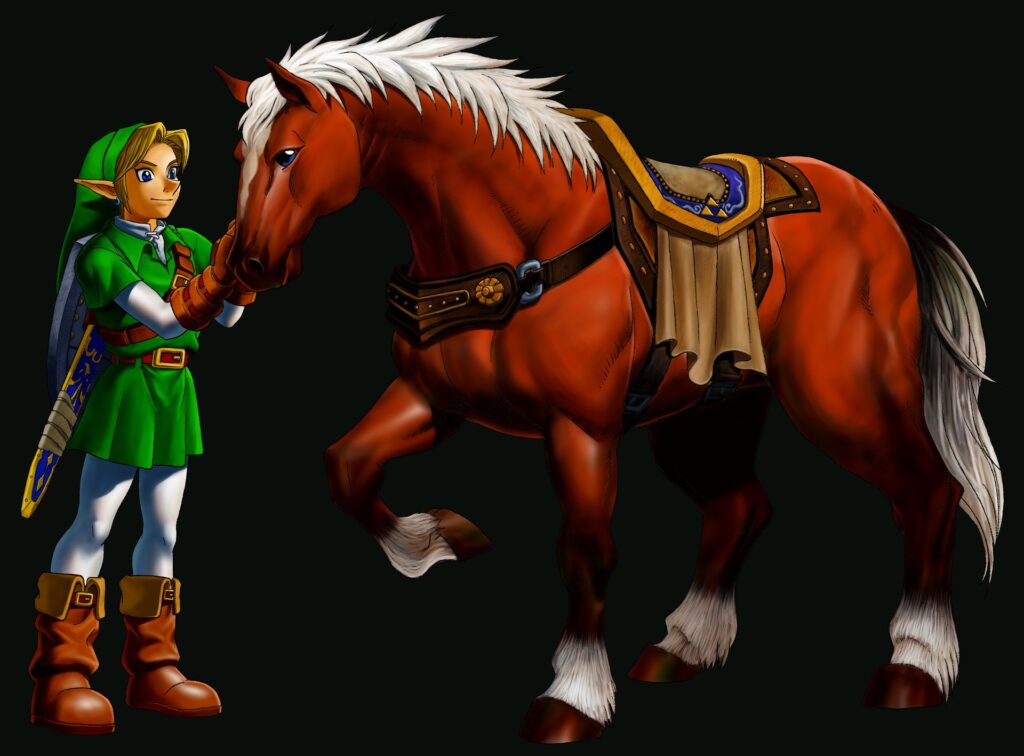
At a glance
- Game: The Legend of Zelda: Ocarina of Time
- Developer: Nintendo EAD
- Publisher: Nintendo
- Original release: November 21, 1998
- Original platforms: Nintendo 64
- Genre: Action-adventure
Twenty-eight years ago today, The Legend of Zelda: Ocarina of Time went on sale in Japan. Let us be plain about the date, because this site counts anniversaries carefully: November 21, 1998 is the Japanese release. North America followed two days later, on November 23, and Europe on December 11. So this is a Japanese birthday we are celebrating — the day the cartridge first reached players anywhere — and it is worth celebrating on the exact day it happened.
None of the struggle shows. That is the first thing to say about what arrived that Saturday: the first 3D Zelda, built by Nintendo EAD for the Nintendo 64, produced by Shigeru Miyamoto, directed by a team that included Eiji Aonuma and Yoshiaki Koizumi, with music by Koji Kondo. It had been delayed, argued over, and rebuilt — development began alongside Super Mario 64, started life aimed at the 64DD disk peripheral, and ended up on a 256-megabit cartridge, the largest Nintendo had made at the time, per Wikipedia’s development history. What shows in the finished game is confidence.
Every 3D adventure game you have played since owes this one something. That is not nostalgia talking. It is a debt the industry itself acknowledges — Rockstar’s Dan Houser once said that anyone who makes 3D games who claims they have not borrowed from Mario or Zelda on the N64 is lying, a quote Wikipedia keeps in its impact section because developers keep proving it true. At 28, Ocarina of Time is not just a great old game. It is the template.
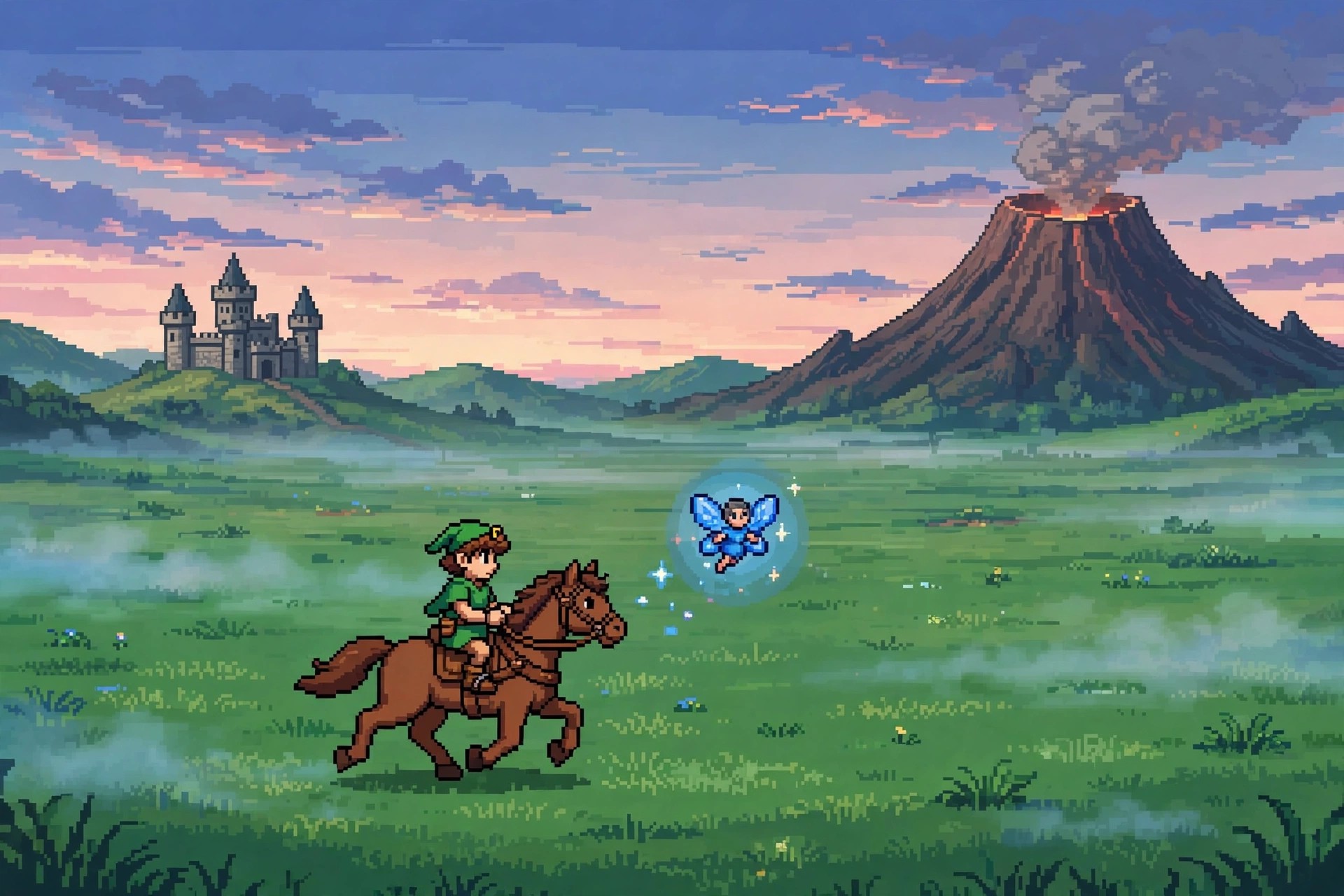
Ocarina of Time in 3D: the jump, and the targeting that made it work
The problem facing Nintendo EAD in the mid-1990s was simple to state and brutal to solve: Zelda was a game about aiming. You swung a sword in a direction, shot an arrow down a line, judged distances on a flat plane. Move that into a free 3D space, with a camera floating behind the hero, and every one of those actions becomes guesswork. Plenty of early 3D games simply accepted the guesswork. Ocarina of Time refused to.
Its answer was Z-targeting. Hold the Z button and Link locks onto the nearest enemy or object; the camera swings in behind him, the frame letterboxes, Navi darts to the target, and Link keeps facing it while you circle, dodge, and strike. Wikipedia’s gameplay section describes the system plainly — the camera follows the target, Link constantly faces it, projectile attacks are directed automatically — and that plainness is the point. Aiming stopped being the player’s problem and became the game’s job. Combat could be about timing and nerve instead of wrestling a camera.
Paired with it was the context-sensitive action button: one button that opens doors, lifts pots, climbs, talks, and rolls, with the on-screen label changing to tell you what it will do. Between those two ideas — lock on, and let one button mean whatever the moment needs — Ocarina of Time quietly wrote the control grammar for a generation of 3D games. Wikipedia notes both features have since become common in 3D adventure games. “Common” undersells it. They became invisible, which is what happens to inventions that work.
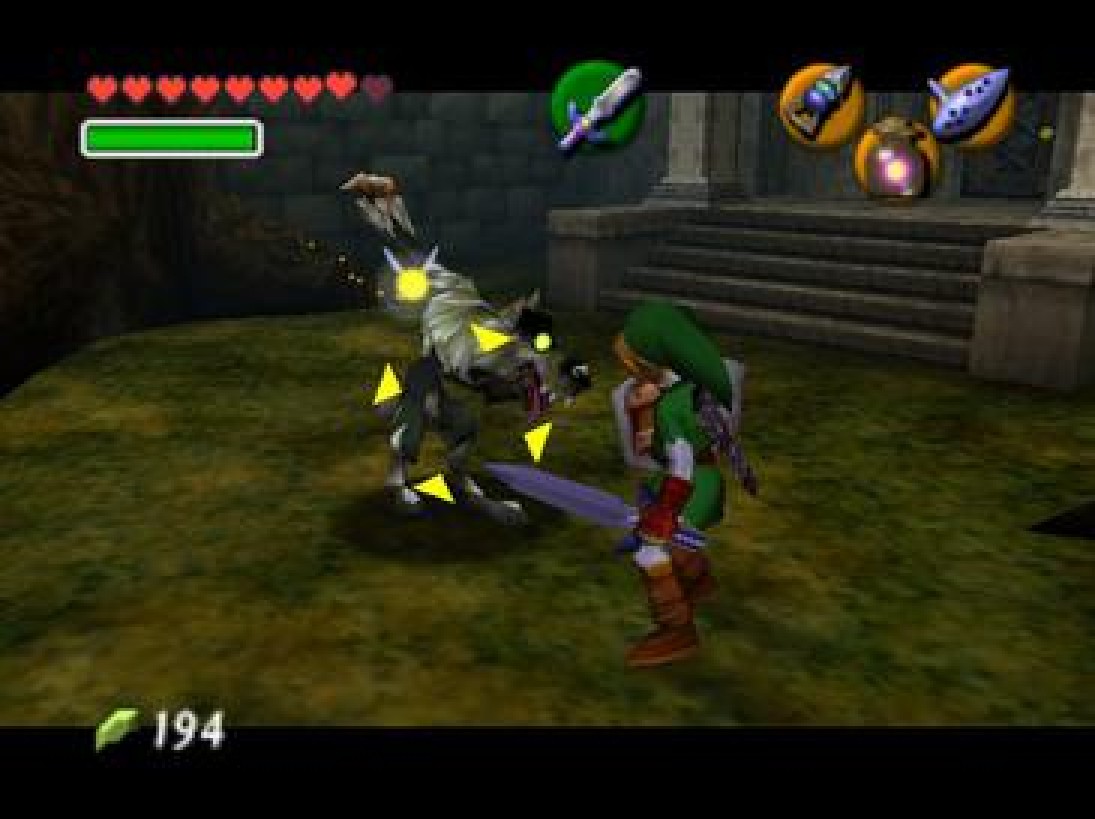
Two Links, seven years: the structure nobody had tried
The story opens with a child. Link, a boy without a fairy in the Kokiri Forest, is summoned by the dying Great Deku Tree, sent to Hyrule Castle, and tasked by Princess Zelda with gathering the three Spiritual Stones before the Gerudo king Ganondorf can reach the Triforce. It is a bright, manageable adventure — three child-sized dungeons, a horse ranch to visit, a castle garden to sneak through.
Then Link pulls the Master Sword from its pedestal in the Temple of Time, and the game commits its great act of cruelty and genius. He was too young to be the Hero of Time, so his spirit is sealed for seven years. He wakes as an adult in a Hyrule Ganondorf has already won: Castle Town ruined, its people fled to Kakariko, the sky over Death Mountain gone wrong. The meadow you learned to love as a child is still there. Everything in it has been hurt.
As structure, it is a masterstroke. The child dungeons teach you the world. The five adult temples make you fight to take it back, awakening the Sages — Saria, Darunia, Ruto, Impa, and Nabooru — one by one. Items respect the split: only adult Link can draw the Fairy Bow, only young Link can crawl through the small passages. And once the mechanic opens up, you travel between the two eras by taking and replacing the sword, planting seeds and beans as a child to use the grown plants as an adult. Games had done light and dark worlds before, including this series. None had made you grow up inside one.
A flute you actually play: the ocarina as an interface
Plenty of games have a magic item. Ocarina of Time handed you an instrument and made you learn it. Link is given a fairy ocarina early on, later replaced by the Ocarina of Time itself, and across the adventure he learns 12 melodies, per Wikipedia’s gameplay account — played on the controller, note by note, with the analogue stick bending pitch in the playing screen if you wanted to fiddle.
The songs are not decoration. Zelda’s Lullaby is a signature that proves your standing to Hyrule’s royal places. The Sun’s Song turns day to night. The Song of Storms makes weather. The warp songs — taught by the mysterious Sheik in the adult era — carry you back to the temples scattered across a world too big to cross on foot every time. And the Song of Time, played at the altar in the Temple of Time, opens the Door of Time itself. Music is the game’s key ring, its fast travel, and its clock, all in five holes and a handful of buttons.
It worked on players, too. Wikipedia credits the game with increasing the popularity of the real ocarina, and anyone who was there remembers why: Kondo’s melodies are short, singable, and attached to moments. You did not just remember the Scarecrow’s Song. You could play it back, years later, from muscle memory. Interfaces are supposed to disappear. This one stayed with people as music.
Hyrule Field and the dungeons: scale, then depth
Step out of Kokiri Forest for the first time and the game makes its promise: Hyrule Field, a rolling open hub connecting the castle, the ranch, the lake, the desert road, and Death Mountain, with a day-night cycle rolling over all of it. By modern standards it is empty. In November 1998 it felt enormous — a place you crossed, on foot as a child and later at a gallop on Epona, the horse you win at Lon Lon Ranch, while the sun dropped and the Stalchildren waited for dark. Wikipedia describes Hyrule Field as the central hub of the world, and that is exactly how it plays: everything you love is a ride away from everything else.
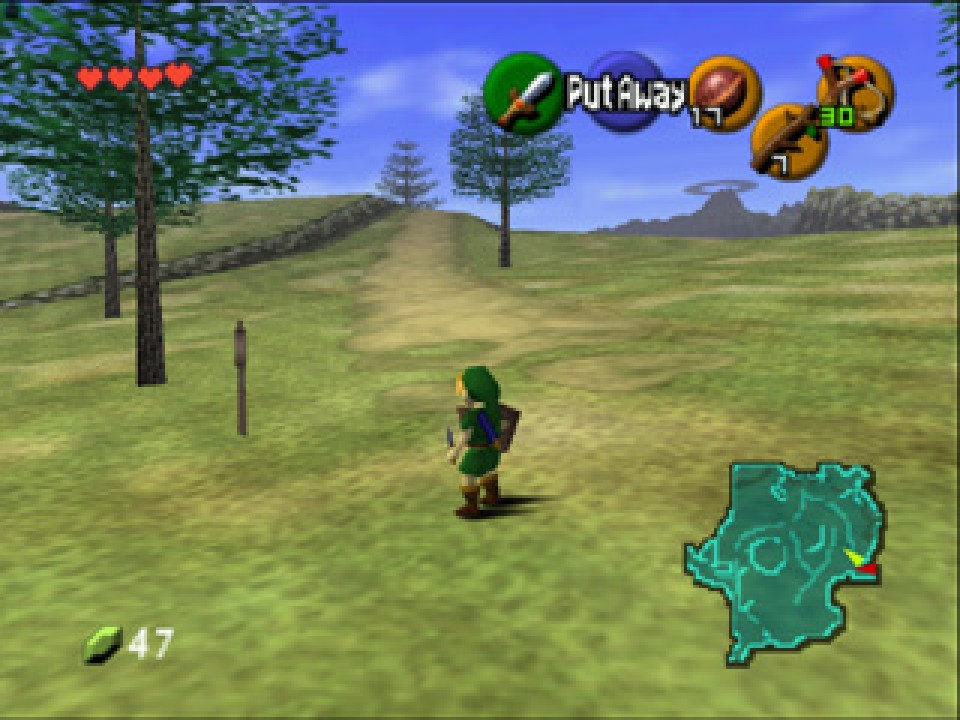
The dungeons are where the design tightens. Inside the Great Deku Tree teaches a child — and a first-time 3D player — how to look up. Dodongo’s Cavern turns bombs into tools of architecture. The Water Temple, with its rising and falling water levels and its iron boots, remains the era’s most argued-over puzzle box, and the Forest Temple’s twisted corridors and Phantom Ganon — a boss born, per Wikipedia’s development notes, from an early idea for a painting-riding doppelganger — show a team using 3D space itself as the puzzle. Eiji Aonuma designed the dungeons, and it shows in the best way: each one hands you a new item and then spends its second half making you fluent in it.
The perfect-score reception, and the long shadow
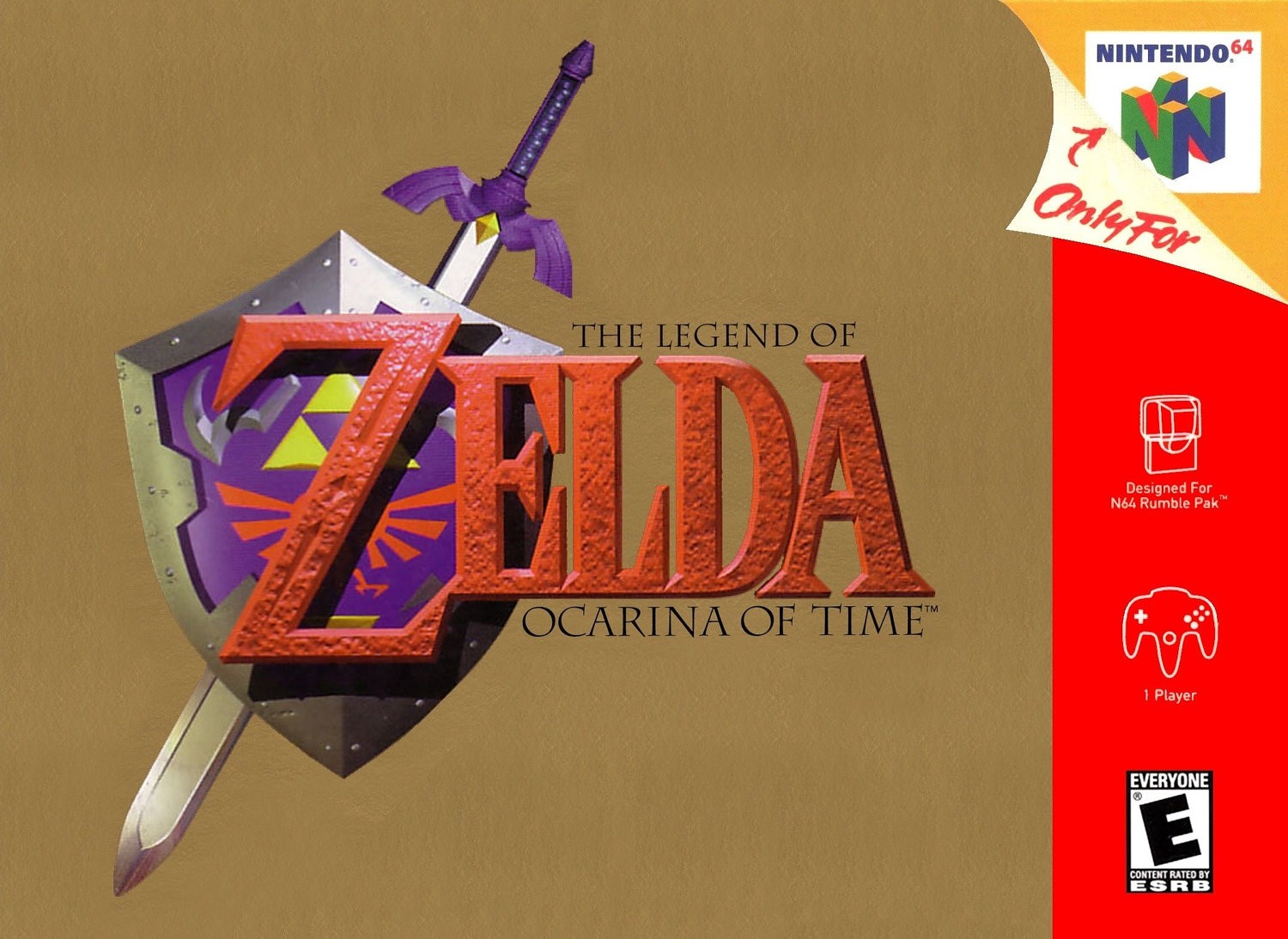
The reviews were not merely good. They were, in several famous cases, perfect. Famitsu gave Ocarina of Time a 40/40 — the first perfect score in that magazine’s history, as Zelda Wiki records. Edge, Electronic Gaming Monthly, GameSpot, and IGN all gave it their top marks; GameSpot’s Jeff Gerstmann called it “a game that can’t be called anything other than flawless,” and IGN called it “the new benchmark for interactive entertainment.” The aggregators settled it at the top of the mountain: 99/100 on Metacritic and 98% on GameRankings, which Wikipedia reports as the highest-rated game on both. Twenty-eight years of games later, that Metacritic 99 still stands as the highest score the site has.
Players matched the critics. Wikipedia’s sales account records more than 500,000 US pre-orders — a Guinness World Record for advance orders at the time — more than a million copies sold in the US in under a week, 2.5 million copies in 1998 despite arriving only 39 days before the year’s end, and 7.6 million copies worldwide on the N64. It was, by dollar sales, the best-selling game of 1998 in the United States.
The shadow has only lengthened since. A direct sequel, Majora’s Mask, followed on the N64 in 2000, reusing the engine to build something stranger and sadder. The awards shelf filled early — six wins at the 2nd Annual Interactive Achievement Awards, including Game of the Year, per Wikipedia’s awards account. Master Quest, the rearranged, harder version first built for the 64DD, reached players on GameCube in 2002–03. In June 2011, Grezzo’s Ocarina of Time 3D rebuilt the game for the Nintendo 3DS — 94/100 on Metacritic, and more than 6.44 million copies sold by December 2022, per Wikipedia’s account of the remake — introducing a whole handheld generation to Hyrule Field. Fans finished decompiling the original ROM in 2021, and the Ship of Harkinian PC port followed in 2022. And this month the game returned again, with a full remake for Nintendo Switch 2 on November 5, 2026 — see our coverage of the Ocarina of Time remake on Switch 2 for what changed there.
Remakes can polish the surface. They cannot explain why this one, specifically, keeps coming back. The explanation is in the design: a lock-on that made 3D combat readable, a two-era structure that made a world worth saving twice, an instrument you played with your own hands, and dungeons that trusted you to think in three dimensions. Ocarina of Time did not just survive the jump to 3D that broke so many beloved series in the 1990s. It landed it so completely that the landing became the standard. Twenty-eight years on, that is still the story.
For more N64-era landmarks, see our N64 hub.
— Chip
Ocarina of Time first launched in Japan on November 21, 1998. See what else happened on that day in This Day in Gaming History: November 21.