
At a glance — Hardware: Nintendo DS, Nintendo’s dual-screen handheld · Form factor: Clamshell handheld, 148.7 × 84.7 × 28.9 mm closed, 275 g · Screens: Two 3-inch backlit TFT LCDs, 256 × 192 each; the lower screen carries a resistive touch screen · Input: Touch screen and stylus, embedded microphone, D-pad, A/B/X/Y face buttons, L/R shoulder buttons, Start and Select · CPU: 67 MHz ARM946E-S and 33 MHz ARM7TDMI · Memory: 4 MB RAM; 256 KB flash memory for firmware and settings · Storage: Nintendo DS Game Card slot (Slot-1) and a Game Boy Advance Game Pak slot (Slot-2) · Wireless: IEEE 802.11 Wi-Fi and Nintendo’s proprietary local wireless, 30 to 100 feet · Battery: 850 mAh lithium-ion, six to 10 hours of play on a four-hour charge · Launch price: $149.99 · Launch date: November 21, 2004 (North America)
Consoles do not usually launch on a Sunday. The Nintendo DS did. November 21, 2004, and the night before it, EB Games opened its new flagship store at Universal CityWalk in Los Angeles at midnight for the people who could not wait until morning. Some could not even wait that long. Reports had a few chains selling the thing early.
Nintendo had built one million of them for North America. The expectation, in Nintendo’s own words, was that they would be gone by the end of the year. They were nearly gone in a week.
And look at what people were queueing for. A silver clamshell. Two screens. You touched one of them with a little plastic stick, and you could talk into it, because there was a microphone in it. A touchscreen and a microphone. In 2004. In a game machine that cost $149.99. Nintendo owned handheld gaming outright back then, and this odd thing was its follow-up to the Game Boy Advance. I still think it is the bravest hardware launch the company has ever run. Here is how it went.
The Nintendo DS Launch Was a Gamble Nintendo Did Not Have to Take
Nintendo announced the DS on January 20, 2004, and the announcement tied itself in a knot right away. This was not the next Game Boy. Nintendo kept saying so. The DS was a “third pillar,” a separate line that would sit next to the Game Boy Advance and the GameCube and replace neither.
You can see why they hedged. The idea came from Hiroshi Yamauchi, who had suggested a two-screen system before stepping back from the presidency, and the work had been going since around mid-2002 under the internal name Nitro. But the Game Boy name sold machines by itself. Walking away from it, even halfway, was a real risk.
Then there was Sony. The PlayStation Portable had been announced in 2003, and it was everything the DS was not. Sleek. Powerful. Aimed at older buyers with money. When the prototype DS showed up at E3 in May 2004, it looked like a science project next to the PSP. It was not even the final design. On July 28, 2004, Nintendo showed a sleeker version and confirmed Nintendo DS as the actual name.
The date and price came on September 20, 2004. November 21 in North America. $149.99. Japan after, on December 2, at ¥15,000. Read that again, because it had never happened before: a Nintendo system making its worldwide debut outside Japan. Nintendo wanted it in American stores for the holiday season and Black Friday, and it wanted it there before Sony. The third pillar went first.
Two Screens, a Stylus and a Microphone: the Hardware in Your Hands
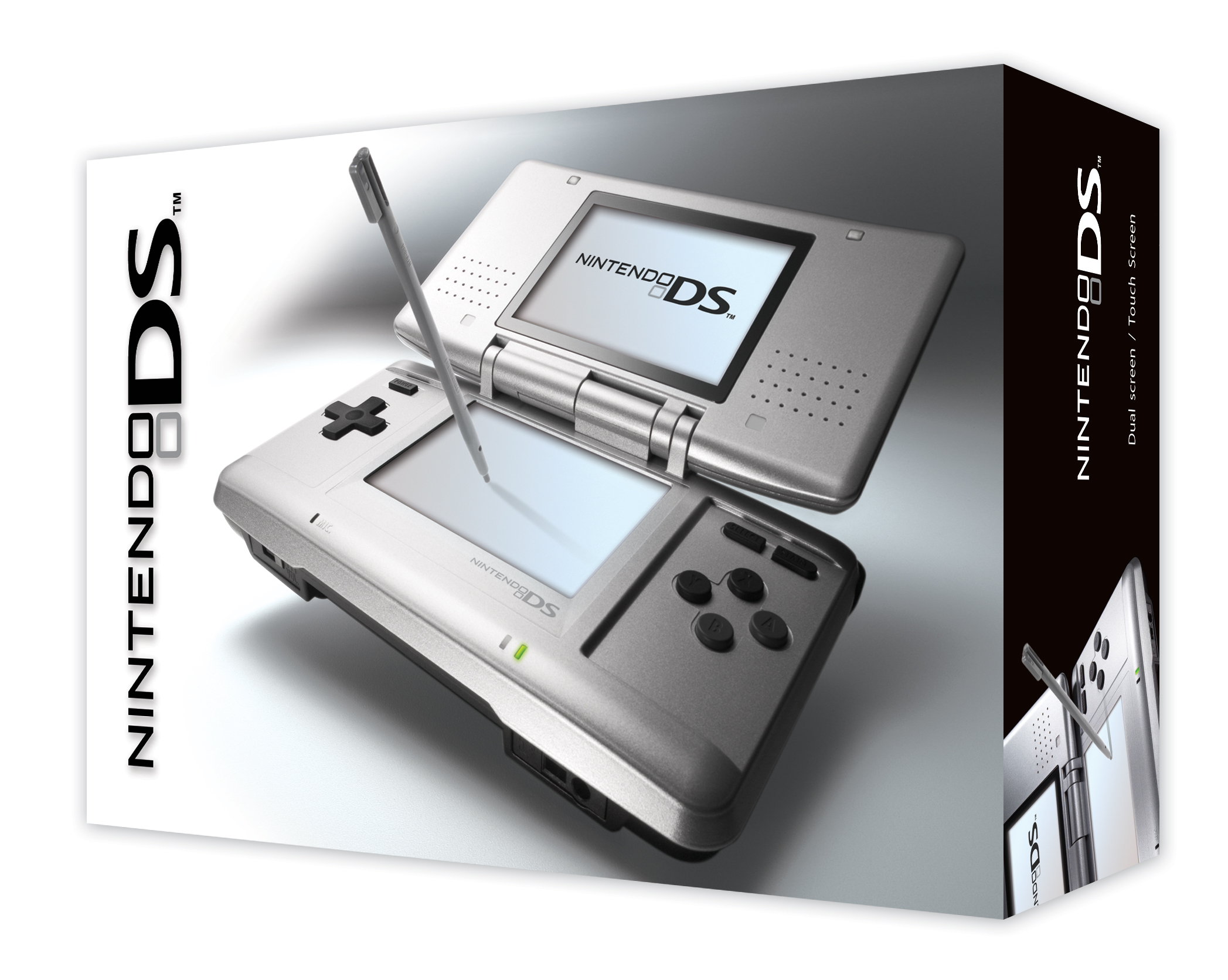
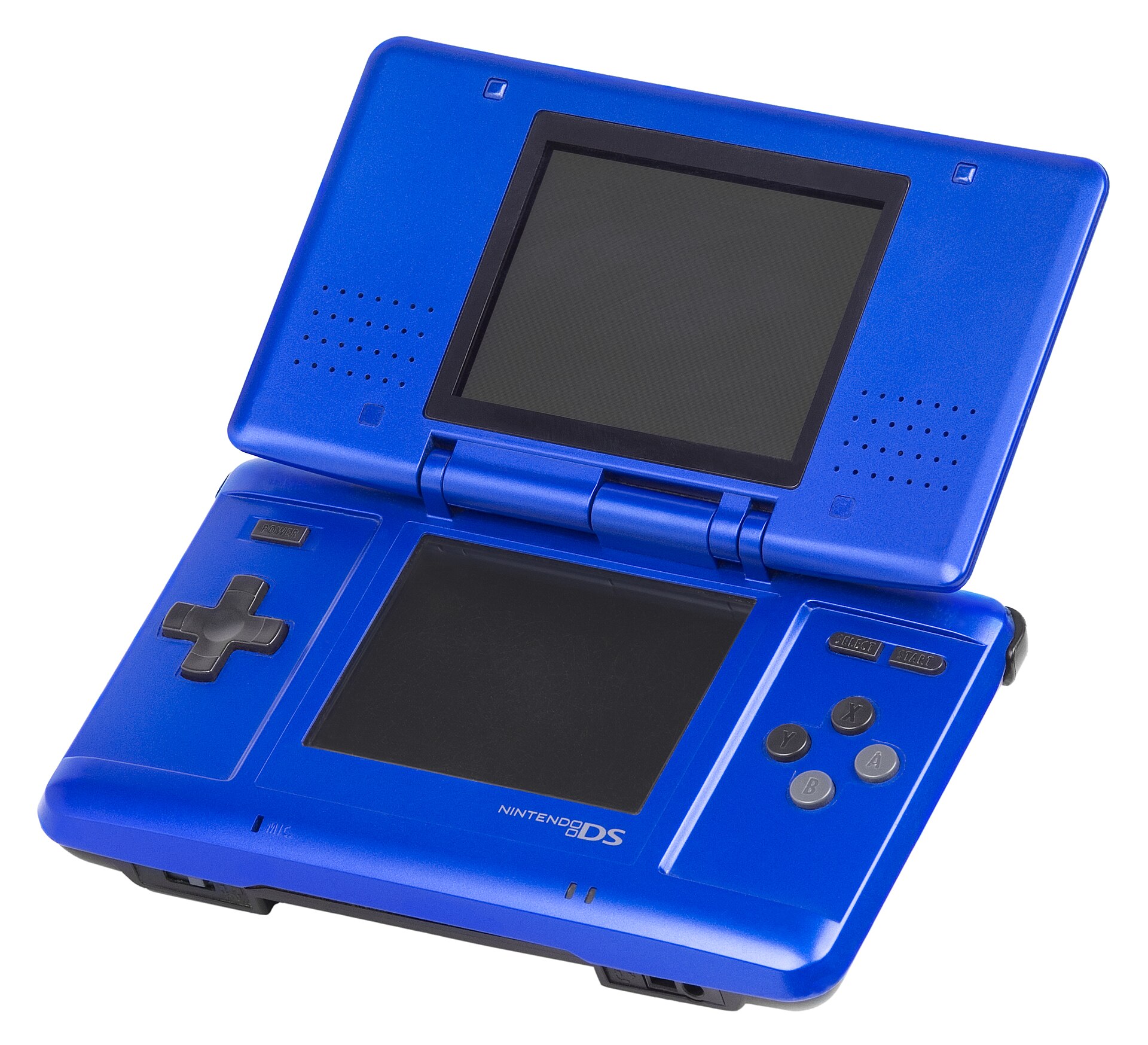
Hold an original DS now and the first thing that hits you is the heft. 148.7 × 84.7 × 28.9 mm. 275 g. Silver and black at launch, wide in the hands, with a thick barrel hinge that shuts with a proper snap. It is not pretty. The DS Lite fixed the looks in 2006, all gloss and clean lines. The 2004 machine is a tool. I mean that as a compliment. It feels like it was built to be dropped, and plenty of them were.
The screens are two 3-inch backlit TFT panels, 256 × 192 each. Small numbers. The top one is a normal screen. The bottom one is the whole idea: a resistive touch screen, worked with a stylus that lives in a slot in the back of the unit. The controls around it are pure Nintendo. D-pad left. A/B/X/Y right. L and R on the shoulders. Start and Select. Then the strange bit, a microphone set into the shell below the screen, there so games could listen to you. Stereo speakers flank the top screen. Nobody had put this combination in a handheld before. Nobody.
Under the shell, the spec sheet gets humble fast. A 67 MHz ARM946E-S does the heavy lifting. A 33 MHz ARM7TDMI — the Game Boy Advance’s processor family, running twice as fast — handles support work. 4 MB of RAM. That is it. The PSP, when it reached North America in March 2005 at $249.99, ran at 333 MHz and played movies off little discs. On paper, the DS got destroyed.
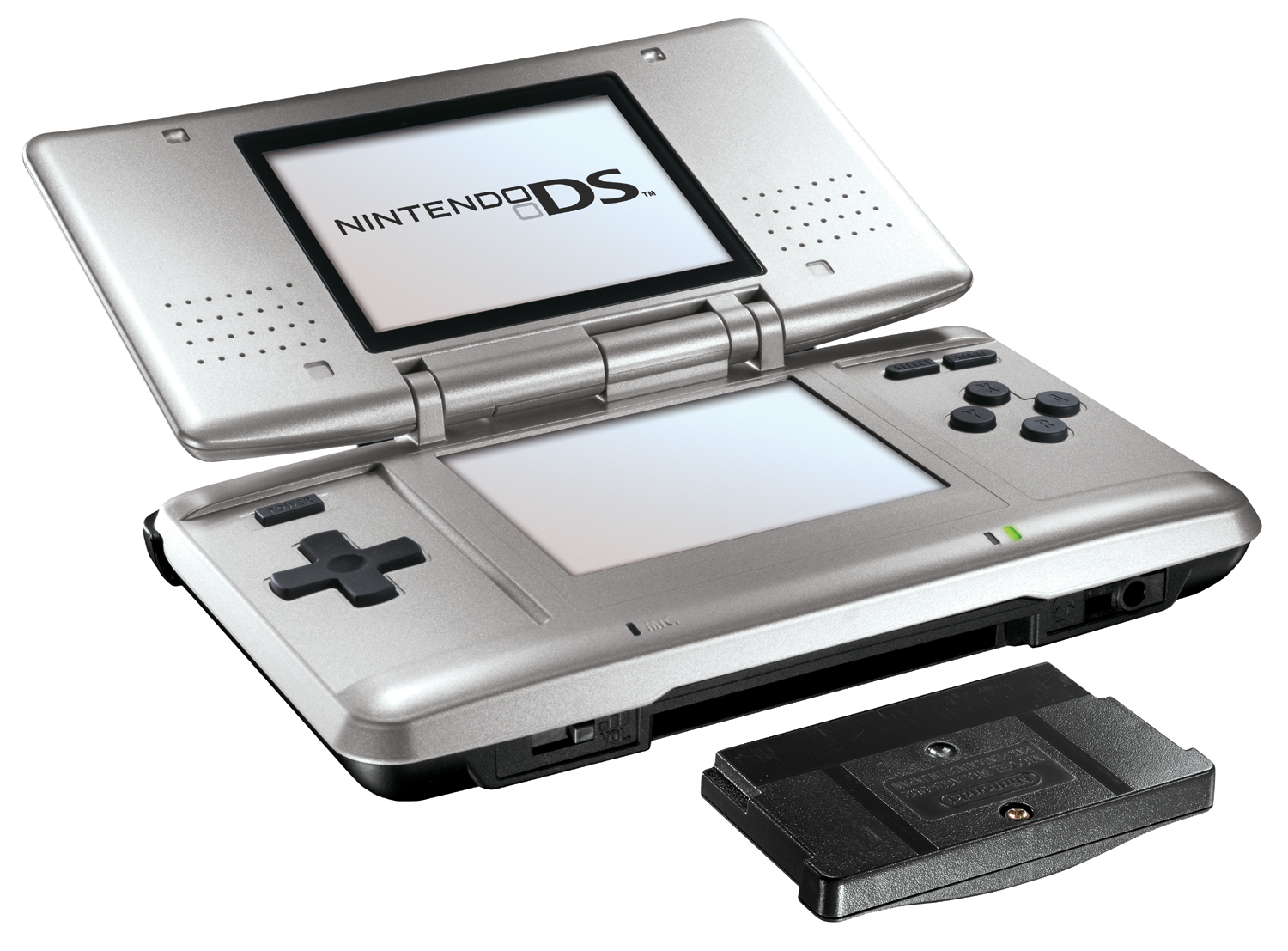
Paper is not where you play games, though. The DS ran six to 10 hours on a four-hour charge. It cost $100 less. And it had a second slot. Slot-1, in the back, took the new DS Game Cards. Slot-2, in the front, took Game Boy Advance cartridges. Your whole GBA library, the games you already owned and loved, worked in the new machine on day one. That slot did more for the DS than any clock speed could have.
What You Actually Played in the Nintendo DS Launch Window
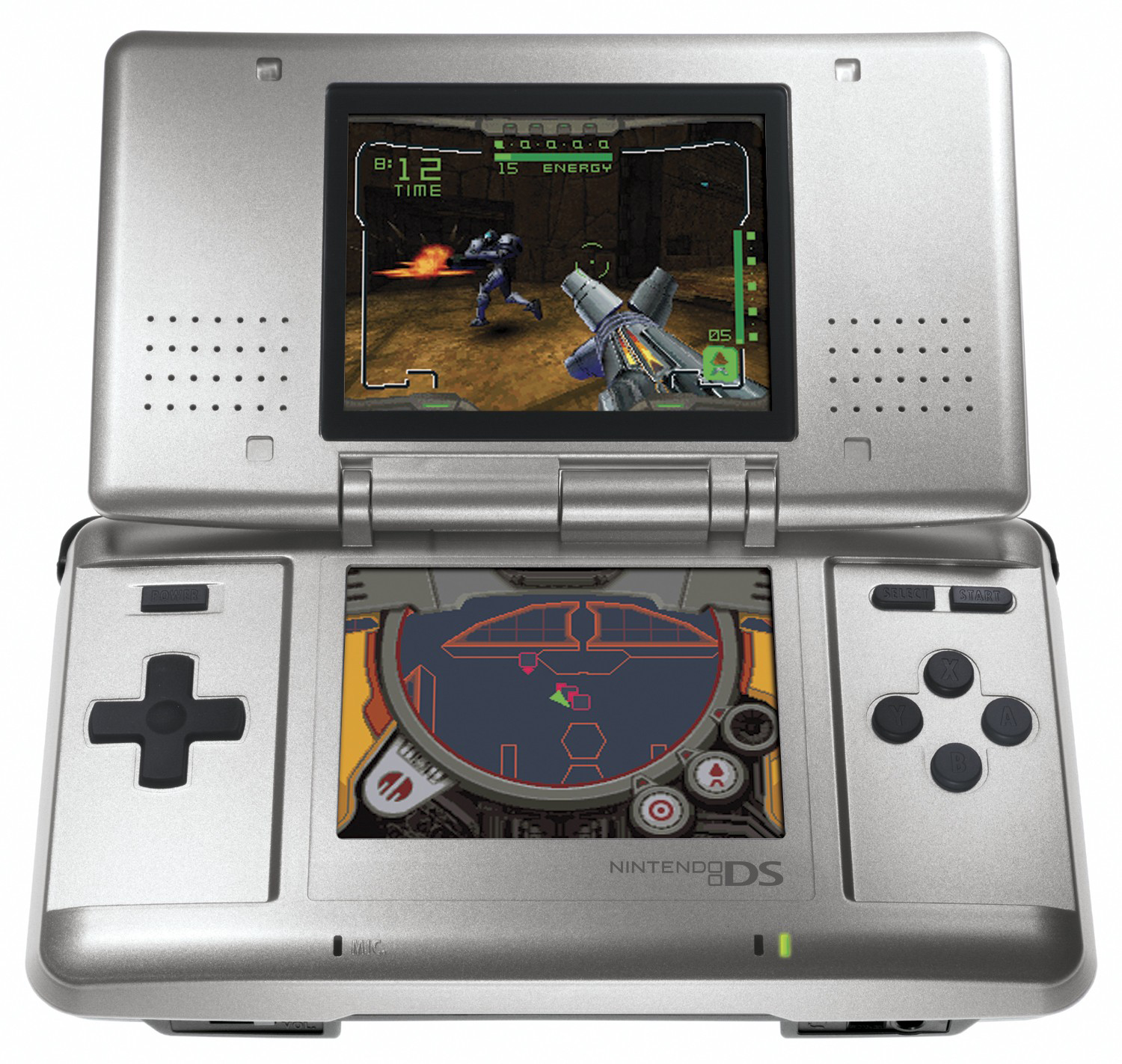
Open the box and there was already a game inside. Every DS came with Metroid Prime Hunters: First Hunt, a playable demo, free in the box. Smart move. You aimed with the stylus. The radar sat on the bottom screen. Up to four players could shoot at each other wirelessly. The full game was still more than a year away, but the demo made the case for the hardware in about ninety seconds, and it cost you nothing to hear it.
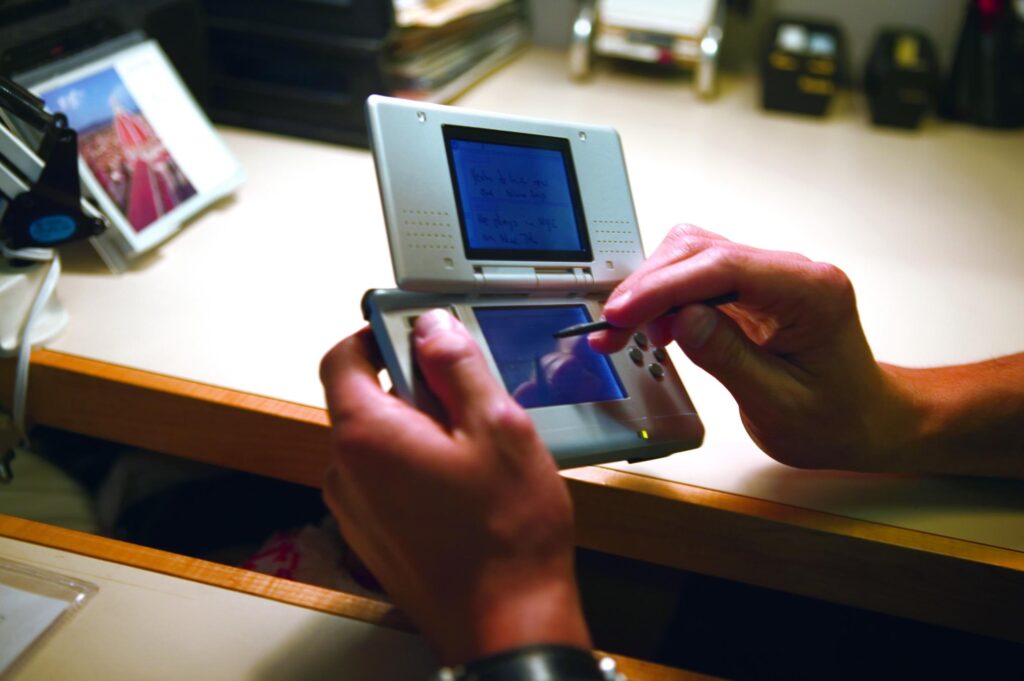
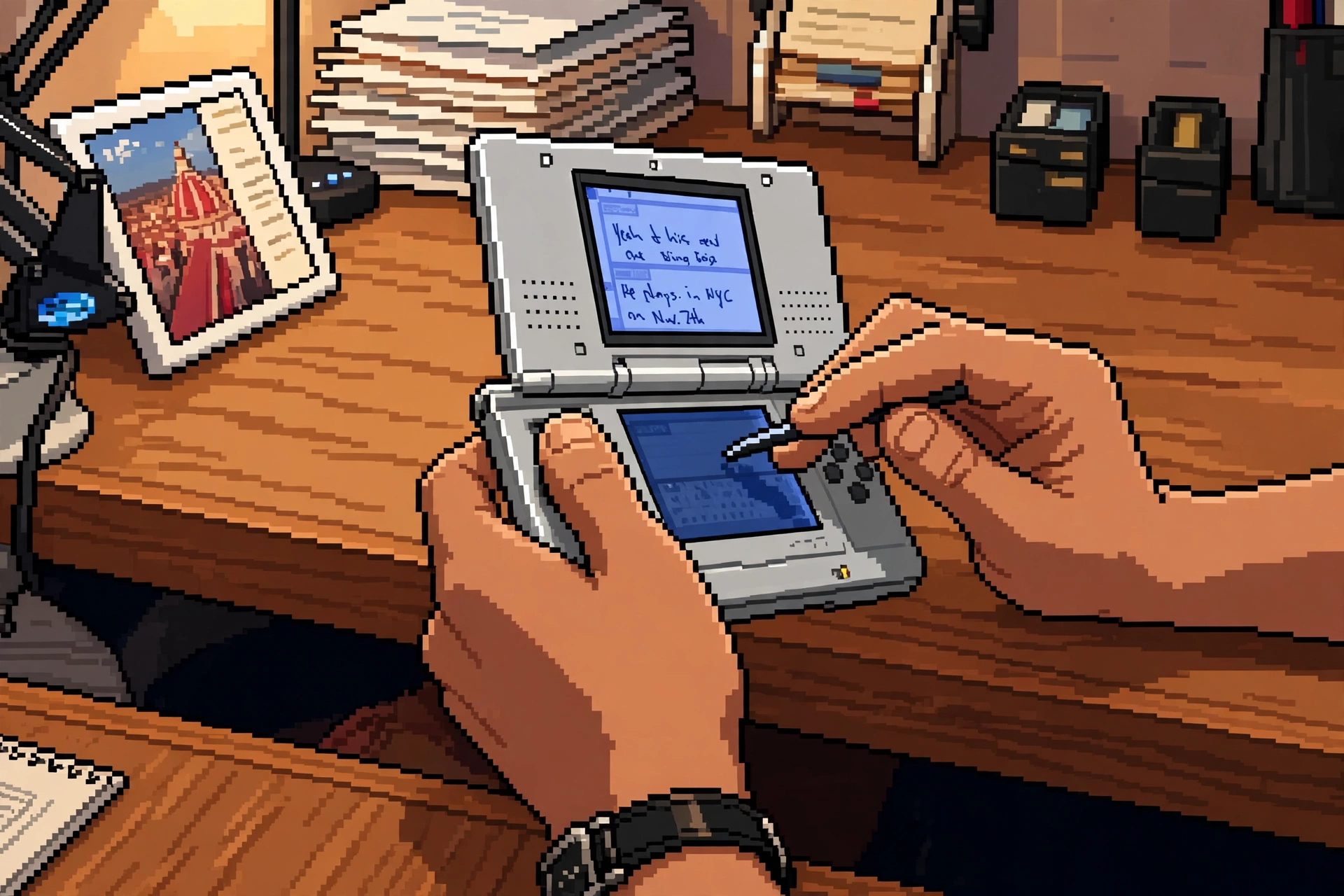
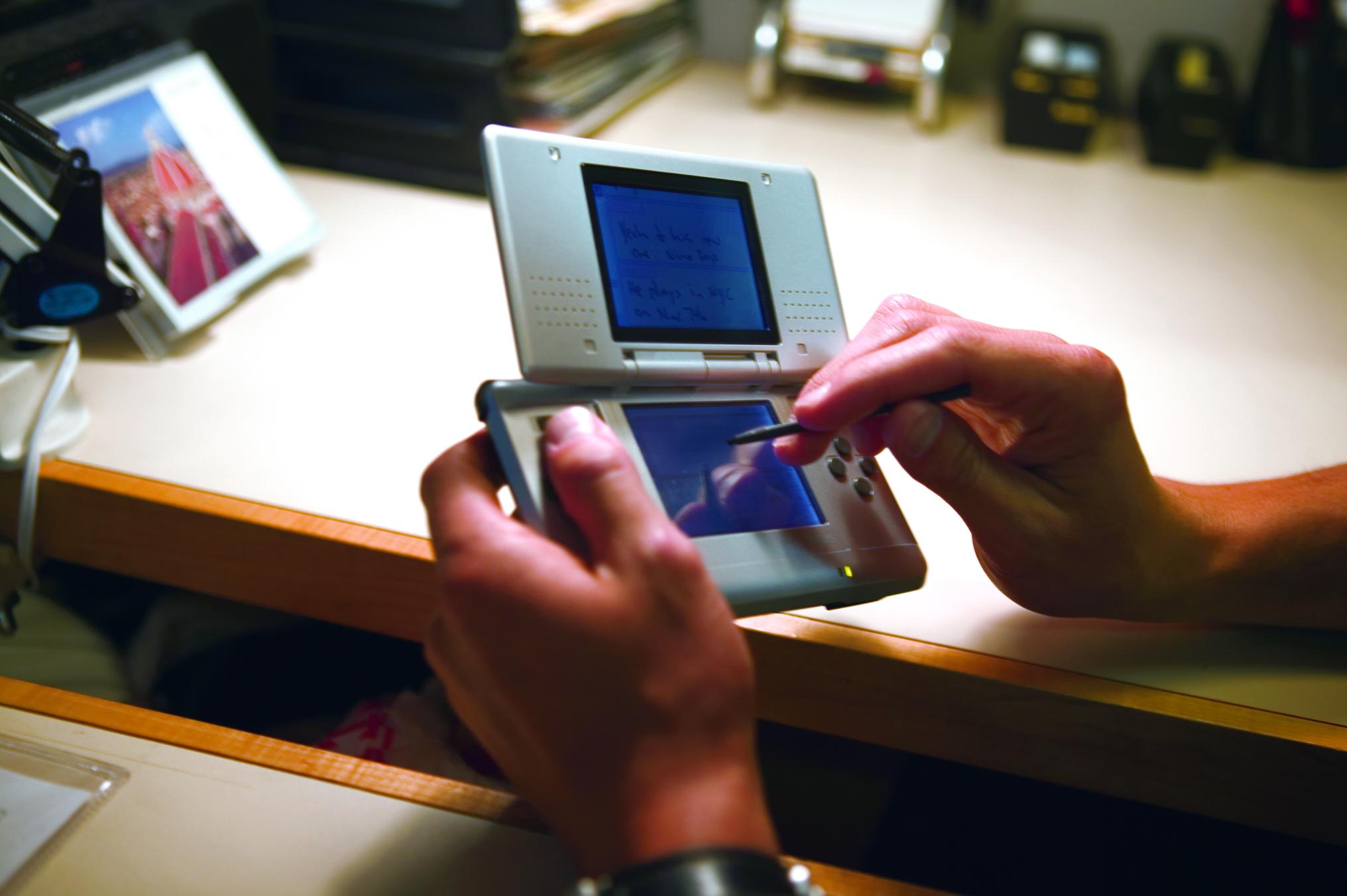
Then there was the thing nobody bought the machine for, and everybody ended up showing off. PictoChat. It was built into the system. No cartridge. You opened it, picked a room, and up to 16 people nearby could swap typed messages and little drawings over wireless. In 2004 that felt like a magic trick. Handwriting, on a game machine, sent through the air to your friend’s screen. Nintendo’s own launch photos are full of PictoChat, and you can see why. It explained the DS faster than any advert could.
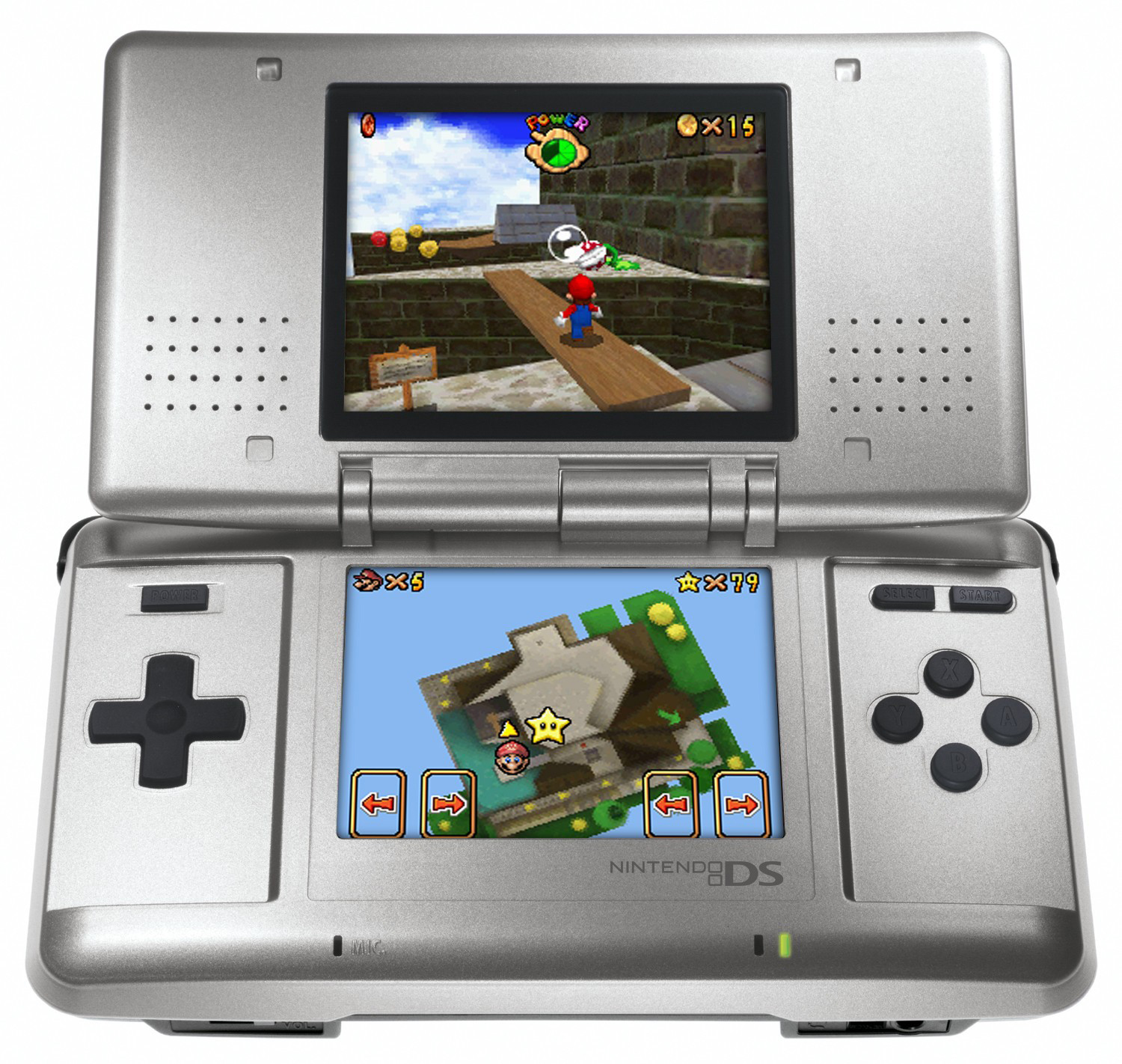
The big cartridge purchase was Super Mario 64 DS. The Nintendo 64 game, rebuilt for the little machine. Four playable characters this time, not one. 150 Power Stars. Touch-screen mini-games. Wireless battles. Mario 64 in your coat pocket — in 2004, that alone justified the stylus.
Around it sat the launch window, a dozen titles deep. Madden NFL 2005, Tiger Woods PGA Tour Golf and The Urbz: Sims in the City from EA. Spider-Man 2 from Activision. Ping Pals from THQ. Feel the Magic: XY/XX from SEGA. Rayman DS and Asphalt Urban GT from Ubisoft. Ridge Racer DS and Mr. Driller: Drill Spirits from Namco. Nintendo promised 10 to 12 games in the first 30 days, 20 to 25 by the end of March 2005, and more than 120 in development worldwide. Not all of them were on a shelf on the morning of November 21 itself. The window was the promise, not the single day. But the pattern was set from the start. Familiar games. Played in ways you had not played them before.
The Week the Nintendo DS Sold Out
The demand was there before the doors opened. Preorders across North America and Japan passed three million. Nintendo had planned 300,000 units for the United States debut and ended up shipping 550,000. Just over 500,000 sold in the first week.
By December 9, Nintendo was raising shipments by 40 percent, to 1.4 million systems for North America before the end of the year. The first 500,000 had all but sold out in that first week. North American sales had already reached 700,000. Japan got the machine on December 2 and bought more than half a million in four days.
The United States passed one million DS systems by December 21, 2004. One month. Worldwide shipments hit 2.8 million by the end of the year, roughly 800,000 more than Nintendo had forecast. The machine Nintendo refused to call the next Game Boy had just sold like one.
Why the Weird Little Machine Won
The final count for the DS family was 154.02 million units. That makes it the best-selling dedicated handheld ever made. And honestly, the launch already contained the reasons.
The price. $149.99 is a gift price, and the PSP landed months later at $249.99. The battery, which just kept going. The GBA slot, which meant buying one was never a leap into the dark. And the odd features, the ones that looked like gimmicks on a spec sheet — the touch screen, the microphone, PictoChat, multiplayer off a single cartridge — were the things owners actually dragged out to show people. You did not explain the DS. You handed it over.
It was not obvious on November 21, 2004. The smart money liked Sony’s machine. It was faster, prettier, more serious. What the smart money missed was sitting in stores that first week, silver and chunky and selling out: a machine that asked you to touch it, draw on it, talk to it. We have told the longer story of the machine’s whole life in our complete history of the Nintendo DS. This is where that story starts. Nintendo bet that a second screen was worth more than a faster chip. The bet paid off in about seven days.
— Hank
For more launches from this date, see This Day in Gaming History: November 21.