
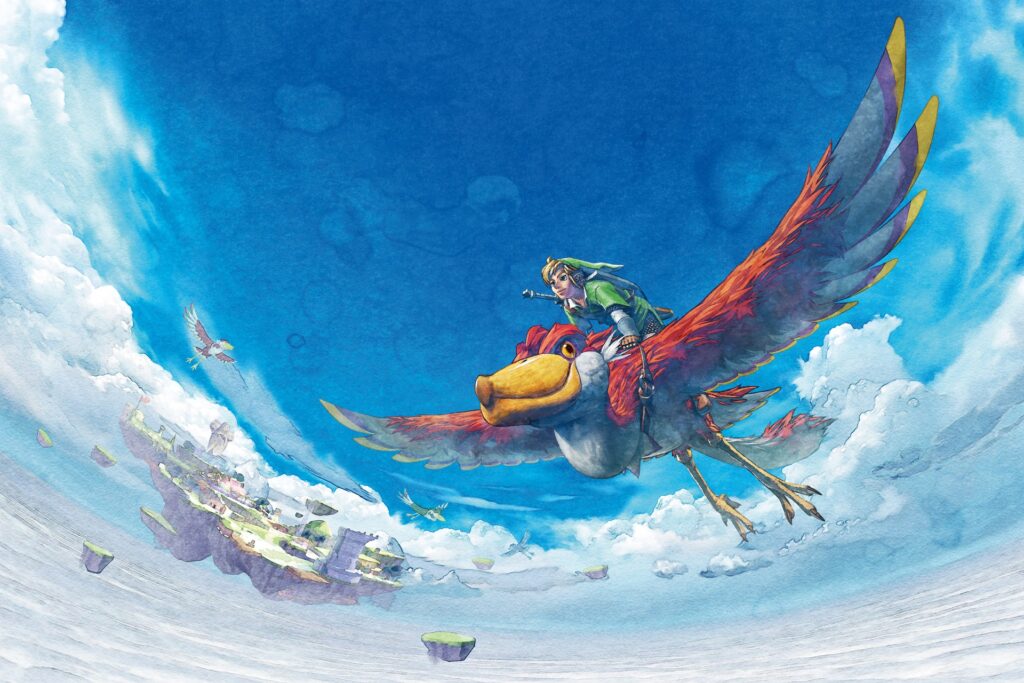
At a glance — Game: The Legend of Zelda: Skyward Sword · Developer: Nintendo EAD · Publisher: Nintendo · Original release: November 18, 2011 (Europe); November 20, 2011 (North America) · Original platforms: Wii · Genre: Action-adventure
Fifteen years ago, Nintendo asked Zelda players to do something no Zelda game had ever asked of them: stand up and fence. Not waggle, not shake — fence. Read a skeleton’s guard, pick your angle, and swing your whole arm the way you wanted Link’s sword to travel. Skyward Sword was the Wii’s last great first-party epic and its most argued-over Zelda, a game that arrived to perfect scores and spent the next decade and a half being re-argued by everyone who played it. At 15, the argument has settled into something simpler. This was the bravest Zelda Nintendo ever shipped — and the one that quietly wrote the series’ entire mythology.
Skyward Sword and the One-to-One Swordplay Bet
Development began in 2006, straight after Twilight Princess, and ran for roughly five years under producer Eiji Aonuma and director Hidemaro Fujibayashi — the handheld Zelda veteran making his first home-console game, with support from Monolith Soft’s Kyoto studio. The starting problem was controls. Twilight Princess on Wii had bolted motion onto a GameCube game; this time the team wanted a Zelda that could only exist on its console. Fujibayashi proposed building everything around Wii MotionPlus, the gyroscopic add-on that could track a Remote’s true angle, and Aonuma was enthusiastic enough to restart the design around it.
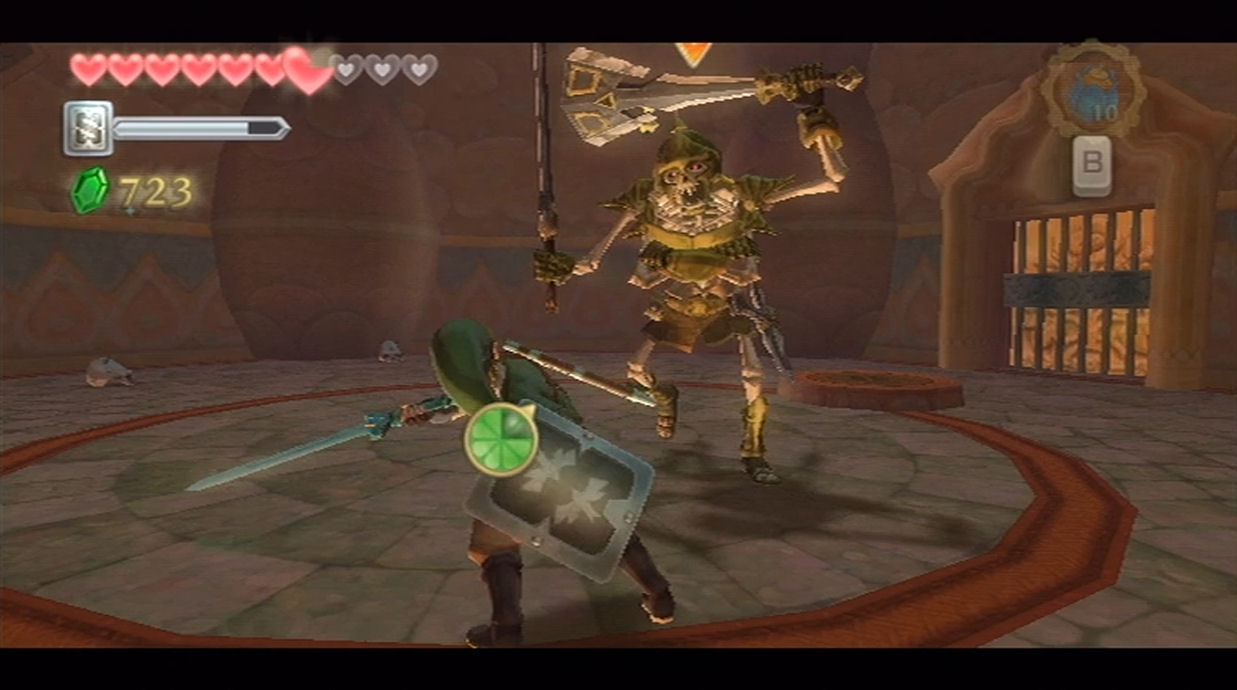
It nearly killed the game. The team struggled for months to make MotionPlus behave — Aonuma later admitted he seriously considered dropping it entirely — until Wii Sports Resort arrived in 2009 and its team showed how its swordplay technology could be borrowed and made reliable. What shipped in 2011 was the full realization of the Wii’s original promise: your swing direction is Link’s swing direction. Horizontal, vertical, diagonal, a thrust — enemies were rebuilt as puzzles with elbows, holding their weapons and shields to block the obvious line and punish flailing. A Stalfos is not a health bar; it is a lock, and your arm is the key. The Skyward Strike, charged by raising the sword to the sky, gave the game its name. Around the sword, everything else bent to motion too — the Nunchuk raised as a shield, the Remote rolled to fly, tilted to swim, flicked to loose an arrow.
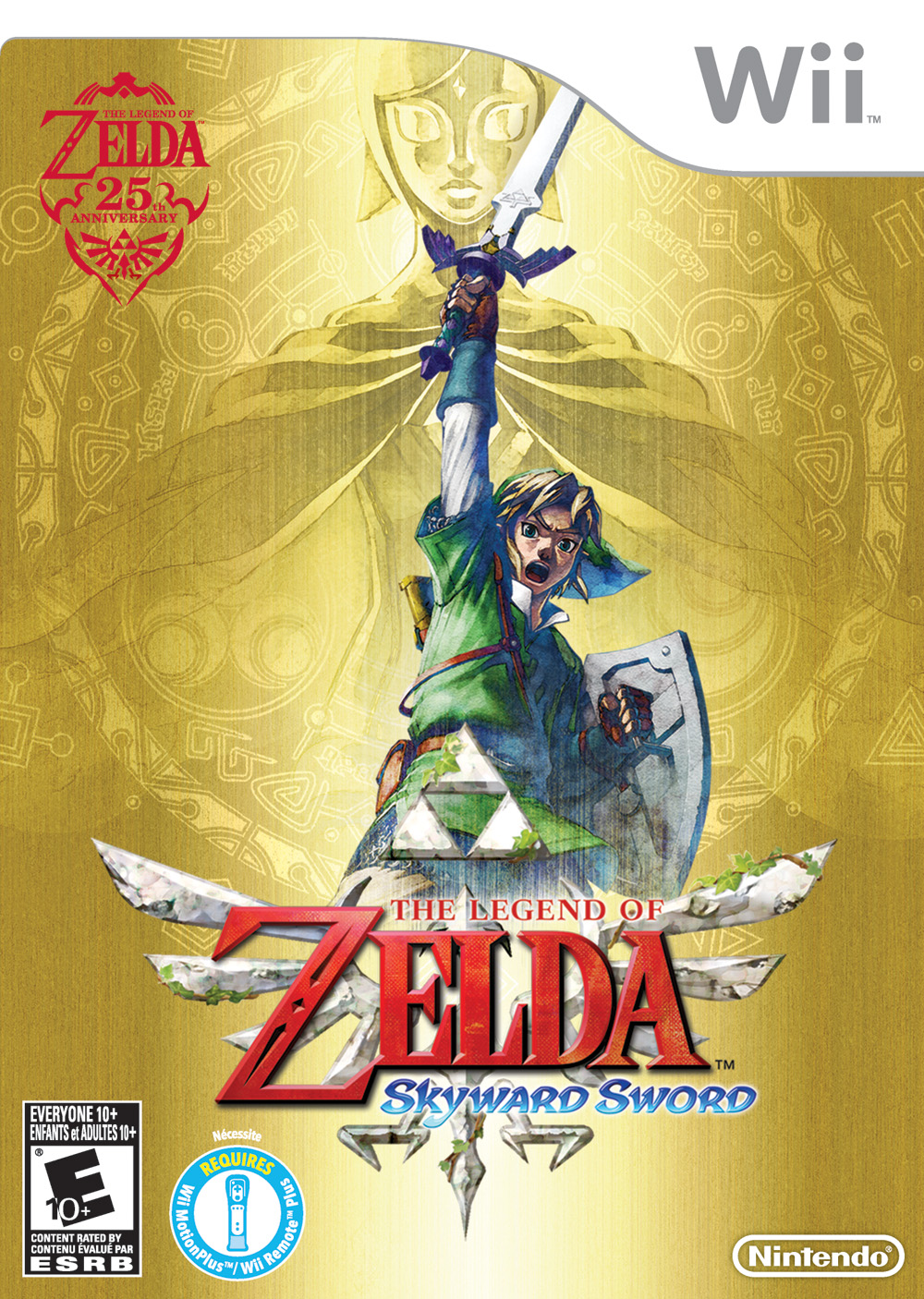
The bet had a cost, and players felt it immediately. MotionPlus was mandatory — a Wii Remote Plus or the snap-on accessory, no exceptions — and when the tracking drifted mid-duel, the spell broke. But when it held, nothing on any console felt like it. Nintendo also dressed the gamble properly: a limited edition bundled a gold Wii Remote Plus bearing the Hylian crest, and early copies carried a CD of the 25th Anniversary Symphony — fitting, because this was also the first Zelda scored with a live orchestra for the majority of its music, led by Hajime Wakai under Koji Kondo’s supervision. The main theme, “Ballad of the Goddess,” hides the series in plain sight: it is “Zelda’s Lullaby” played backwards.
A Village in the Clouds, a World in Three Pieces
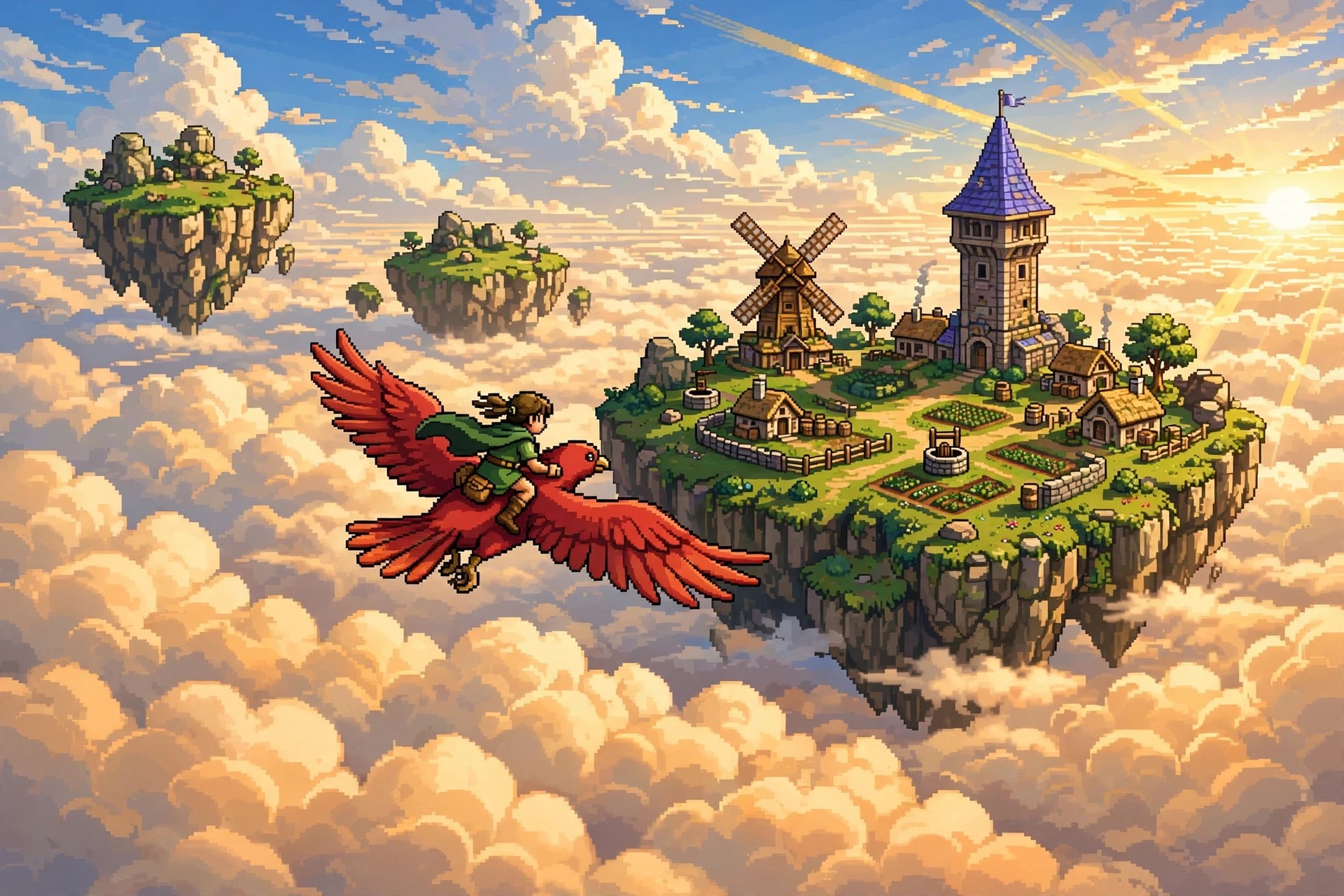
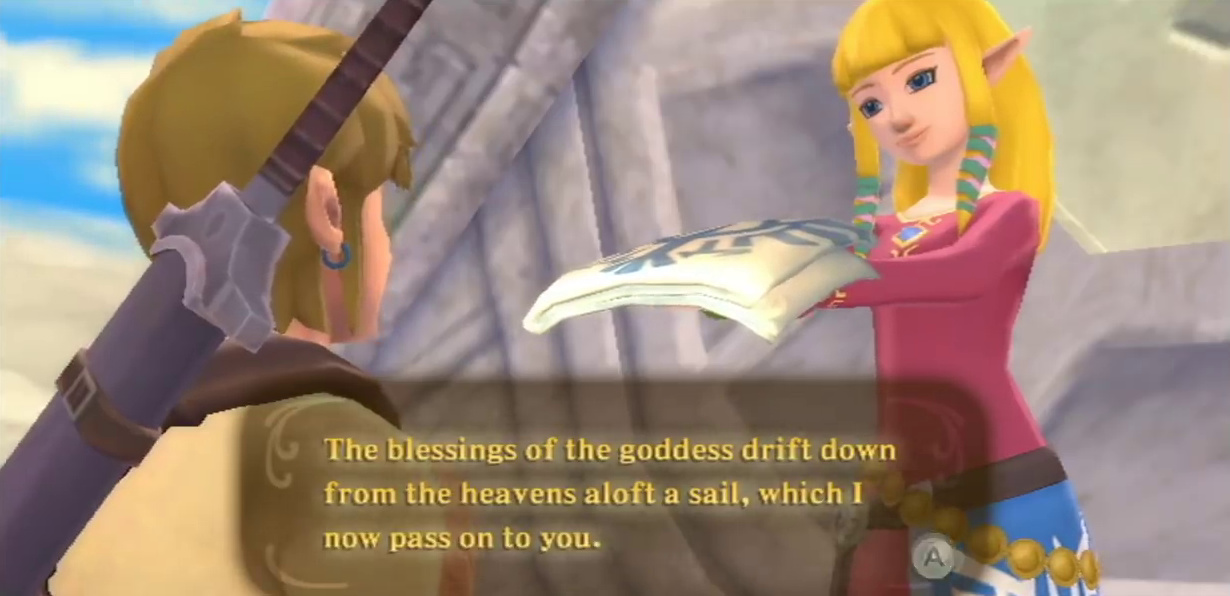
The structure was as radical as the controls. Instead of one sprawling Hyrule, Skyward Sword split its world in two. Above the cloud barrier sits Skyloft, a floating village of knights-in-training, bazaars and pumpkin soup, where Link begins the game not as a chosen hero but as a sleepy student oversleeping his final exam. His Zelda — and the game makes the change matter — is no princess. She is the headmaster’s daughter and Link’s childhood friend, close enough that the team built the whole rescue plot on the player actually caring, and the opening hours play like a school story before a dark tornado tears her out of the sky.
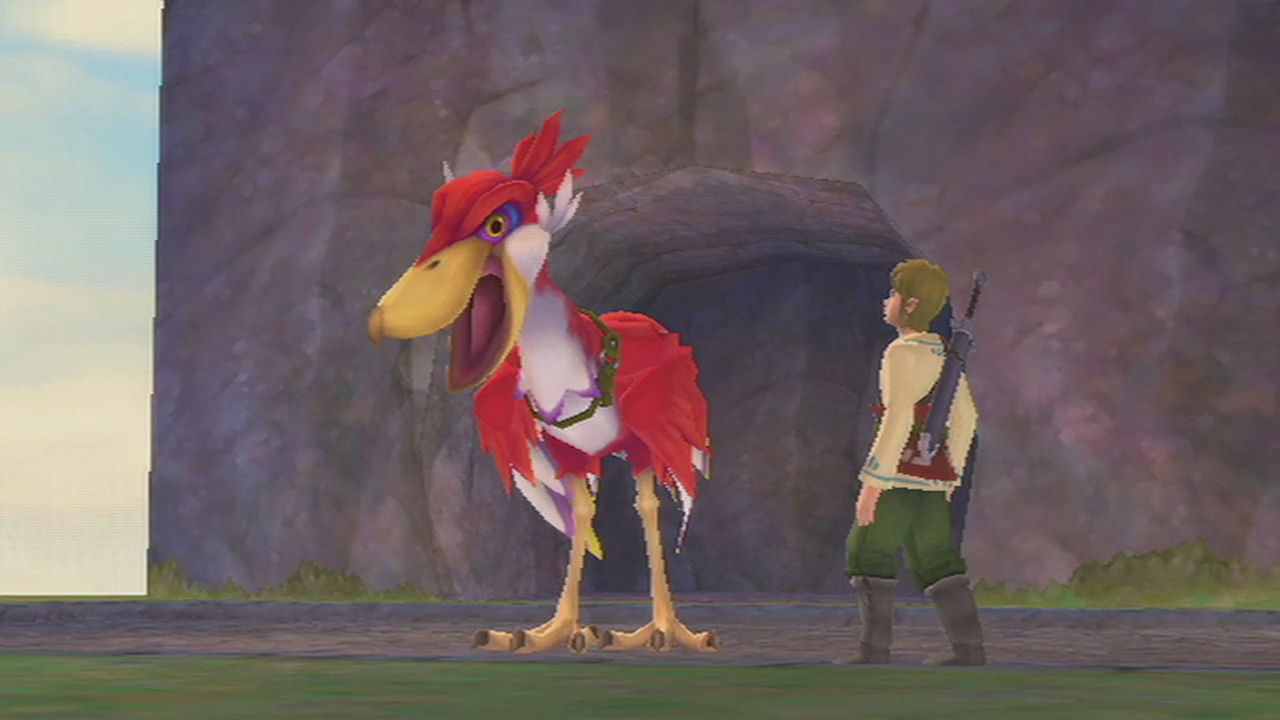
Travel belongs to the Loftwings, the great shoebill-like birds every Skyloftian bonds with for life. Link’s crimson bird was a breed thought extinct, and flight — diving off any ledge, whistling, and being caught in freefall — remains one of the series’ purest joys. Below the clouds, the Surface is deliberately compact: three great regions, Faron Woods, Eldin Volcano and the Lanayru Desert, revisited again and again as they change state and open new layers. The team had decided Twilight Princess‘s fields were too big and too empty; here the overworld itself is built like a dungeon, dense with puzzles before you ever reach a temple door. The painterly art style carries it — an impressionist wash, inspired in part by Cézanne, that sits between Twilight Princess‘s realism and the cel-shading we praised in our Wind Waker review, and which conveniently forgives the Wii’s standard-definition limits by turning distance into watercolor.
The smaller systems reward the same philosophy. A stamina meter governs sprinting, climbing and spin attacks, draining and refilling in seconds and quietly retiring the roll-spam of earlier games. The Beetle — a flying mechanical scout you steer by tilting the Remote — replaces the boomerang and turns scouting into a small pleasure of its own, while Dowsing turns the sword itself into a metal detector, pointed in first person toward whatever you are hunting. In a series first, shields take damage and can shatter outright if you block sloppily instead of parrying, and nearly every item can be upgraded at Skyloft’s scrap shop with monster parts and treasures gathered on the surface — an early, modest version of the crafting instincts the series would later run wild with.
The Imprisoned, the Silent Realms, and the Fights People Still Argue About
No retrospective gets far without the two recurring appointments that split the fanbase. The Imprisoned — the monstrous, toe-nailed form of the Demon King Demise, sealed beneath the Sealed Grounds — breaks free three times, and each time Link slides down the great spiral pit to reseal it, whacking toes, riding air vents onto its back, and eventually getting comic relief in the form of Groose, the game’s pompous rival, who matures across the story from bully to engineer of the Groosenator, a rail-mounted catapult built purely to help. The fights are spectacle and ritual, but by the third ascent the ritual feels like repetition — the clearest symptom of the game’s love of sending you back through beloved places once too often.
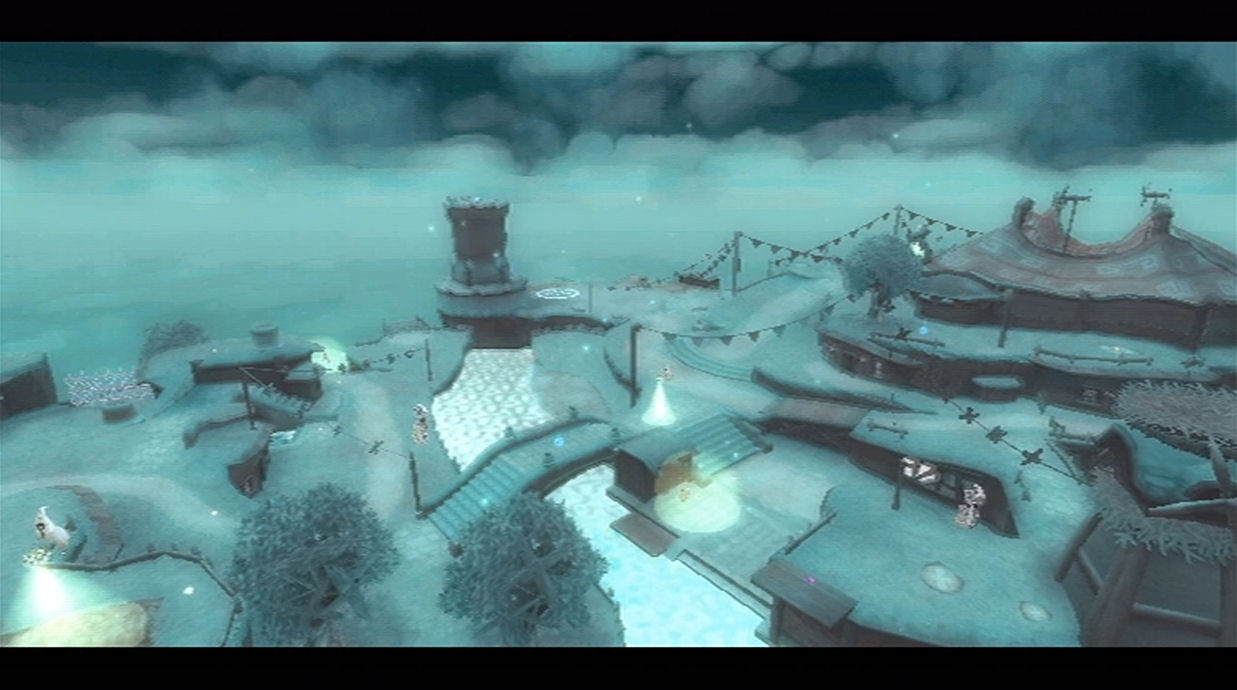
The Silent Realms are the braver idea. In each region, and finally in Skyloft itself, Link enters a spirit world stripped of sword and items, gathering Sacred Tears while indestructible Guardians patrol — one touch or one step outside the light, and they wake. The team had experimented with undefeatable enemies in the DS games, but here, with your weapons gone and only sprint stamina between you and failure, familiar ground turns genuinely frightening. Fifteen years on, the Realms have aged the best of the game’s experiments: they are stealth, memory test and panic attack in one, and their ethereal blue Skyloft is still one of the Wii’s most beautiful images.
The First Story Zelda Ever Told
Underneath the experiments sits the game’s most permanent contribution. Because the theme was the sword, the team chose to tell the origin of the Master Sword — and that decision pulled the whole series’ mythology in behind it. The Goddess Sword Link draws in Skyloft, guided by its spirit Fi, is tempered in three Sacred Flames into the Master Sword itself. Zelda is revealed as the mortal reincarnation of the goddess Hylia, who raised Skyloft into the sky to protect her people from Demise. And when Link destroys Demise, the dying Demon King curses their bloodlines to be haunted forever by an incarnation of his hatred — the story’s explanation, at last, for why a Link, a Zelda and a Ganon keep meeting across millennia. Skyward Sword was placed at the very head of the official Zelda timeline: every game you have ever played in this series happens after this one.
Fi herself became the argument in miniature. Designed from the Master Sword’s own silhouette, she speaks in probabilities and percentages, and her interruptions — batteries, hearts, hints you did not ask for — were the single most-cited irritation in 2011. Yet her farewell, accepting eternal sleep inside the sword as Link drives it into its pedestal, lands as one of the series’ most quietly devastating goodbyes. The game around her reviewed like a masterpiece and argued like a disappointment, sometimes in the same review: a Metacritic score of 93, perfect marks from IGN, Eurogamer, Edge, Game Informer and a 40/40 from Famitsu, one famous 7.5 dissenting — and 3.52 million copies sold by March 2012, at the time the fastest-selling Zelda ever in America.
What Skyward Sword HD Fixed — and What It Couldn’t
A decade later, Nintendo handed the game to Tantalus Media for Skyward Sword HD on Switch, released July 16, 2021. The remaster is best understood as a list of apologies, precisely targeted. Motion controls remain for those who want them, but a full button scheme maps the sword to the right stick, finally making the game playable in handheld mode. Fi’s guidance became largely optional. Dialogue and cutscenes can be skipped, item descriptions stopped repeating, autosave arrived, the picture sharpened to HD at 60 frames per second, and a Zelda & Loftwing amiibo offered fast travel between sky and surface. Players responded — the remaster sold over four million copies, more than the Wii original’s lifetime total — and if you want the original hardware experience instead, our Wii in 2026 setup and buying guide covers what a MotionPlus-ready Wii costs today.
What HD could not fix is the thing that makes the original worth revisiting: its shape. The linearity, the revisited regions, the long tutorial morning in Skyloft — these were not bugs but the design, a deliberate reaction against empty open worlds that the series then reacted against in turn. Aonuma has said his wish for the next console Zelda was to “expand and make a better Skyward Sword,” and Breath of the Wild‘s freedom is this game’s direct descendant — as are the floating islands its sequel scattered above Hyrule, an idea the Wii’s hardware could only gesture at. Skyward Sword is the hinge of the whole series: the last of the old Zeldas, the first story in its timeline, and the argument that made the modern ones possible. Fifteen years on, it deserves to be played standing up, arm raised — the way it always asked.
— Chip
For more launches from this date, see This Day in Gaming History: November 18.