
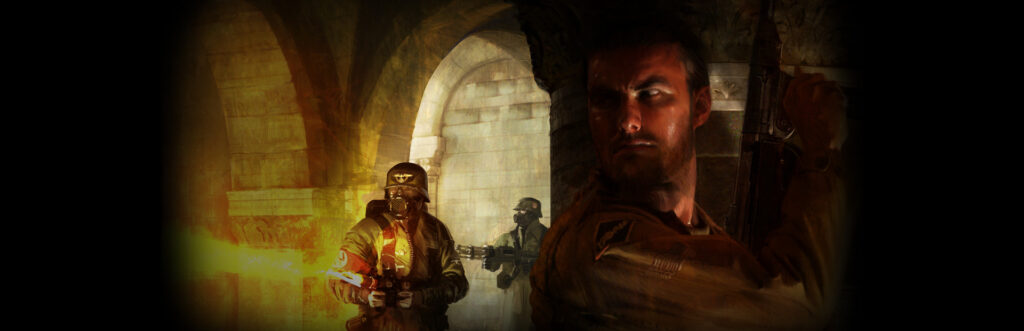
At a glance — Game: Return to Castle Wolfenstein · Developer: Gray Matter Studios (multiplayer by Nerve Software) · Publisher: Activision · Original release: November 19, 2001 (North America) · Original platforms: PC (Windows) · Genre: First-person shooter · Music: Bill Brown
Twenty-five years ago today, on November 19, 2001, B.J. Blazkowicz came back. Wolfenstein 3D was nine years old, the first-person shooter had grown up around it, and id Software handed its founding hero to a young studio called Gray Matter — a team formed from the makers of Kingpin — with a simple, wonderful brief: World War II, plus everything the history books left out. What came back was Return to Castle Wolfenstein, a game that is really two games wearing one uniform. The first is a superb soldier’s shooter, all snow and stone and stolen documents. The second is a pulp horror story about an SS division digging up things that should have stayed buried. A quarter-century on, it is still the rare sequel that honors its ancestor — the series started even earlier, with Muse Software’s 1981 stealth game Castle Wolfenstein — while inventing a second life for itself that nobody, least of all its makers, saw coming.
The setup is pure Saturday-matinee. It is 1943, and the Allies’ Office of Secret Actions sends two men to Egypt: American ranger William “B.J.” Blazkowicz and a British operative known only as Agent One. The SS Paranormal Division is digging there, and the dig has already gone wrong in the way these digs do — the dead have not stayed dead. The pair survive Egypt, get shot down over Germany, and wake up in the last place either of them wanted to see: the dungeons of Castle Wolfenstein itself. If that name means something to you, it should. We have been escaping that castle, in one form or another, since Wolfenstein 3D taught a generation to mash the spacebar against every wall.
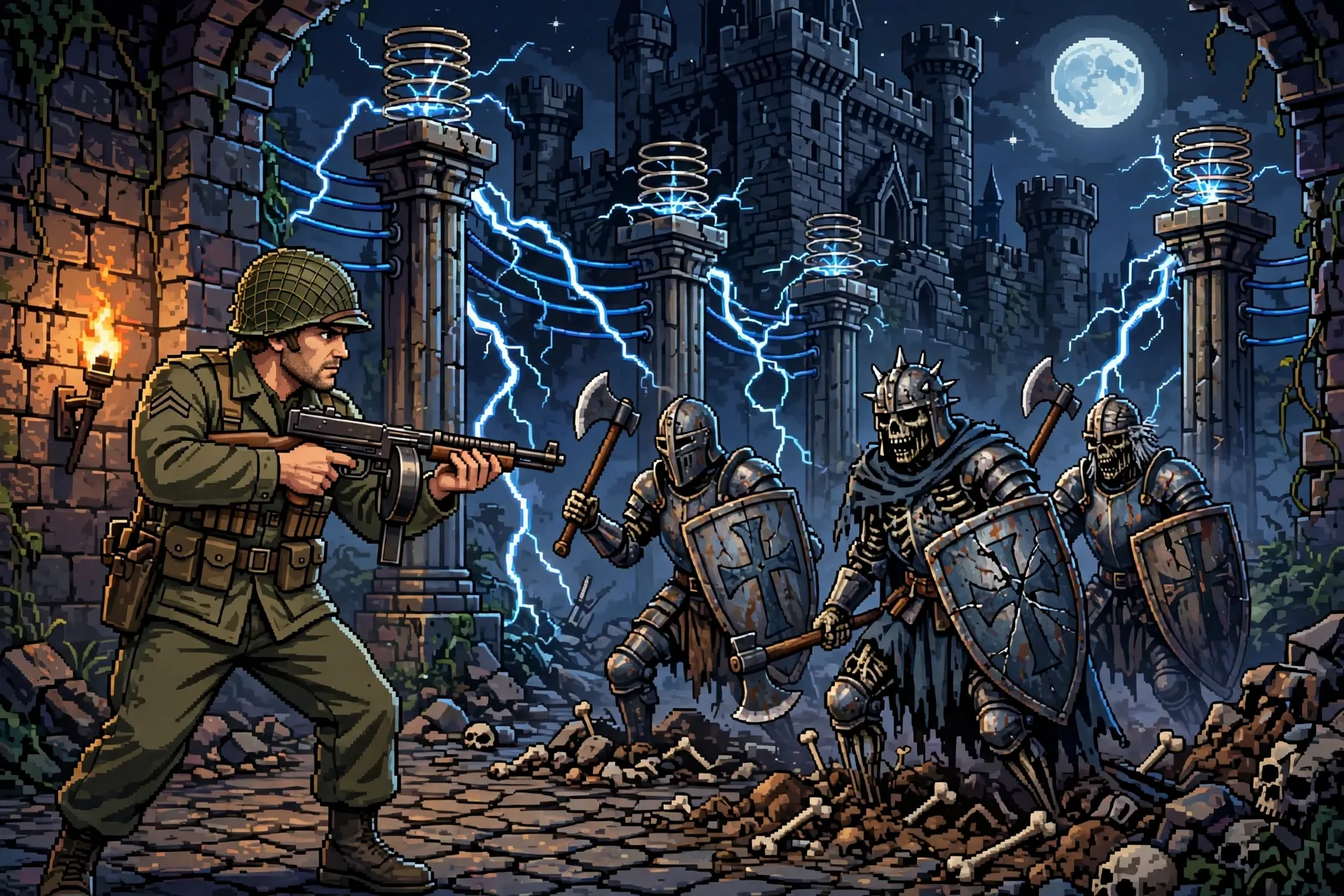
The Castle, the Crypts and the Long Way Out
The campaign — twenty-seven levels across seven missions — is structured like a slow descent. It opens as a prison break: Agent One is tortured to death in the castle’s depths, and B.J. fights his way up and out alone, escaping by cable car in a sequence the developers cheerfully modeled on the 1968 film Where Eagles Dare. From there the trail leads down again, into the catacombs beneath the village of Wulfburg, where SS officer Helga von Bülow is excavating the tomb of a Dark Knight of the old Reich. Her scientist, Professor Zemph, has built a device to extract “life essence” from the undead, and the mission ends in a defiled church with an ancient dagger, a traitorous spirit named Olaric, and the first real hint that the war underground is much older than the one above it.
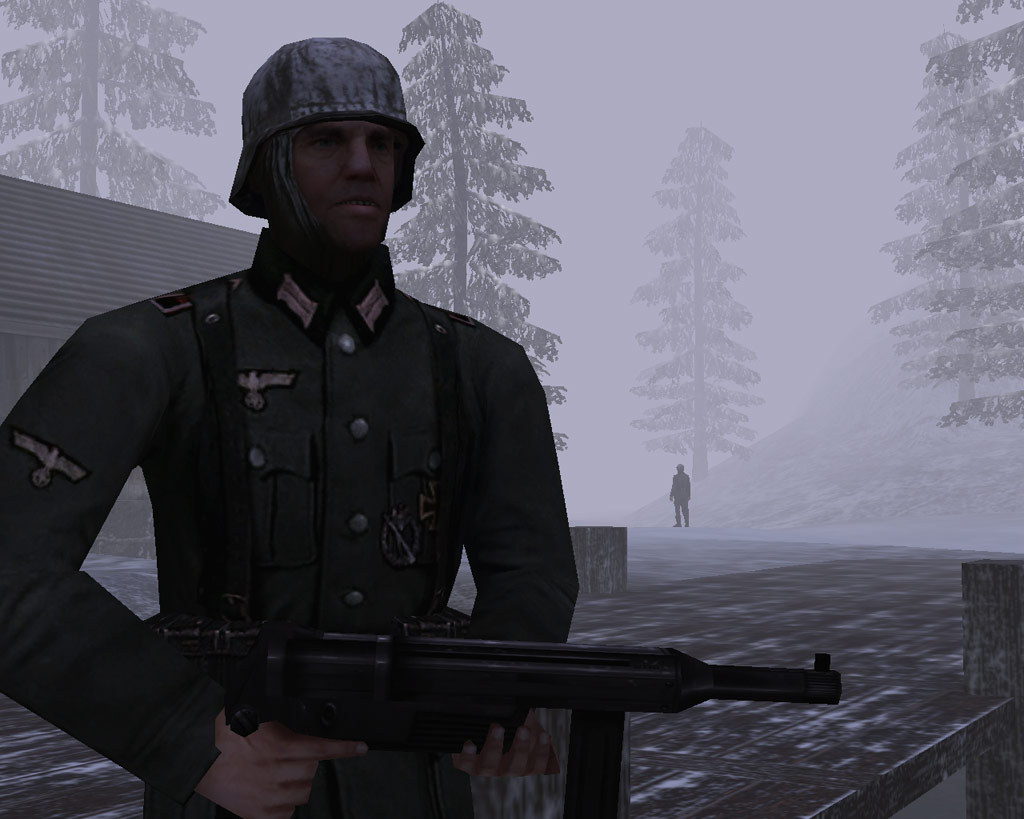
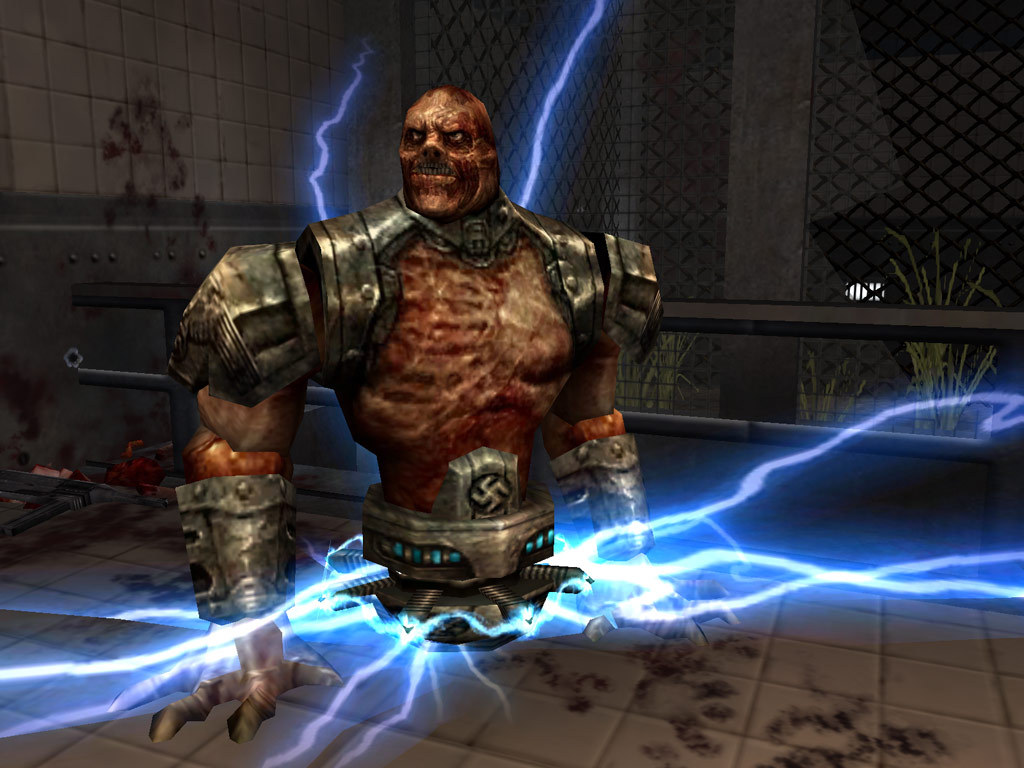
Then the game changes its mind, in the best way. The second front belongs to Wilhelm “Deathshead” Strasse, an SS Oberführer building a V-2 rocket with an experimental biological warhead, aimed at London. B.J. fights through the ruins of Kugelstadt alongside the Kreisau Circle resistance, raids a secret weapons facility, and ends up in the X-Labs in occupied Norway, where Deathshead’s real work waits: the Lopers, legless horrors crackling with electricity, and the Übersoldat, a super-soldier in powered armor. The finale returns to Castle Schufstaffel for Operation Resurrection, Himmler’s thousand-year plan to resurrect Heinrich I, a Saxon warlock-king dead since the tenth century. It very nearly works.
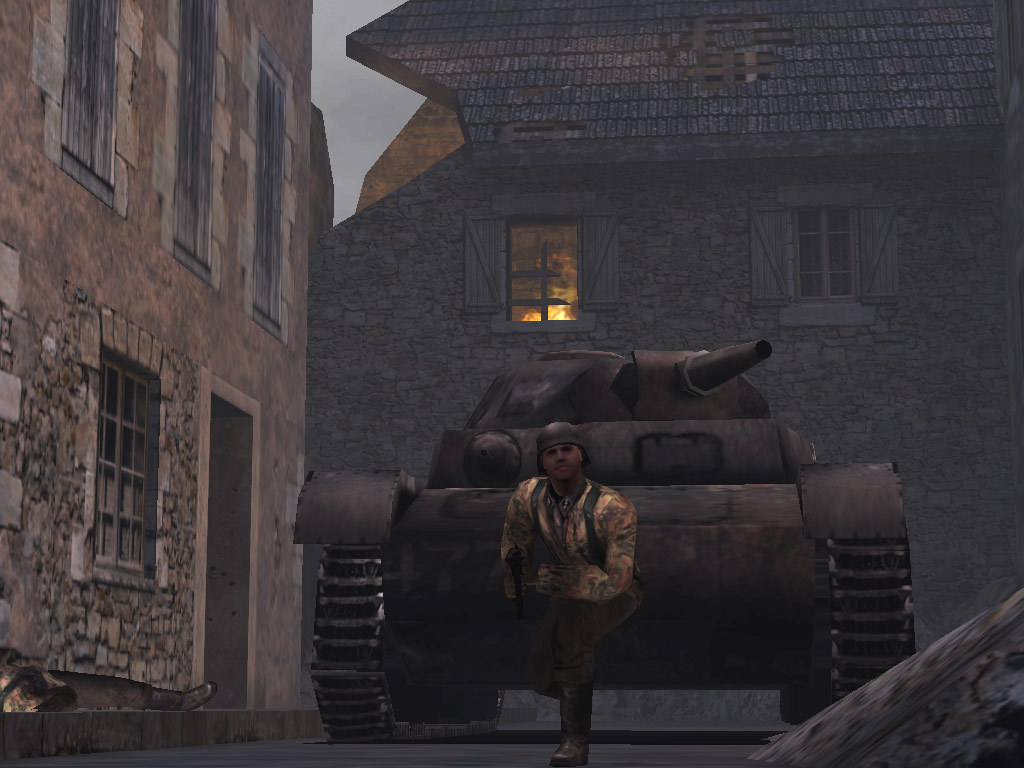
What makes it hold together is the variety Gray Matter wrings from the formula. Some missions are loud. Some are stealth exercises where an alarm box, once tripped, ends everything, and you learn to move like a rumor. The arsenal mixes the authentic — the Thompson, the MP40, the Mauser — with the experimental: the Venom, a handheld minigun that chews through ammunition and enemies alike, a Tesla gun, a flamethrower, the Panzerfaust. Health comes from first-aid kits and hot meals scavenged off officers’ tables, which remains, twenty-five years later, the most honest healing mechanic in the genre.
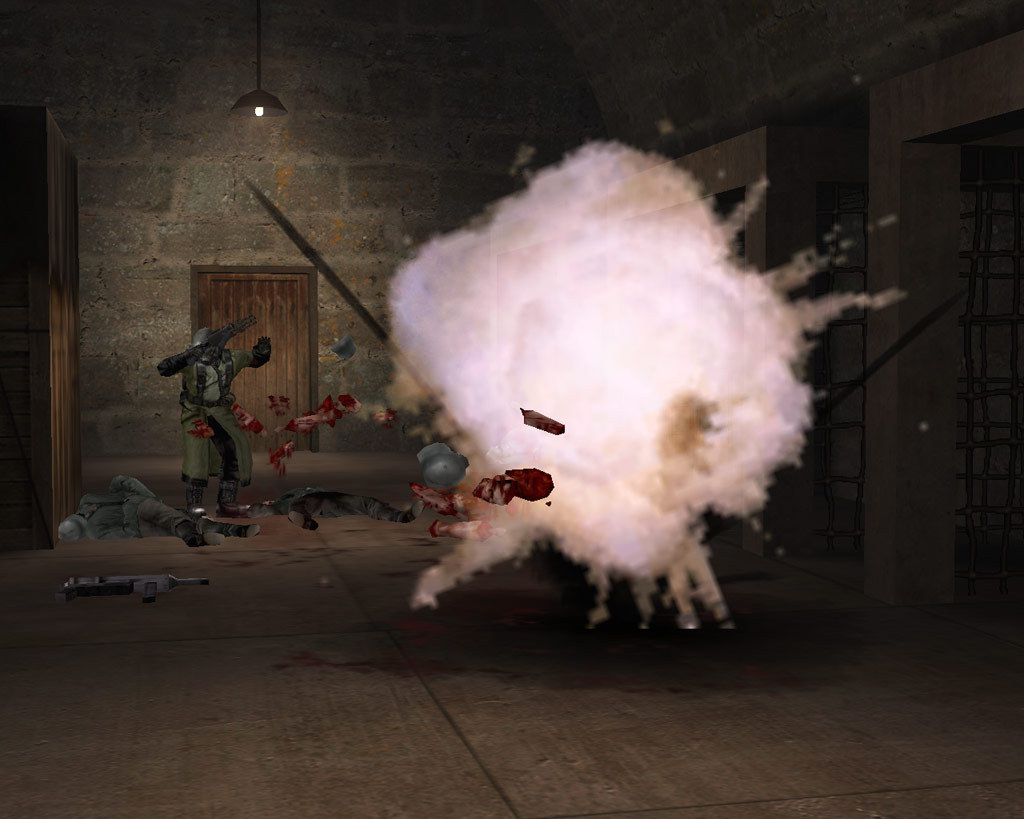
Return to Castle Wolfenstein’s Other War: Science Versus Sorcery
Creative director Drew Markham described the pitch as “World War 2 meets The X-Files,” and the game wears that line proudly. The supernatural material was not decoration; it grew out of the real obsessions of Heinrich Himmler, whose fixation on the castle at Wewelsburg and the mythology of Heinrich I gave the fiction its unnerving plausibility. Gray Matter’s artists photographed European castles and countryside for textures, and the score — Bill Brown’s big orchestral work, modeled on the war films of the late fifties and sixties — plays it all completely straight, even when a gramophone in a guard room is playing Beethoven’s Für Elise while the dead walk downstairs.
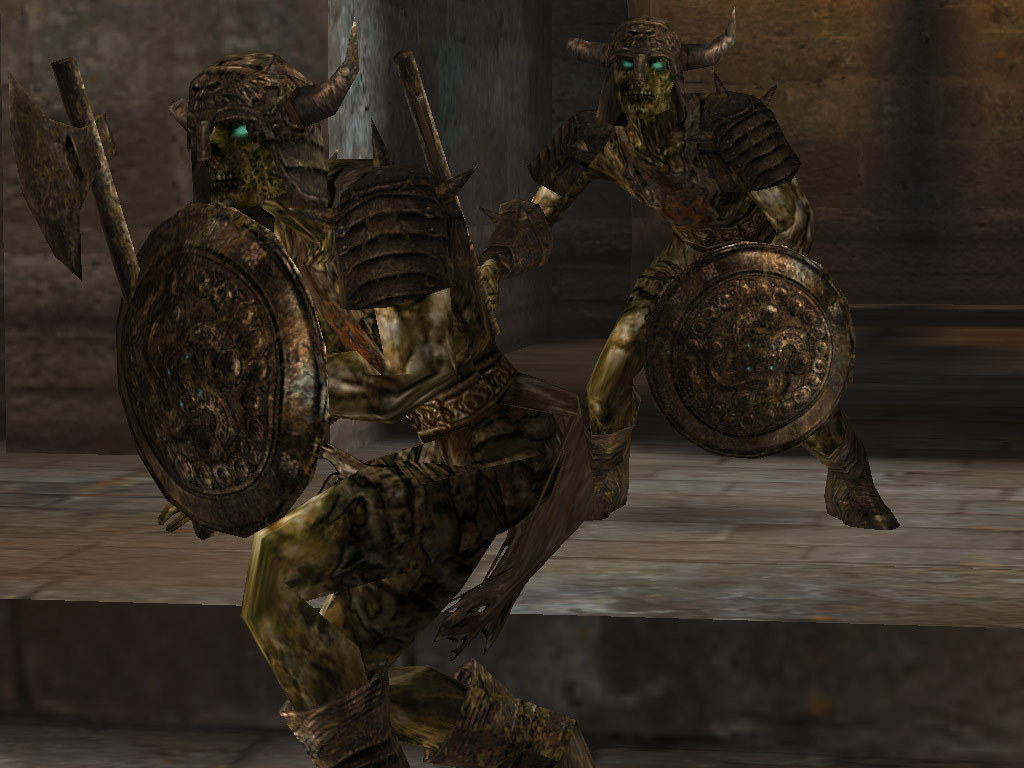
Underneath sits a heavily modified Quake III: Team Arena engine — id Tech 3 — stretched to build the big outdoor spaces the series had never had: forests, a rocket base, a Norwegian fjord-side lab, a dam. In 2001 those vistas were the flex, and they still read beautifully. The engine matters to the story, too, because of what it made possible for the game’s other half.
The Beach: Where the Multiplayer Went to War
Gray Matter built the campaign; the multiplayer came from Nerve Software, and it is not an exaggeration to say it changed what a shooter could ask of its players. Axis fought Allies across objective-based maps in three modes — Objective, Stopwatch and Checkpoint — with four classes whose jobs genuinely interlocked. Soldiers carried the heavy weapons. Medics revived and healed. Engineers planted the dynamite that opened the way. Lieutenants handed out ammunition and called in airstrikes. Reinforcements arrived in waves on a thirty-second timer, which turned every death into a small strategic calculation: wait for the wave, or watch your team lose the wall.
And then there was the Beach. The map from the free multiplayer test that autumn — Beach Invasion — sent the Allies over a sea wall, through the trenches and into the bunker to steal the war documents and carry them to the transmitter room, while the Axis tried to hold the line for the clock. Some of us basically lived on that beach for two months before the full game even shipped. The critics noticed, too: PC Gamer named it the Best Multiplayer Game of 2001, and it took home an Interactive Achievement Award for Online Gameplay. Class-based, objective-driven team play did not begin here, but this is where a generation of PC players learned its grammar.
Enemy Territory: The Expansion That Became a Gift
The strangest chapter came after. Activision planned a full retail expansion: a new single-player campaign from Mad Doc Software, and a multiplayer side from Splash Damage, a young London studio that had contributed maps to the Game of the Year edition. In February 2003, id announced the single-player half was cancelled — it “did not progress as anticipated,” in the company’s careful phrasing. What happened next almost never happens. Rather than shelve the finished multiplayer, Activision and id released Splash Damage’s work in May 2003 as Wolfenstein: Enemy Territory — complete, standalone, and free. Not a demo. Not shareware. The whole game, given away.
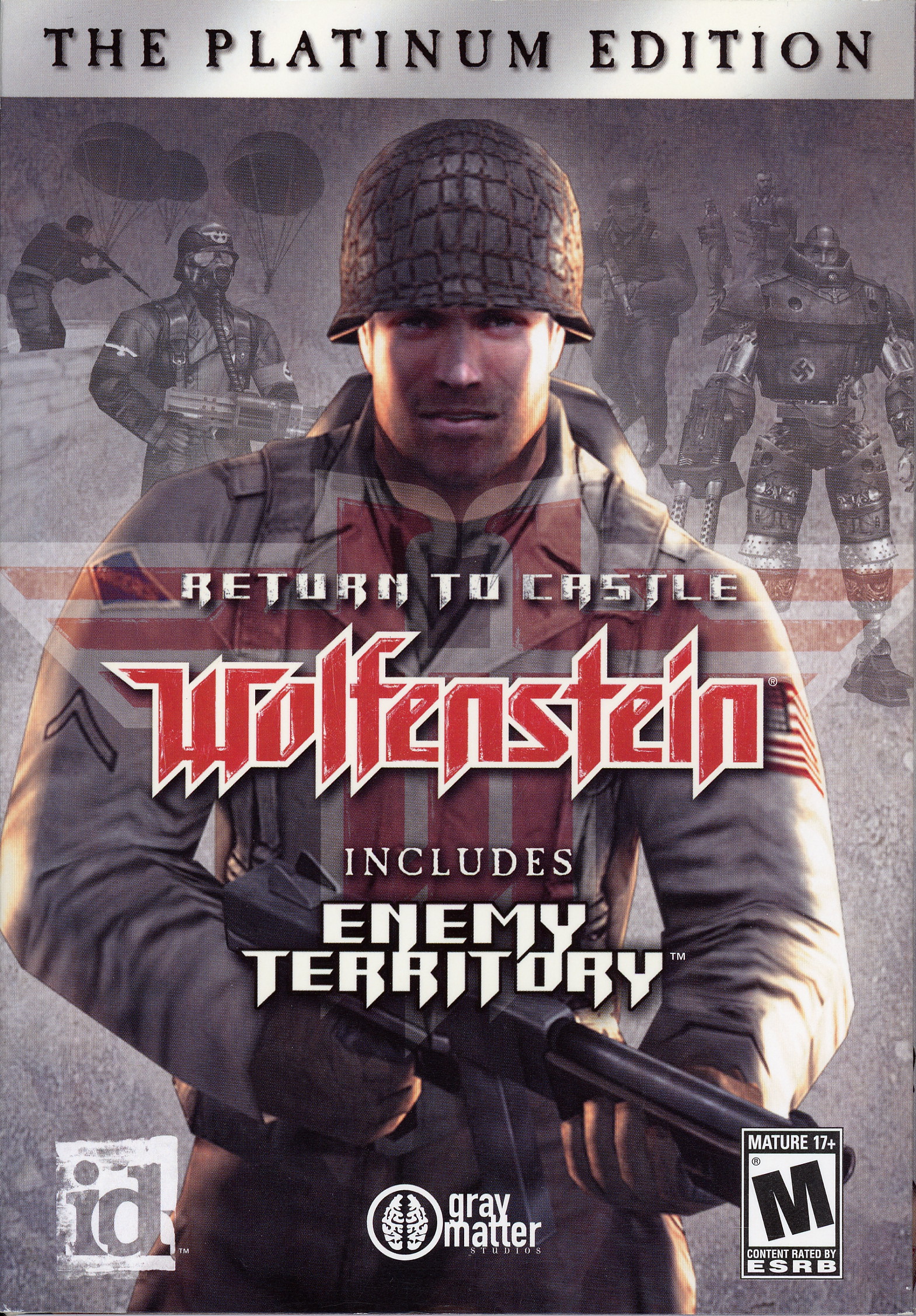
It was a gift that kept giving for a decade — a thriving server scene, a mod community, and a whole studio’s career launched. A fan team later even rebuilt the cancelled single-player campaign as a free mod, closing a loop that had been open for nearly twenty years. The Platinum Edition box above tells the story in one image: the giveaway had become the headline.
Twenty-Five Years On
The game was a hit in its day — an 88 on Metacritic, a 9.2 from GameSpot, a 9 from IGN, more than a million copies shipped by January 2002 and two million by January 2004 — even if a few critics sniffed that its story was clichéd and its ideas less revolutionary than Wolfenstein 3D‘s had been. Fair enough, as far as it goes. But revolutions are not the only thing a series needs. Sometimes it needs a foundation, and Return to Castle Wolfenstein poured one: the console ports of 2003 (the Xbox version even added a two-player co-op campaign played as Agent One), a sequel in 2009, and eventually MachineGames’ reboot — where Deathshead, who slips away from B.J. twice in this game, returned as the villain of The New Order. The castle’s ghosts turned out to have long memories.
Best of all, the game itself never went away. id released the source code under the GPL in August 2010, and the community has kept the faith ever since — source ports, an active Enemy Territory scene, and RealRTCW, the fan overhaul that brought the campaign to Steam in 2020 with modern resolutions and reworked gunplay. It costs a few dollars on Steam and GOG today, runs on anything, and remains, at twenty-five, exactly what it was in 2001: a cracking shooter with a haunted heart. The gramophone is still playing. The cable car is still waiting. Some of us never really left the castle.
— Sal
For more launches from this date, see This Day in Gaming History: November 19.