
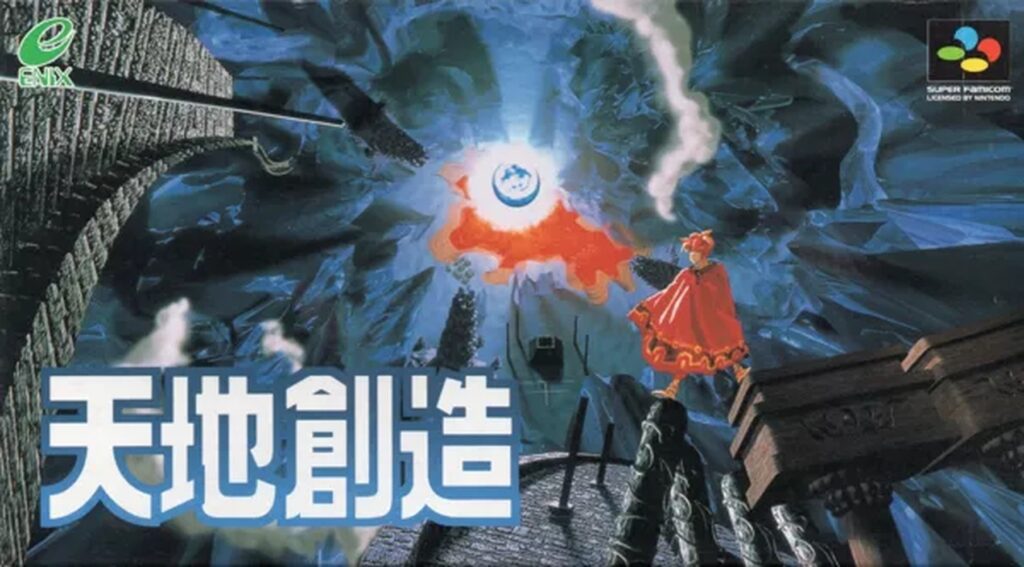
There is a particular kind of heartbreak only retro gamers of a certain age will recognise: reading about a game in a magazine — a full page of screenshots, a writer in another country telling you it might be the best thing on the machine you own — and knowing you are never going to play it. Not because you cannot afford it. Because it is simply never coming to where you live.
That was Terranigma for me. I had the Super Nintendo. I had the hunger. I had played Soul Blazer until the cartridge felt like part of the furniture, and Illusion of Gaia had left marks on me that games were not supposed to leave at that age. The third one — the biggest one, by every account drifting across the Atlantic — was a rumour with box art. For thirty years, that is mostly what it stayed. So before we talk about scores and systems, understand what this piece is: it is a love letter that took three decades to deliver, to a game America was never sent.
At a glance — Developer: Quintet · Publisher: Enix · Release: October 20, 1995 (Japan) / December 19, 1996 (Europe) · Genre: Action-RPG · Platform: SNES
The Quintet line, and the story Terranigma chose to tell
Quintet arrived at Terranigma with a theme already in its bones. This was the studio behind ActRaiser and Soul Blazer, games about creation — about a world that is broken, emptied or sleeping, and a hero whose job is not really to destroy something but to put life back where life had been taken away. Soul Blazer arrived in 1992, Illusion of Gaia followed in 1993, and together they form what fans call an unofficial trilogy. They are not sequels in the ordinary sense. They share a feeling: melancholy underneath the adventure, and a belief that rebuilding is a more interesting heroic act than conquering.
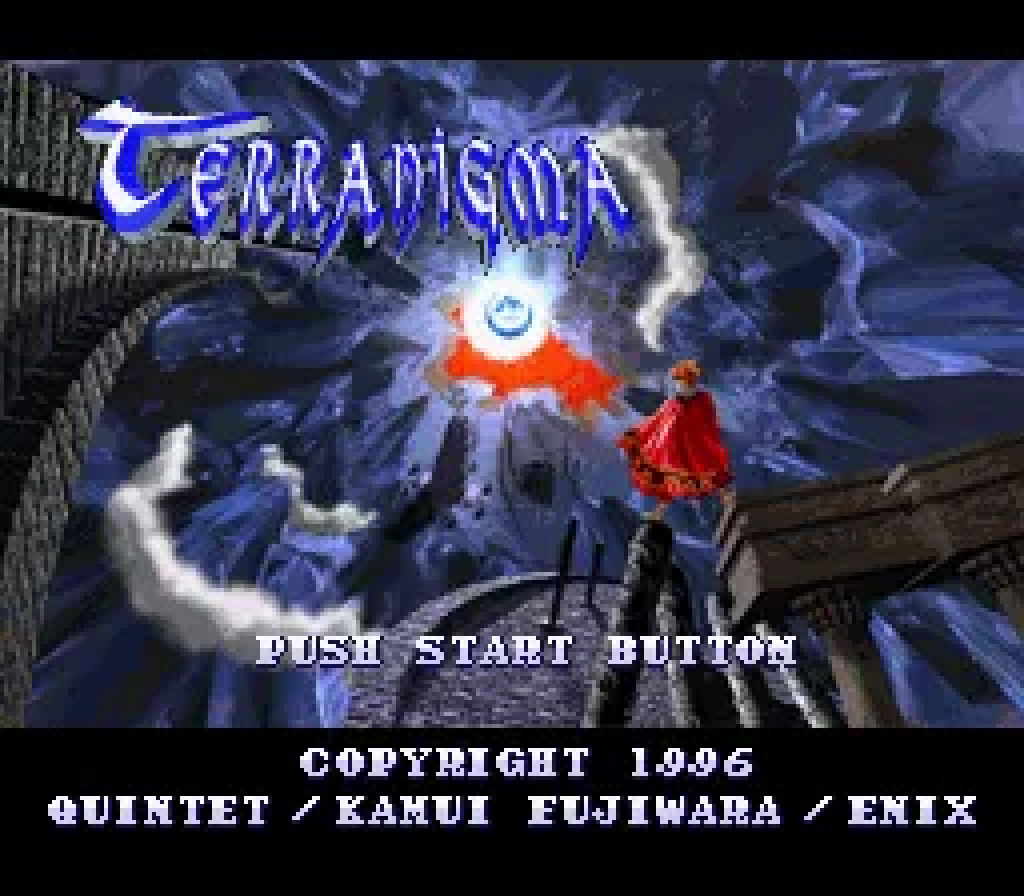
Terranigma — Tenchi Sōzō in Japan, a title usually rendered as “The Creation of Heaven and Earth” — takes that creation theme and gives it the largest canvas Quintet ever worked on: the whole history of a planet. You play Ark, a mischievous boy in Crysta, the only village in an underworld of crystal mountains and rivers of magma, sealed inside a hollow Earth whose sunlit surface — the Lightside — was emptied by an ancient war between the forces humans came to call God and Devil. Ark does the thing boys in stories must never do. He opens a forbidden door, touches a mysterious box, meets the cheerful little demon Yomi who lives inside it, and wakes to find everyone he loves frozen solid.
The only way back is forward. The village Elder sends Ark out of Crysta — the first person ever to leave it — to conquer the trials of five towers, each one standing for a continent of the dead surface world. Clear them, and the mainland of the Earth rises again. And that, astonishingly, is only the first chapter. From there the game becomes a resurrection conducted one layer of life at a time: Ark frees the great tree Ra and brings back the plants, then restores the birds and the wind, then the animals, then — last and most complicated — humanity itself. Later he walks among the humans he revived, nudging their towns along, watching inventions and ambitions arrive together. It is an RPG in which your quest log is, quite literally, the evolution of life and the growth of civilisation, and in which the boy doing the resurrecting slowly learns that his mission was never as clean, or as kindly meant, as the voice that sent him made it sound.
I will not spoil the ending here, even after thirty years, because some of you are about to play this for the first time and you have waited long enough to deserve it whole. I will say only this: I have finished a great many RPGs since the 1990s, and I can count on one hand the endings that stayed in the room after I switched the machine off. This one never left. Character designer Kamui Fujiwara, a manga artist, gives the cast a warmth that the little sprites somehow manage to keep, and director and designer Tomoyoshi Miyazaki — who also wrote the script, from a scenario by Reiko Takebayashi — trusts silence and small moments in a way that games of the era, rushing to fill every screen with incident, rarely did.
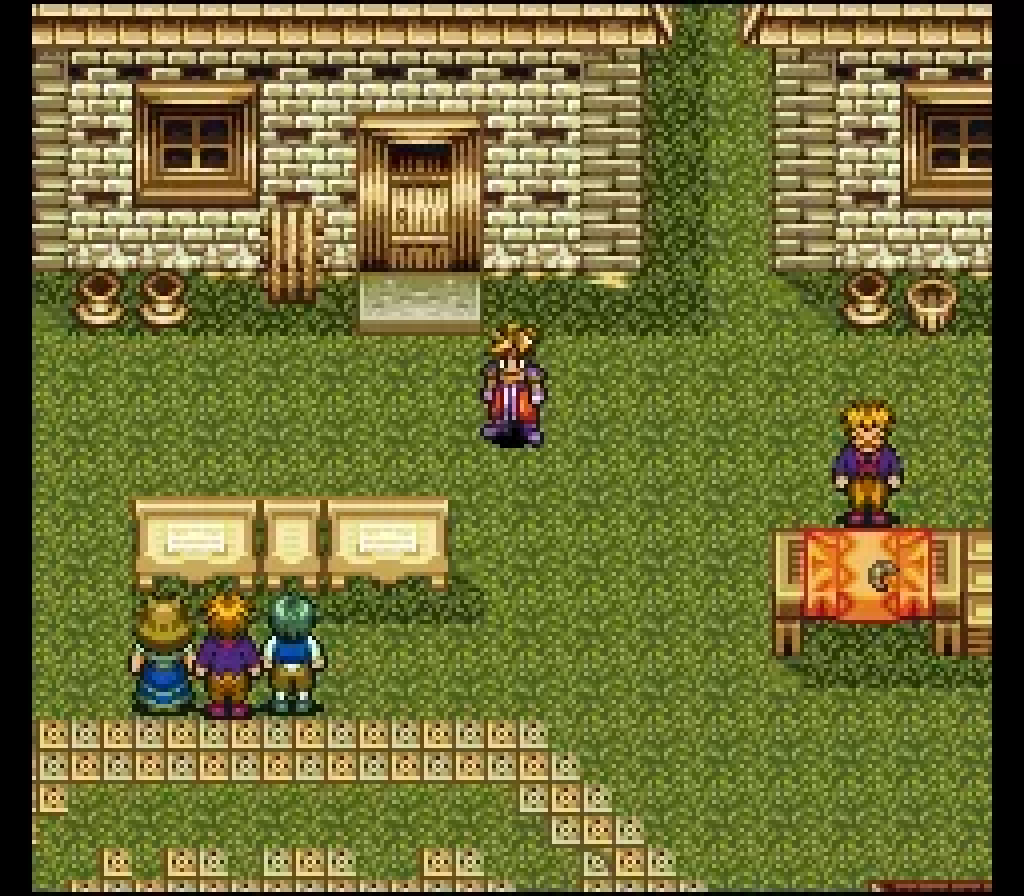
Combat, and a world you can watch growing back
For all its philosophy, Terranigma never forgets to be a game you play with your hands, and its combat remains the most fluid Quintet ever built. It is real-time, top-down action, built from three simple verbs — attack, run and jump — that combine into a small, satisfying language of techniques. Attack standing still and Ark lunges and pierces. Attack on the run and he dashes through enemies. Attack in the air and he spins down on top of them. A guard move turns projectiles aside — useless against a sword at your throat, invaluable against everything being thrown at you from across the room, and one of those details you learn the honest way, exactly once.
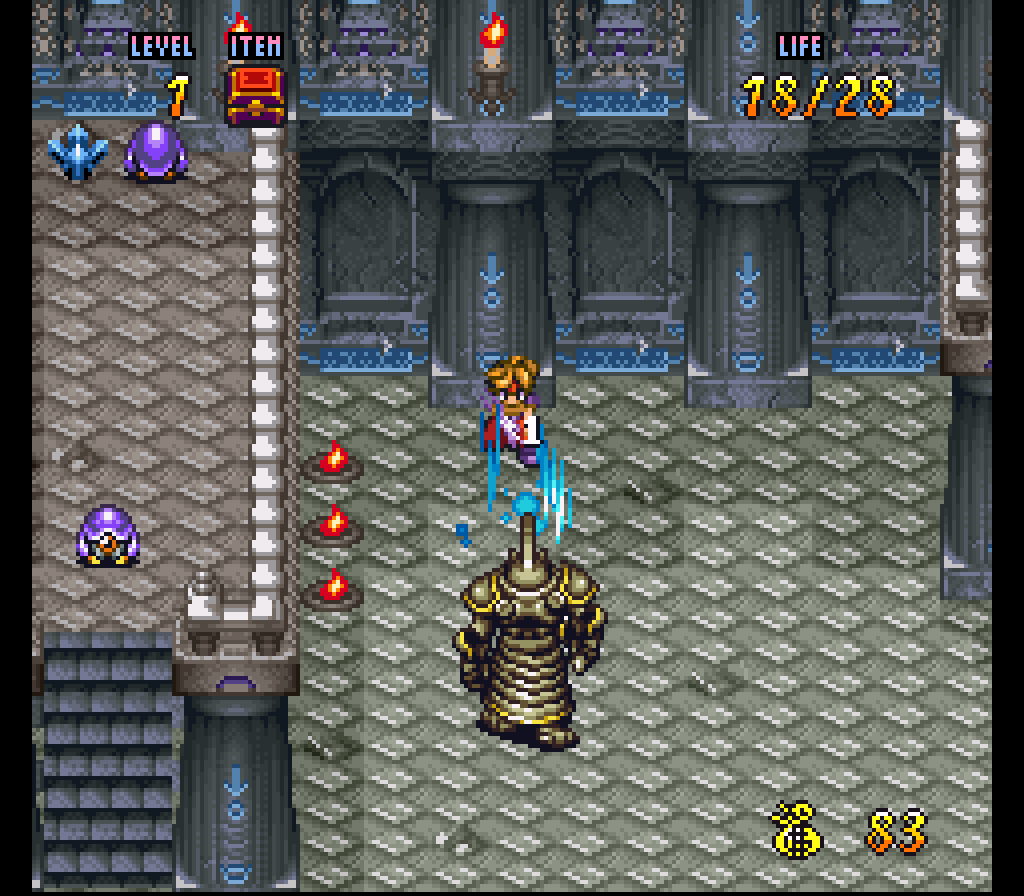
The scaffolding underneath is pure, well-mannered RPG. Victories bring experience, levels, and steady growth in hit points, strength, defence and luck. Fallen enemies leave gems to spend on weapons, armour and supplies. There are no magic points — one of my favourite decisions in the game. Spells live in Magirocks, carried to a magic shop and worked into rings and medals; cast the spell and the item is spent, the Magirock returning to your pouch to be exchanged again. Magic, here, is something you pack, like provisions.
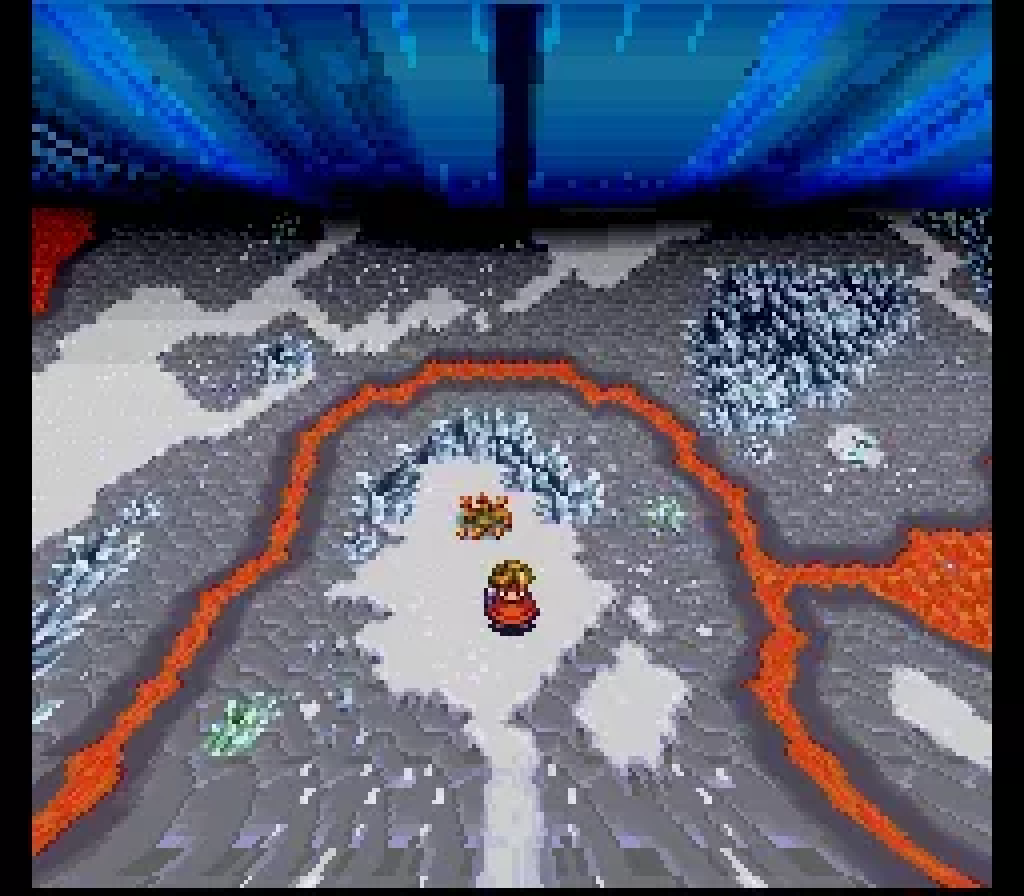
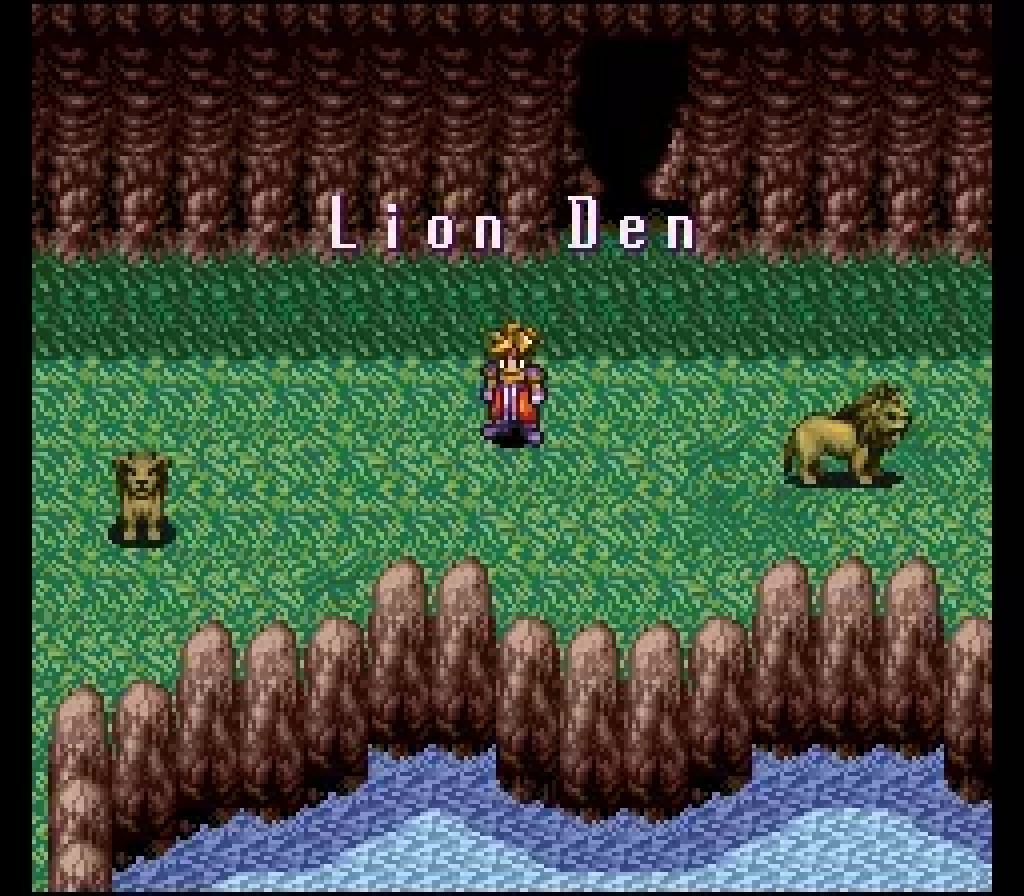
But the design decision that lifts the whole game is structural. Most RPG worlds are finished before you arrive — you tour them. This one is unfinished, and you are the reason it finishes. The underworld map rolls out beneath Ark in a pseudo-3D view of ice, crystal and magma, beautiful and desolate at once, and every tower you clear rewrites it. Then the surface: a barren world that greens, feathers, furs and finally fills with voices as you work. You talk to plants. You talk to animals — there is a lion’s den I still think about — and then, in a turn as sad as it is clever, humanity returns and the common language you shared with the living world is gone. Progress, in this game, always costs something. That is not a mechanic you find in a design document every day. That is a worldview.
Why America never got it
Here is the whole tragedy, and it fits in one sentence: the game was finished, translated, and reviewed — and the office that would have sold it in America no longer existed. Terranigma was published in Japan by Enix on October 20, 1995. By the time the localisation was finished, Enix had already closed its United States subsidiary. There was simply nobody left whose job it was to put the game on a boat.
Europe, for once in the 1990s, was the lucky continent. Nintendo stepped in as PAL publisher, and the game reached Europe and Australia from December 19, 1996, in English, German, French and Spanish. We were the generation that watched Europe miss game after game; this time the English version existed, pressed and boxed, an ocean away — and North America, which had received both of its predecessors, got nothing. What followed was the familiar underground economy of the era: expensive PAL imports never meant for our televisions, word of mouth, magazine envy, and eventually emulation — which is how a great many of us, myself included, finally played a masterpiece we would gladly have paid full price for on day one.
The music of a world being born
A game about the creation of the world needs a score that can hold both an empty planet and a crowded one, and Miyoko Takaoka — also credited as Miyoko Kobayashi — together with Masanori Hikichi, wrote exactly that. The title music arrives like weather over mountains. The town themes have the unhurried warmth of a place that believes it will still be there tomorrow. The underworld and tower pieces carry the loneliness the story is actually about, and the melodies that accompany the resurrection scenes do the heaviest lifting in the game: they make a map changing colour feel like a miracle you performed.
Japan got a soundtrack album, Tenchi Sōzō Creative Soundtracks, within days of the game’s release in October 1995, and the music has been loved and re-arranged by fans ever since — which, for a game most of the world could not buy, tells you how far a melody can travel on its own.
Thirty years of absence
And then — nothing. No port, no Virtual Console release, no collection. For over thirty years Terranigma was not re-released at all, held in place, by the accounts given over the years, by complicated questions around its rights. Quintet itself went quiet. The cartridge became one of the prizes of the SNES aftermarket, its price climbing the way prices do when a beloved thing is also a scarce thing, and the game’s reputation grew in the dark, passed hand to hand like a recommendation nobody could act on.
The fans never stopped asking. A Japanese fan-led petition that began in 2021, backed by Kamui Fujiwara and co-composer Miyoko Takaoka, pushed publicly for a re-release or remaster; reporting around it noted that Quintet president Tomoyoshi Miyazaki had, to Fujiwara’s knowledge, disappeared from contact — one more reason the rights had stayed tangled for so long. I remember reading that and thinking the story had finally ended the way these stories usually end: beautifully, and badly. I was wrong, and I have rarely been happier to be wrong.
Terranigma returns — January 14, 2027, and a deadline this Sunday
Clear River Games announced the return in August 2026, and the enhanced port launches on January 14, 2027, on PlayStation 5 and PlayStation 4, Xbox Series, Nintendo Switch 2, Nintendo Switch and PC via Steam and GOG — with North America, at last, on the list. Read that sentence again if you grew up like I did. First official North American release. Thirty-one years late, and welcome beyond words.
The port is careful in the ways that matter. The original game is there intact, and alongside it an Arranged Mode offers a gentler, modernised route through: enhanced progression, a permanent mini-map, the freedom to save where you wish, quick save and rewind, plus a music player and a museum for those of us who intend to live in this thing for a while. Fujiwara has returned to provide new artwork, which feels less like a marketing bullet point and more like the family coming home. If you have never played it, Arranged Mode is your open door. If you have, you already know which mode you are choosing first, and so do I.
One date matters sooner, and it matters this weekend. The physical editions from Limited Run Games — the Foiled Standard Edition at $44.99 on Switch 2, the SteelBook Edition at $64.99 with Fujiwara’s new art, and the big Gaia Edition collector’s set at $199.99 — are on a pre-order window that closes on Sunday, November 8, 2026, at 11:59 PM Eastern. After that window, it is gone. A game that waited thirty years to come to America is giving us one weekend to claim the boxed copy. There is a poetry in that I could do without, but here we are — set the alarm.
Terranigma is the masterpiece America never got — a creation story you play with your own hands, and the finest hour of the studio that made it. Thirty years late is not too late. It never was.
Score: 9.5/10. The half point is withheld only because Quintet never got to make the next one, and I am still not over it. The story, the structure, the combat, the score — everything in Terranigma serves the single idea that bringing a world back is braver and harder than saving one, and the game earns its ending the slow way, resurrection by resurrection. If you buy one retro re-release next year, make it the one some of us waited half a lifetime to buy at all. Welcome home, Ark. — Sal