
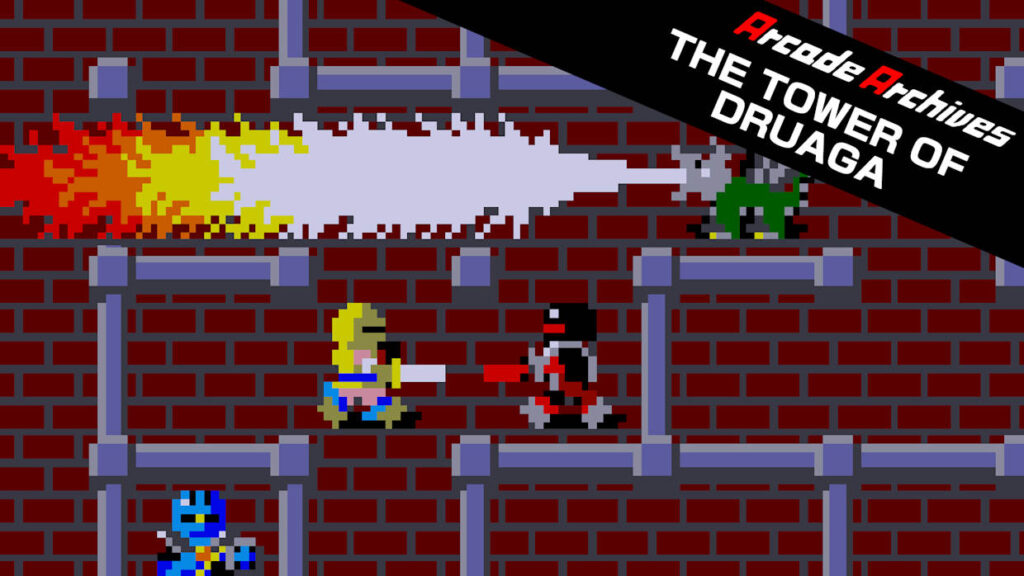
At a glance — Game: The Tower of Druaga · Developer: Namco · Publisher: Namco · Original release: June 1984 (Japan) · Original platforms: Arcade · Genre: Action role-playing, maze · Designer: Masanobu Endō · Music: Junko Ozawa
The notebook was not part of the machine. In Japanese arcades in the summer of 1984, players left one beside the cabinets for Namco’s The Tower of Druaga — filled in by hand, by strangers, with maps, hints and hard-won secrets, free to anyone willing to climb. Druaga did not just invite that notebook. It made the notebook necessary. And in doing so it quietly invented the way gamers have shared knowledge ever since.
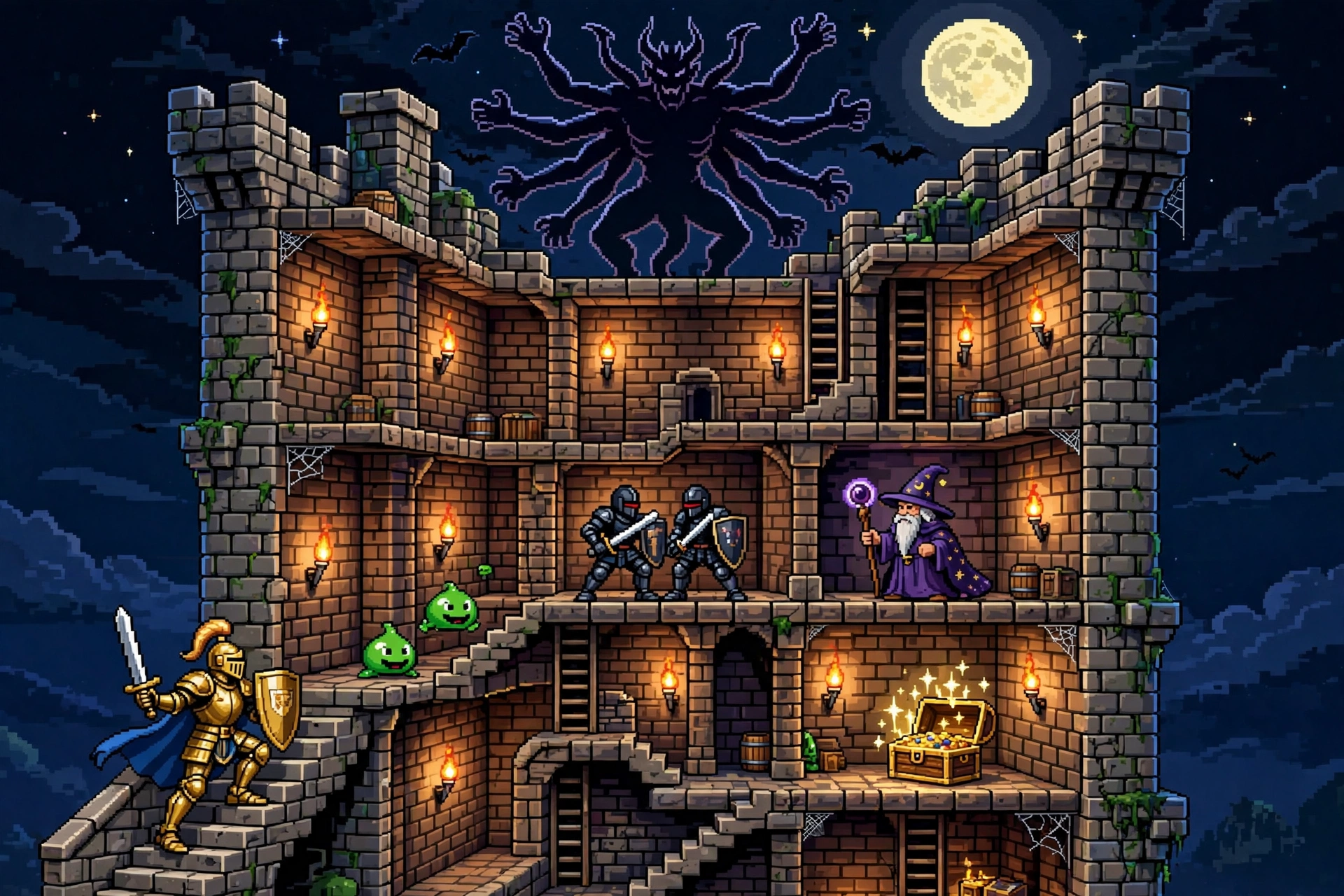
A fantasy Pac-Man with a sword
The bones are pure Namco. Gilgamesh — Gil, to everyone who has ever fed the machine — is a knight in golden armour, sent up a tower to rescue the maiden Ki and recover the Blue Crystal Rod from Druaga, a demon with eight arms and four legs who plans to use the rod to enslave mankind. Every floor of the sixty is a brick maze. Somewhere in it, a key. Somewhere else, the door that key opens. Find the key, reach the door, climb. Slimes, knights, projectile-firing wizards, ghosts that drift straight through walls and fire-breathing dragons patrol the corridors, and a time limit ticks on every floor. Dawdle, and two indestructible Will-o-Wisps come for you.
Designer Masanobu Endō came to it fresh off Xevious. On a business trip to North America he had bought a copy of Dungeons & Dragons, and back home he was a devoted player of the Apple II game Wizardry. His first prototype, called Quest, leaned hard into role-playing. Dissatisfied with how heavy it felt, he rebuilt it as something brisker — in his own framing, a “fantasy Pac-Man” with combat and puzzle-solving stirred in. The mythology came from Sumerian, Mesopotamian and Babylonian sources: the Epic of Gilgamesh, the Tower of Babel, the goddess Ishtar, who aids Gil from above. Even the tower’s height is a period detail — sixty floors, borrowed from Sunshine 60 in Ikebukuro, then the tallest building in Asia. Junko Ozawa composed the music and wrote a unique sound driver to carry it. The game ran on Namco’s Super Pac-Man hardware, modified with the horizontal-scrolling video system from Mappy and a vertical screen — a conversion-friendly board, for a game about to take over far more than the cabinets it converted.
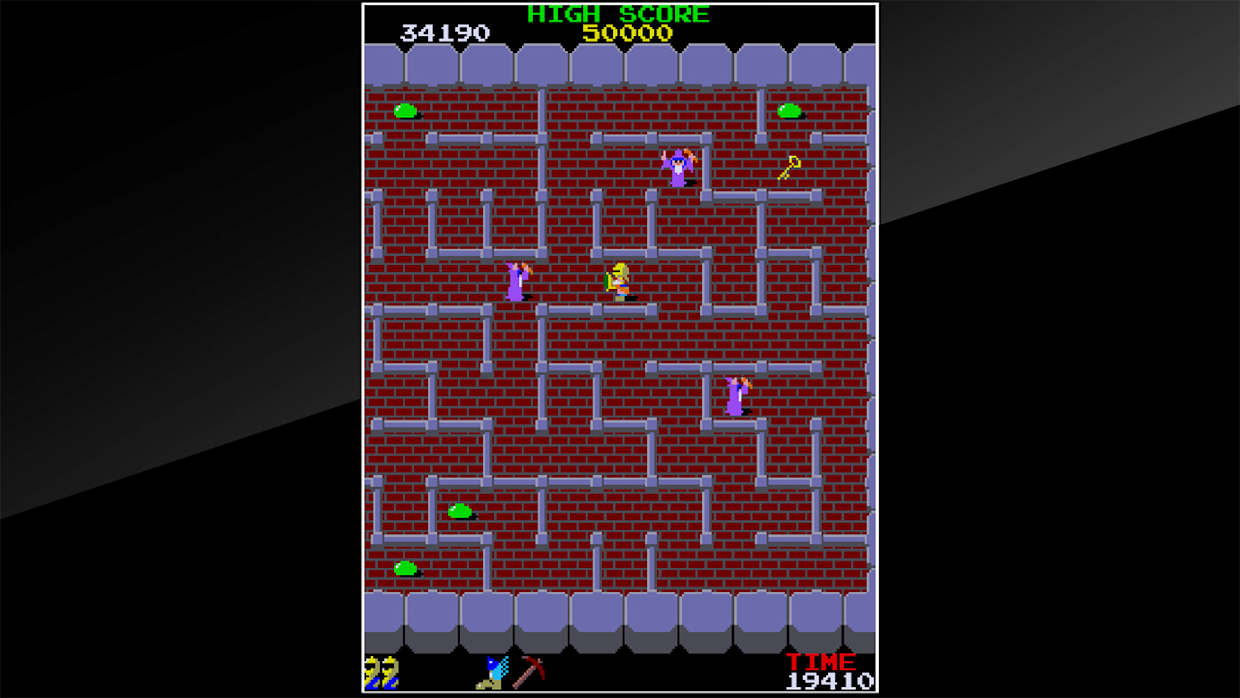
The Tower of Druaga notebook: sixty floors, sixty secrets
Here is the decision that built the legend. Every floor hides a treasure: a pickaxe that smashes through maze walls, jet boots that transform Gil’s plod into a stride, a candle that makes the invisible ghosts visible. Not one of those treasures announces how it is earned. The chest appears only when you perform a specific, unadvertised act — kill exactly three slimes on the first floor and the pickaxe is yours. Elsewhere it might be a set number of one enemy type, a joystick code, standing in the right spot. The game never hints at any of it. No tutorial text. No flashing arrow. No mercy.
And some of those treasures are not bonuses. They are requirements. Miss the wrong one and the game quietly becomes unwinnable — or it makes the point more rudely, “zapping” you back to an earlier floor to fetch what you skipped. Your sword and shield work honestly enough; face a wizard’s fireball with the shield and you can block it. But no amount of reflexes substitutes for knowledge. Druaga is a game you beat with information, and in 1984 there was exactly one place to get information: each other.
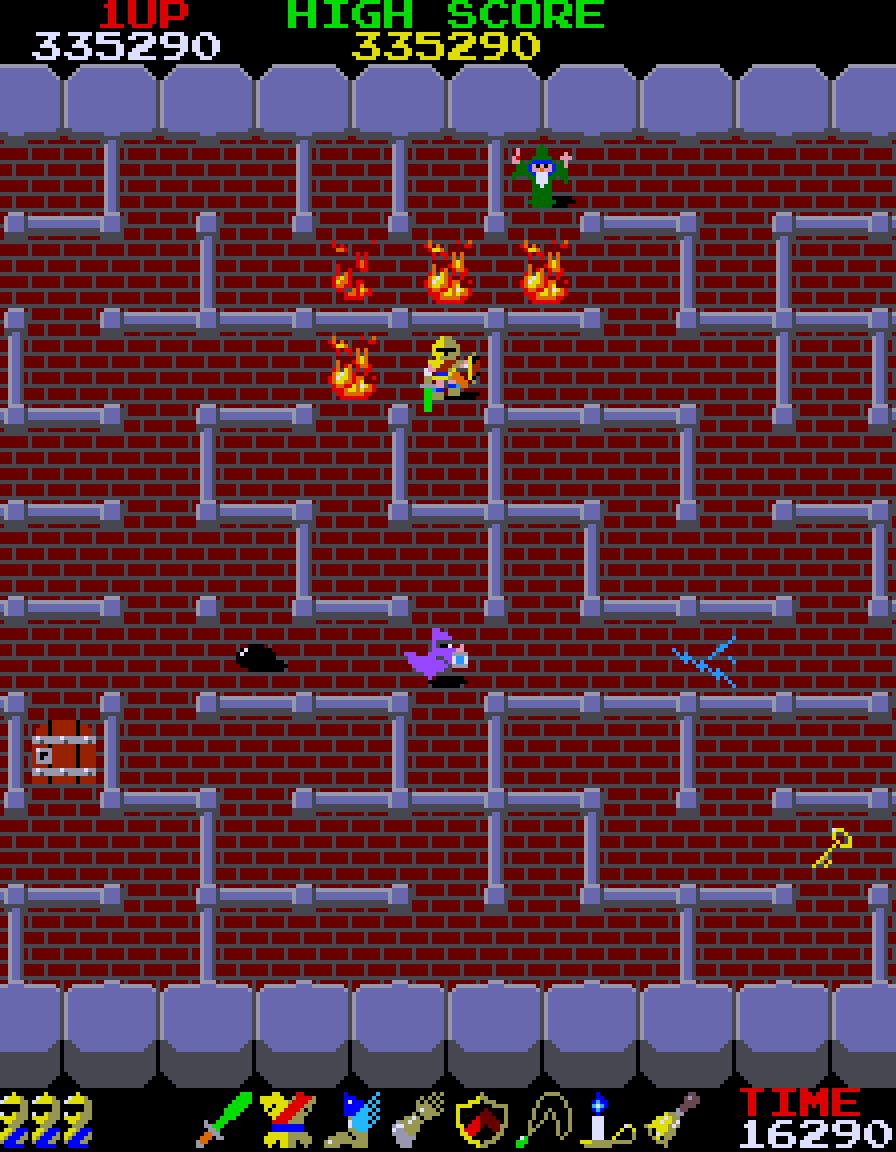
The notebook by the cabinet
So the players built the guide themselves. Notebooks appeared beside Druaga cabinets in arcades across Japan — communal documents, added to by strangers, consulted by strangers, mapping floors and logging the bizarre little rituals that made chests appear. Think about what that is, in 1984: a living strategy guide, written by the crowd, years before the internet made crowd knowledge ordinary. Druaga is routinely credited with inspiring exactly that culture of sharing tips and guidebooks with friends, and you can draw a straight line from those pencilled pages to every wiki, forum thread and shared spreadsheet the hobby runs on now.
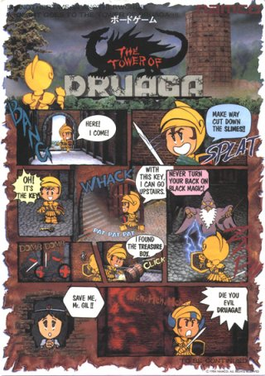
Namco leaned into the mystery in its promotion, too. The launch art was built from miniature dioramas and cardboard cutouts rather than drawings, because company president Masaya Nakamura disliked manga art. The final panel of the flyer even shows Gil wearing a horned helmet as he faces Druaga — a quiet visual spoiler. Observant players were meant to understand that the helmet was required to finish the game. The clues were always there. They were just never labelled as clues.
What the tower taught the games that followed
Japan took the climb to heart. Druaga was the second-highest-grossing table arcade cabinet of August 1984, behind only Karate Champ, and the Famicom port that followed in August 1985 was a major hit of its own. The design DNA travelled further: the game is cited as a foundation stone for the action role-playing genre, and an influence on Ys, Hydlide, Dragon Slayer and The Legend of Zelda. The saga it started — the Babylonian Castle Saga — ran to The Return of Ishtar in 1986, the Ki-led prequel The Quest of Ki in 1988, the adventure game The Blue Crystal Rod in 1994, and eventually a punishing PlayStation 2 roguelike, The Nightmare of Druaga, in 2004. It even got a feature-phone sequel in 2011 — a game that spent fifteen years locked to dead Japanese phone networks and has just been rescued for the Switch, which is the other half of today’s Druaga story on this site.
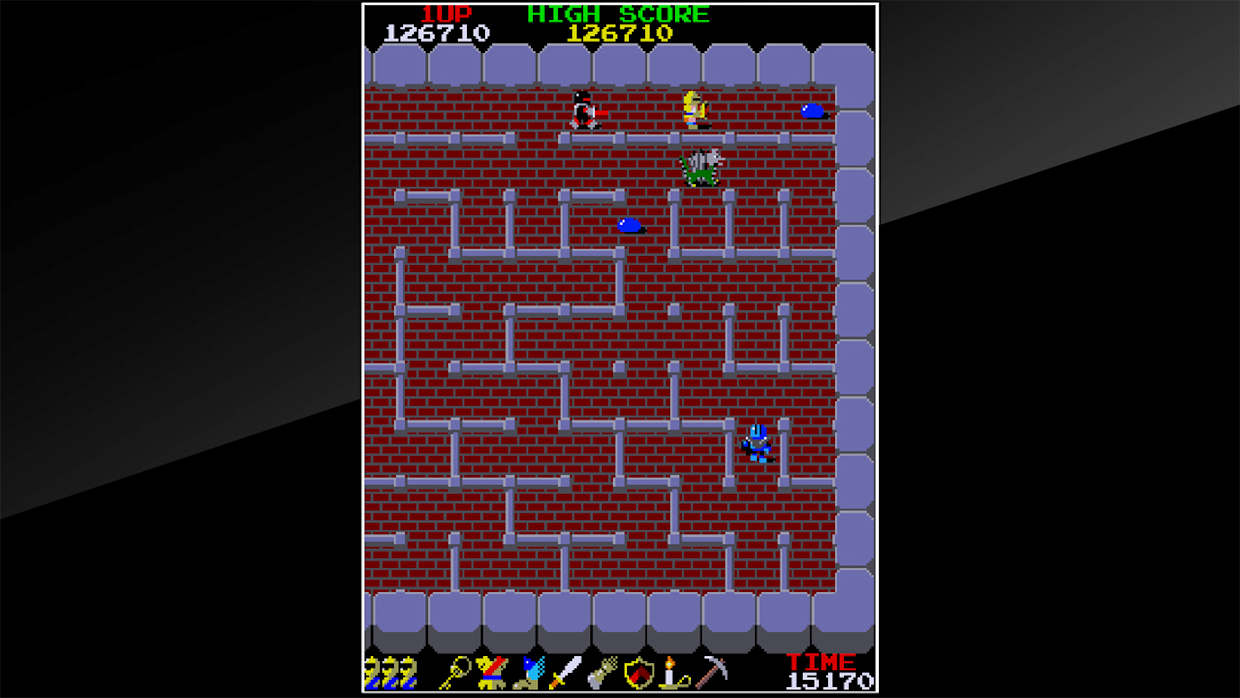
Honesty demands the other side of the record. When the arcade version reached North America on the Wii Virtual Console in 2009, Western reviewers bounced off it hard — scores of 3/10 and 4/10, the hidden items called arbitrary, the whole game near-impossible without a guidebook. They were not wrong about the experience of playing it alone, cold, in 2009. They were describing a game missing its other half: the crowd. Endō himself, in a 2003 interview, said he somewhat regretted how difficult he had made it, and worried it had made players paranoid about secrets. Perhaps. But paranoia, shared, turned into collaboration — and collaboration turned into a culture.
If you want the tower today, Hamster’s Arcade Archives edition (Switch and PlayStation 4, June 2022) is the faithful route, Japanese ROM and all, and it quietly completes the circle: it offers an optional in-game map and treasure guide. The notebook, forty years on, is built into the machine. Druaga never stopped being a game about what players tell each other. It just took the rest of the industry four decades to catch up with the players of 1984, who figured that out with a pencil.
— Sal
More from this system: our Arcade hub.