
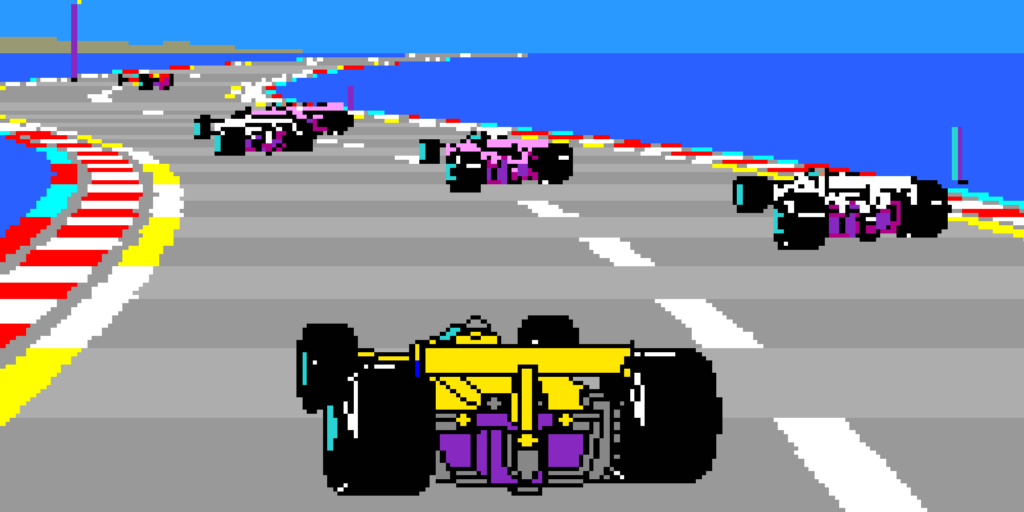
At a glance — Game: TX-1 V.8 · Launch: November 19, 2026 · Platforms: Nintendo Switch, Nintendo Switch 2, PlayStation 4, PlayStation 5, Xbox Series X|S · Price: $7.99 (Switch, PS4) / $9.99 (Switch 2, PS5, Xbox Series X|S), $2.99 upgrade path · Players: 1 · Rating: E (Everyone)
Hamster’s weekly Arcade Archives drop lands tomorrow, November 19, and this one has been hiding for 42 years. TX-1 V.8 is Tatsumi’s 1984 sequel to TX-1 — a Formula 1 racer that topped Japan’s arcade charts for months, then simply never came west. Atari, which had distributed the original in North America, never licensed the sequel, no home port was ever made, and outside Japan the machine became the kind of rare that means most of us have only ever seen it in photographs. Tomorrow it is $7.99.
TX-1 V.8 Arcade Archives release: what you get tomorrow
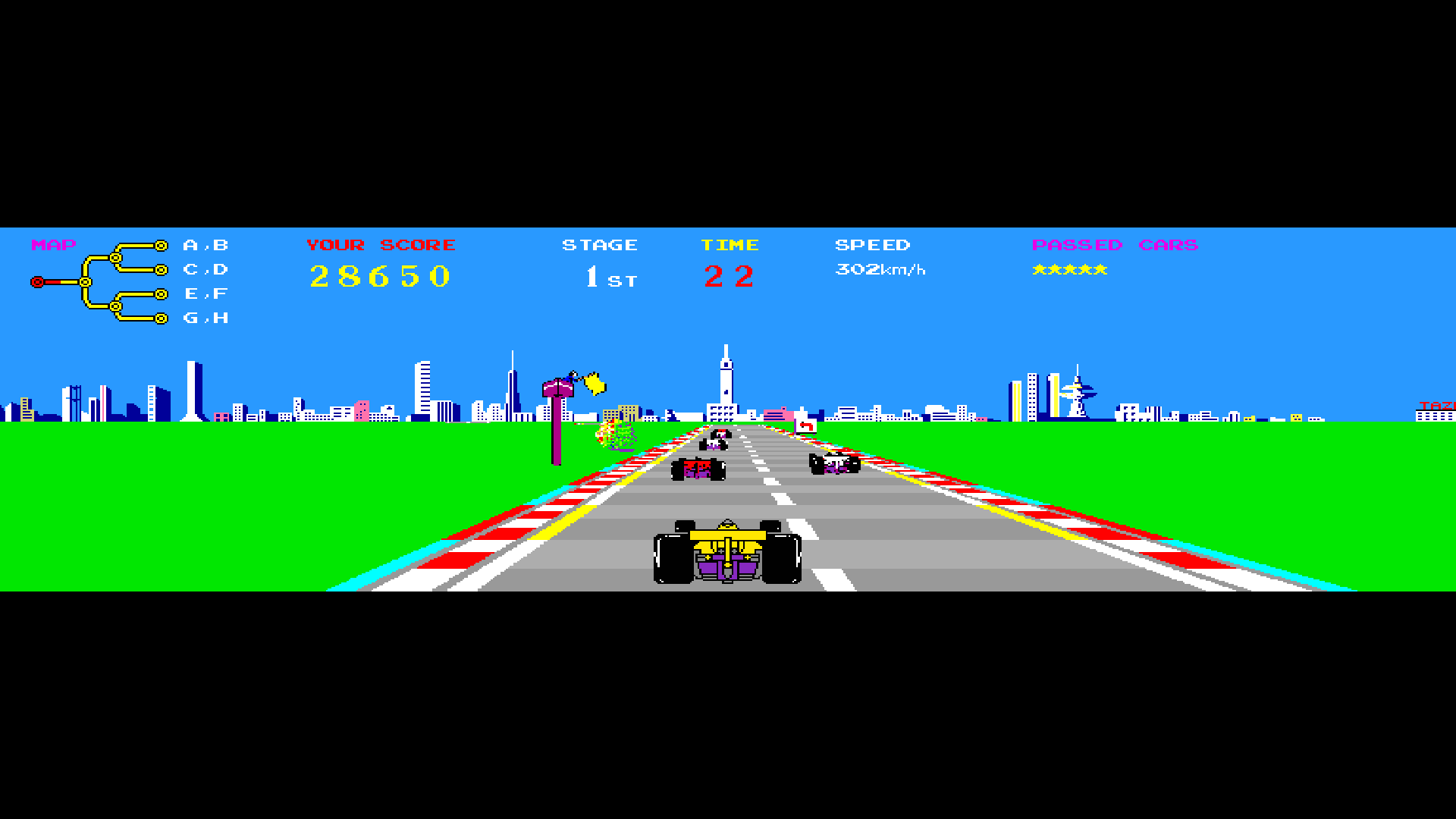
The TX-1 V.8 Arcade Archives release splits across Hamster’s two banners, the way the original TX-1 did when it joined the line-up on July 30 this year. The standard Arcade Archives version ($7.99) is for Switch and PS4, with Original, Hi Score and Caravan modes, difficulty and display settings, button remapping, multiple save files, a rewind function, CRT-style display options and online rankings. The Arcade Archives 2 version ($9.99) is for Switch 2, PS5 and Xbox Series X|S, and adds a Time Attack mode — a straight race against the clock, score be damned — plus VRR support for a closer match to the original hardware’s timing.
Own the cheaper version already and want the newer one later? There is a $2.99 ownership upgrade from Switch to Switch 2 and from PS4 to PS5, with two catches worth knowing before you buy anything: the discount only works on the same account, it only works if you buy the standard version first, and save data does not carry between the two versions. Hamster also notes, in its own fine print, that this one has no network mode. The racing itself is single-player, as it was in 1984.
What V.8 changed: eight new countries and a jump button
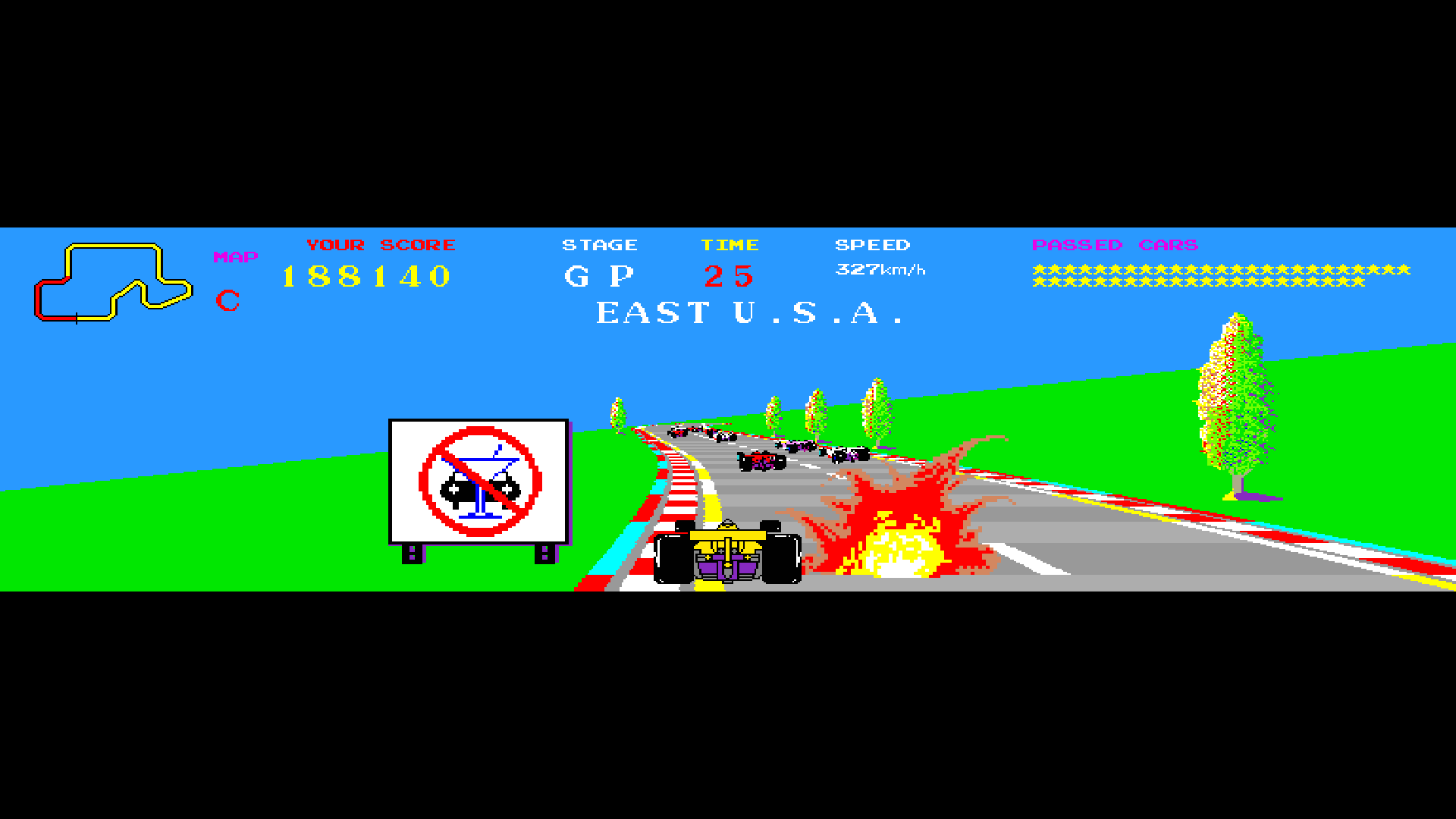
TX-1 V.8 was not a lazy re-skin. The eight Grand Prix countries are all new — Brazil, the Netherlands, East U.S.A., England, Germany, Canada, Mexico and Australia — and the driving got friendlier in two specific ways that matter. Roll the car or spin out and you can now recover instead of watching your run end, and when a rival is parked in your line with no room either side, you can jump clean over them. In a game built on threading a Formula 1 car through traffic at a claimed 370 km/h, a jump button is less a gimmick than an act of mercy.
The bones underneath are the original’s. You race the clock through stages, pass cars for score, and at the end of a stage the road forks — the route you choose decides which countries you finish in. That branching structure was the first game’s quiet revolution, and V.8 keeps it intact.
Why you never saw one: the sequel Atari left in Japan
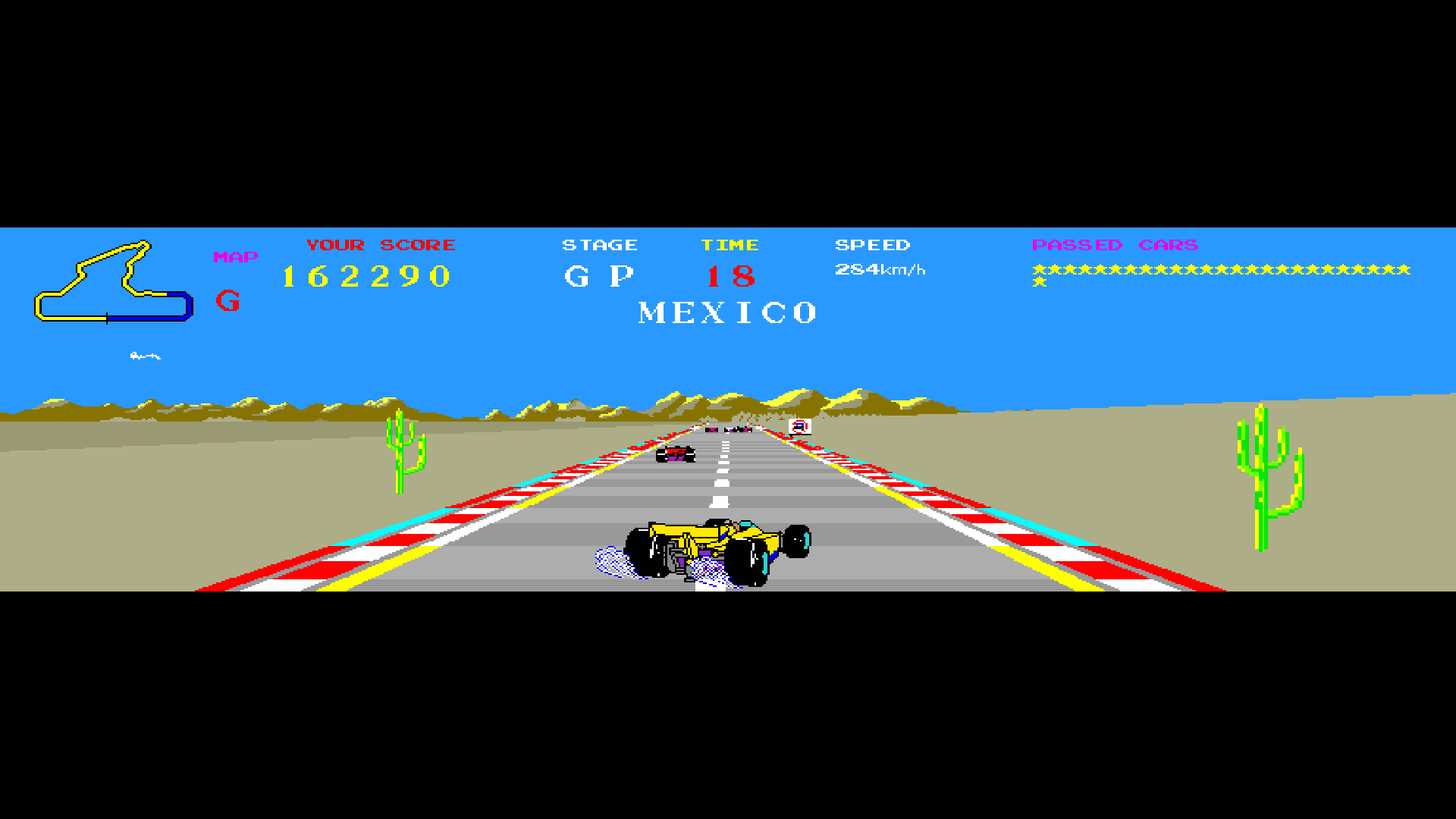
To understand the rarity, start with the original. TX-1 arrived in October 1983, a year after Namco’s Pole Position, and it was a physically enormous thing: a sit-down cabinet running three monitors — one dead ahead, two angled at thirty degrees either side — to wrap the road around the driver. The steering wheel fought back with force feedback, the driving model made you brake or downshift for corners and lift off in a skid to get the steering back, and the branching routes let a run end in one of eight destinations. Sega’s Out Run would make that fork-in-the-road structure famous three years later; Tatsumi was doing it in 1983. Computer and Video Games called it possibly the most sophisticated racing simulation on the market at the time.
Japan agreed, loudly. The original topped Game Machine‘s upright/cockpit charts for six months into 1984, and V.8, released that year — often as a conversion kit inside existing cabinets — then topped them for roughly ten more, from September 1984 through July 1985. Sixteen months of combined chart-topping between the two games. But where the original travelled — Tatsumi to Namco to Atari, and into American arcades — the sequel stopped at Namco. Atari never licensed it, and a three-monitor cockpit cabinet was never an easy import on the grey market. The result is a chart-topping hit that North America essentially skipped. The collector census at the Museum of the Game underlines it: exactly one known TX-1 V8 machine is recorded in the hands of an active preservation-society member. One.
Tatsumi clearly knew the hardware was special, because it used the same three-screen trick again for 1985’s Buggy Boy — the off-road racer many of us met later through its home ports. But the TX-1 line itself ended with V.8, and with no home port and no Western arcade run, the sequel’s afterlife was a flyer in an archive and a line in the original’s Wikipedia entry. Until tomorrow, that was the whole story.
Which version should you buy?
Simple rule: buy for the machine you will actually play it on. Switch 2, PS5 and Xbox owners get the Arcade Archives 2 build with Time Attack and VRR for $9.99, and that is the one to get. Switch and PS4 owners are not being short-changed at $7.99 — Original, Hi Score and Caravan modes, rewind and the display options are the core of the package — and if you later move up a generation, the $2.99 upgrade means the early purchase is not wasted, as long as you buy the standard version first and stay on the same account. What you should not do is buy both versions outright: Hamster is unusually blunt that save data does not cross over, and double-buying gets you nothing but a second icon on the dashboard.
The three-screen problem, solved with letterbox
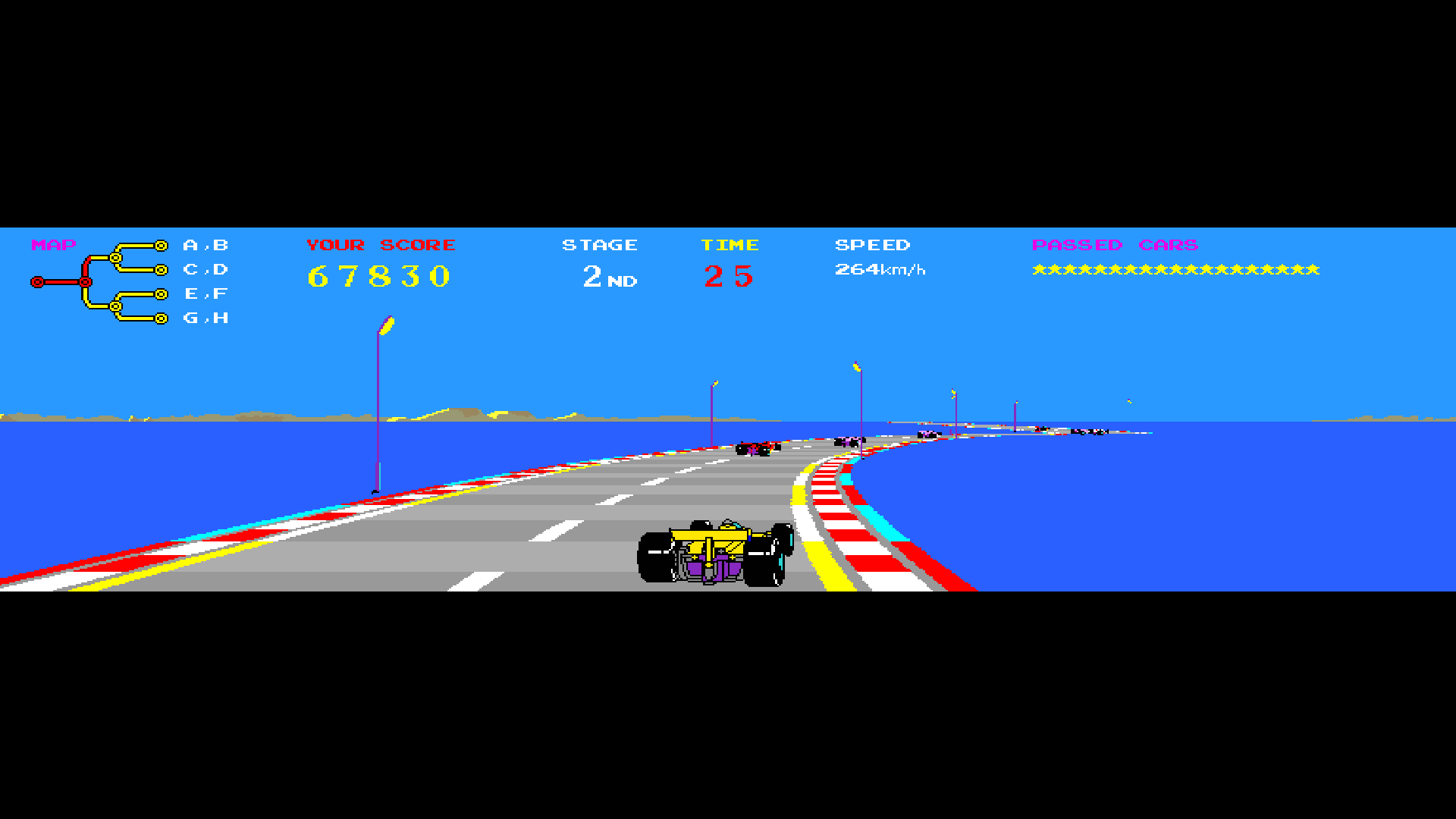
The obvious question with any TX-1 re-release is the screens. A game designed to be read across three monitors does not fit a television honestly, and Hamster’s answer — visible in every screenshot on this page — is to present the full panoramic view letterboxed on a single display: narrow, wide and unapologetic. It looks unusual for about thirty seconds and then it just looks like TX-1. (Owners of the original’s July release went further: players found an undocumented way to split that version back across three real monitors with an HDMI splitter. Whether the same trick survives in V.8 is something the community will no doubt answer by the weekend.)
That is the pitch, then. One of the most successful Japanese arcade racers of 1984, the sequel to a genuine innovator, playable at home for the first time ever tomorrow — for the price of a sandwich. The Arcade Archives line has had bigger names this year. It has not had many better stories.
— June
More from this system: our Arcade hub.