
At a glance — Game: Dragon Quest · Developer: Chunsoft · Publisher: Enix · Original release: May 27, 1986 (Famicom, Japan) · Original platforms: Famicom / NES · Genre: Role-playing game · Designer: Yuji Horii · Artist: Akira Toriyama · Music: Koichi Sugiyama
Forty years ago this spring, a Famicom cartridge went on sale in Japan for ¥5,500, and the console role-playing game was born in it. Not the RPG — computer players already had Wizardry and Ultima, and Dragon Quest’s creator would be the first to name them as his teachers. What Dragon Quest did, on May 27, 1986, was translate all of that machinery — the stats, the towns, the grinding, the quest — into something a kid with a Famicom and no English could pick up and finish. Almost everything the Japanese RPG became is in this cartridge, in embryo, in about the time it takes to watch a film.
It is back in the conversation this week for an odd reason. This morning we covered the Chrono Trigger composer’s argument that the series might honorably end rather than go on imitating Akira Toriyama’s hand. It is a fair moment to go back to where that hand first drew a Slime, and to ask what the first quest actually was.
Dragon Quest 1986: three names and a borrowed idea
The credits read like a poker hand nobody should have been able to assemble. Yuji Horii was a freelance writer who had won an Enix programming contest and made his name with The Portopia Serial Murder Case in 1983, one of the defining Japanese adventure games. Koichi Nakamura, a prodigy programmer barely out of his teens, ran the small studio Chunsoft and built the game. For the art, Horii’s friend Kazuhiko Torishima — editor of the Dragon Ball manga at Weekly Shōnen Jump — assigned a young manga artist named Akira Toriyama. And the music arrived by the strangest route of all: Koichi Sugiyama, already an established television composer, wrote to Enix on a feedback postcard from another game asking to work with them. Enix, to its eternal credit, said yes.
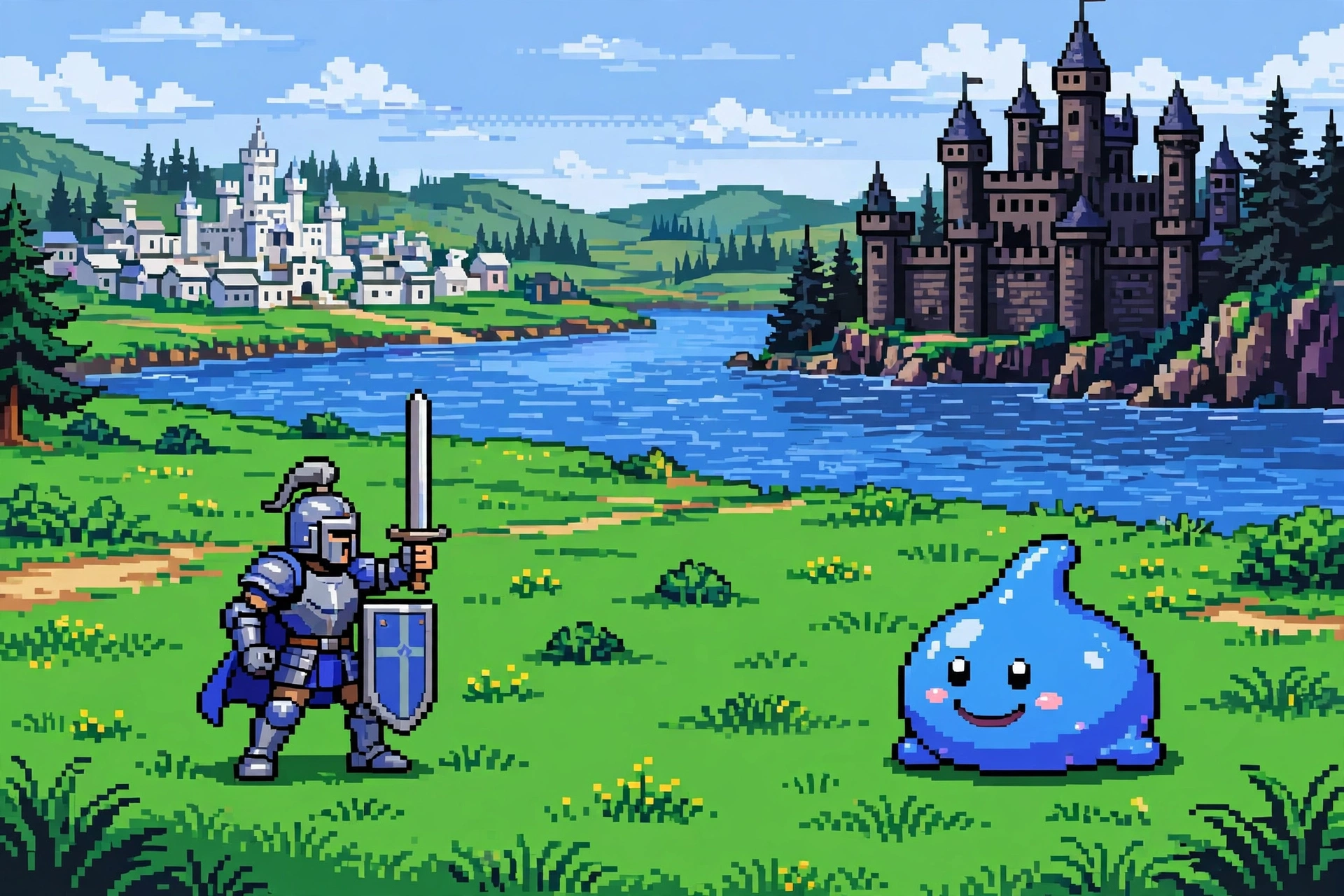
Horii has never hidden the recipe. He had played Wizardry and Ultima on Western computers and wanted their depth without their hostility: fewer keys, friendlier menus, a story you were inside rather than a system you were operating. Portopia had already proven he could make a menu-driven game feel like a conversation. Dragon Quest applied the same thinking to the RPG — and then Toriyama’s monsters did the rest. His Slime is a teardrop with a smile, possibly the most inviting first enemy in video game history. In Japan the design became so familiar that, as the saying goes, ask someone to draw a slime and they will draw his.
Alefgard, whole and entire
The world fits on one screen’s worth of map and one sentence of premise. Alefgard was at peace under the Ball of Light, the gift of the legendary hero Erdrick — Loto, in Japanese. Then the Dragonlord stole the Ball, raised Charlock Castle within sight of the king’s own walls, and in time kidnapped Princess Gwaelin for good measure. You arrive at Tantegel Castle a stranger with no sword, no armor and a bloodline: a descendant of Erdrick, come at last, exactly as the prophet Mahetta foretold.
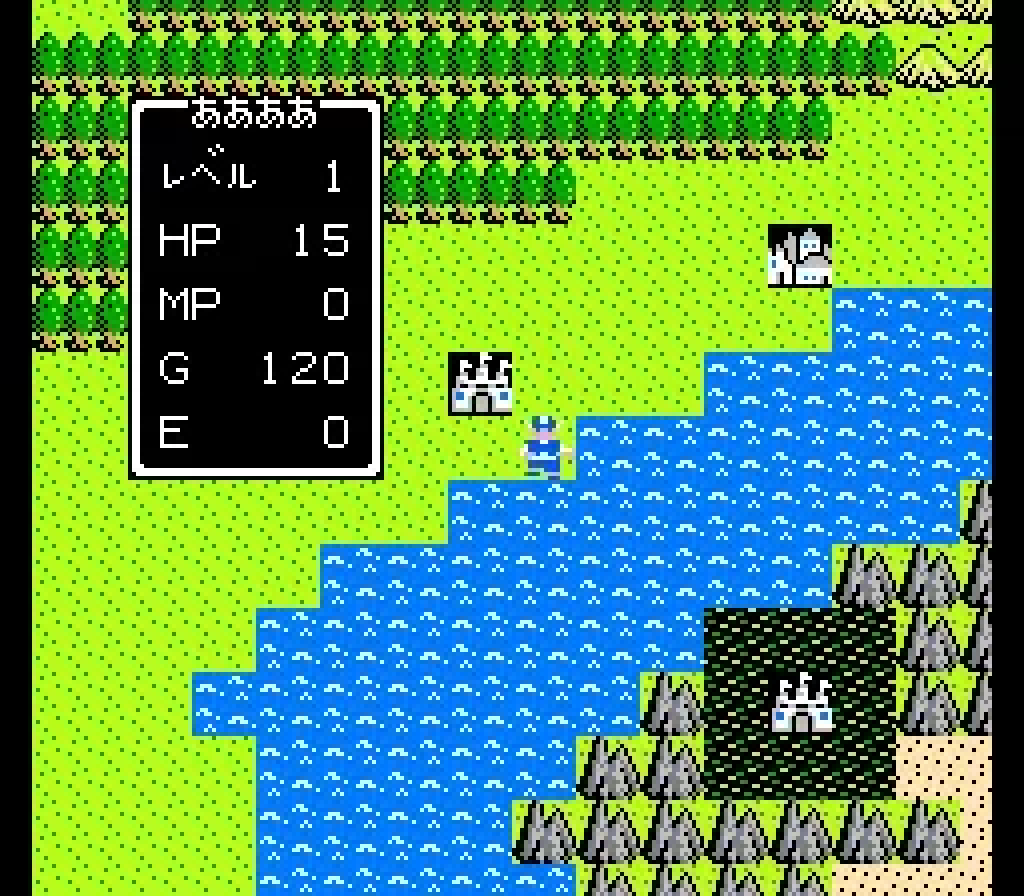
What still startles, replaying it, is how open it is. Apart from Charlock itself, nothing physical stops you walking anywhere on the map from the first minute. The gate is arithmetic: stray too far from Tantegel and the encounters will explain your level to you, fatally, in one round. Death sends you back to King Lorik, resurrected and lighter by half your gold — the game’s one punishment, and a fair one. Even the princess is optional. You can finish Dragon Quest without ever rescuing Gwaelin, a liberty almost no quest game since has dared to leave lying around. Rescuing her is simply the better story, and the game trusts you to want it.
One hero, one monster, no party
Everything later generations would complicate is here in its simplest possible form. One hero. One enemy at a time, met face-on in first person while your hero stays off-screen. Four commands: Fight, Run, Spell, Item. Towns that are a shop, an inn and a handful of people who know things. Caves that go properly dark unless you carry a torch or learn the RADIANT spell. A name-entry screen that quietly uses the name you choose to seed your stat growth, so two players’ heroes genuinely grow differently.
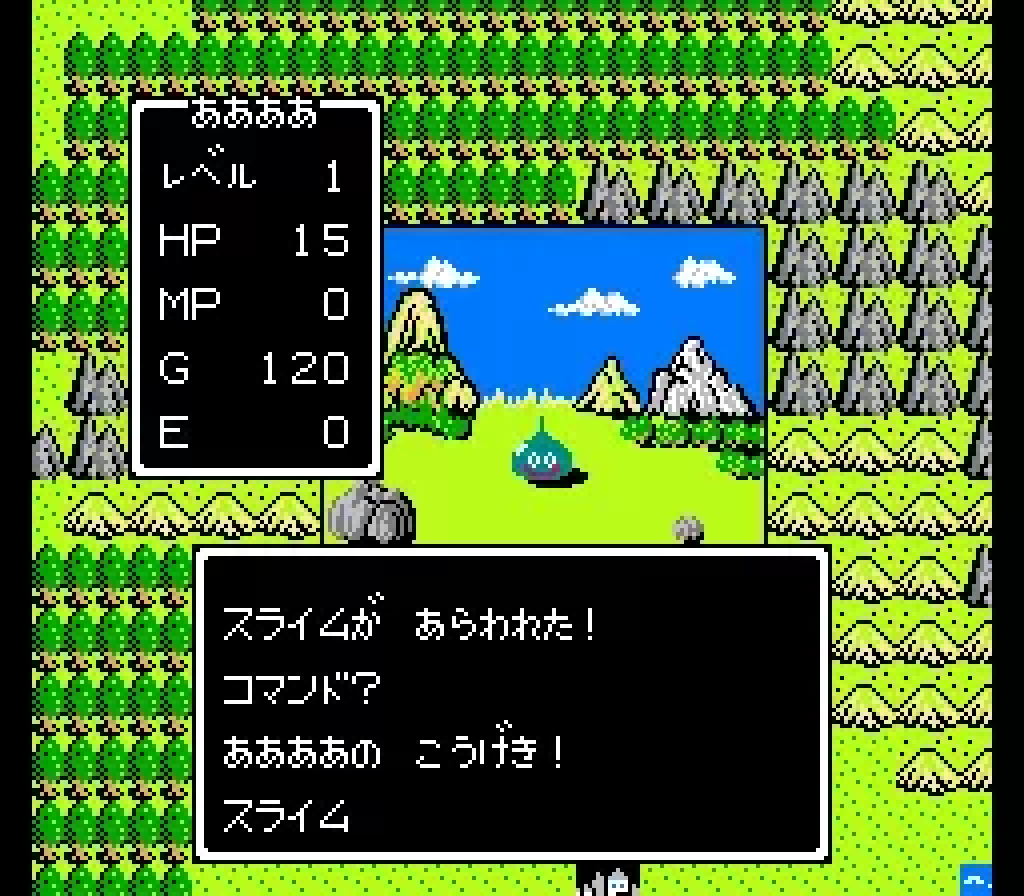
It is, by modern accounting, spartan to the point of comedy — a weekend’s worth of content, a single save point at the king’s feet, a final act that asks for a long, honest grind. And yet the shape is perfect. Explore, earn, equip, venture further. The loop every JRPG still runs was assembled here, complete, the first time, by people who were explicitly trying to make the genre welcoming. The grind is not a flaw in that design; in 1986 it was the design’s pacing, the way the game made Alefgard feel big on a 512-kilobit cartridge. Japan understood immediately. Dragon Quest sold more than two million copies in its original run — around 1.5 million of them at home — and swept the first Famitsu awards, including Game of the Year. The sequels would turn a hit into a national institution. It started here, with one hero walking out of one castle.
The Dragon Warrior detour
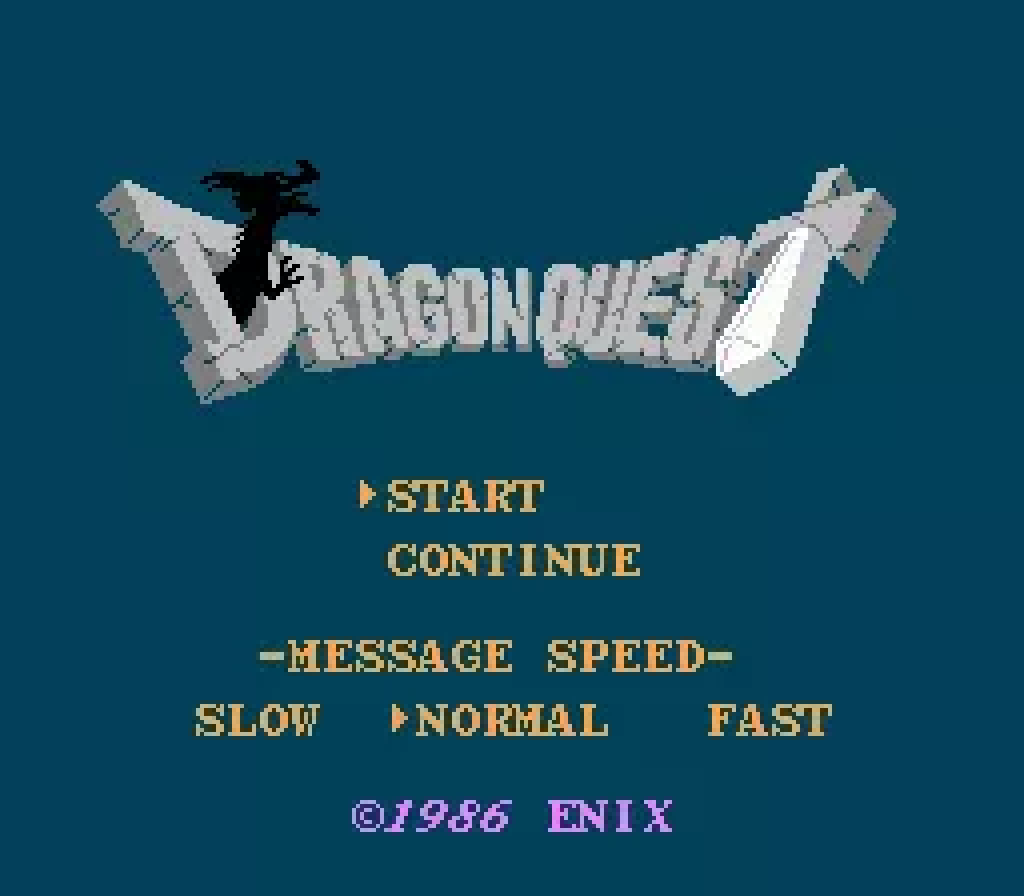
North America got the game three years late and under another name. Nintendo published it in August 1989 as Dragon Warrior — the title changed to steer clear of a pen-and-paper game already called DragonQuest — with real improvements in tow: a battery-backed save in place of Japan’s long password (the famous “spell of resurrection”), larger hero sprites, and dialogue dressed up in thee-and-thou pseudo-Elizabethan English.
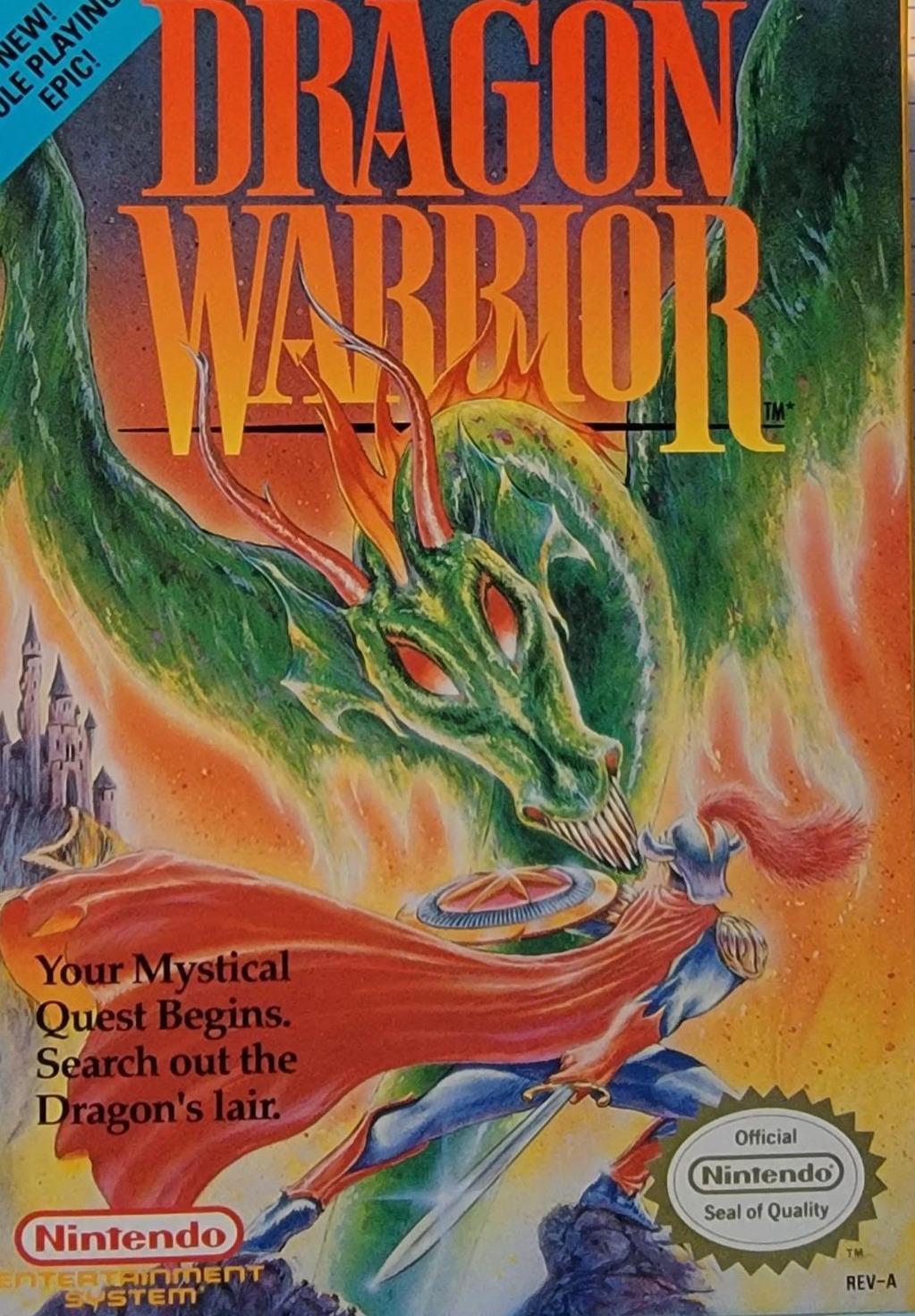
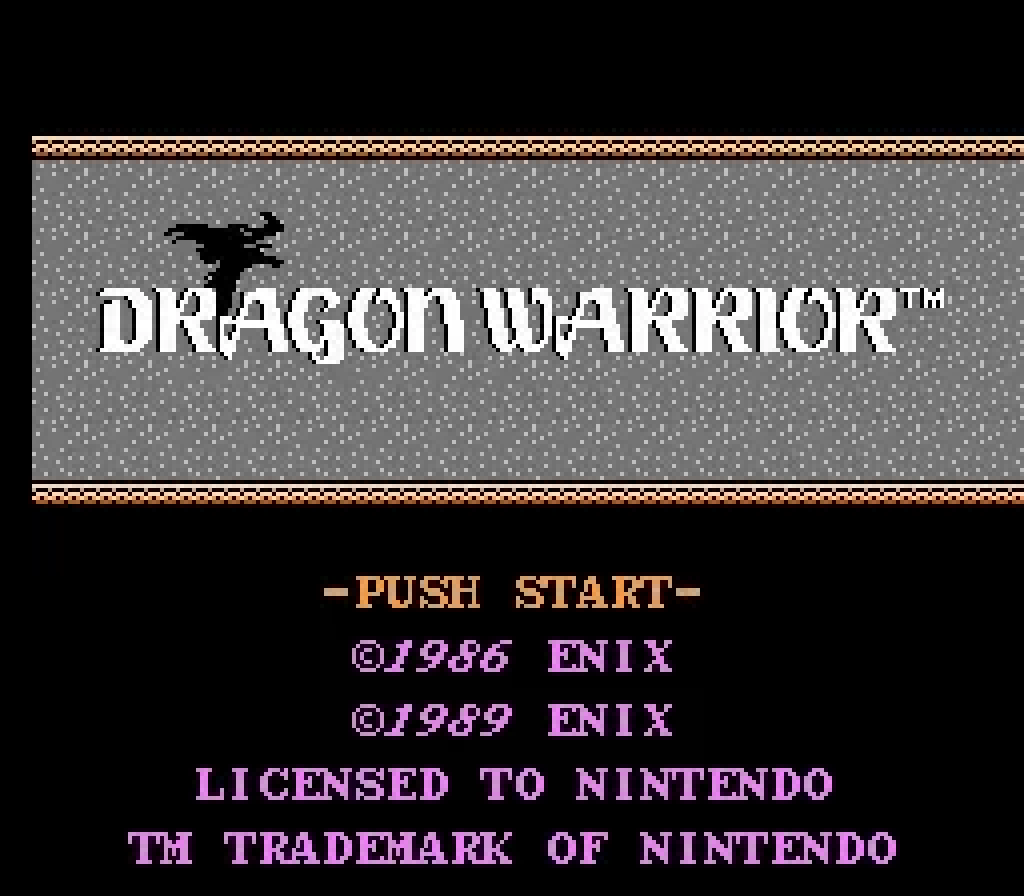
It underperformed anyway, at first — Nintendo had manufactured for Japanese numbers and found itself holding warehouses of a slow seller. The solution became legend: in late 1990, Nintendo Power offered a free copy of Dragon Warrior, with a 64-page Explorer’s Handbook, to anyone who subscribed. A roughly $50 game for a $20 subscription. Nearly half a million new subscribers later, a generation of American kids owned an RPG many of them would never have bought — and a measurable slice of the Western JRPG audience can be traced to a magazine giveaway. The original American release still moved about 500,000 copies in total. Sometimes a classic needs a push. This one got the biggest push in the industry, and it worked.
Why the first quest still matters — and the argument it started
Put the Mitsuda argument next to this cartridge and it sharpens. His worry, forty years on, is about inheritance: whether a series can keep a dead artist’s style alive by imitation, or whether the honest move is to let the thing end and build something new. What the 1986 game shows is what was actually inherited. Toriyama’s hand is all over Dragon Quest — the Slime on this page is his, and no successor will draw it innocently again. But the durable inheritance is Horii’s, not Toriyama’s: the conviction that an RPG should be built for the player who has never touched one, that menus can carry a story, that one hero and one clear quest are enough. That philosophy does not need imitating. It needs re-deciding, game by game — which is more or less what Mitsuda said.
There is a plainer reason to keep this game in print, too. Dragon Quest, its sequel, and the prequel third game form the Erdrick trilogy, the first connected saga in console gaming, and the whole of JRPG history is a footnote to decisions made in this one cartridge: random encounters, experience levels, the town-inn-shop rhythm, the hero’s journey home. We put it on our shelf of the 16-bit RPGs that still outclass modern games‘ ancestors — except this one is 8-bit, and earlier, and started the shelf.
How to play Dragon Quest 1986 today
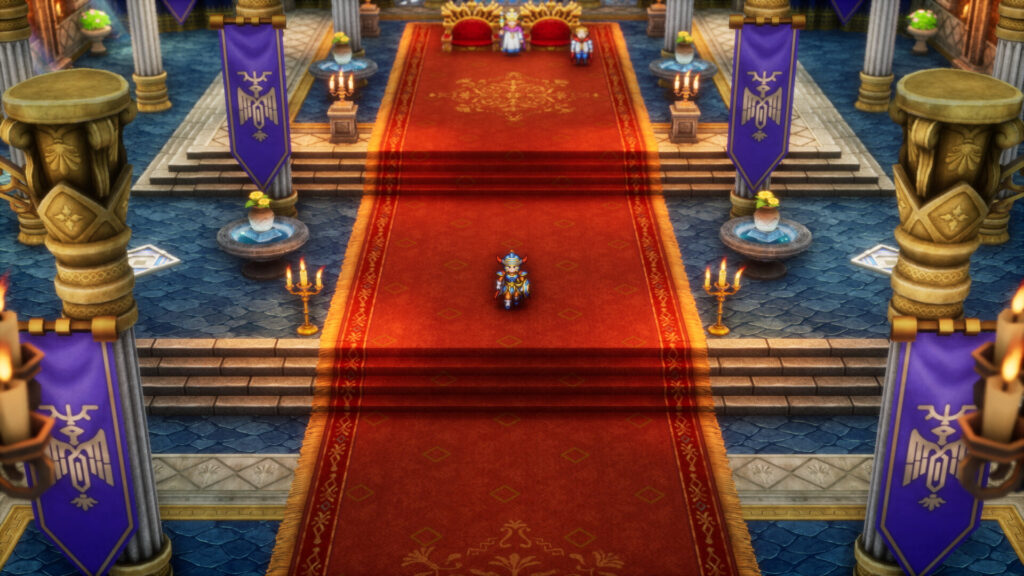
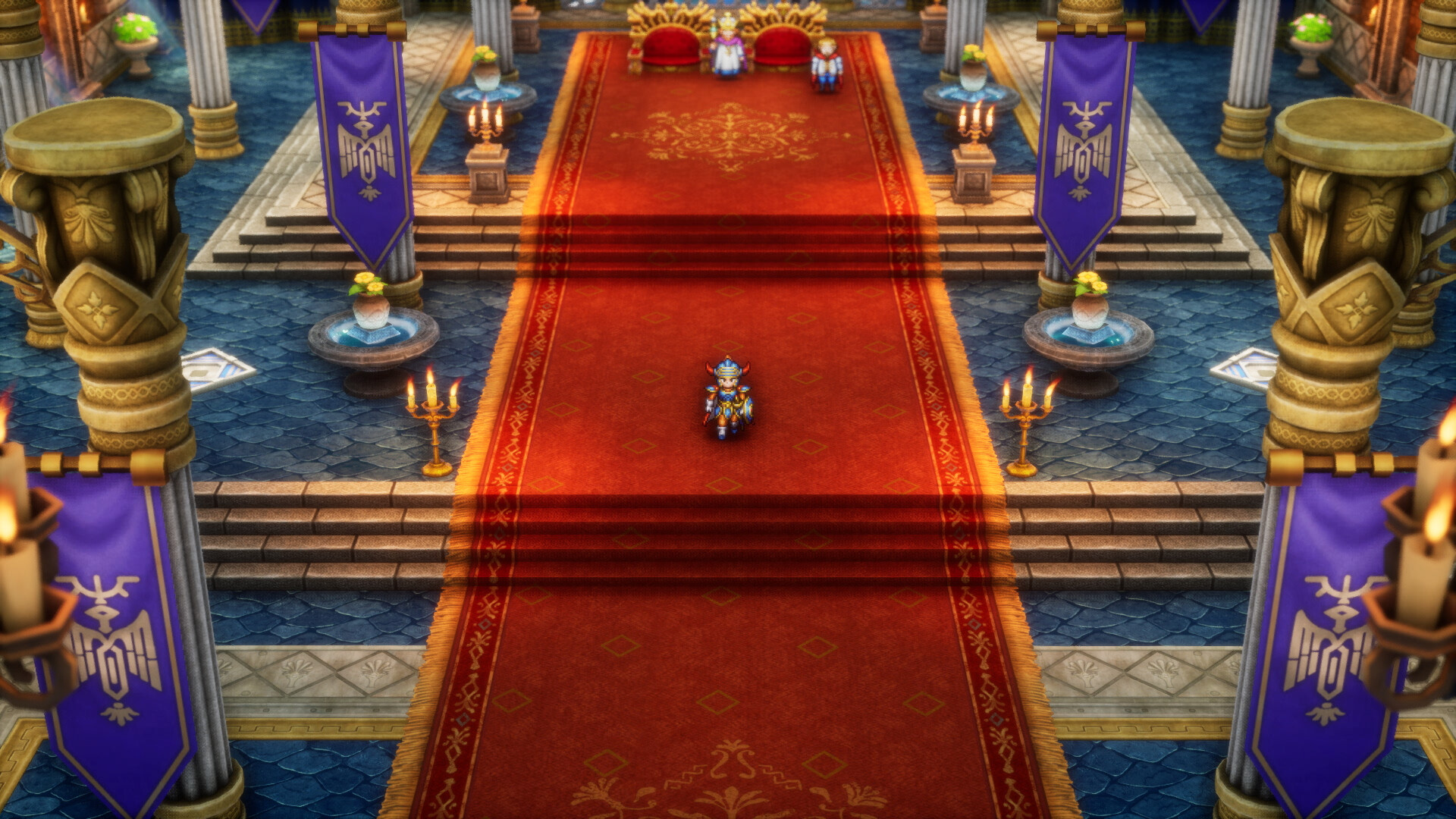
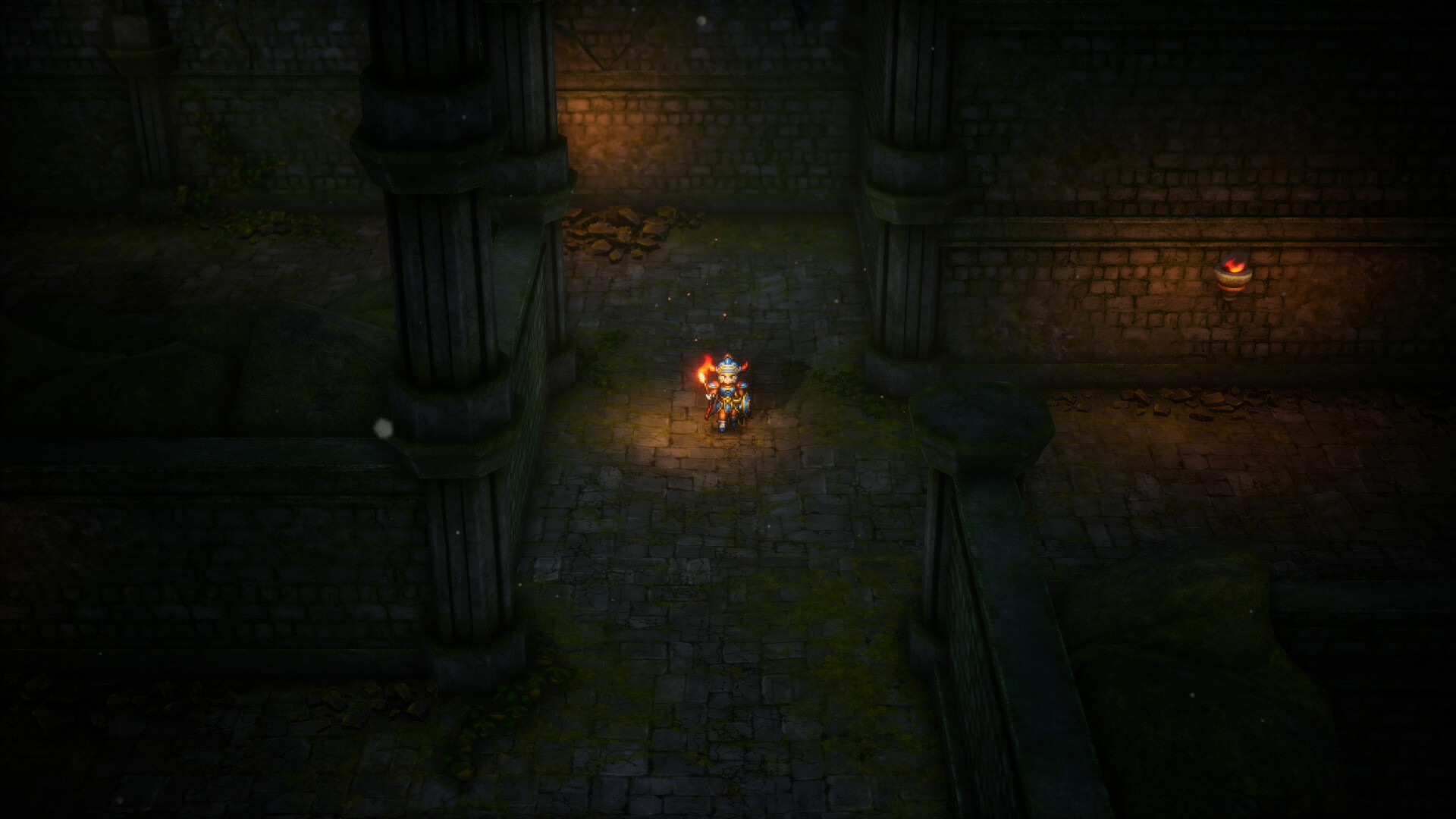
Easier than it has ever been, and prettier. The current headline version is Dragon Quest I & II HD-2D Remake, released worldwide on October 30, 2025 by Square Enix — the 1986 game rebuilt in the diorama style of the Dragon Quest III remake, bundled with its sequel for $59.99 on modern platforms including Steam. It is a faithful frame around the same small, perfect map: the throne room where your quest begins now looks like this.
If you want the original texture, the 2019 Nintendo Switch port of Dragon Quest is the Famicom game’s direct descendant in a clean modern wrapper, and the Game Boy Color version of Dragon Warrior I & II remains a lovely way to play it on a handheld. But honestly? Any version will do. The game is four hours long, forty years old, and still teaching the same first lesson it taught Japan in 1986: walk out of the castle. The world is open. Mind the Slimes.
— Sal
For more launches from this date, see This Day in Gaming History: May 27.