
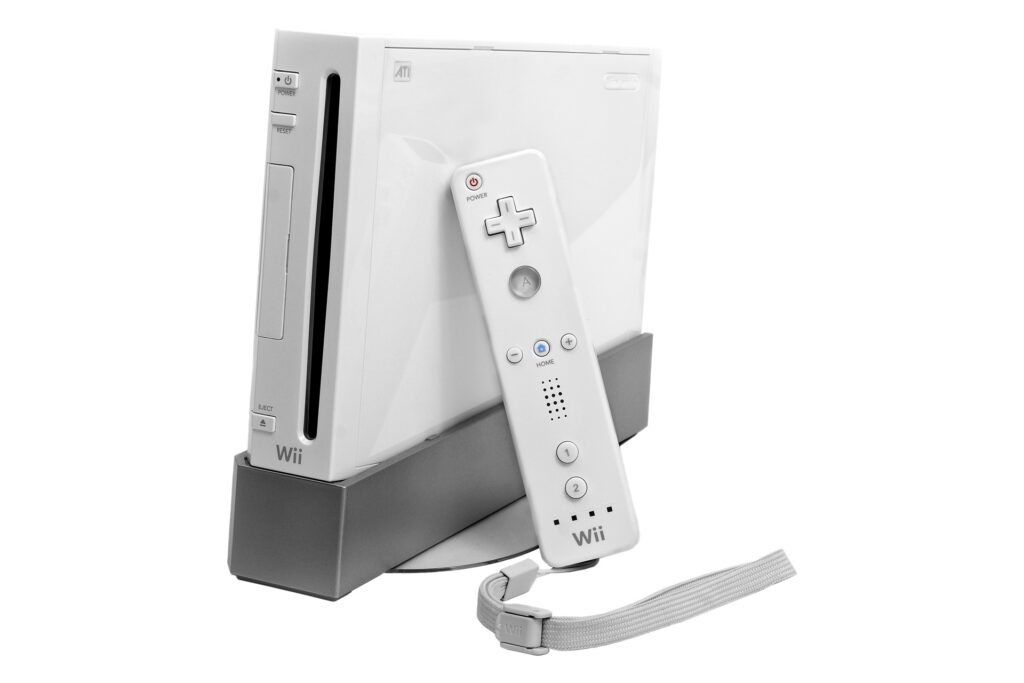
At a glance — Console: Nintendo Wii · Maker: Nintendo · Original release: November 19, 2006 (North America) · Launch price: $249.99 (US MSRP) · Media: 12 cm Wii Optical Disc (also plays 8 cm GameCube discs) · CPU: IBM Broadway at 729 MHz · Graphics: ATI Hollywood at 243 MHz · Controller: Wii Remote (with Nunchuk) · Lifetime sales: 101.63 million
On the morning of Sunday, November 19, 2006, the strangest console launch of the seventh generation did not look like a console launch at all. There was no midnight arms race over teraflops to argue about in the queue. The Nintendo Wii was a small white wedge, barely bigger than three DVD cases stacked together, sold for $249.99 — half the price of the top PlayStation 3 model that had arrived two days earlier — and the game in the box was not a shooter or a racer. It was bowling. Tennis. A little boxing. Nintendo was not asking the people in that queue to upgrade their hobby. It was asking everybody else to join it.
Twenty years on, that bet reads as the boldest Nintendo ever placed on its own hardware. The Wii was deliberately the least powerful major console of its generation, and it outsold both of its stronger rivals for years, finished with 101.63 million consoles sold, and dragged an entire industry — Sony and Microsoft included — into motion control. This is the story of launch day, and of the pack-in disc that explained the whole idea in about ninety seconds.
Revolution: The Nintendo Wii Bet Against Power
The Wii began life under the codename Revolution, and the name was a mission statement. Shortly after the GameCube, Nintendo decided early — designer Shigeru Miyamoto has said as much — that it would not compete on raw computational power. President Satoru Iwata directed hardware lead Genyo Takeda to, in effect, go off the technology roadmap: build something accessible, something a household that had never owned a console would allow into the living room, and keep backward compatibility with the GameCube so the machine reduced clutter instead of adding to it.
The numbers show how far off the roadmap they went. The Broadway CPU, built by IBM on the same PowerPC architecture as the GameCube’s Gekko, ran at 729 MHz. The Hollywood chip from ATI, running at 243 MHz, folded graphics, audio and input/output into one system-on-a-chip. Total memory was 88 MB. Nintendo’s own framing put the machine at roughly one and a half to two times the GameCube’s power — respectable, but a different sport from the Xbox 360 and PlayStation 3, and everyone knew it. What the savings bought was the price, the size and the silence: a console that drew little power, made little heat and could sit beside a television without announcing itself.
Iwata first talked about Revolution at E3 2004, showed the console itself at E3 2005 — holding it up in one hand to make the size point — and revealed the controller that September at the Tokyo Game Show. The final name, announced in April 2006, drew a week of jokes. Nintendo’s explanation was simple: “Wii” sounds like “we,” the two lowercase i’s look like two people standing side by side, and nobody anywhere would struggle to say it. The jokes faded. The reasoning turned out to be the whole strategy in one syllable.
Launch Day: November 19, 2006
Nintendo set the terms on September 14, 2006. In its own launch announcement, Nintendo of America confirmed the Americas would lead the worldwide launch on November 19, at an MSRP of $249.99, with one wireless Wii Remote, one Nunchuk and Wii Sports in the box — “one price, one configuration, one color,” as the company put it on stage in New York. Japan followed on December 2 at ¥25,000, Australasia on December 7, and Europe on December 8. Nintendo aimed to ship about four million consoles by the end of the year, with the largest share going to the Americas.
The launch lineup carried the same two-audiences argument as the hardware. Twenty-one games were announced for launch day in North and South America, with more arriving before the year ended. At the head of the line stood The Legend of Zelda: Twilight Princess — the dark, traditional epic the faithful had waited years for, reviewed on this site as the Wii’s dark launch epic — alongside Nintendo’s own Excite Truck, an arcade racer steered by tilting the Remote like a wheel. Third parties showed up in real numbers: Ubisoft’s Red Steel and Rayman Raving Rabbids, Sega’s Super Monkey Ball: Banana Blitz, Atlus’s Trauma Center: Second Opinion, plus Madden NFL 07, Need for Speed: Carbon, Tony Hawk’s Downhill Jam and Call of Duty 3 among the day-one shelves.
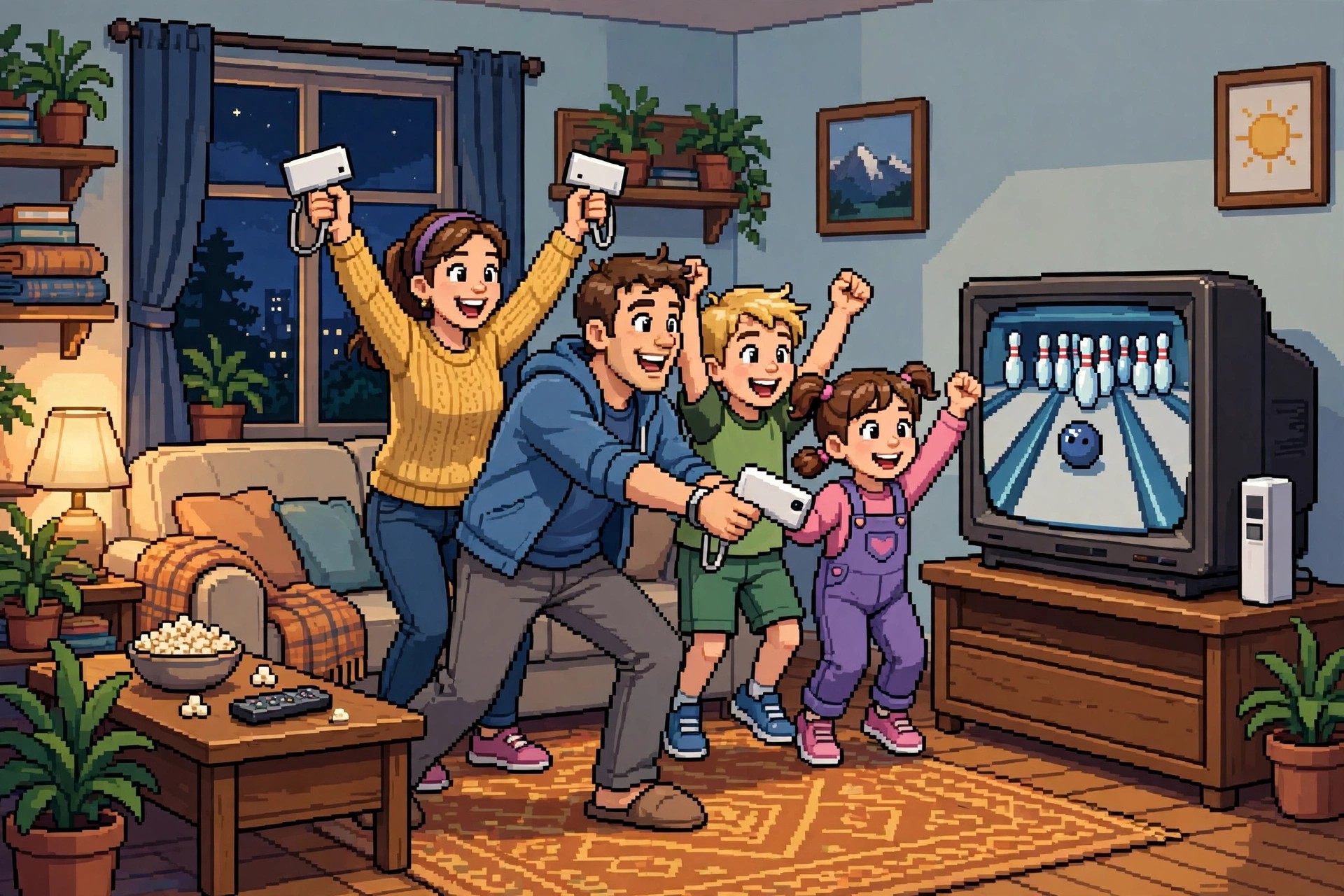
It worked immediately, and then it kept working past the point of comfort. The Wii was in short supply through its first year; Nintendo had shipped nearly 3.2 million units worldwide by the end of 2006 and spent 2007 apologizing for shortages while it raised production. A $249.99 machine with a game in the box had launched two days after the $499 and $599 PlayStation 3, and the queues were for the cheap one.
Wii Sports: The Pack-In That Sold the Idea
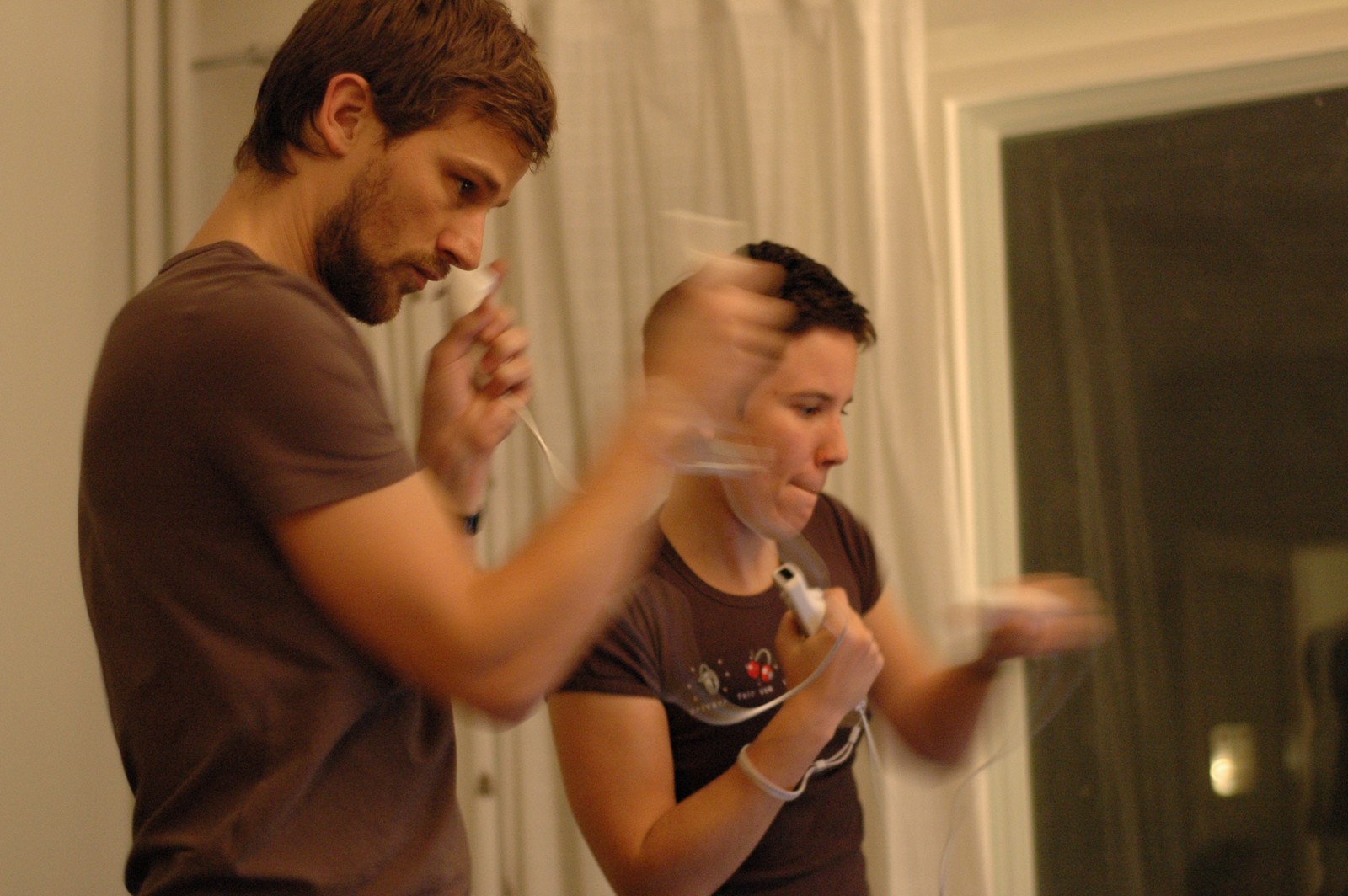
Every console launch has a game that explains the hardware. The Wii’s came free inside the box in North America and Europe — though pointedly not in Japan, where Wii Sports was sold separately and still sold 176,167 copies in its first two days, a record for a seventh-generation game there at the time. Five sports on one disc: tennis, baseball, bowling, golf and boxing. No tutorials worth the name, because none were needed. You held the Remote like a racket, a bat or a bowling ball, and your body already knew the instructions.
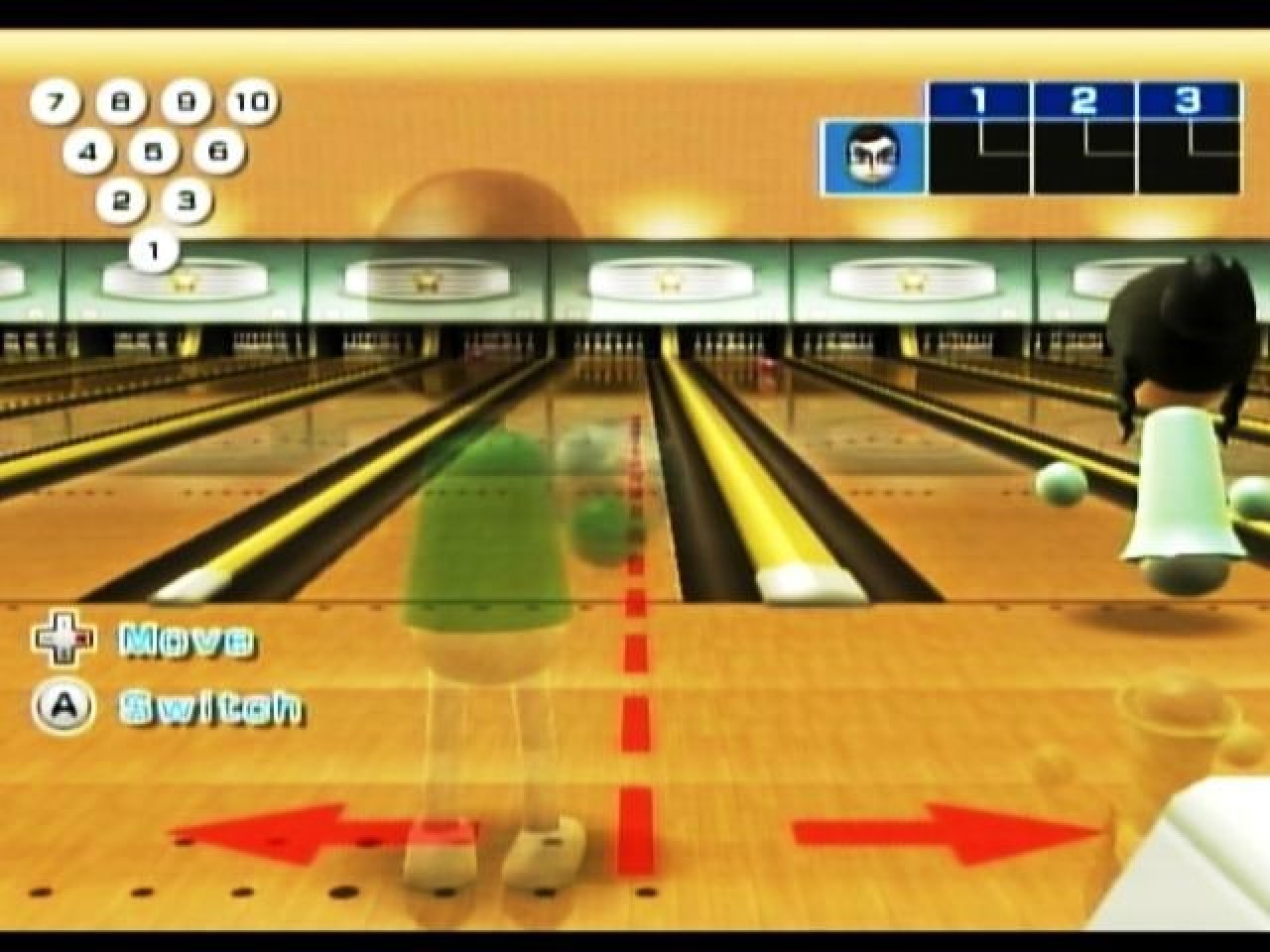
That was the trick, and it is hard to overstate how radical it felt in November 2006. Bowling became the universal demo — the game played in living rooms, bars, offices and retirement homes by people who had never held a controller and never intended to. Players appeared on screen as Miis, the simple caricatures built in the Mii Channel, so the person swinging was recognizably you. Wii Sports went on to sell 82.9 million copies including pack-ins, making it the Wii’s best-selling game by an enormous margin. Nintendo bundled it, by its own account, because it did not expect anyone to buy a console just for Wii Sports. Instead, Wii Sports became the reason millions bought the console.
The Remote, the Nunchuk and the Channels
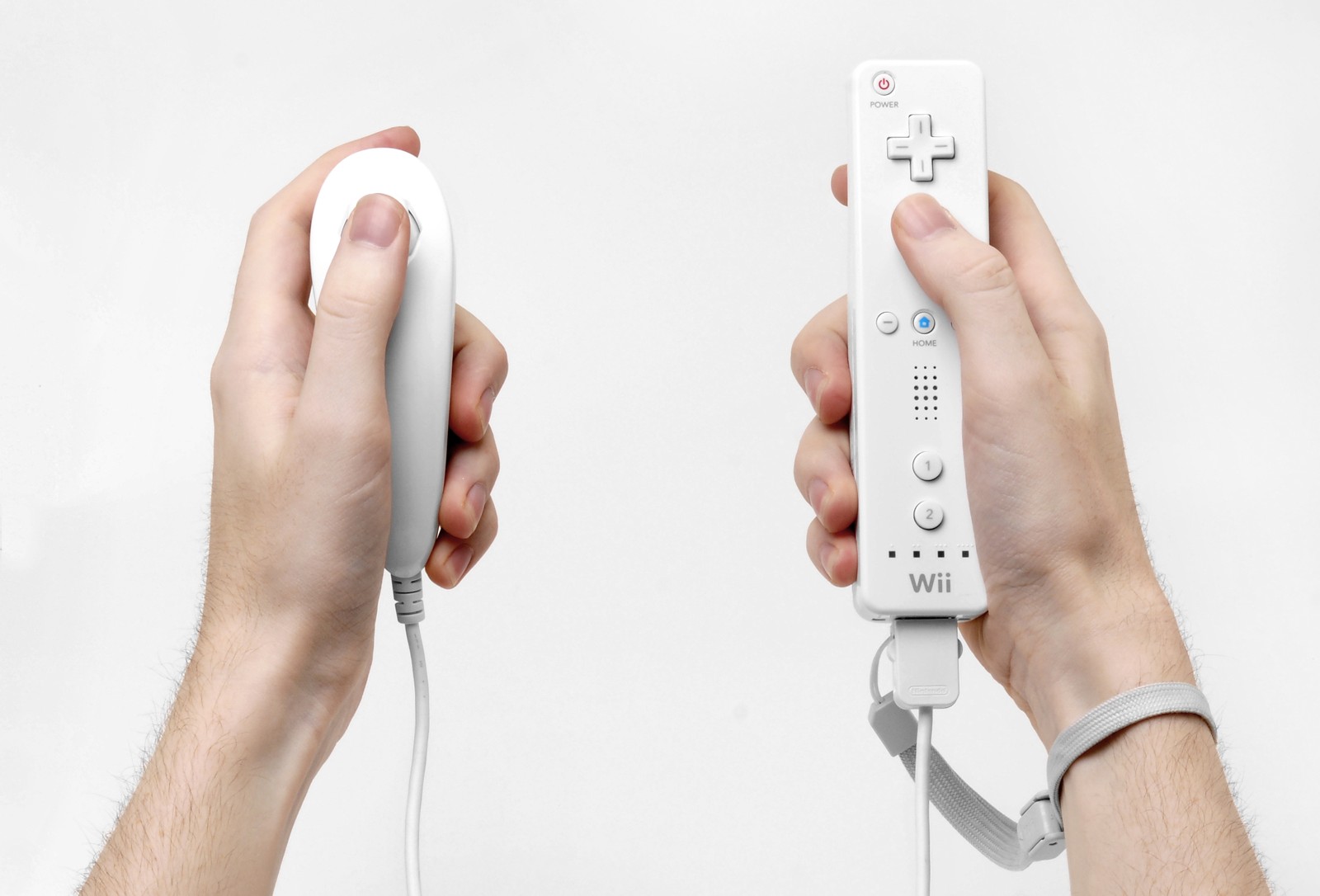
The Wii Remote deserves its place as the most influential controller since the D-pad. Inside the white wand sat a three-axis accelerometer that registered orientation and gesture, and an infrared camera in its tip that tracked the LEDs in the Sensor Bar above or below the television — which is how a remote became a pointer, moving a cursor across the menu with mouse-like ease from about fifteen feet away. It carried a D-pad, a big A button, a trigger underneath, a small internal speaker, rumble, and player-number LEDs along the bottom. Up to four could connect over Bluetooth at once. The bundled Nunchuk plugged into its base on a cable, adding an analog stick, its own accelerometer and two trigger buttons — one hand for pointing and swinging, the other for steering and moving, which is how Twilight Princess and most traditional games were played.
The Remote also produced the era’s most famous teething trouble. Within weeks of launch, slipped Remotes were cracking television screens, and in December 2006 Nintendo recalled the original wrist straps and replaced them free with a stronger version, spending the following year drilling one instruction into every owner: keep the strap on. A silicone Wii Remote Jacket followed in October 2007, free to existing owners and packed in afterward. It is a strange kind of success metric — a controller so physical that its manufacturer had to armor it — but no rival pad ever needed one.
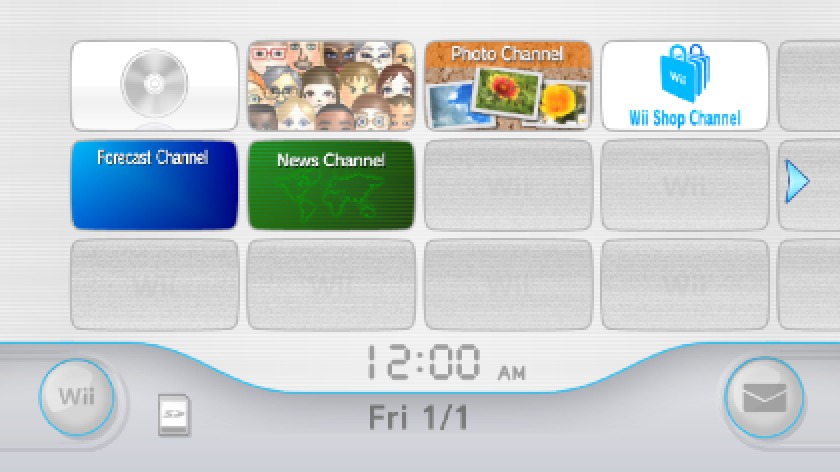
Turn the machine on and the other half of the design appeared: the Wii Channel Menu, a grid of friendly tiles — Disc Channel, Mii Channel, Photo Channel, Forecast and News, and the Wii Shop Channel. Through the Shop came the Virtual Console, which at launch began selling downloadable classics from the NES, Super NES and Nintendo 64, and later grew to cover the Genesis, TurboGrafx-16, Master System, Neo Geo, Commodore 64 and arcade games besides. And under a flap on top of the original model sat four GameCube controller ports and two memory card slots: every GameCube game, more than 530 titles by Nintendo’s launch-day count, playable from day one. The Wii was a new machine that arrived already owning two decades of library.
The Phenomenon: Shortages, 50 Million, Then 101.63 Million
The sales curve still looks like a printing error. The Wii passed the Xbox 360 in worldwide sales by September 2007, less than a year after launch. At the March 2009 Game Developers Conference, Iwata could report 50 million sold. It crossed 100 million in the second quarter of 2013, and Nintendo’s final reported lifetime figure stands at 101.63 million consoles — at least 48 million of them in North America — with 921.85 million Wii games sold alongside. For years it was Nintendo’s best-selling home console ever, until the Switch passed it in 2021.
Success bent the whole industry around it. Microsoft answered with Kinect, Sony with PlayStation Move; both were admissions that Nintendo had found an audience the power race had been ignoring. The honest accounting includes the cost, too: the same casual image that filled living rooms pushed some core players away, third-party support thinned badly after 2010, and the follow-up Wii U, launched in 2012, tried to win those players back and became Nintendo’s worst-selling home console instead. Nintendo discontinued the original Wii in October 2013 with the argument settled and the lesson only half-learned.
Nintendo held the $249.99 launch price for nearly three years — an eternity in console economics — before cutting it to $199.99 in September 2009, days after Sony and Microsoft cut their own machines. By then the argument was already over: during 2009 the Wii passed 67 million units and became the best-selling home console Nintendo had ever made. The decline, when it came after 2010, was the industry catching up and the novelty cooling at the same time, not a verdict on the idea itself.
The Wii at 20: What It Left Behind
Twenty years after launch day, the Wii’s fingerprints are everywhere, even where the hardware is gone. Motion control became a permanent dialect of game design rather than a fad. The Mii idea — a simple, personal avatar that follows you between games — fed straight into everything Nintendo built afterward. The Virtual Console normalized the idea that a console launches holding its own history, an expectation every platform now lives with; our Wii in 2026 setup and buying guide exists because so many of these machines are still plugged in and played, and our complete story of the Wii follows the phenomenon year by year.
Most of all, the Wii proved the living room was bigger than the hobby. A console slightly larger than three DVD cases, built from yesterday’s chips, sold for $249.99 with bowling in the box — and for a while it was not the second machine in the house or the kids’ machine. It was the machine. On November 19, 2006, Nintendo stopped trying to win the arms race and changed the room instead. Twenty years on, we are still playing in the room it made.
— Chip
For more launches from this date, see This Day in Gaming History: November 19.