
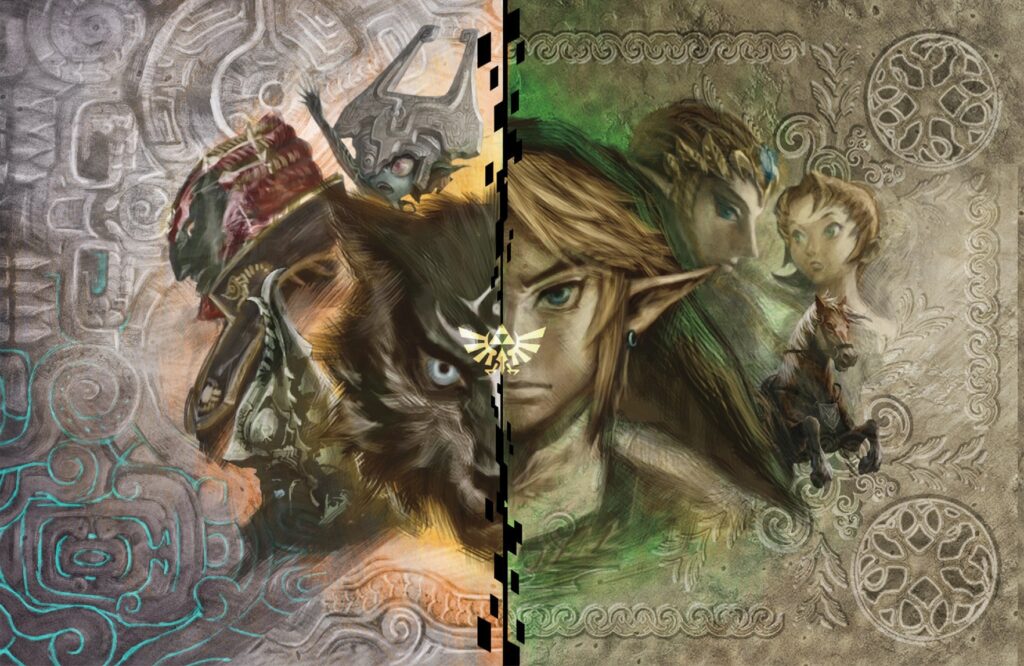
At a glance — Game: The Legend of Zelda: Twilight Princess · Developer: Nintendo EAD · Publisher: Nintendo · Original release: November 19, 2006 (Wii, North America) · Original platforms: Wii, GameCube · Genre: Action-adventure
Twenty years ago this week, the longest line in gaming was not for a console. It was for the game standing next to one. The Wii launched in North America on November 19, 2006 with a pack-in party game doing the demonstrating — but the disc people had been dreaming about for two and a half years, ever since a trailer made a Los Angeles conference hall lose its mind, was the dark, grown-up Zelda Nintendo had promised and then delayed, and delayed again. Twilight Princess arrived carrying impossible weight: it had to justify the wait, sell a strange new controller, close out the GameCube with dignity and prove that the series could still do the big, serious epic its fans kept asking for. It did all four — and it did them as two different games at once, facing in opposite directions.
The Scream at E3 2004: Twilight Princess and the Realistic Zelda Promise
To understand the noise, you have to start with the disappointment it answered. Nintendo had shown a realistic Link duelling Ganondorf as a Space World 2000 tech demo, and a generation of fans filed it away as a promise. What the GameCube actually got, in 2003, was The Wind Waker — a sunlit, cel-shaded cartoon with a child hero. It was wonderful, and our Wind Waker review says so at length, but in North America its look was widely blamed for soft sales, and director Eiji Aonuma heard the message clearly: the audience wanted the other Zelda, the grown-up one.
So at the end of Nintendo’s E3 2004 press conference, Reggie Fils-Aimé invited the room to step inside one more world, and the trailer that followed — a realistic Link riding through burning fields, fighting on horseback, chain-swinging in dark dungeons — produced the most famous audience reaction in E3 history. Grown journalists stood on chairs. Shigeru Miyamoto walked out holding a sword and shield. The game had begun life under the working title The Wind Waker 2, built on a heavily modified version of that game’s engine, but nothing about its presentation said sequel to a cartoon. Aonuma’s team took its visual cues from the Lord of the Rings films then dominating cinemas, built horseback combat Miyamoto insisted on — lead character designer Keisuke Nishimori learned to ride so the team could feel what Epona should feel like — and aimed for the largest Hyrule the series had attempted.
The promise came with a date, November 2005, and the date slipped. In August 2005 Nintendo delayed the game into 2006 to add content and polish. What players did not yet know was that the delay had a second purpose: the GameCube’s epic was being quietly rebuilt as the flagship of its successor.
A Launch Title Is Born: Two Consoles, One Twilight Princess
The Wii — still codenamed Revolution — was built around a pointing controller, and Miyamoto spotted early that the Wii Remote was a natural way to aim a bow in Zelda. Aonuma’s team prototyped pointing controls, liked the feel, and faced a hard choice: finish the GameCube game its audience had pre-ordered in its head, or split the project in two. Nintendo president Satoru Iwata backed the two-version plan, accepting a longer wait as the price of satisfying both audiences. The result was a first for the series and still a rarity in the industry: one game, developed as a GameCube title, launched as the headline act of a new console. As our Wii Forever history tells it, the little white console needed exactly one traditional epic to stand beside Wii Sports, and this was it.
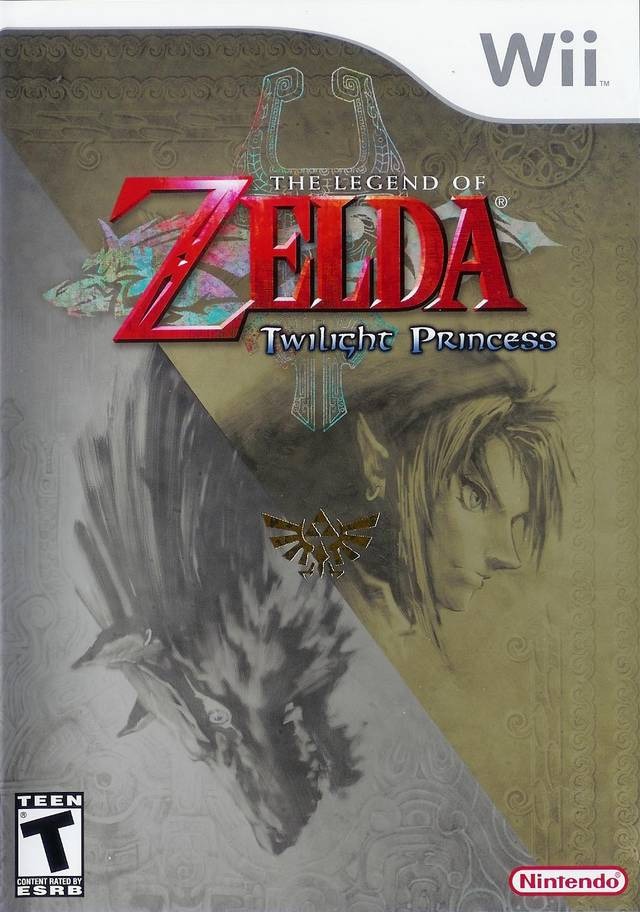
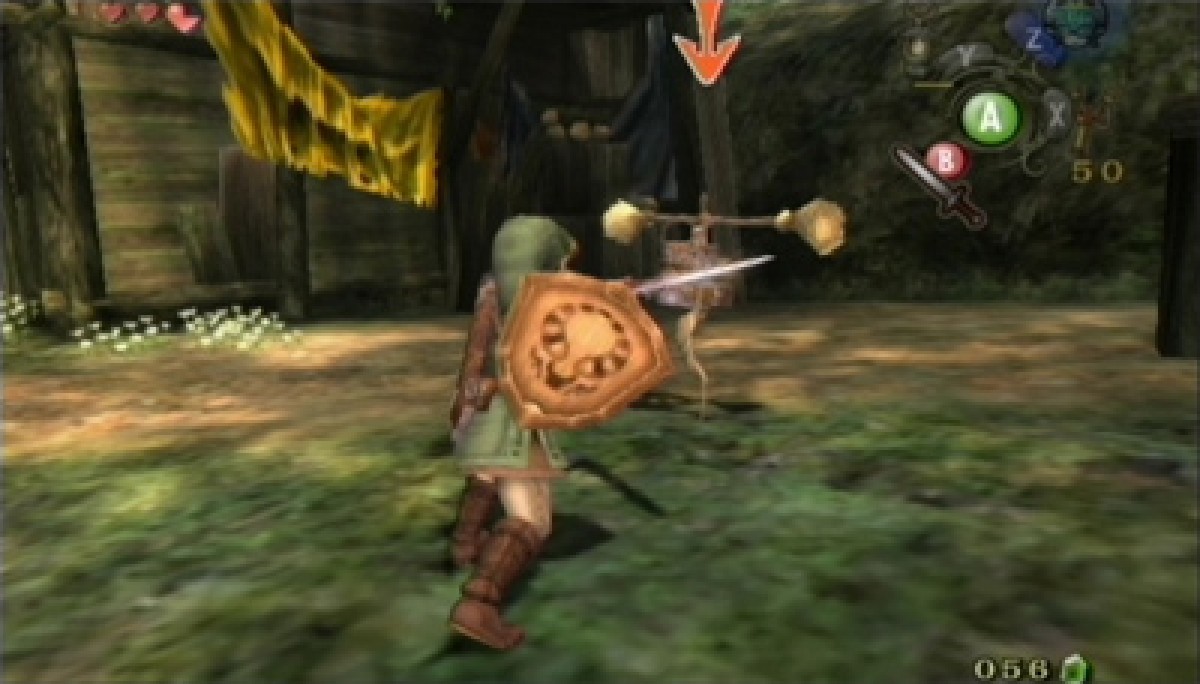
The Wii version led. It reached North America on November 19, 2006, the console’s launch day — the first Zelda ever to launch with a Nintendo system, and, unusually, the first console Zelda to reach the United States before Japan, which followed on December 2 alongside Europe and Australia that month. Buyers responded the way Nintendo had bet they would: in its first week the game sold with three of every four Wii purchases in North America, and its 412,000 US copies in November 2006 represented 87 percent of Wii software sales that month — the highest attach rate for a launch game since Super Mario 64. The Wii controls were the headline difference: swing the Remote to swing the sword, aim the bow and the Clawshot by pointing at the screen, and hear the bowstring twang and Midna’s giggle from the Remote’s little speaker. Not every critic was sold — GameSpot’s review famously called the motion controls tacked-on — but as a demonstration that the new controller could carry a forty-hour epic and not just tennis, Twilight Princess made the argument on day one.
Wolf Link, the Twilight Realm and the Genius of Midna
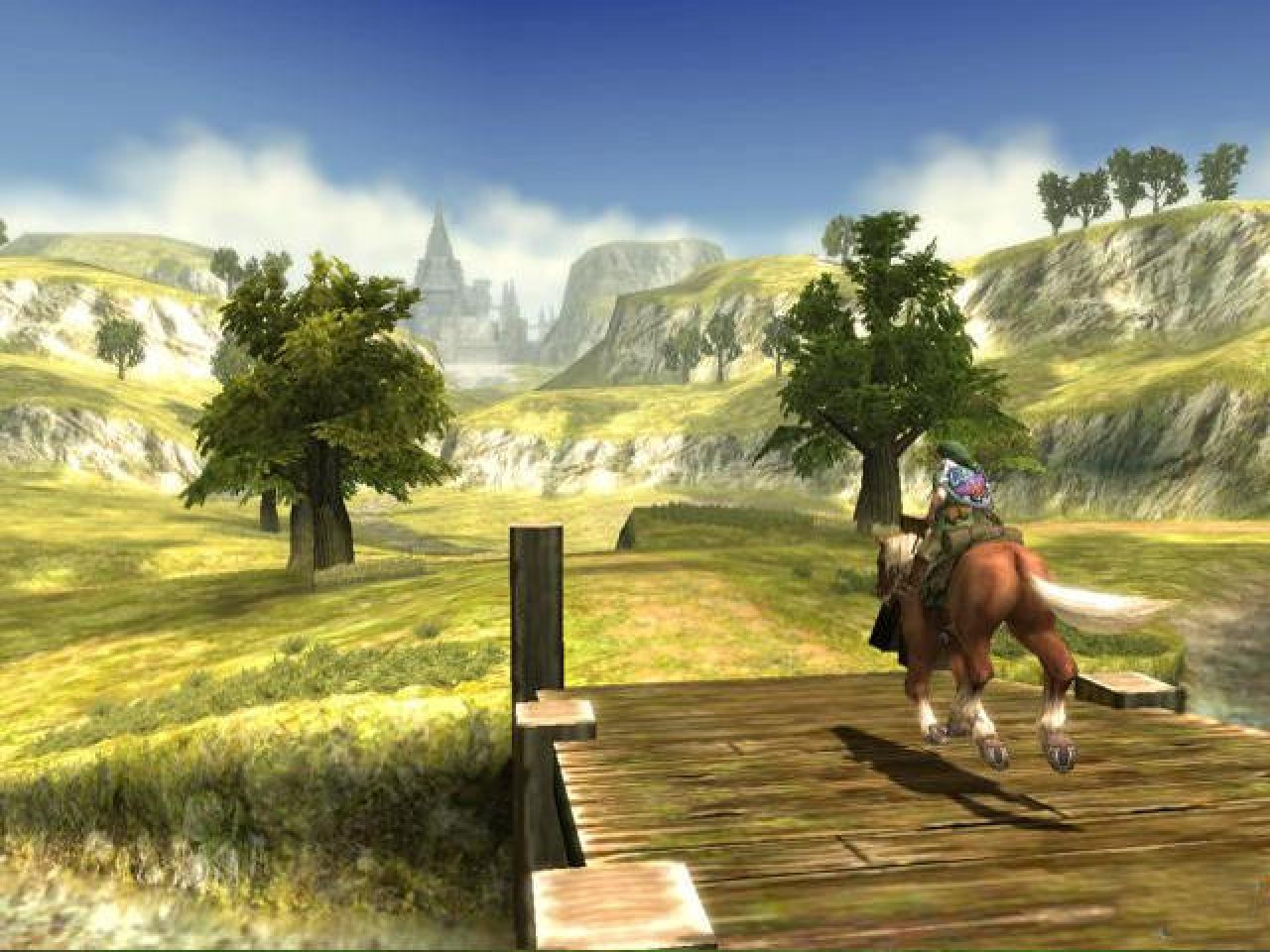
Strip away the launch drama and the game underneath is the most structurally daring of the traditional Zeldas. Link begins as a ranch hand in Ordon Village — herding goats, fishing, living the quiet life the series rarely lets him keep — before Bulblins raid the village, take the children, and drag him through a wall of Twilight into a Hyrule transformed. The Twilight Realm, a corrupted parallel dimension leaking across the kingdom, turns Hyrule’s people into unaware spirits and turns Link into a wolf. The transformation had roots in series history — A Link to the Past had turned Link into a rabbit in its Dark World — and in a dream Aonuma had of being a wolf locked in a cage, confused and disoriented. Mechanically it is a second moveset folded into the same adventure: Wolf Link cannot hold a sword, but he runs faster, digs, follows scent trails and sees the spirit world with sharpened senses, and the early game’s rhythm alternates between restoring light to each Twilight-covered province as the wolf and dungeon-crawling through it as the man.
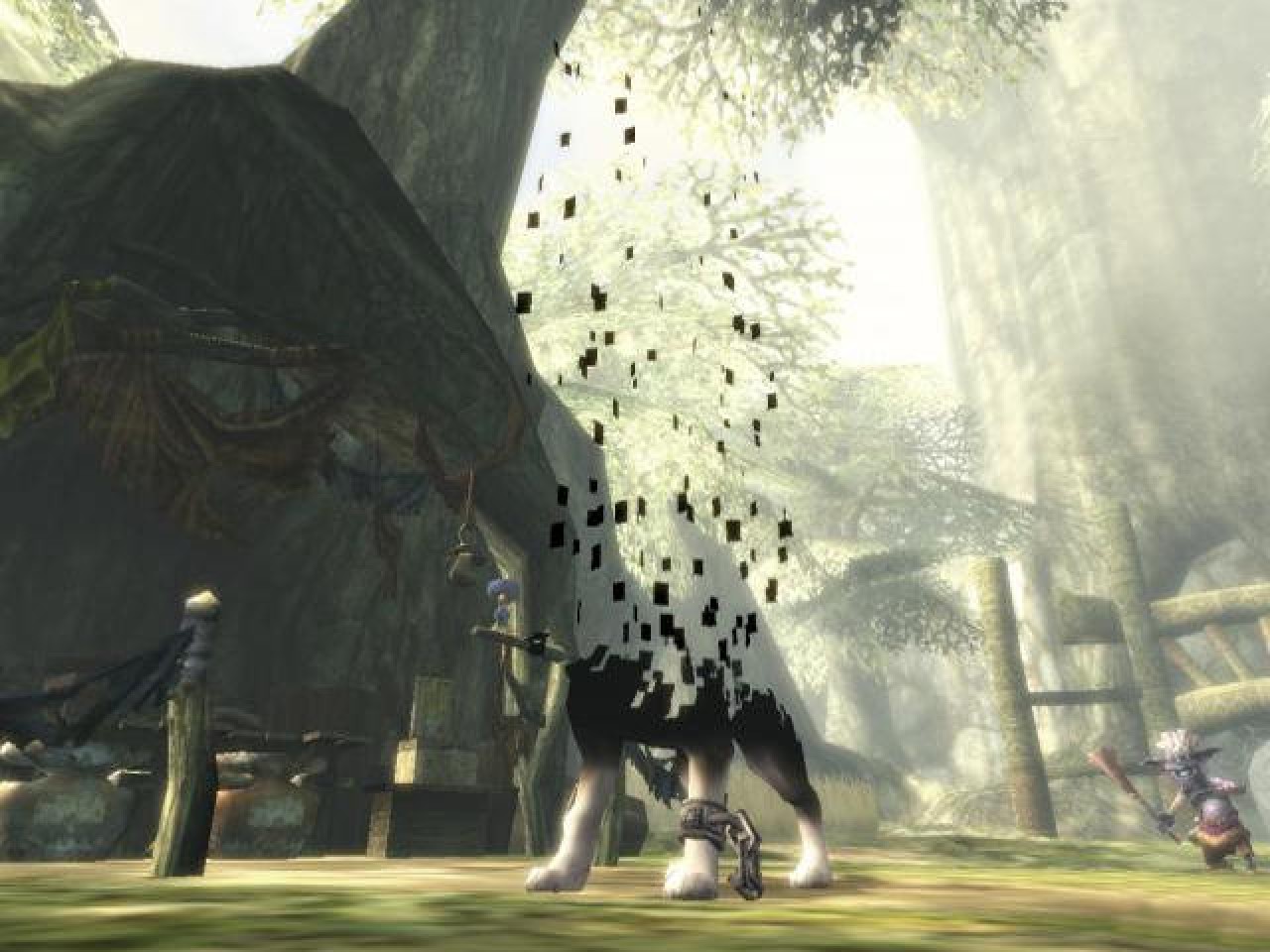
What elevates the whole design is the passenger. Midna, the imp who frees Wolf Link from his cell in the game’s first hour, is introduced as a blackmailer — she will help, on her terms, for her reasons — and becomes, across forty hours, the emotional centre of the story in a way no Zelda companion before or since has managed. She rides on Wolf Link’s back, fights beside him with an energy field that can hold whole packs of Shadow Beasts, warps him across the map, and talks — constantly, teasingly, in a scrambled pseudo-language voiced by Akiko Kōmoto that remains one of the great sound-design tricks of the era. The revelation that she is the Twilight Princess of the title, the Twili’s true ruler usurped and cursed by Zant, lands because the game has spent so long letting her be difficult first. Her arc — from user of Link to Zelda’s counterpart to the friend who shatters the Mirror of Twilight in the final scene so the worlds can never endanger each other again — gives the biggest Zelda of its generation its smallest, sharpest heart.
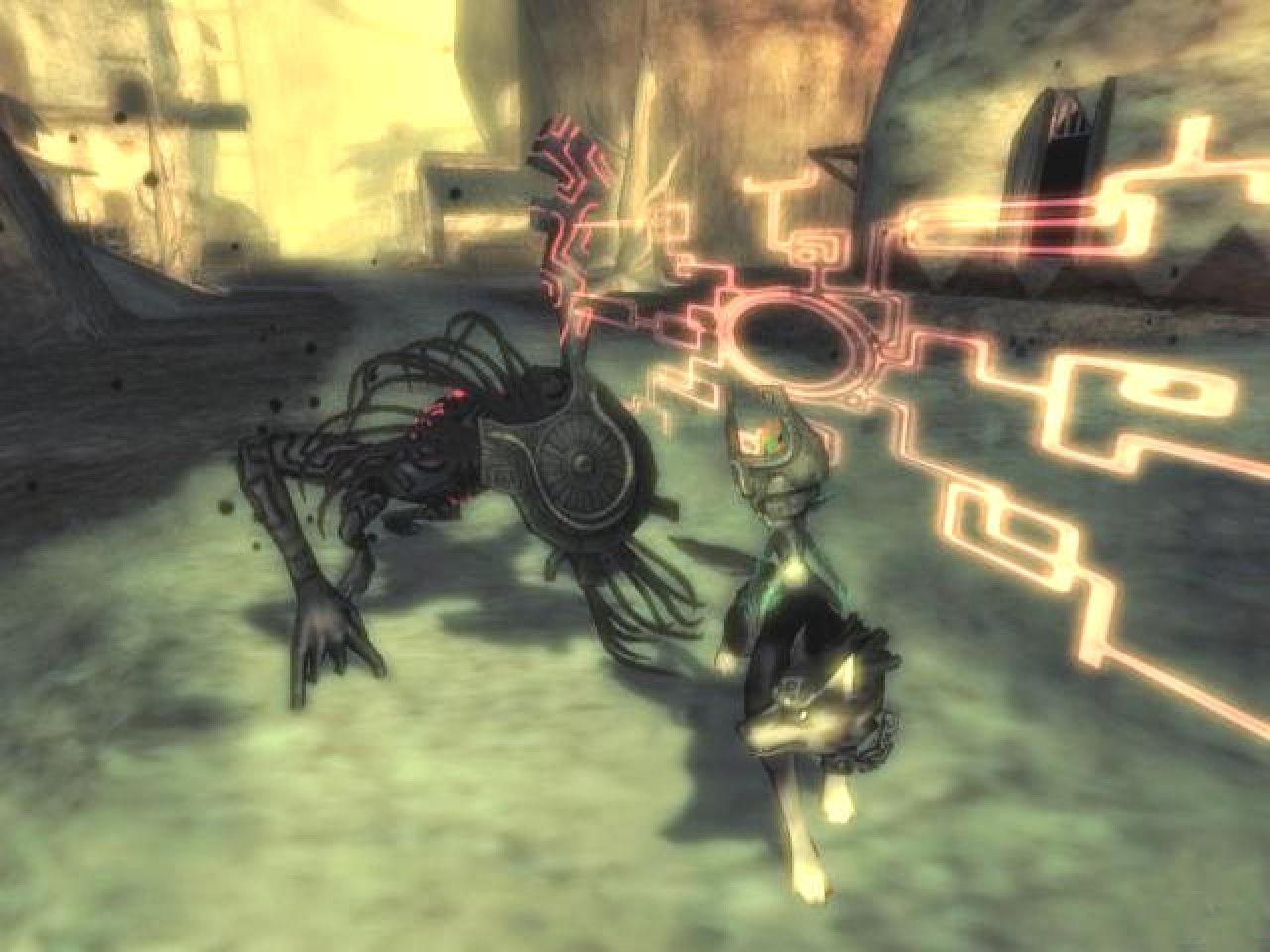
Around that partnership the game builds the fullest version of the Ocarina of Time template the series ever made: nine dungeons, from the Forest Temple’s monkey-troop puzzles to the magnetic ceilings of the Goron Mines, the waterworks of Lakebed Temple and the double-Clawshot skyways of the City in the Sky. It is set more than a century after Majora’s Mask, on the timeline branch where the Hero of Time returned to childhood — a placement Nintendo confirmed around release — and it plays like a deliberate summation: Z-targeting combat refined, horseback swordplay delivered at last, and a villain structure that runs from the genuinely unsettling Zant to the Ganondorf waiting, inevitably, behind him.
The Other Twilight Princess: The GameCube Version and the Mirror
Three weeks after the Wii launch, on December 11, 2006 in North America (December 2 in Japan), the GameCube version arrived — the final first-party game Nintendo ever released for the console, and, in Japan, the last official GameCube game of all. Our GameCube Forever history marks it as the little purple box’s swansong, and a generation of owners who had waited since 2004 finally got their game. Many of them will tell you, still, that they got the better one.
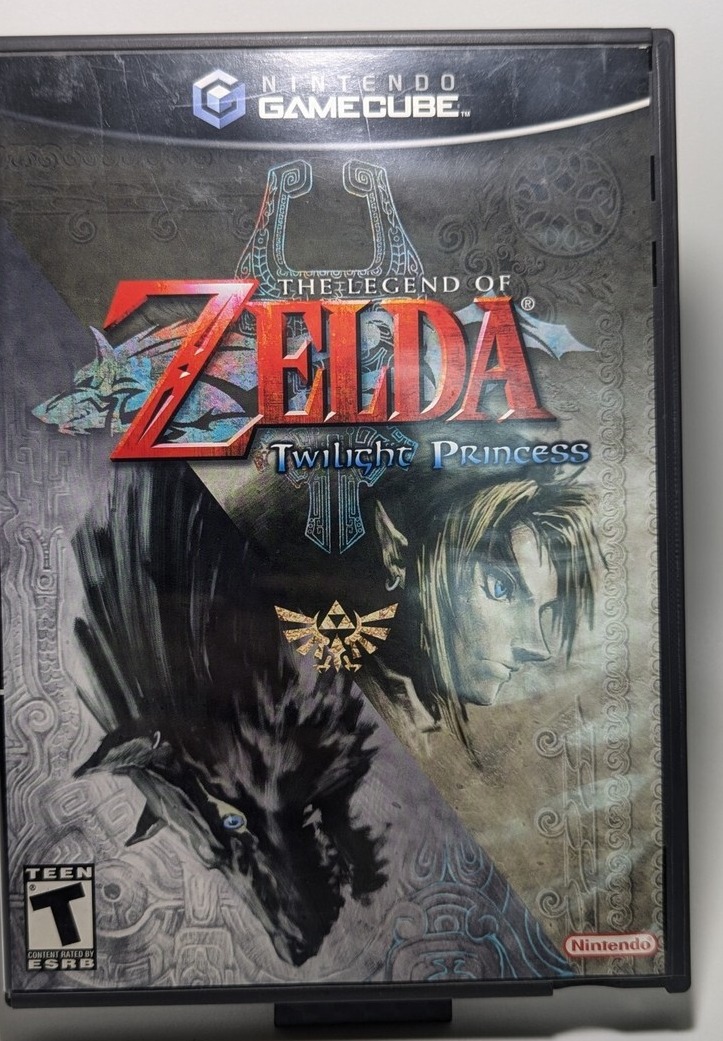
They have a real case. The GameCube version plays with a conventional controller and a freely controlled camera the Wii version traded away, and it presents Hyrule in its original orientation. The Wii version, famously, does not: when the team restored third-person sword-swinging late in development, swinging a right-handed Remote against a left-handed Link felt wrong, and with no time to rebuild the character model, Nintendo flipped the entire world. Every map, every dungeon, every east and west in the Wii version is a mirror image of the GameCube original — Link right-handed, Kakariko Village on the opposite side of the world, even the official player’s guide forced to print flipped maps in the back for GameCube players. It remains the most consequential cosmetic decision in the series’ history: two players comparing notes on the same dungeon in December 2006 could be, quite literally, facing opposite directions. The GameCube disc’s relative scarcity in North America — sold largely through pre-orders and quickly gone — has since made it the collector’s version, which is its own irony for the port that was supposed to be the afterthought.
Reviews, Sales and the Long Shadow of Twilight Princess at 20
The reception settled the argument about whether the wait had been worth it. Twilight Princess holds Metacritic scores of 95 on Wii and 96 on GameCube, collected perfect scores from publications including 1UP, Computer and Video Games, Electronic Gaming Monthly, Game Informer and GameSpy, and swept game-of-the-year awards from GameTrailers, EGM, Game Informer, GamesRadar, GameSpy, X-Play and Nintendo Power, among others; at the Interactive Achievement Awards it won for story and character development — a nod, surely, to Midna. Critics praised the art direction, the dungeons and the sheer scale, with the honest caveats that have followed it since: textures that betrayed its GameCube origins, a slow opening, and sequenced music where an orchestra had been considered — Toru Minegishi and Asuka Ohta’s score, supervised by Koji Kondo, is beloved anyway, Midna’s Lament and the Hyrule Field theme above all. By September 2015 the two original versions had sold 8.85 million copies, making it the best-selling Zelda of all time until Breath of the Wild passed it in 2018. We make the case for the Wii version in our own Twilight Princess review, if you want the dungeon-by-dungeon version of the argument.
The afterlife has been busy. The Wii version joined the Nintendo Selects budget line in 2011; a decade after launch, Twilight Princess HD brought the game to Wii U in March 2016, built by Tantalus Media from the GameCube version’s orientation, with sharper textures, a Wolf Link amiibo and a new optional challenge dungeon — the version through which many younger players now know Hyrule’s dusk. Akira Himekawa’s manga adaptation ran to eleven volumes between 2016 and 2022, and Midna and Wolf Link have stayed in the series’ bloodstream through Hyrule Warriors, amiibo and Breath of the Wild itself, whose developers used an HD Twilight Princess running on Wii U kits while searching for that game’s art style.
Twenty years on, Twilight Princess sits in a singular place: the last of the old-formula giants, and the fullest expression of it. The series that followed it — Skyward Sword’s motion-built world, then Breath of the Wild’s open reinvention — defined itself partly against its scale and structure, yet the dusk has never really lifted. It is still the Zelda people picture when they say they want a dark one. It launched a console, closed another, hid its best character in an imp’s silhouette and trusted a wolf to carry half of Nintendo’s biggest adventure. Some promises made in a screaming conference hall in 2004 were, it turns out, worth keeping.
— Chip
For more launches from this date, see This Day in Gaming History: November 19.