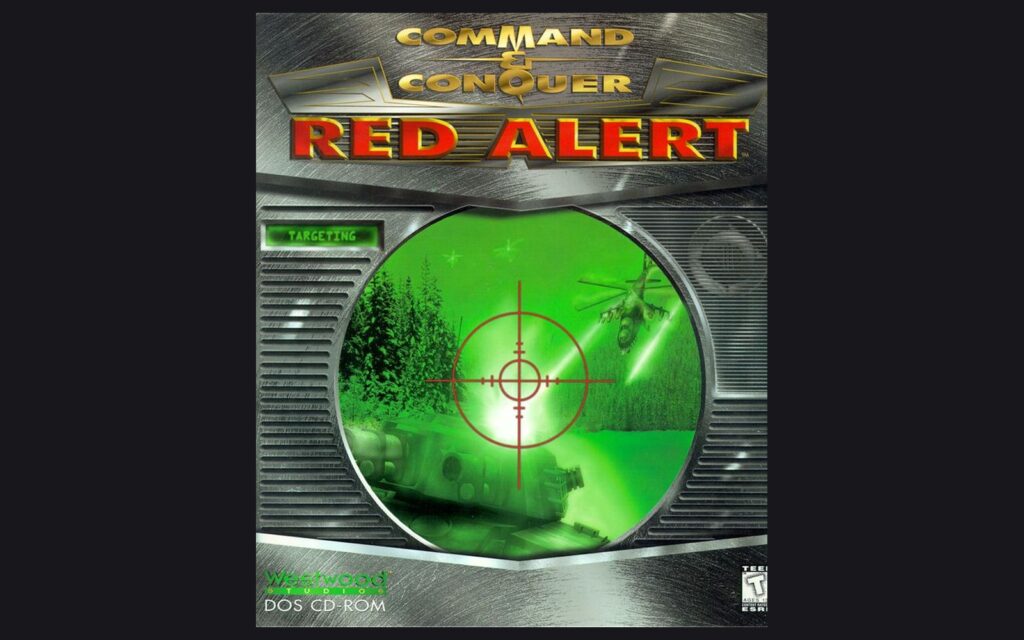
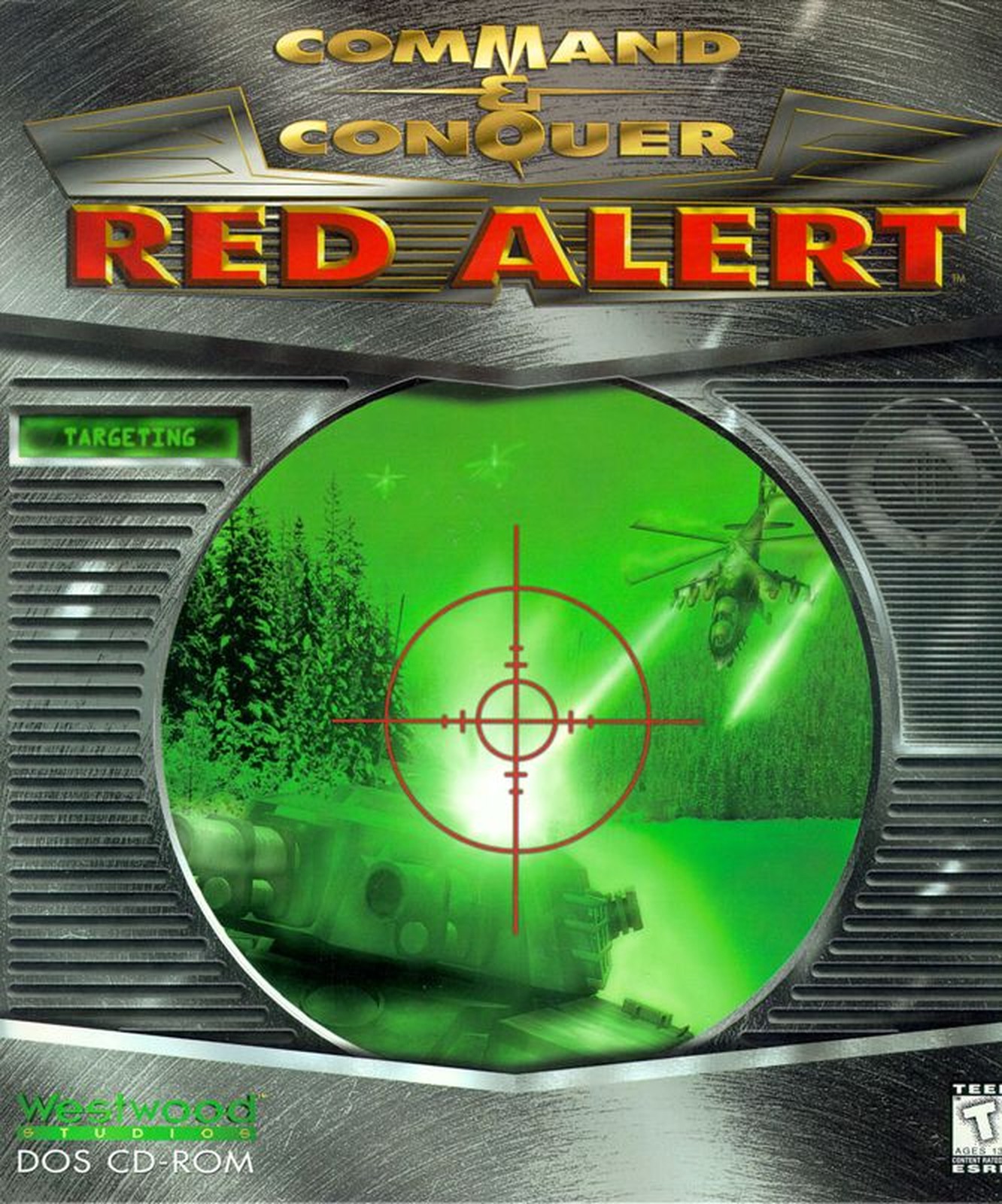
At a glance — Game: Command & Conquer: Red Alert · Developer: Westwood Studios · Publisher: Virgin Interactive · Original release: November 22, 1996 · Original platforms: MS-DOS, Windows · Genre: Real-time strategy
It starts with a handshake. Albert Einstein, an experimental time machine, and a young Adolf Hitler who ceases to exist the moment their hands touch — that is the premise Westwood Studios built a war on. Command & Conquer: Red Alert arrived on November 22, 1996, barely fourteen months after the original Command & Conquer had turned the real-time strategy into the PC’s loudest genre, and it was stranger than its sequel-shaped expectations suggested. It kept the formula that worked — build a base, harvest a resource, roll armour across the map — and wrapped it in the boldest premise the genre had ever attempted: a war that only happened because Einstein deleted Hitler.
Red Alert was the second game to carry the Command & Conquer name, designed as a prequel to 1995’s Tiberian Dawn and built by a team of close to thirty people. It shipped for MS-DOS and Windows 95 in a single package — one of the defining releases of the PC’s DOS decade, straddling both worlds at once — and a PlayStation port followed in November 1997. The numbers landed fast: 1.5 million copies sold worldwide in its debut month, over half of them in North America, a No. 2 debut on the US sales chart behind only Microsoft Flight Simulator, and close to two million copies by the middle of February 1997.
Command & Conquer: Red Alert Rewrote the War
The opening film does the whole trick in about a minute. At the Trinity Site in New Mexico in 1946, Einstein activates an experimental time machine and steps out in Landsberg, Germany, on December 20, 1924, where a young Hitler has just walked free from prison. They shake hands. Hitler ceases to exist. Einstein returns to 1946 having saved the world — and having cleared the stage for the one man Hitler would have stood in the way of. Without Nazi Germany to check him, Joseph Stalin’s Soviet Union grows unchecked, seizes land from China, and pours into Eastern Europe behind a vision of a Soviet empire stretching across the whole Eurasian landmass. Western Europe rearms, forms the Allied Nations, and the alternate Second World War begins.
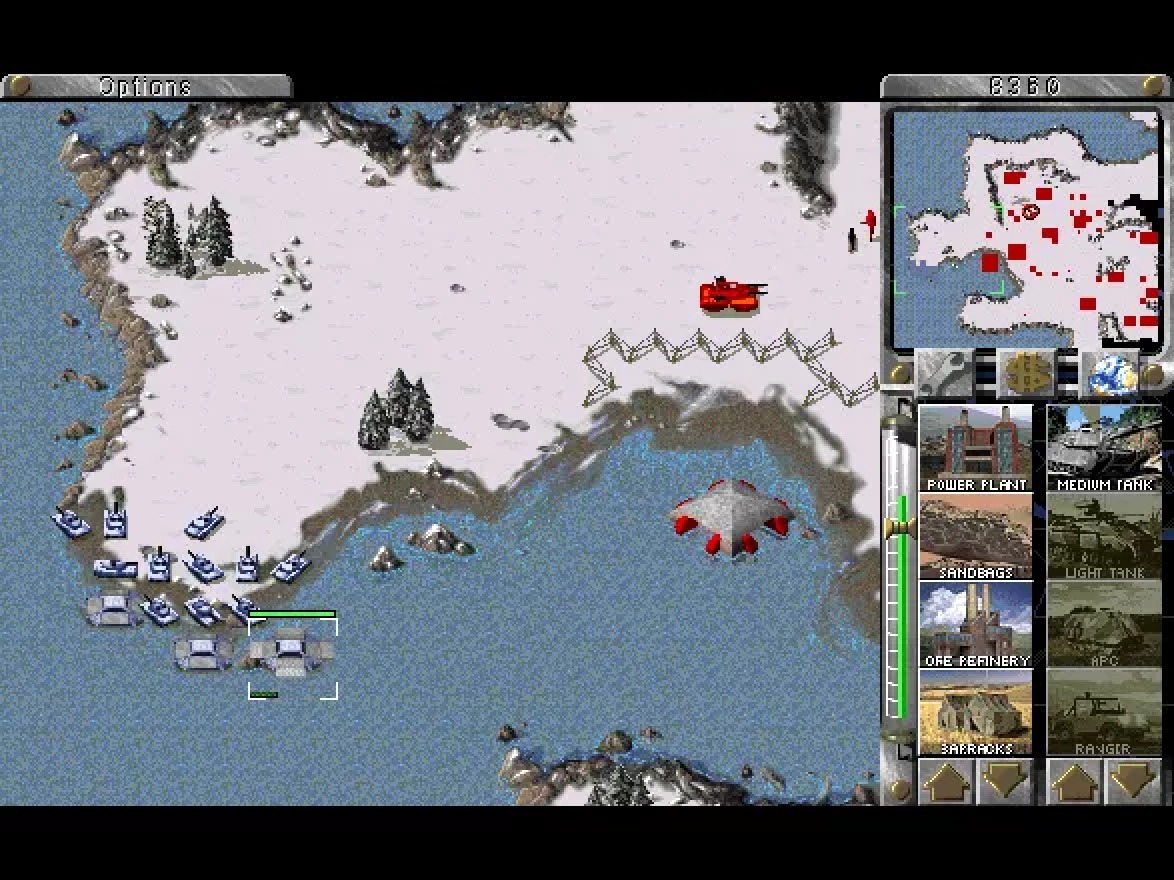
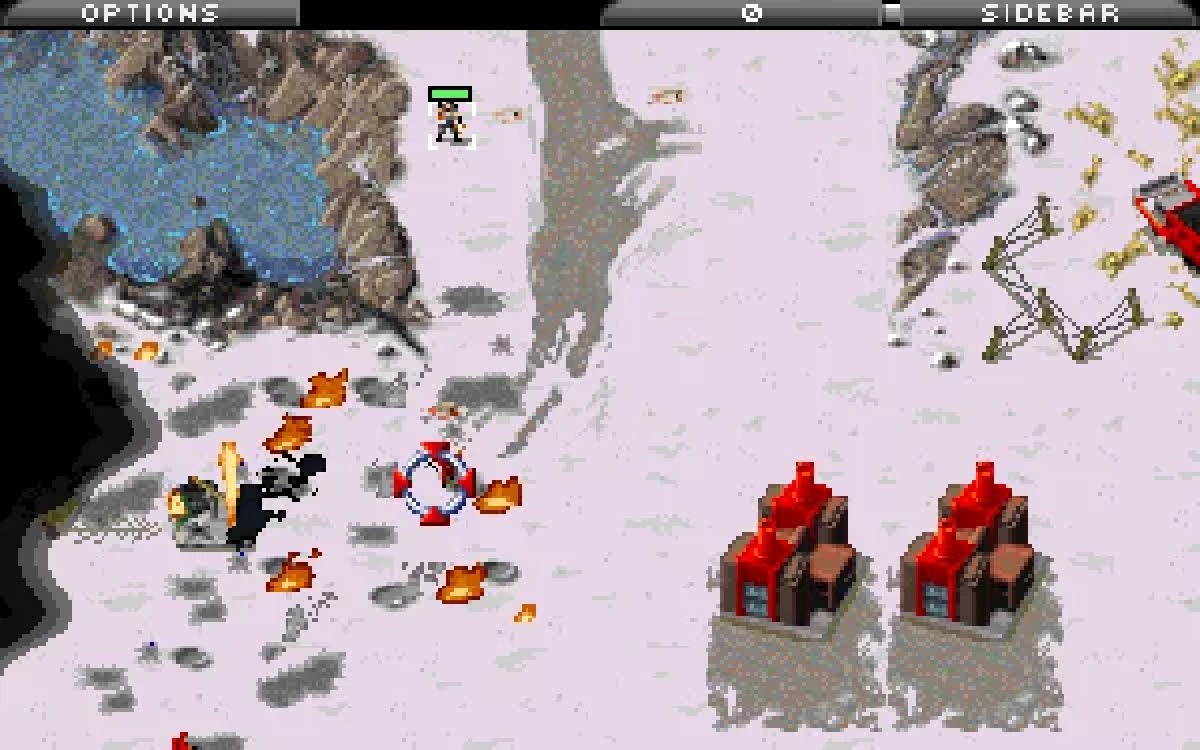
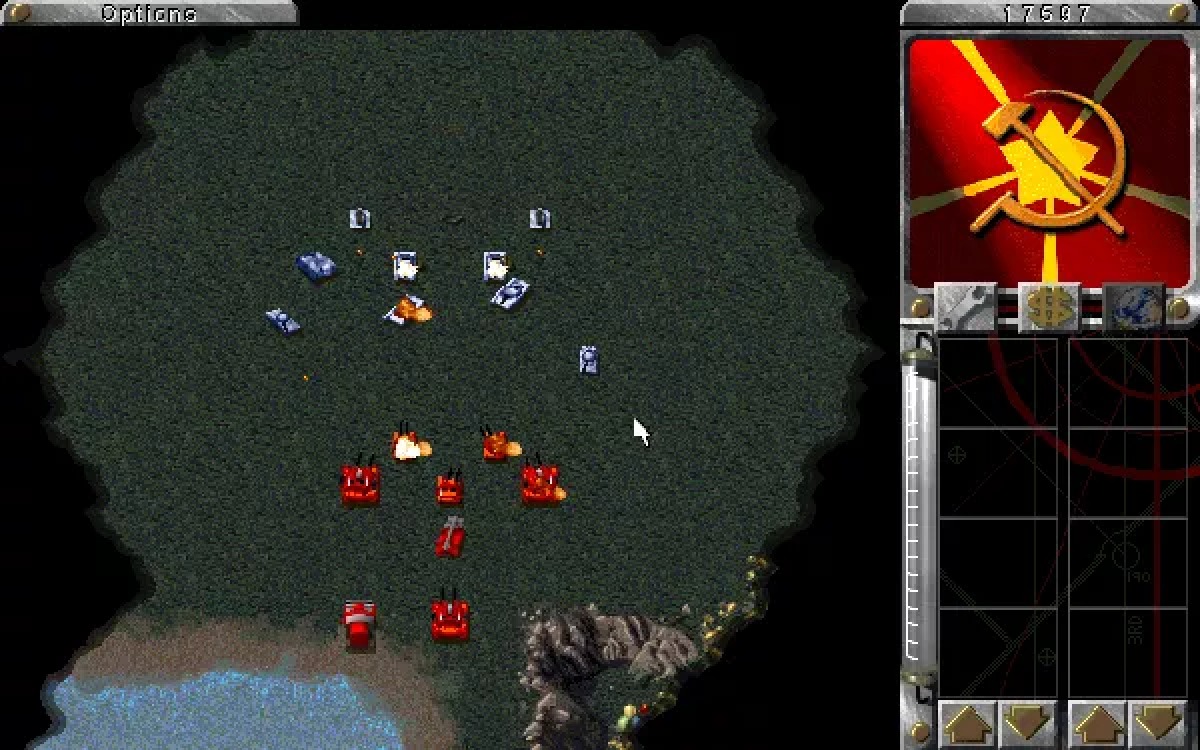
It is pulp, and Westwood knew it, but the pulp had a point. Red Alert’s war is recognisably the 1950s played with 1940s hardware and tomorrow’s toys: propeller-era airfields launching MiGs and Apaches, naval guns duelling submarines, and superweapons out of a Saturday serial — the Soviet Iron Curtain, which renders a unit briefly invulnerable, and the Allied Chronosphere, Einstein’s own technology repurposed to teleport armour across the map. Underneath the theatre sits a genuinely sharper strategy game than its predecessor. The two sides are not palette swaps. Soviet forces are heavier, slower and more expensive, built around the twin-barrelled Mammoth Tank, flamethrower towers and the Tesla coil, a defence so power-hungry that killing a base’s power plants became the first move of every serious attack. The Allies are cheaper and faster, weak in a straight fight and lethal with tricks: medics keeping infantry alive, minelayers blunting Soviet armour, spies and thieves, gap generators that hide a base under electronic fog, and total command of the sea through destroyers and long-range cruisers. Ore and gems replace Tiberium, engineers can capture a crippled enemy building and start producing its units, and the campaigns thread it all through live-action film. Play the Soviet story to its end and a familiar face steps out of the shadows: Kane, advising Stalin throughout, revealed as the hand behind the war — the thread that originally tied Red Alert directly into Tiberian Dawn.
Hell March: The Song That Outranked Quake
Every Red Alert story has a soundtrack, and the soundtrack has a first track. Frank Klepacki, Westwood’s composer, wrote “Hell March” in a single day while working on the Covert Operations expansion for the first game, building it from a simple idea — a rock tune set to marching boots. It was meant to be the Brotherhood of Nod’s theme. Westwood’s president, Brett Sperry, heard it and settled its future on the spot: “That’s the signature song for our next game.” What you hear is exactly what the title promises — adrenalised electric guitar over marching feet, synthesisers, and a barked drill command, later identified as a Canadian commander’s “Reform line, quick march.” It is less a piece of music than a starting pistol.
The full Red Alert score was voted the best video game soundtrack of 1996 by PC Gamer and Gameslice — ahead, Klepacki’s admirers like to note, of Trent Reznor’s score for Quake. “Hell March” never left the series: it returned as “Hell March 2” for Red Alert 2 and again for Red Alert 3, and it remains the sound most players hear in their heads the moment a tank rush starts. Westwood’s games had always sounded good. Red Alert sounded like an identity.
Briefings in Full Motion, and a Commando Called Tanya
Between missions, Red Alert talks to you — literally. Westwood shot its briefings as full-motion video, with actors in uniform leaning into the camera and addressing you, the commander, directly. Soviet briefings play like politburo theatre, all medals and menace, with Stalin himself presiding over a court that includes his NKVD chief Nadia and the quietly terrifying Kane. Allied briefings are steelier: generals von Esling and Stavros talking like men losing a war they intend to stop losing. By 1996 standards this was Hollywood on a CD-ROM, and it gave the campaigns a flavour no rendered cutscene of the era could match.
The films also gave the series its first icon. Tanya Adams, the Allied commando — played in Red Alert’s films by Lynne Litteer — is a one-woman army in the game’s fiction and close to it on the battlefield: dual pistols that delete infantry at range, demolition charges that level buildings, and a cheerful disregard for the odds. She was created, designer Adam Isgreen has explained, to set Red Alert apart from the first game — the male commando of Tiberian Dawn reimagined as a female lead out of a Hong Kong action film. Tanya became a fixture of the whole Red Alert line, recast in each sequel, and the template for the series’ love of larger-than-life heroes. The briefings around her have aged into affectionate camp. Tanya never needed the apology.
The Tank Rush Goes Online
Red Alert’s solo campaigns were half the story. The other half was other people. Westwood shipped the game with a map editor and Westwood Chat, the bundled software that fed into Westwood Online, and the Windows version turned internet play into a headline feature at a moment when most PC owners were still on dial-up. The game supports up to eight players on a local network, and its skirmish mode let you rehearse against the computer before risking your reputation. Multiplayer sharpened the design: with human opponents, each side’s country variants mattered — Germany hit harder, England endured, France fired faster, Russia built cheaper, Ukraine moved quicker — and the Soviet tank rush, a flood of heavy armour built to end arguments, became the era’s defining online tactic.
Context matters here. The 1996 holiday season was, as GameSpot’s reviewer put it at the time, swamped with Command & Conquer clones, and Red Alert was judged the clear best of the field — GameSpot scored it 9.5, and it holds a 90 on Metacritic and 91% on GameRankings from its contemporary reviews. But its longer achievement was demographic. Alongside Warcraft II, Red Alert turned the RTS from a genre PC magazines explained into one everybody’s friends played, and its online scene — ladders, fan maps, the Westwood Chat lobbies — sketched the shape competitive PC gaming would take for the next decade. The interface helped it travel: you could queue production, group units under a number key and direct dozens of machines at once, a control scheme that felt like the future because, for strategy games, it was.
Counterstrike, The Aftermath, and a Legacy That Keeps Marching
Westwood fed the game properly. Two expansion packs arrived for PC in 1997. Counterstrike, built with London developer Intelligent Games and stocked with multiplayer maps from the Compuserve ladder community, sold 650,000 copies by October 1997 — which Westwood noted made it the fastest-selling expansion pack for a computer game to that point. It also hid the series’ best joke: the secret Ant Missions, “It Came from Red Alert,” in which the war is interrupted by giant mutant ants. The Aftermath went bigger — hundreds of new maps, a larger map size, and seven new units that reshaped multiplayer, among them the Chrono Tank, the Tesla Tank, the Missile Sub, the Shock Trooper and the gloriously unsubtle M.A.D. Tank. Both packs were later compiled for PlayStation as Retaliation in 1998, with exclusive briefing films of their own.
The line Red Alert started ran on without it: Red Alert 2 in 2000, Red Alert 3 in 2008, each louder and sillier than the last, while the original settled into permanence. Electronic Arts, which had acquired Westwood in 1998, made Red Alert freeware on August 31, 2008, and the community kept it alive through fan patches and installers. Then came the reunion. The Command & Conquer Remastered Collection, released June 5, 2020, rebuilt Red Alert with the first game and all three expansions — including the Retaliation briefing films, matched back to their missions — with rebuilt multiplayer, a modernised interface, and more than seven hours of remastered music from Klepacki, who re-recorded twenty tracks live with The Tiberian Sons. The developers were Petroglyph Games, a studio founded by former Westwood staff: the old team, finishing its own game. EA even released the remaster’s source code, and in February 2025 it went further and open-sourced the original game’s code as well — a preservation story we covered when EA set the Command & Conquer source code free.
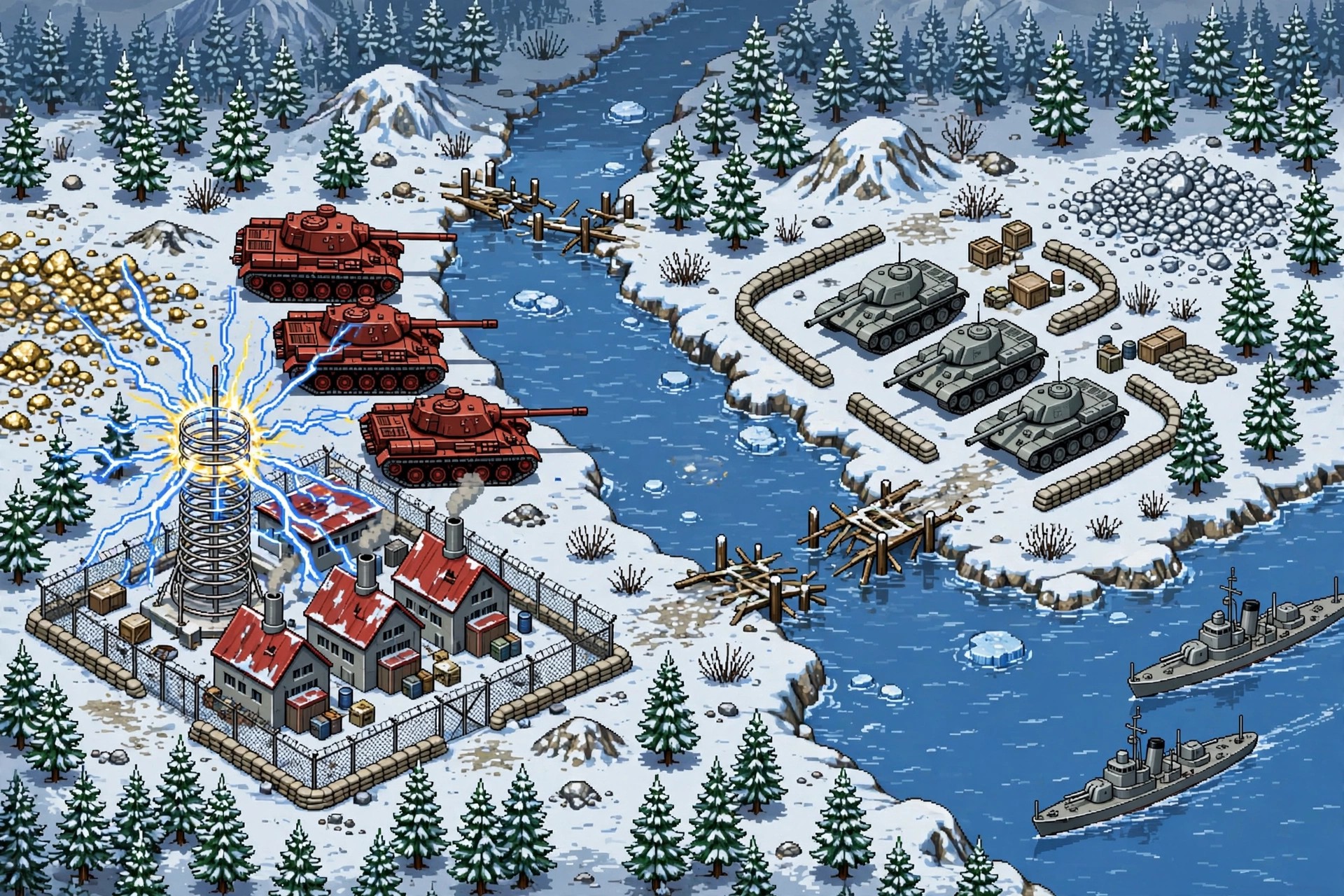
Thirty years on, Red Alert’s premise still gets quoted, its first music track still gets hummed, and its central pleasure — a base rising in the snow, a coil crackling at the treeline, armour massing at the river — has never really been improved on, only re-rendered. Einstein changed history to prevent a war. He got a better one. So did we.
— Chip
Command & Conquer: Red Alert first launched on November 22, 1996. See what else happened on that day in This Day in Gaming History: November 22.