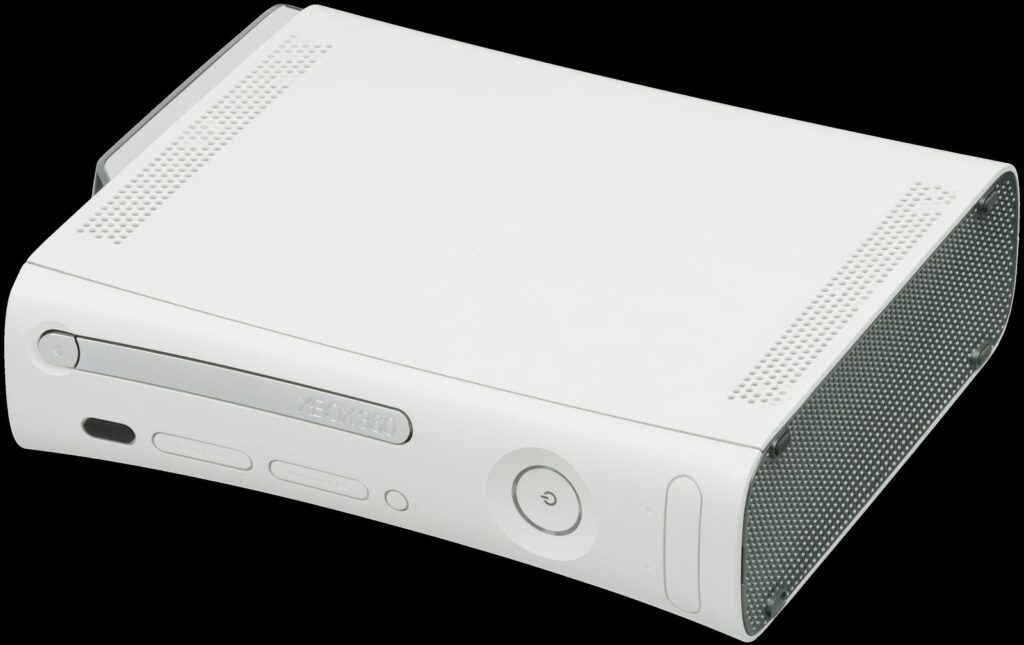
- Console: Xbox 360 (original model)
- Manufacturer: Microsoft
- Launch date: November 22, 2005 (North America)
- Launch price: Core System $299.99 · Premium $399.99
- CPU: 3.2 GHz tri-core IBM PowerPC Xenon
- GPU: 500 MHz ATI Xenos, 10 MB eDRAM
- Memory: 512 MB GDDR3, unified
- Storage: 20 GB detachable hard drive (Premium only; Core shipped with no hard drive)
- Media: DVD
- Output: 720p / 1080i high definition
The tents went up before the shops had even shut for the night. Folding chairs. Thermoses. A level of confidence that a store in November somehow owed you a console. Twenty-one years ago tonight — November 22, 2005 — the Xbox 360 was the most wanted object in North American retail, and there were nowhere near enough of them. I am a hardware man, so the machine goes on the bench first: the spec sheet is at the top of this piece, where it belongs. What follows is how the 360 reached that midnight line, what was actually inside the two boxes Microsoft sold, and why the night still shapes the consoles under our televisions.
The Xbox 360 Launch Started on MTV, Not at E3
Consoles were unveiled at trade shows back then. Convention halls. Journalists with notebooks. Microsoft went louder. On May 12, 2005 the Xbox 360 was revealed on television, in a programme called “MTV Presents: The Next-Generation Xbox Revealed” — celebrities, athletes, musicians, and the white box itself, put in front of millions of people at home before most of the press had laid a hand on one. The detailed game information came later that month at E3 2005. The order was the message. Living rooms first. The industry second.
Microsoft’s own words that night framed everything the generation would be sold on: an era of digital entertainment that was “always connected, always personalized and always in high definition.” Every Xbox 360 game, the company said, was designed for high-definition, widescreen televisions. In 2005 that was a gamble. Plenty of homes were still watching chunky CRT sets, and an HDTV cost serious money. But the bet was plain enough. The 360 was not built for the television people owned. It was built for the one Microsoft was sure they were about to buy.
The games shown around the reveal made the same point. Rare’s Perfect Dark Zero and Kameo: Elements of Power. Bizarre Creations’ Project Gotham Racing 3. Call of Duty 2, Quake 4, Need for Speed Most Wanted, Madden NFL 06. Some of it was months from finished. Nobody cared. The pictures were wide and sharp and clean in a way console games on an ordinary TV had never looked, and everyone watching got it at once: this is what next generation means.
Two Boxes, Two Prices: What $299.99 and $399.99 Actually Bought
The guessing ended on August 17, 2005, at the Games Convention in Leipzig. Two configurations. A hundred dollars between them, and that hundred bought very different first nights.
The Xbox 360 Core System, at $299.99, was the console and the basics. A wired controller. A detachable faceplate, standard AV cables, an Xbox Live Silver membership. No hard drive in the box — and that mattered more than the price tag let on, because without one the Core could not play original Xbox games out of the box at all. Storage meant paying separately: the 20 GB hard drive at $99.99, or a 64 MB memory unit at $39.99. Same Xenon processor as its brother. Same Xenos graphics. A real console, sold in pieces.
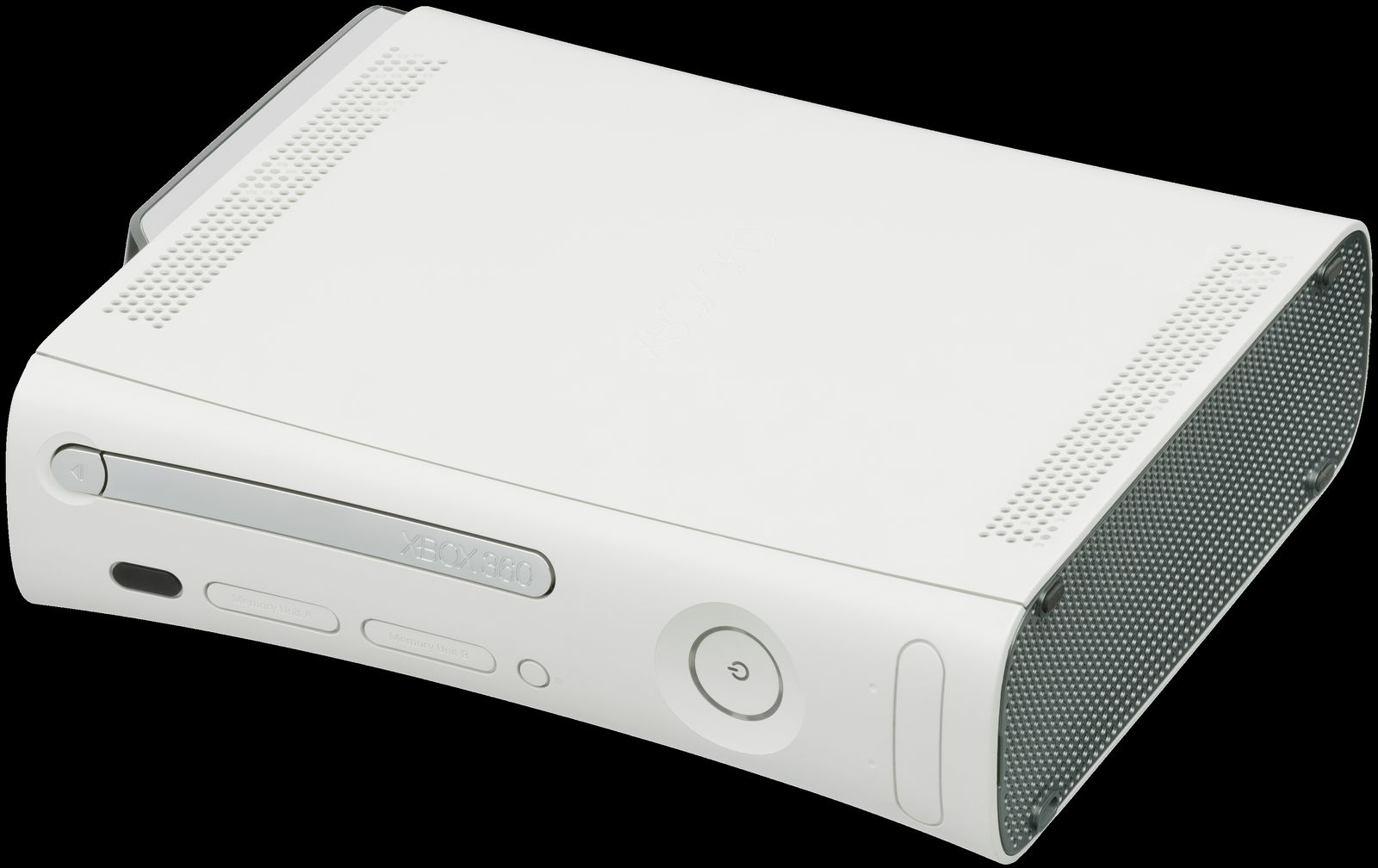
The Premium package, at $399.99 — sold simply as “the Xbox 360” — was the machine as Microsoft meant you to meet it. The detachable 20 GB hard drive. A wireless controller instead of a wired one, a headset, high-definition AV cables, an Ethernet cable and, for a limited time, a media remote. The console wore signature metallic detailing too, the chrome disc tray in the photo above. Microsoft reckoned the bundled parts would have cost more than $200 bought separately. For once, bundle maths was easy to believe.
Under both shells, the same silicon. In 2005 it read like science fiction next to the original Xbox. The Xenon CPU: three PowerPC cores at 3.2 GHz each, two hardware threads per core. The ATI Xenos GPU at 500 MHz, with 10 MB of embedded DRAM and a unified shader design PC graphics would not standardise until later. Memory was 512 MB of GDDR3, one unified pool the CPU and GPU both drank from. Output ran to 720p and 1080i. Numbers on a page mean little now. On a shop demo pod in November 2005, Project Gotham Racing 3 running on a widescreen panel, they meant everything.
Launch Night: Lines, Cold Weather and Empty Shelves
North America got the machine on November 22, 2005, in the United States and Canada. Europe followed on December 2, Japan on December 10 — a near-simultaneous worldwide rollout no console had attempted at that scale, and one that spread the stock painfully thin. Reporting from launch night tells the same story town after town: fans queued overnight outside stores, some in tents, in temperatures reported as low as 34 degrees in College Station, Texas. By morning the rule was simple. No queue, no console.
The shortage was not a pose. The Xbox 360 was in short supply across North America and Europe from the start, and shops sold through their allocations fast. Freshly bought consoles were drawing eBay bids as high as $1,500 in the days around launch, according to reporting at the time — nearly four times the Premium’s price, paid for a box whose main selling point was that it existed and was in someone’s hands. Plenty of people who had done everything right, pre-order paperwork and all, still went home with nothing and spent the run-up to Christmas phoning shops.
Worth remembering what that chaos bought Microsoft. Launching in November 2005 put the Xbox 360 a full year ahead of Sony’s PlayStation 3. A year as the only new console on the shelf. A year of Xbox Live growing while the competition showed trailers. Empty shelves were a problem, yes. They were the problem of a company that had arrived early to its own party.
18 Games on Day One
Microsoft announced the day-one lineup on November 14, 2005: 18 games available in North America on or before November 22, billed by the company as the broadest and deepest retail launch lineup in console history. Its own three standard editions — Perfect Dark Zero, Kameo: Elements of Power and Project Gotham Racing 3 — were priced at $49.99. Third-party launch titles generally arrived at $59.99, the price point the generation would soon make normal.
The list had range. Call of Duty 2 gave the launch a serious, mud-and-smoke war shooter that showed the hardware off better than almost anything else that month. Condemned: Criminal Origins pulled the opposite trick — dark, slow, first-person dread in a city falling apart. Then Quake 4, Need for Speed Most Wanted, Madden NFL 06, NBA 2K6, Ridge Racer 6, Tony Hawk’s American Wasteland, Amped 3 and Peter Jackson’s King Kong filled out a shelf with something for nearly every taste. And tucked into Xbox Live Arcade sat Geometry Wars: Retro Evolved, a downloadable twin-stick shooter costing a fraction of a boxed game that, for a lot of early owners, quietly became the most-played thing on the machine.
A classic launch lineup? Honestly, no. A good one, with two or three great tenants — which is about the best any launch manages. Perfect Dark Zero carried impossible expectations as the follow-up to a Nintendo 64 legend. Kameo had travelled between three Nintendo and Microsoft platforms before finding a home. But a launch lineup’s job is simpler than greatness. It has to make the new box feel necessary on the first night, in the first hour, on whatever television it is plugged into. Call of Duty 2’s opening missions, running in high definition, passed that test on their own.
The Shadow: Three Red Lights
An honest history of this launch does not get to skip what came next. So, plainly, and in its own time: the Red Ring of Death was not a launch-night story. It became one later. Reports of failing consoles and overheating workarounds surfaced within the first weeks, but the failure that defined the machine’s reputation — a general hardware failure announced by three flashing red lights around the power button — built over the months and years that followed, until the trickle of repairs became, in Microsoft’s own later words, unacceptable.
On July 5, 2007, Microsoft answered properly. Warranty coverage was extended to three years from purchase for any console displaying the three flashing red lights. Shipping was covered. Customers who had already paid for those repairs were reimbursed. And the company took a pre-tax charge of $1.05 billion to $1.15 billion for the anticipated costs. A billion dollars is hard to argue with. Read another way, it was the price of the speed that got the 360 to November 2005 first — a machine rushed to a holiday deadline, sold in enormous numbers, whose weakest point only showed itself under months of heat and play. The launch made the 360. The repair bill nearly unmade it. That Microsoft paid the bill in public is a large part of why the machine survived its own hardware.
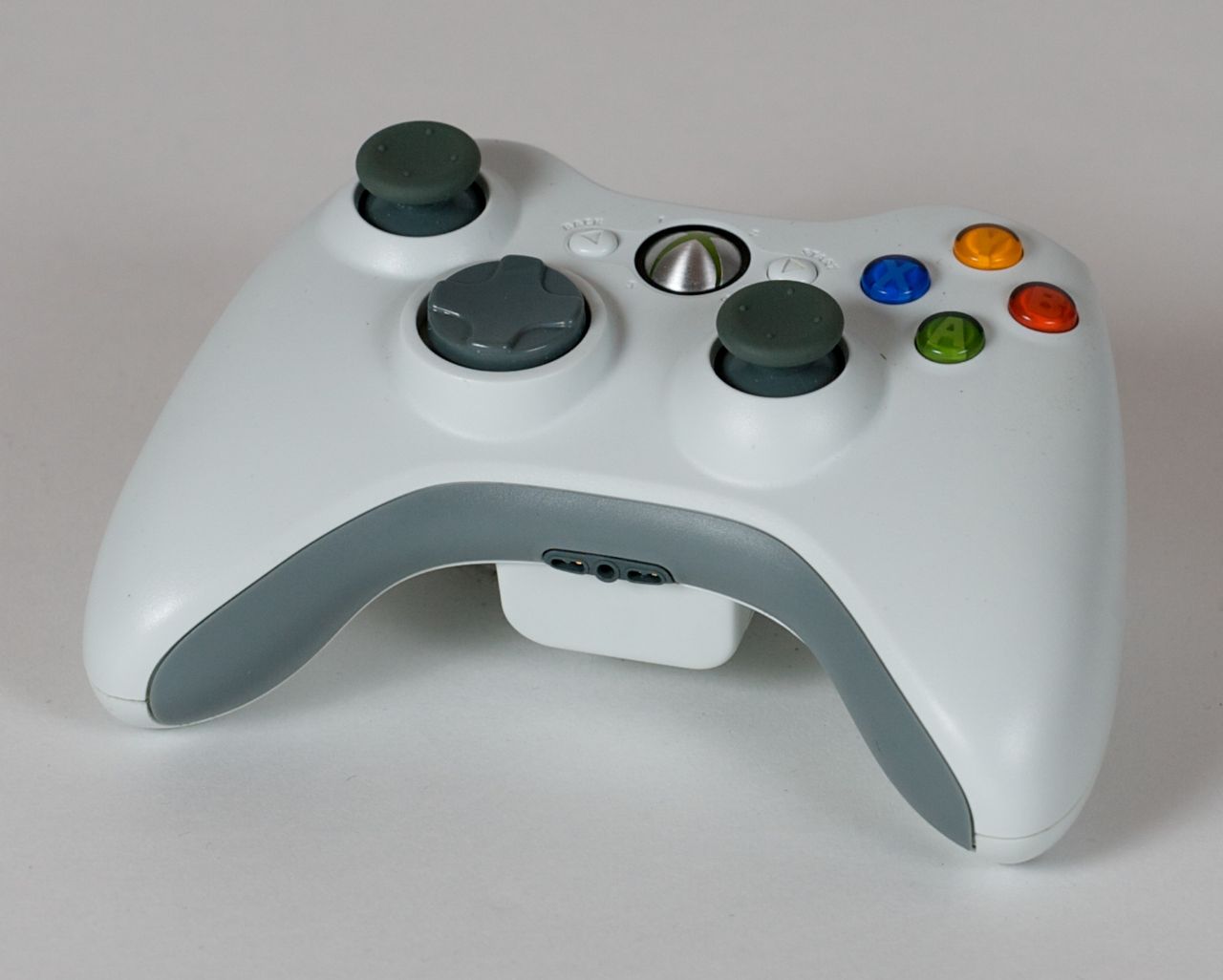
The generation the 360 started found its defining game a year after launch, when Gears of War rebuilt the cover shooter around the hardware in 2006. By then the pattern was set. High definition as standard. A proper online service at the centre of the machine. Downloadable games alongside discs. And a controller — that white wireless pad — judged so well that its layout is still the template rivals measure against.
Why the Xbox 360 Launch Still Matters at 21
The Xbox 360 went on to sell 84 million units worldwide. Production of new hardware did not end until April 20, 2016, more than a decade after that cold November night. Its successor, the Xbox One, arrived on November 22, 2013 — exactly eight years to the day after the 360. Console generations are rarely that tidy.
The number I keep coming back to is not 84 million, though. It is two numbers. $299.99 and $399.99, and the argument they started. This launch taught the industry that a console could be sold as a family of boxes at different prices. That online was not a feature but the foundation. That being first mattered more than being perfect — provided you were willing to pay, later and in full, for what “first” cost. Every launch since has run on some version of that lesson.
Twenty-one years on, the white box still looks right. Concave sides. The big Ring of Light button. The chrome tray on the Premium. It was designed to stand upright like a piece of hi-fi and disappear into a living room, and it did. So if yours is still under the TV, or in a cupboard, or — like too many launch units — long since returned in a cardboard coffin, tonight is its night. Plug it in. Listen to the fans. That sound is where the HD era started.
— Hank
For more launches from this date, see This Day in Gaming History: November 22. More from this system: our Xbox 360 hub.