
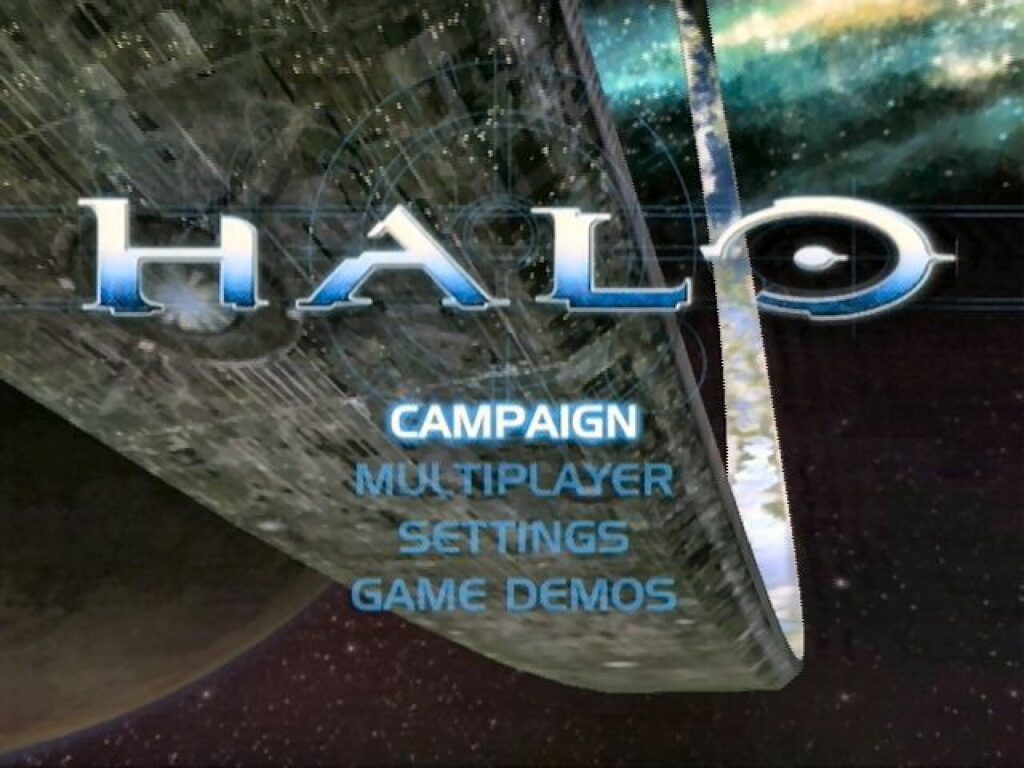
At a glance — Game: Halo: Combat Evolved · Developer: Bungie · Publisher: Microsoft Game Studios · Original release: November 15, 2001 (North America) · Original platforms: Xbox · Genre: First-person shooter · Director: Jason Jones · Music: Martin O’Donnell and Michael Salvatori
Twenty-five years ago this Sunday, Microsoft — a company that had never sold a games console in its life — wheeled a very large, very black box into North American shops and asked the world to take it seriously. Standing in front of that box, doing nearly all of the persuading, was a single first-person shooter from a small Chicago studio whose previous claim to fame was a strategy series for the Mac. The console was the Xbox. The game was Halo: Combat Evolved. The console business has run on rules the two of them wrote ever since.
A strategy game from Chicago that Steve Jobs announced
Halo did not begin as a shooter, or as an Xbox game, or even as a Bungie game in the form anyone now recognises. It began in the late 1990s as a real-time strategy project built by a three-person team inside Bungie, running on the engine of the studio’s Myth games: science fiction, realistic physics, three-dimensional terrain, viewed from above. The camera kept creeping closer to the units. Driving the vehicles directly turned out to be more fun than ordering them around, and by the middle of 1998 the strategy game had become a third-person shooter about a human starship crash-landing on a mysterious ringworld. The working title, at one point, was Blam! — co-founder Jason Jones reportedly could not bring himself to tell his mother the previous name, Monkey Nuts.
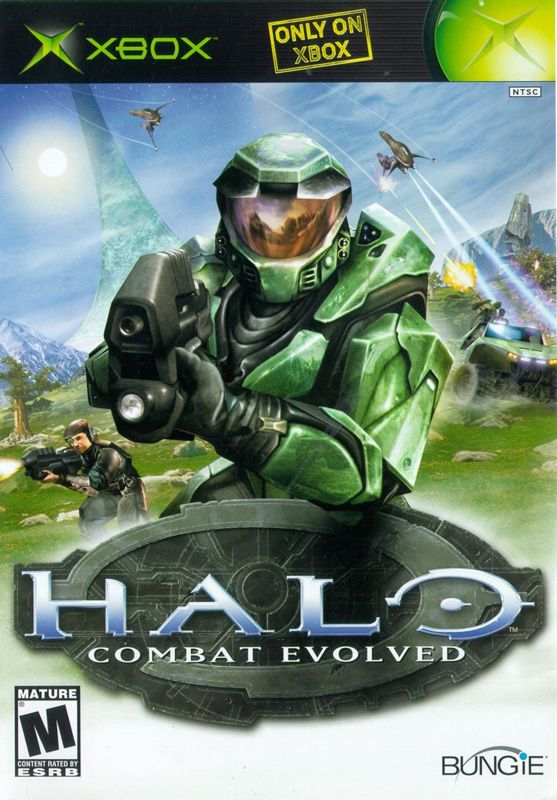
The name Halo — suggested by artist Paul Russell, disliked by some on the team for sounding like a shampoo — stuck. And on July 21, 1999, it was Steve Jobs who introduced it to the world, unveiling Halo at the Macworld Conference & Expo as a simultaneous release for Mac OS and Windows. A year later, at E3 2000, it was still a third-person shooter for home computers. Nothing about the game the world first applauded — open terrain, vehicles, a ring you could see curving up into the sky — pointed at a console launch. Which is what makes what happened next the great pivot of modern gaming.
Microsoft buys Bungie, and Halo becomes the Xbox
Bungie, it turned out, was in financial trouble. A recall of Myth II — a glitch discovered after 200,000 copies had been manufactured, which could wipe the directory the game was installed in — had cost the studio some $800,000, and a share of the company and its publishing rights had already been sold to Take-Two Interactive. Bungie’s Peter Tamte contacted Ed Fries, the head of Microsoft Game Studios, who was assembling a software line-up for Microsoft’s first console and needed a centrepiece. On June 19, 2000, Microsoft announced it had acquired Bungie outright. Take-Two kept Myth and Oni. Microsoft got Halo.
The conversion was brutal and fast. Jones pushed the camera from third-person to first-person, and designer Jaime Griesemer wrote code to read a gamepad player’s intent — buffering inputs, quietly helping aim and movement — because in 2001 almost nobody believed a shooter could feel right on a controller. The team’s sandbox prototype level, B30, became The Silent Cartographer, still the mission most players name first. The open-world ambitions were scrapped; multiplayer was torn down and rebuilt from scratch four months before release; online play was dropped entirely, because Xbox Live would not be ready in time. When the game stumbled through E3 2001 in visibly rough shape — poor frame rates, technical problems — the doubt was genuine and loud. Meanwhile, with planned tie-in games to Steven Spielberg’s A.I. scrapped, it had quietly become clear inside Microsoft that Halo was not one launch title among many. It was the launch. Even the title was a compromise: Bungie refused to rename the game to satisfy marketing research, so the subtitle Combat Evolved was bolted on to make it sound more like a military shooter. It is the most honest subtitle in games — the combat genuinely had evolved. Nobody meant it that way at the time.
November 15, 2001: the day the console business changed
The Xbox launched in North America on November 15, 2001, at $299, and Halo launched with it — the same day, the same box-out moment, the machine’s identity in a green case. The numbers that followed are the kind publicists invent, except that they are all on the record. During the first two months, Halo sold alongside more than half of all Xbox consoles. It passed a million copies in roughly five months — a faster pace than any sixth-generation console game before it — then three million by July 2003 and four million by January 2004, on its way to becoming the second-best-selling game on the platform, behind only its own sequel.
The reviews matched the tills. Halo sits at 97 out of 100 on Metacritic, from 68 professional critics. IGN and GameSpot both scored it 9.7 out of 10. Edge gave it a perfect 10 and called it “the most important launch game for any console, ever” — a sentence that read as hyperbole in 2001 and reads as a plain statement of fact in 2026. For the record, our own Halo: Combat Evolved review scored it 9.5/10 and reached the same conclusion by a longer road: the game is a set of small, strict rules that argue with each other beautifully. Twenty-five years on, neither the 10 nor the 9.5 looks generous.
The design DNA: two guns, a shield and a Warthog
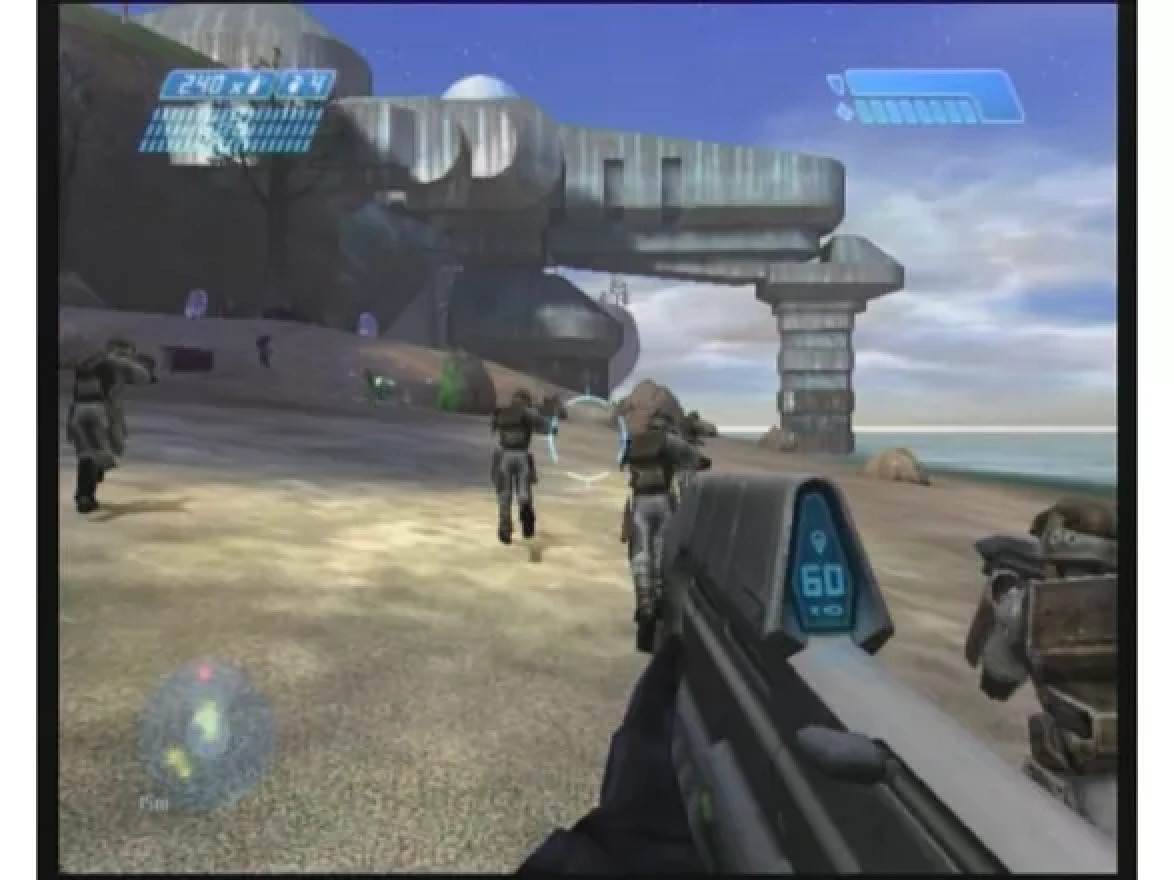
Strip Halo down and you find a handful of decisions so simple they look obvious — which is precisely the point, because none of them were obvious in 2001, and all of them are now the default grammar of the console shooter. You carry two weapons, never an arsenal, so every pickup is a decision. Your energy shield recharges if you find a breath of cover, so retreat is a tactic rather than a failure — while the health bar underneath it, topped up by health packs, keeps retreat honest. Grenades and melee live on their own buttons and never ask you to holster your gun, so the three never stop flowing into each other. Bungie called the resulting loop its “thirty seconds of fun”, and built every encounter as a short, readable puzzle inside it.
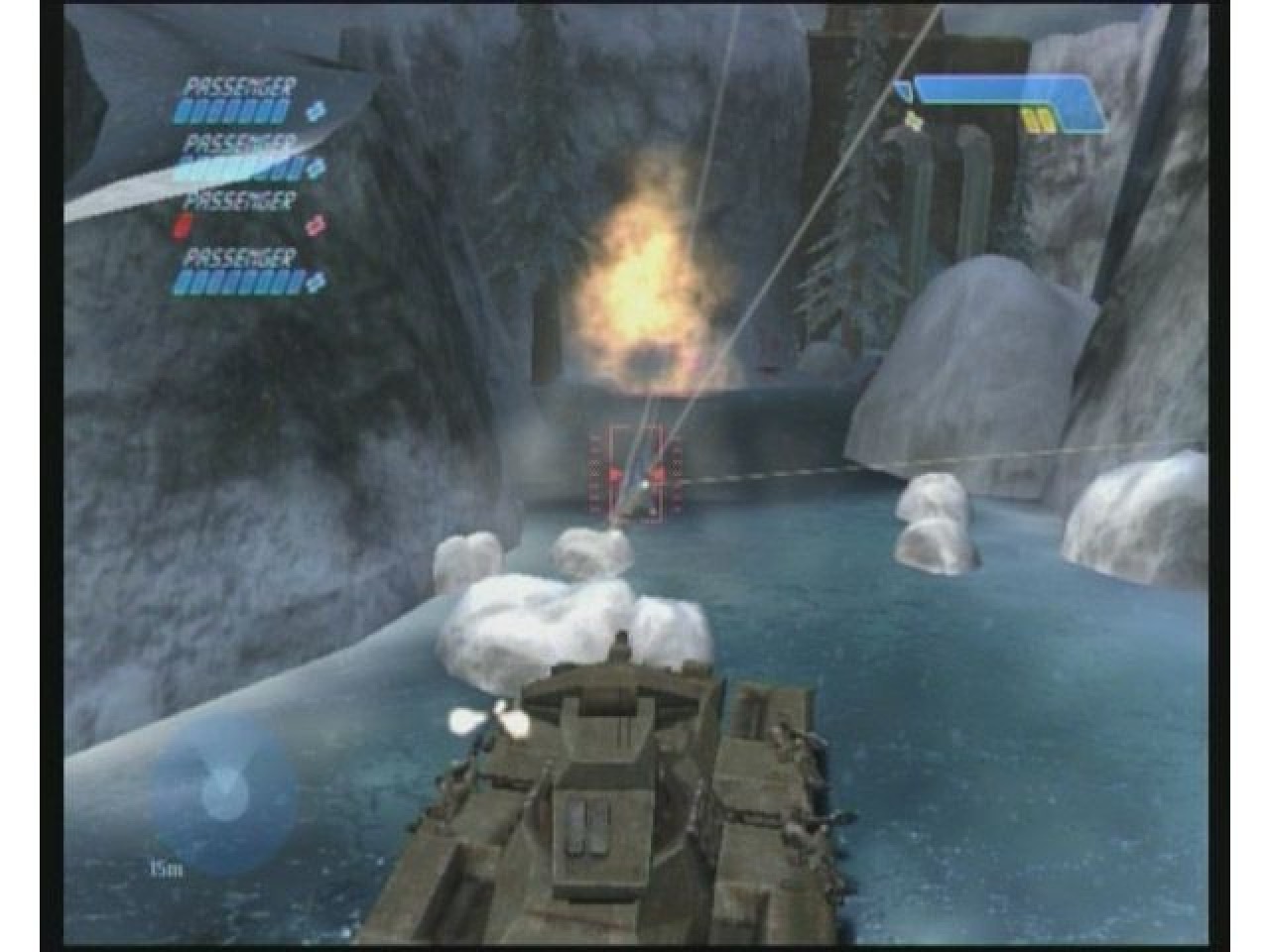
The enemies complete the design. The Covenant are not a ladder of bigger health bars but a small cast of behaviours: Grunts who panic and flee when their leader falls, Jackals hiding behind shields that demand a flank or a charged shot, Elites whose own recharging shields mirror yours and who dodge, taunt and press the exact moment yours pops, Hunters who arrive in bonded pairs. Add vehicles that are not set-pieces but a second language — the Warthog’s loose, bouncing physics, a gunner who matters, the option to simply drive around a problem — and Martin O’Donnell and Michael Salvatori’s score, Gregorian chant folded into strings and percussion, and you have a game whose every system was designed to argue with the others. The argument is the game, and it is why the campaign still plays, today, like it was made recently by people being strict with themselves.
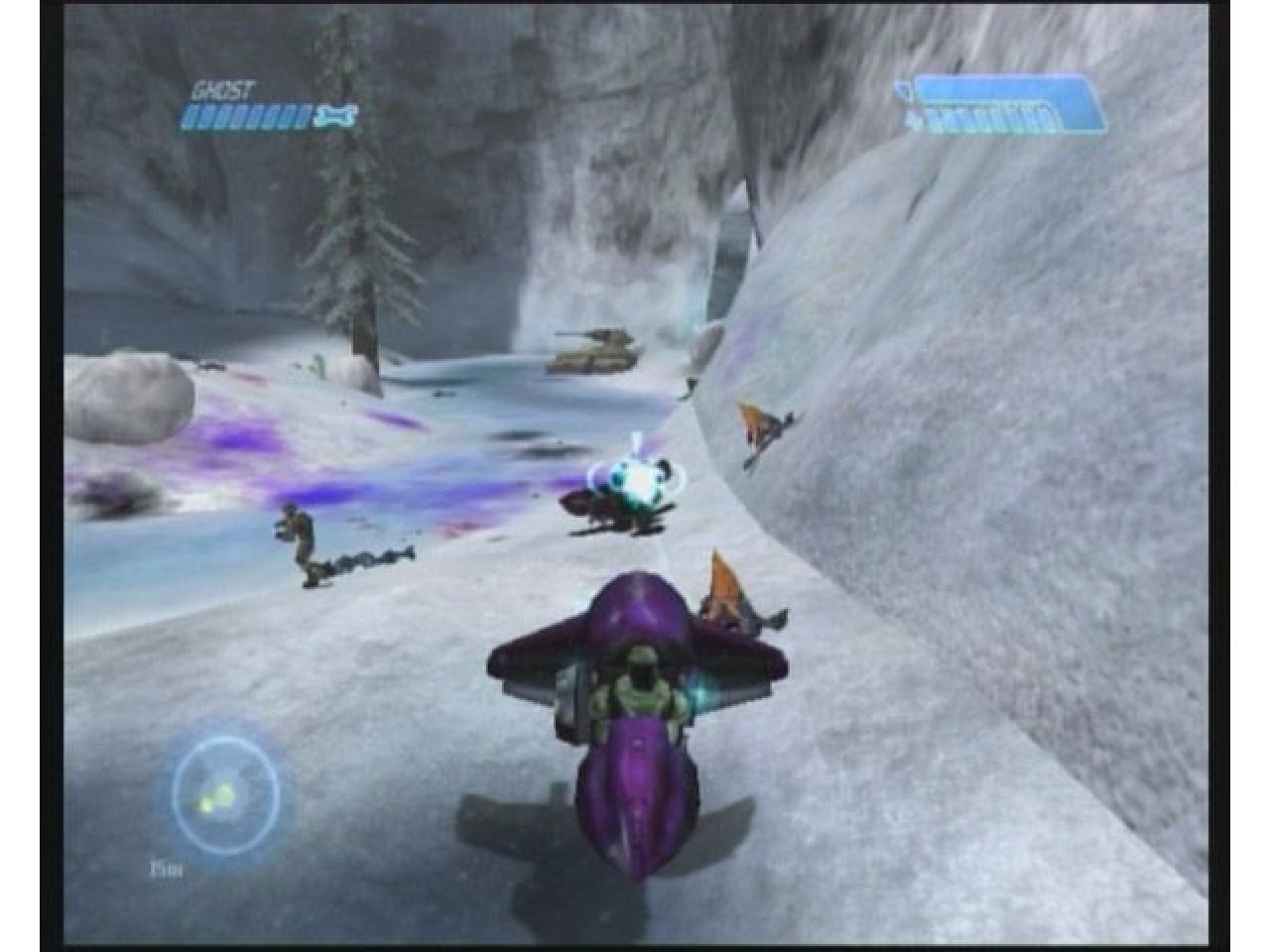
Sixteen players, four Xboxes, one garage: multiplayer before Live
The strangest thing about the most influential multiplayer shooter on consoles is that, on its own machine, it never officially went online. What Halo offered instead was local: the full campaign in two-player split-screen co-op, competitive modes for two to sixteen players, four players to a screen — and, via System Link, up to four Xboxes cabled together into a local network. It sounds impractical, and critics said so at the time. In practice it invented a culture. A generation of players has a formative memory involving two televisions back to back, a cable run down a hallway, and Blood Gulch at 2 a.m. Xbox Live itself arrived exactly a year later, on November 15, 2002 — but it was Halo 2, in November 2004, that turned online console play into the centre of the industry, a story we told in Halo 2 at 22: The Night Xbox Live Grew Up. Halo 1’s contribution was the proof of demand: thousands of players were already wiring consoles together by hand, waiting for someone to build the network they were improvising.
The ring, twenty-five years on
The legacy arithmetic is well known: Halo 2 in 2004, Halo 3 closing the trilogy, a franchise that Microsoft counted at more than 81 million copies sold by 2021, and a place in the World Video Game Hall of Fame, which inducted Combat Evolved in 2017. The original was remastered as Halo: Combat Evolved Anniversary — released, pointedly, on the tenth anniversary, November 15, 2011 — and restored properly, original multiplayer and all, inside Halo: The Master Chief Collection in 2014. This summer the ring came round again: Halo: Campaign Evolved, Halo Studios’ ground-up Unreal Engine 5 remake of the campaign, launched on July 28, 2026 with three new prequel missions and four-player online co-op. Critics were kind — Metacritic scores in the high 70s and low 80s depending on platform, with the loudest reservation being the absence of the original’s competitive multiplayer — but the headline was not a score. It was a platform list. Twenty-five years after “Only on Xbox” was printed on the box, Halo shipped on PlayStation 5. The console war that Halo started, Halo ended.
Anniversary week keeps finding new angles on the same game. A solo developer currently has Combat Evolved running — campaign, Warthog and all — on the Sega Dreamcast, the console the Xbox replaced, as we reported in Halo: Dreamcast Evolved. And Microsoft opened this anniversary weekend by bringing 21 more original Xbox games to PC, a quarter-century after the big black box launched. But the deepest measure of Halo is not the remakes or the ports or even the sales. It is that if you pick up almost any console shooter made since — two weapons, a shield that breathes, a grenade that is always one button away — you are playing by rules written in Chicago and Redmond by a team racing a deadline, salvaging a strategy game, and inventing the modern shooter because the old one’s controls did not fit the controller. Combat evolved, indeed. It just took the rest of the industry with it.
— Chip
For more launches from this date, see This Day in Gaming History: November 15. More from this system: our Xbox hub.