
At a glance — Game: Super Mario World · Developer: Nintendo EAD · Publisher: Nintendo · Original release: November 21, 1990 (Japan) · Original platforms: Super Famicom · Genre: Platform game · Director: Takashi Tezuka · Producer: Shigeru Miyamoto · Music: Koji Kondo
November 21, 1990. Nintendo launches the Super Famicom in Japan, and the whole launch line-up is two games. Two. F-Zero is one of them, all speed and Mode 7 corners. The other one is this.
Think about the pressure on that cartridge. A brand-new 16-bit machine needs a reason to exist, and the reason has to fit in one box, on day one. Super Mario World was that reason. Thirty-six years later it still is, every time somebody plugs in a SNES and this is the game they reach for first.
Super Mario World had one job: sell the Super Famicom
The team started in October 1988, right after Super Mario Bros. 3 was finished. Fifteen people at Nintendo EAD. Their first move tells you everything about their standards: they ported Super Mario Bros. 3 to the new hardware just to see how it felt. Better colours. Bigger sprites. Same game. Miyamoto’s verdict was that they had to build something totally new, not dress up the old one.
It was not a smooth build. Director Takashi Tezuka has said the software tools were not even finished yet. The team was learning the machine while the machine was still being built. Around two years of that. And out of it came this huge, confident, stuffed-full cartridge. I still find that a bit hard to get my head around.
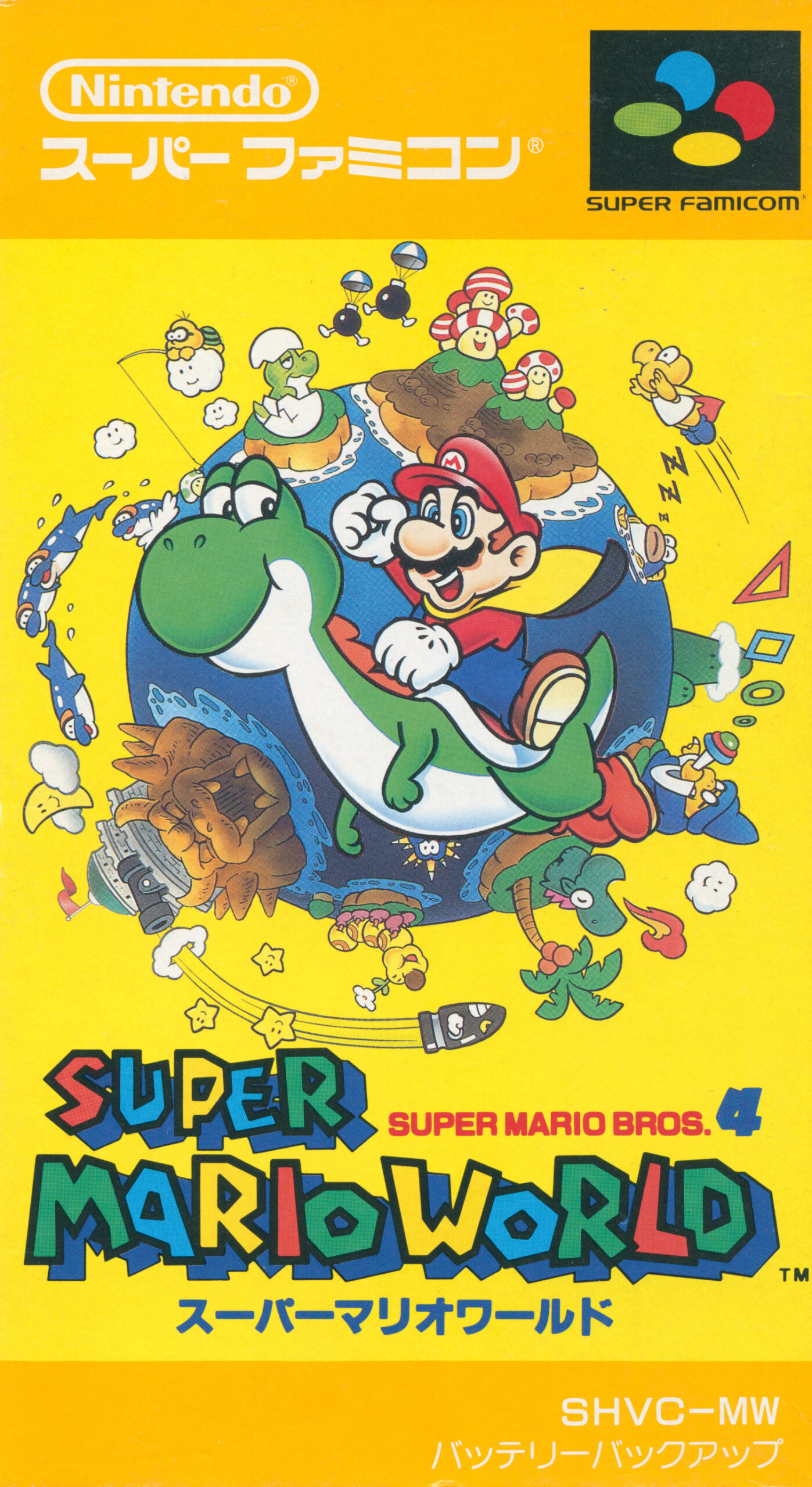
The setup is pure holiday-gone-wrong. Mario, Luigi and Princess Toadstool go to Dinosaur Land for a break after Super Mario Bros. 3. Bowser takes the Princess. Of course he does. The brothers find a giant egg in the forest, and out hatches Yoshi, whose friends are sealed in eggs all over the island by the Koopalings. Seven worlds. A castle at the end of each one, a Koopaling waiting inside, and Bowser’s castle at the end of the seventh. Simple. Then the game starts opening doors you did not know were doors.
Then the egg hatches
Yoshi. I mean. Yoshi.
Miyamoto had wanted Mario riding a dinosaur since the first Super Mario Bros. The NES just could not do it. The idea sat in sketchbooks for years until the hardware caught up, and then designer Shigefumi Hino drew the version we all know. Green, cheerful, hungry.
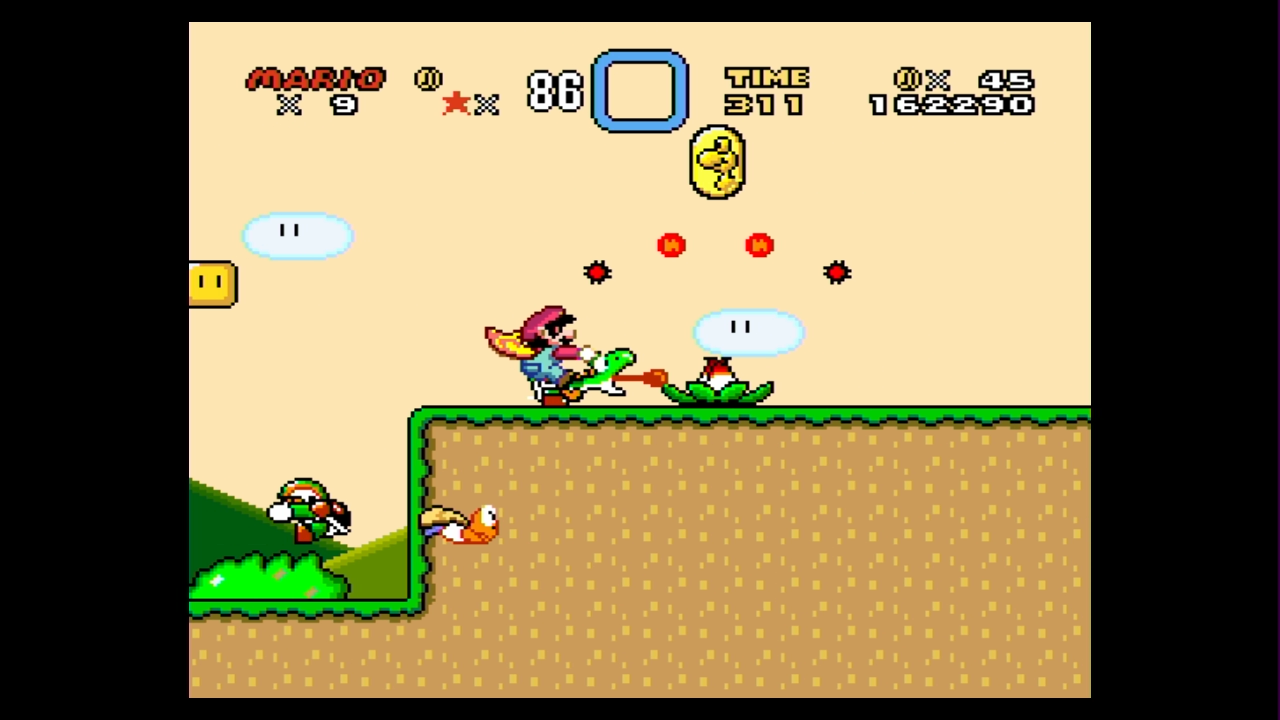
He eats most enemies whole. That alone would have been enough. But hold a shell in his mouth and the shell’s colour becomes a power. Blue shell, he flies. Red shell, he spits three fireballs. Yellow shell, he lands with a thump of dust that clears everything near him. Out in the Star World there are eggs holding blue, yellow and red Yoshis who carry those powers as standard.
And here is the bit I love. Yoshi is not a power-up on a timer. He takes the hit that was meant for you. You can ditch him mid-jump to make one impossible leap, feel guilty about it, and then find him again in another egg like nothing happened. The game hands him to you in the second level and trusts you with him. That trust is the whole cartridge in miniature.
The cape, the spin jump and a spare in the bank
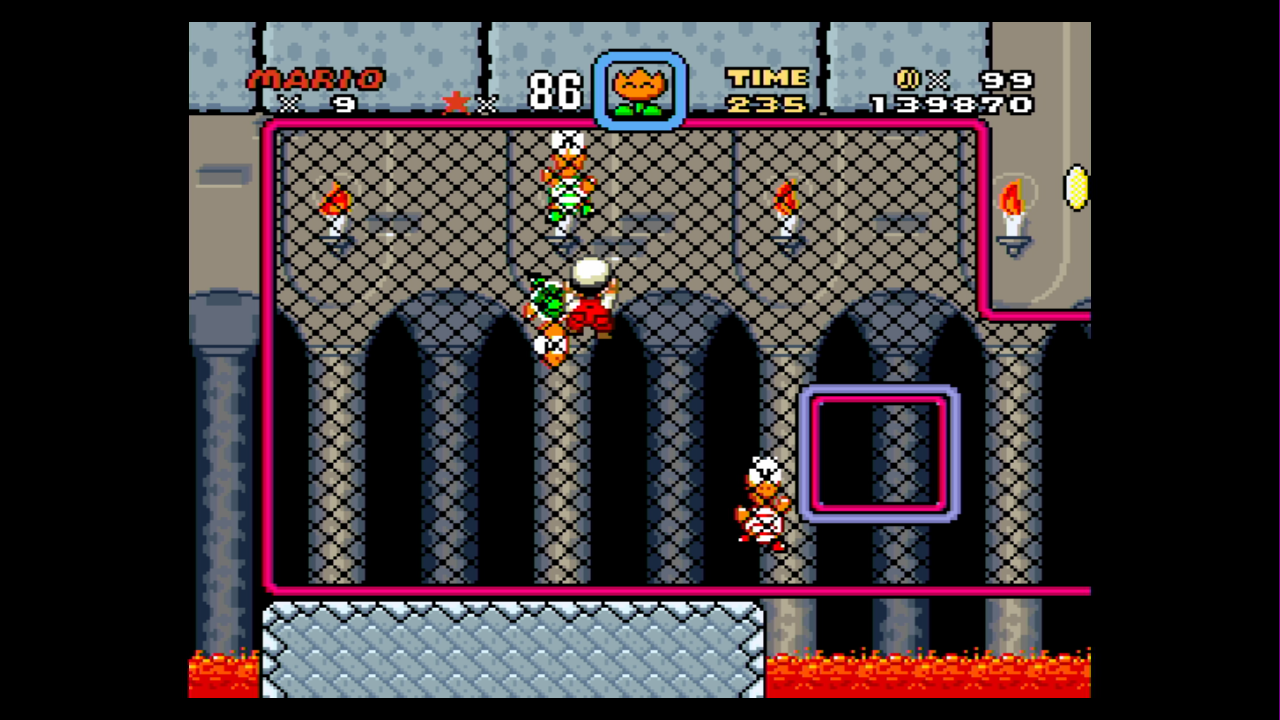
Then there is the Cape Feather. Run, jump, and if you catch the rhythm of the dive and the climb you can stay up there. Not glide. Fly. Whole levels pass underneath you. Every kid I knew had an opinion on whether flying over a level counted as beating it. It counted. The game knew some of us would do it and hid secrets up in that sky anyway. That is confidence.
The Spin Jump is quieter but just as good. Bounce off things that should hurt you. Saw blades, spiky enemies, all fair game, and powered up you can smash through certain blocks from above. And the reserve box at the top of the screen keeps a spare power-up banked. Get hit and it drops for you. Or drop it yourself when you want it. Small mercy. Huge difference. The game is kinder than the NES ones in its systems, and greedier in its secrets, and that mix is exactly right.
96 exits, and the game counts every one
Ninety-six exits. The save file counts them and shows the number on the file-select screen, so you always know how much of this game you have not seen. That number did something to us. You did not ask a friend if he had beaten Super Mario World. You asked what number he was on.
Most of those exits hide. A key, carried to a keyhole, opens a second way out of a level, and the map itself changes. New paths. Fortresses. Switch Palaces that fill in those dotted blocks in levels you already finished, so old ground turns new. The Star Road can drop you near Bowser’s doorstep shockingly early if you are good enough. And past the Star World sits the Special Zone, the hardest courses in the game. Finish it and the save file changes for good. Autumn colours on the map. Enemies wearing different faces. No way back. The game remembers what you did.
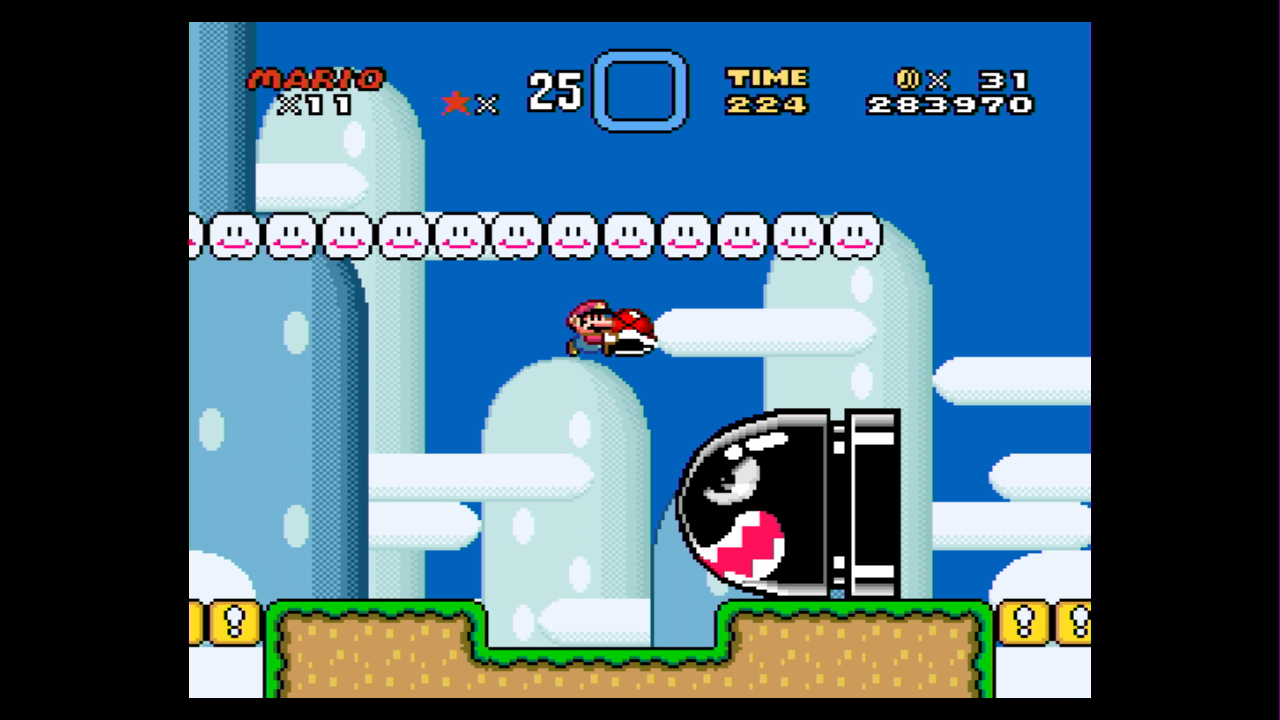
That is the idea every Mario after this one inherited. Beating a level is not finishing it. Finishing it is finding everything it hid.
And it keeps layering things on. Ghost houses show up here for the first time, all fake doors and Boos who creep up the moment your back is turned. Most levels hide five Dragon Coins, and collecting the full set earns you an extra life. None of it is required. All of it is just sitting there, waiting. The exit tape is right there in front of you, and you walk straight past it on purpose, hour after hour. That is the hold this game gets on you.
One tune, worn a dozen ways
Koji Kondo did something sneaky with the music. He took a small set of melodies and kept rearranging them. The same tune, brisk in the sunshine. Slowed into a waltz underwater. Dark and low in the castles. Spooky in the ghost houses.
So Dinosaur Land sounds like one real place. Same weather system, different days. You can hum three notes of this score in a room full of people our age and watch heads come up. Thirty-six years. Still instant.
America waited nine months — and got the game in the box
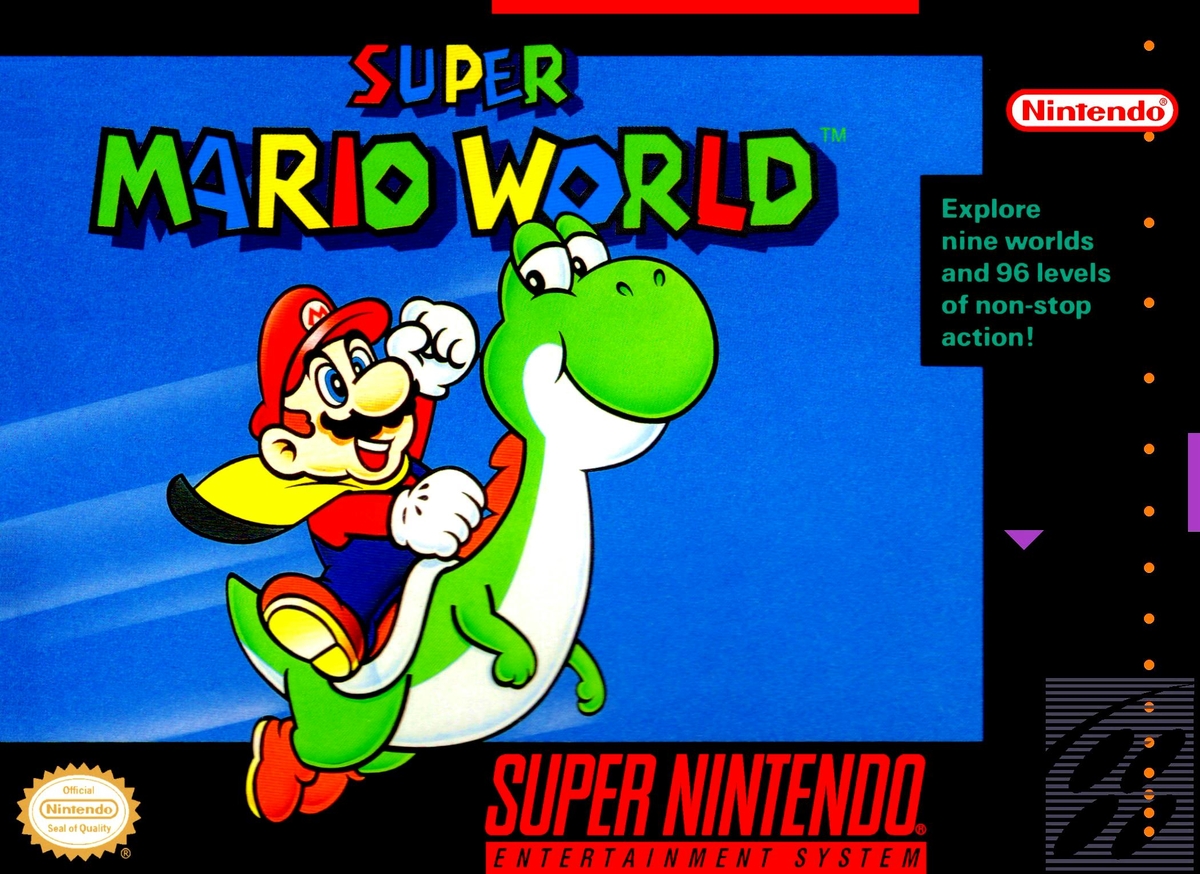
Now the honest bit, because this anniversary belongs to Japan. North America did not get Super Mario World until August 1991. That is when the machine arrived here, redesigned and renamed the Super NES, and Nintendo sold it at $199 with this game packed in the box.
Packed in. Think about that. For a whole generation of us the first thing a Super NES ever did was play this, because it came with the machine. Europe got its turn on April 11, 1992. The game sold more than 20 million copies in the end. The commonly cited figure is 20.61 million. Best-selling game on the system, and it is not close.
At 36, it has not aged a day
It never really went away. It came back on the SNES itself in 1994, in Super Mario All-Stars + Super Mario World. Then on Game Boy Advance as Super Mario World: Super Mario Advance 2, in 2001 in Japan and 2002 over here. Then the Virtual Console years. Then the Super NES Classic Edition in 2017, and the Switch’s Nintendo Classics library in 2019. Yoshi got his own prequel in 1995, Super Mario World 2: Yoshi’s Island, and never really left the stage again.
It is still a two-player game in the old way, too. Mario and Luigi take turns on the same map. You die, you hand the controller over. That was my favourite way to play it in 1991 and it is my favourite way now. Somebody on the couch groaning at your cape work is part of the design, as far as I am concerned.
Load it up now and the shock is how little dust there is on it. The jump feels right. The cape feels right. Somewhere around the second keyhole you stop playing a piece of history and you are just playing, and then an hour is gone.
Fifteen people. Unfinished tools. A launch deadline. And inside the cartridge: a dinosaur rescued from a sketchbook, a cape that can break the whole game open if you are brave enough, a second game hiding behind the first one, and a save file that changes colour when you have truly finished it. New consoles usually arrive selling a promise. On November 21, 1990, this one arrived with the promise already kept, in a yellow box, on day one.
— Sal
For more launches from this date, see This Day in Gaming History: November 21. More from this system: our Super Nintendo hub.