
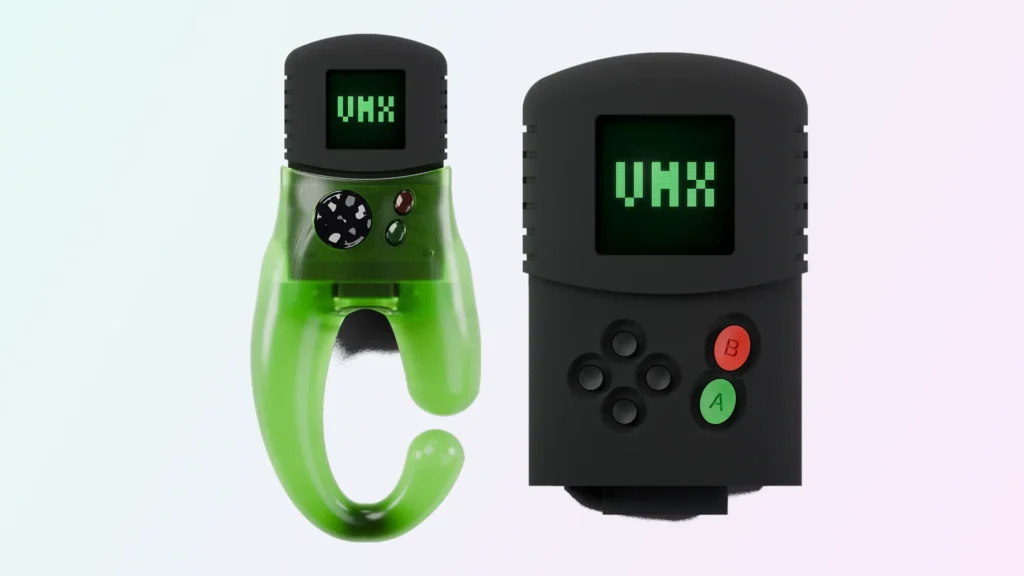
At a glance — Hardware: VMX, a screened memory unit for the original Xbox Duke controller · Maker: Schrammrock Industries · Status: In development — not for sale, no price, no date announced · Screen: 64×64 green OLED · Games: 30+ developed so far
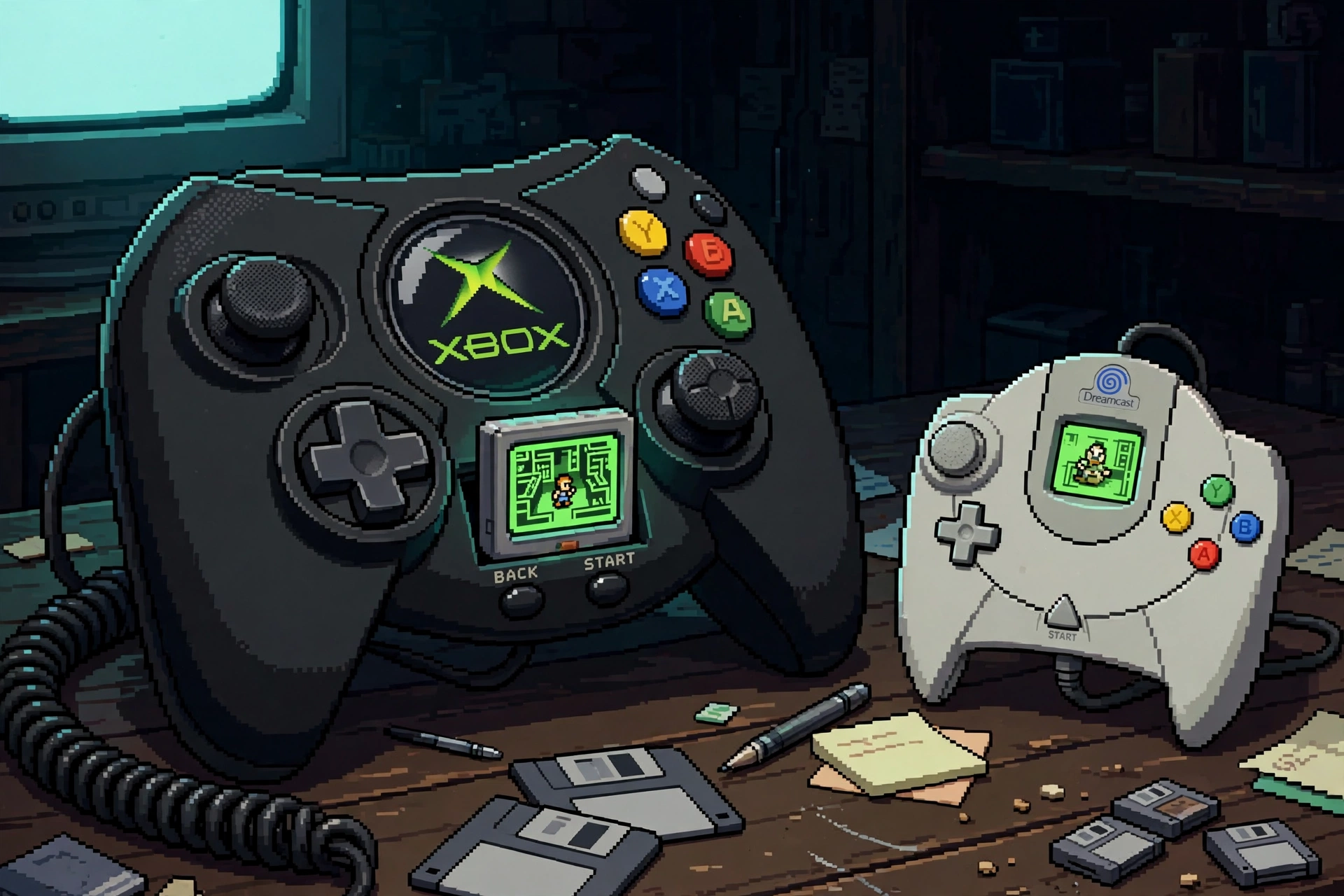
Look at the top edge of a Duke sometime. Two memory slots. For 25 years the most exciting thing anyone put in either of them was a memory card — plain storage, nothing more. Sega’s Dreamcast crowd got the VMU, a memory unit with its own little screen that beeped at you from the controller and played minigames on the bus. Xbox owners got storage. That is the whole grudge, and one fan builder has spent years quietly fixing it.
What the Xbox VMX actually is
The VMX is a memory unit with a brain. It slots into a Duke the way a memory card does, holds your saves the way a memory card should, and then — this is the part the original hardware never dreamed of — it keeps playing after you set the controller down. The screen is a 64×64 green OLED, deliberately monochrome, deliberately Game Boy-adjacent. The bare unit carries a D-pad layout, A and B buttons, a side button and even a beeper; an optional sleeve gives it a proper rocking D-pad for longer sessions away from the console.
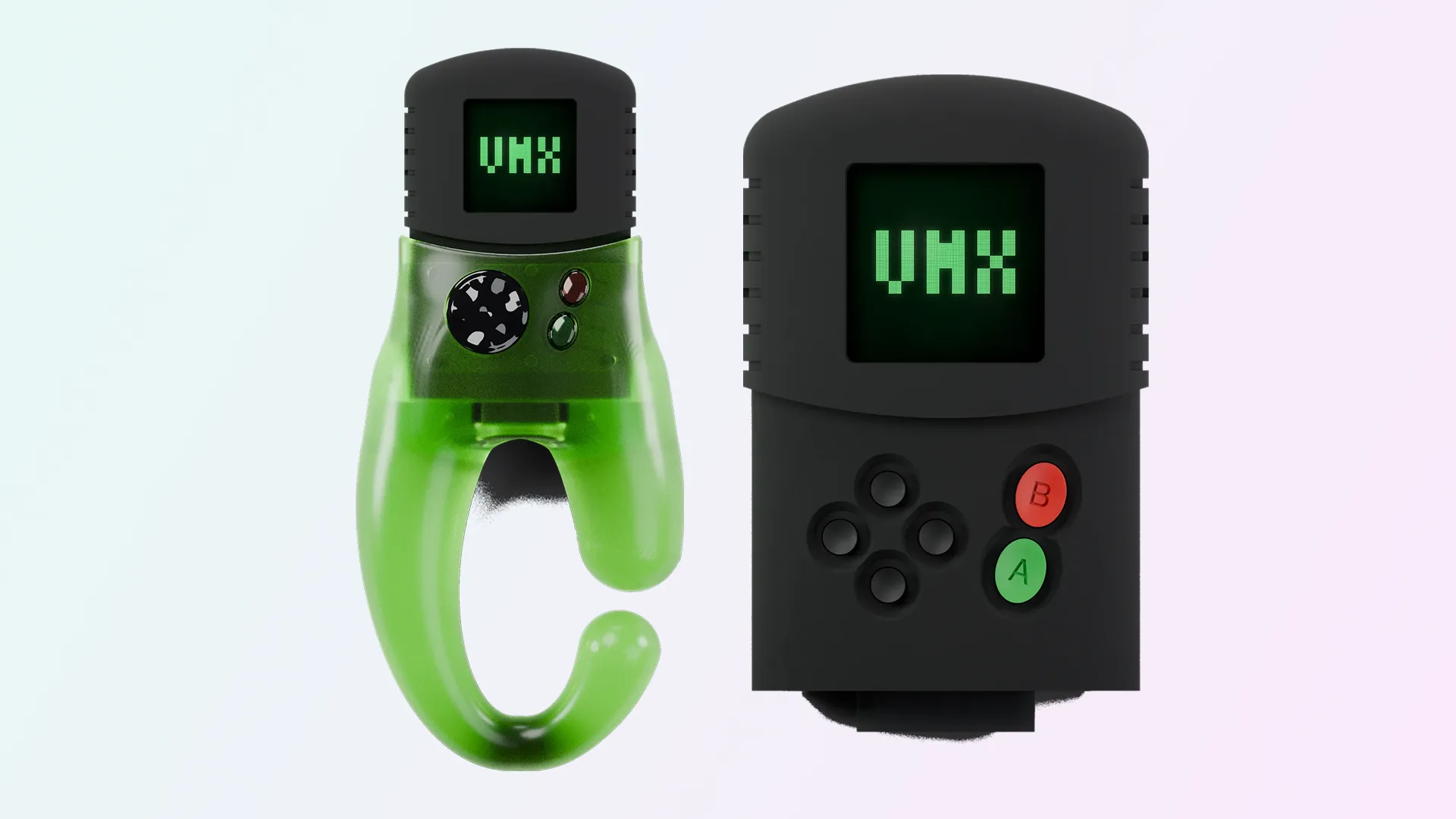
Honesty box, because this desk insists on one: there are no photographs of finished VMX hardware, because there is no finished VMX hardware. The project labels its own imagery “design render,” the firmware is running on a development rig, and the controller-slot hardware is still in development. What you are looking at in this piece is a well-advanced design with working software behind it — not a product you can order, and anyone who tells you otherwise is ahead of the facts.
The slot Sega filled and Microsoft didn’t
Some context for younger readers, because the envy only makes sense with it. The Dreamcast’s Visual Memory Unit was the best party trick of its generation: a memory card with a screen, two buttons and a beeper that lived inside the controller, showed you plays and status mid-game, and unplugged to become a tiny handheld of its own — Chao raising in Sonic Adventure being the famous case. It made saving your game feel like a toy instead of a chore. Microsoft’s designers clearly knew the shape of the idea; the Duke shipped with not one but two memory slots on its face. They just never put a screen in anything that went into them. The slots sat there for the console’s whole life, holding plain storage, like a socket nobody wired up.
That is why this project has been gathering attention out of proportion to a fan accessory. It is not nostalgia for the Xbox’s memory cards, which nobody sane feels. It is the closing of a 25-year-old parenthesis — the feature the hardware always looked like it was supposed to have. Judged as hardware, the VMX has to earn it on build quality we cannot test yet. Judged as an idea, it is already the most interesting thing to happen to the Duke since Hyperkin rebuilt the controller itself.
Thirty games before the hardware exists
Fan hardware usually dies at the prototype photo. This lot built the library first. More than 30 games already exist for that little green screen. Then there is VMX World, a companion app that runs on a real Xbox today — the console side of the ecosystem is alive even while the unit itself is not. Its online pieces, downloads and worldwide scores, are still in development, and the project says so plainly.

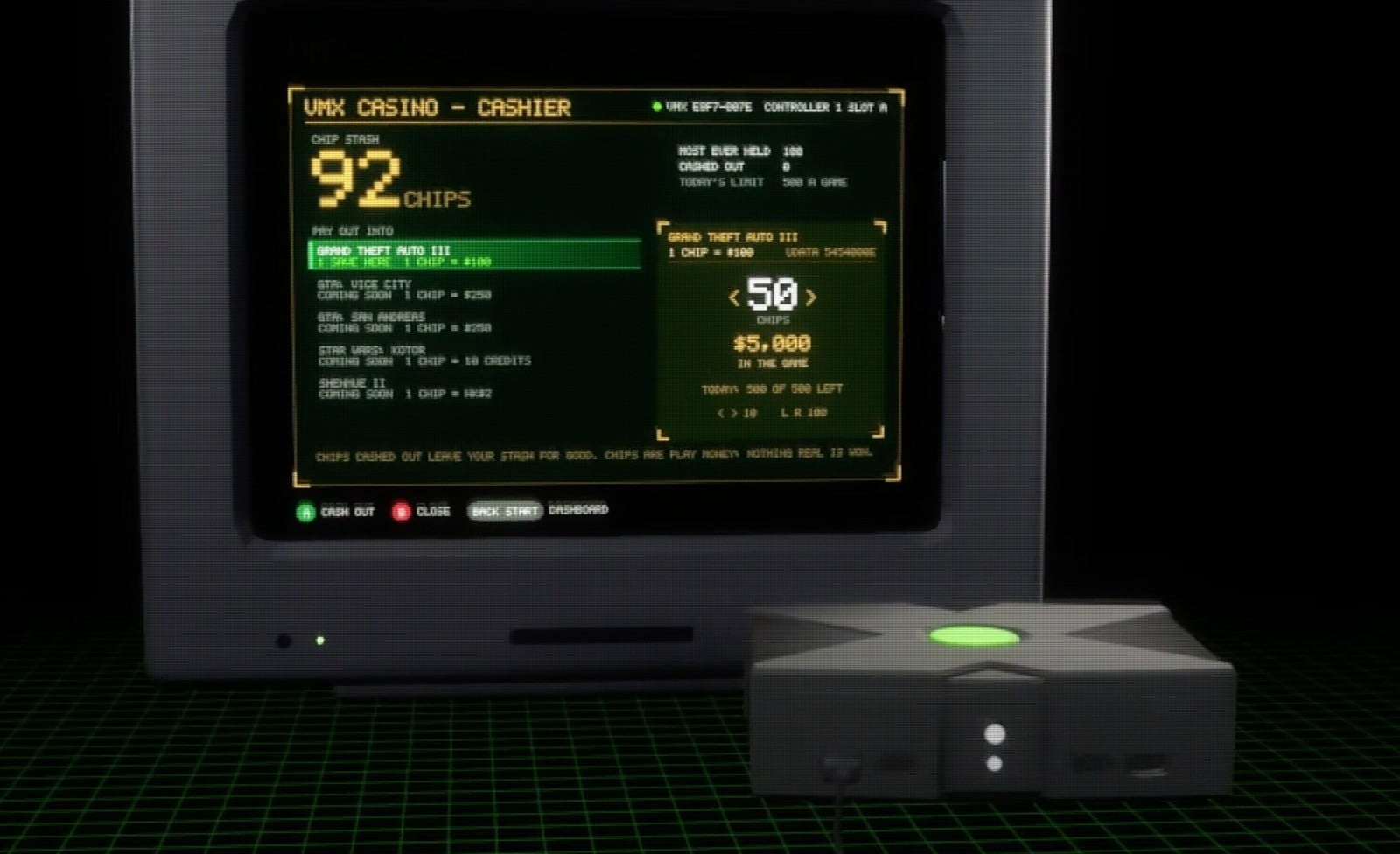
And then there is the casino, which is where this stops being a VMU tribute and gets strange in a good way. VMX Casino packs 18 tables — blackjack, roulette, craps, baccarat, keno and 13 more — onto one shared chip stack. Win on the unit, and the plan is to cash those chips out into real Xbox games. That cash-out feature is still in development; the project’s own cashier screen shows Grand Theft Auto III as the worked example, with Vice City, San Andreas, KOTOR and Shenmue II marked as coming soon. It is a concept UI today. It is also exactly the kind of daft, specific idea that makes this scene worth covering.
No price, no date — and that is the honest part
Here is what the VMX is not: it is not for sale, it has no price, and it has no release date. The maker — James, working as Schrammrock Industries — is looking for a hardware partner to manufacture it, and says on the project’s own homepage that Kickstarter is the backup plan if that search fails. The only money route open today is a no-reward Ko-fi tip fund toward prototype costs. That is not a pre-order, and this piece will not dress it up as one.
The calendar helps. A little, anyway. This is the original Xbox’s 25th-anniversary month — we marked it with our look back at the console at 25, and the Duke itself got its own feature here. A fan-built screen for the Duke’s empty slot is a fitting anniversary story precisely because Microsoft never made one. The VMU envy was real in 2001. Somebody finally did something about it.
What would make this desk happier still is a manufactured unit in a real Duke, photographed on a real desk. Until then: renders, working firmware, 30-odd games, a casino with ambitions, and a partner search. We will update this story when any of those facts change — and if the Kickstarter appears, you will read it here with the price in the first paragraph, where prices belong.
What this desk wants to test when hardware exists
Because the VMX is renders and firmware today, the questions that matter are the ones a review unit would answer. Does the unit sit flush in both Duke slots without wobble? Does the console read it as storage without complaint, and do saves survive the trip from console to standalone play and back? How long does that beeper-era hardware run a casino session on a charge, and does the sleeve’s rocking D-pad actually fix the bare unit’s four separate buttons for anything faster than a menu? None of those are gotchas. They are the difference between a beloved render and a beloved object, and the project’s whole pitch — a memory card you keep playing after the console goes off — stands or falls on the boring answers.
There is precedent for optimism. The modern retro scene has spent a decade turning renders into real, shipping, well-made things, usually late and usually worth it. The VMX at least starts from working software and a library, which is more than most announcements can say on day one.
— Hank
More from this system: our Xbox hub.