
At a glance — Game: The Dig · Developer: LucasArts · Publisher: LucasArts · Original release: November 1995 · Original platforms: DOS · Macintosh · Genre: Point-and-click adventure
Thirty-one years ago, the most famous filmmaker on Earth lent his name to a point-and-click adventure — and very nearly sank it. The Dig took six years, four project leaders, three complete restarts and one major earthquake to reach shop shelves. It remains the strangest, saddest and most stubborn game LucasArts ever shipped.
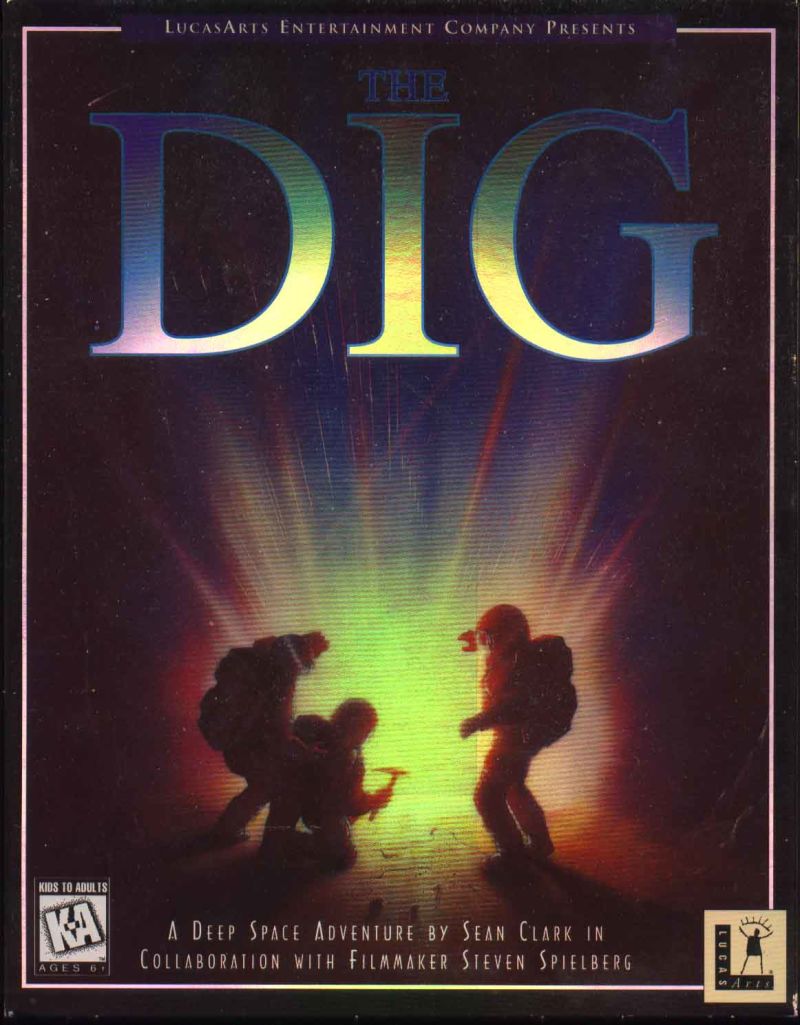
The Movie Steven Spielberg Couldn’t Afford to Make
Every troubled production starts with a good idea nobody can afford. In the mid-1980s, Steven Spielberg was story-editing his NBC anthology series Amazing Stories, feeding outlines to an absurd roster of guest directors — Scorsese, Zemeckis, Eastwood. One of his ideas followed a team of futuristic archaeologists excavating the ruins of an alien civilisation. It was judged too expensive for television. Spielberg then considered it as a film, and the verdict came back the same, only larger: prohibitively expensive to shoot.
What survived was the core of it — a deliberate collision of two films Spielberg loved. From Forbidden Planet came the dead world and its impossible technology; from The Treasure of the Sierra Madre came the rot that sets in when companions start to distrust one another. Spielberg, a genuine games enthusiast who had followed the making of the Indiana Jones and the Last Crusade adventure closely and was known to ring the studio for hints, brought the idea to his friend George Lucas’s games division in 1989. The Dig LucasArts would spend the next six years failing to finish was born in a single planning meeting on October 17, 1989 — a meeting interrupted, with a sense of theatre nobody appreciated at the time, by the Loma Prieta earthquake. Designer Noah Falstein went home that day with Spielberg’s game in his hands and the San Francisco Bay Area in ruins around him. It was an omen the whole studio should have framed.
Version One: Treasure Hunters of the Far Future
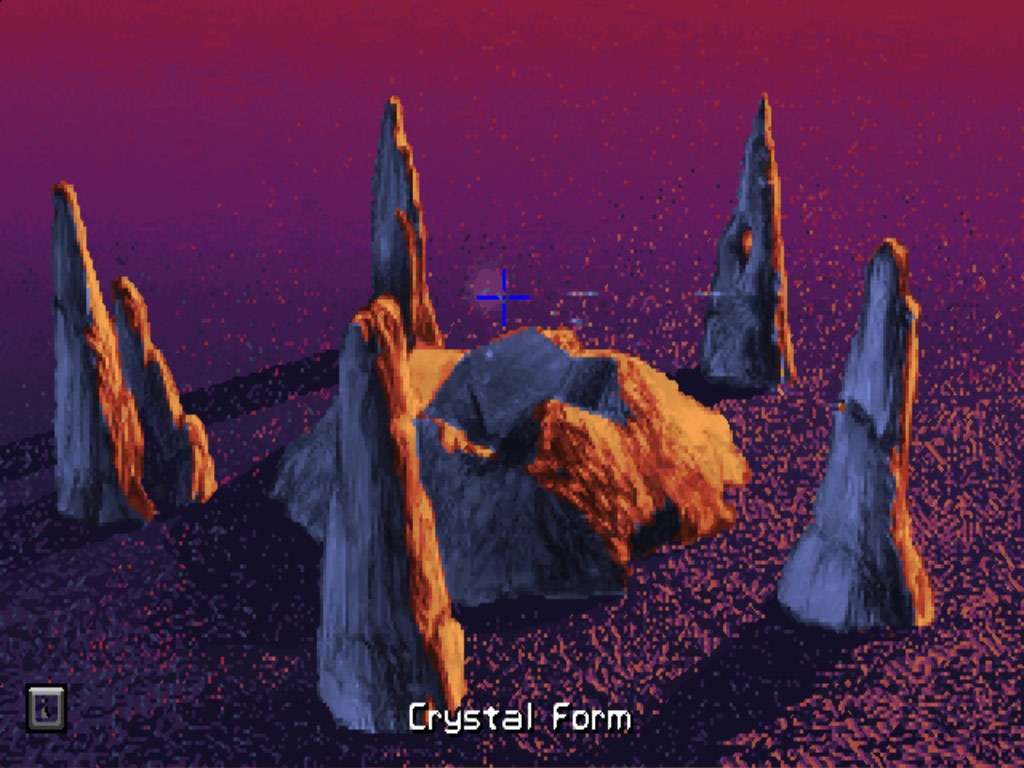
Falstein’s brief was to squeeze Spielberg’s sprawling concept into SCUMM, the point-and-click engine behind the studio’s comedies, and his design — finalised in a document dated January 30, 1991 — is barely recognisable as the game that eventually shipped. It is set some eighty years after the invention of faster-than-light travel, on a planet named Ozymandias after Shelley’s poem about a fallen empire. Three treasure hunters, not astronauts, pick over the ruins of a civilisation that destroyed itself with germ warfare; the player chooses one of two subordinates as their character, and the endgame involves waking the war’s survivors from cryogenic sleep and negotiating a peace between them. There were role-playing and survival systems in the mix, food and water included — sacred cows the LucasArts adventure traditionally did not keep.
Almost none of it was built. Falstein remembers a little SCUMM programming on one promising puzzle and a great deal of concept art, and then, in early 1991, he was pulled off the project entirely and sent to help Hal Barwood finish Indiana Jones and the Fate of Atlantis. The Dig went into a drawer. It would not be the last time.
Version Two: Professor Moriarty’s Dark Restart
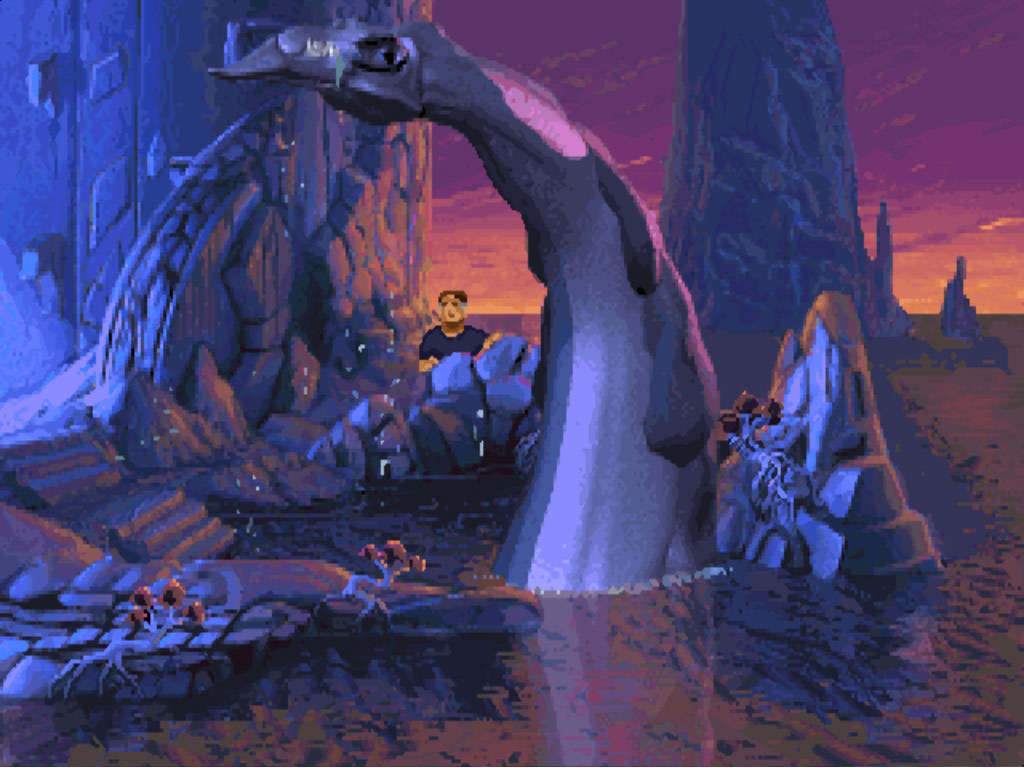
After a year or more of limbo, the project passed to the most literary designer in the building. Brian Moriarty had written Trinity and Beyond Zork for Infocom — his colleagues there nicknamed him “Professor” Moriarty — and had made Loom, LucasArts’ lyrical, haunting fairy tale. He accepted The Dig on one condition: total control. Management, dazzled, agreed. He then threw out Falstein’s game in its entirety and started again.
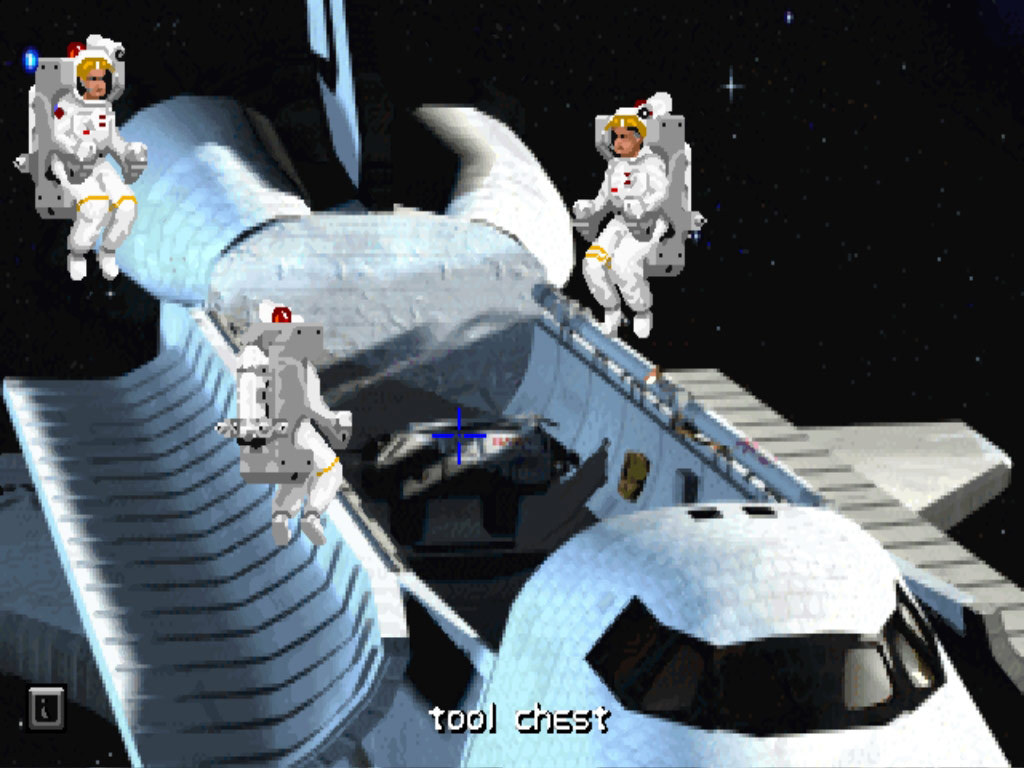
Moriarty’s version is the skeleton of the one you can buy today: a present-day setting, the space shuttle Atlantis, an asteroid named Attila on a collision course with Earth, and Commander Boston Low leading a crew to plant diversion charges — only to find the asteroid hollow, and booby-trapped, and very far from home. But his telling was darker and bloodier. A fourth traveller, a Japanese tycoon named Toshi Olema who had bought his way onto the crew, was written to die horribly under dripping acid. The violence was deliberate; this was to be the adult LucasArts adventure, and Spielberg initially applauded the tone. (After Jurassic Park drew complaints from parents who had ignored its rating in 1993, Spielberg changed his mind and asked for the gore to be toned down.) Under the bonnet, Moriarty’s programmers were building a whole new engine, StoryDroid, to carry ideas SCUMM couldn’t: inventories of abstract ideas, a maze that rebuilt itself, a trip through a Klein bottle.
It went wrong in the way these things usually go wrong — slowly, then all at once. The art team, led first by Bill Eaken and then by Bill Tiller, wanted budgets and schedules; Moriarty wanted limitless iteration, and by several accounts the two camps ended up working in separate buildings in every sense. In the autumn of 1993, on the morning of the project’s first “pizza orgy” — the studio ritual where everyone plays a milestone build — Moriarty quit. He remains one of the finest writers the adventure game ever produced, and he never wrote another one.
Version Three: The Man Who Actually Shipped It
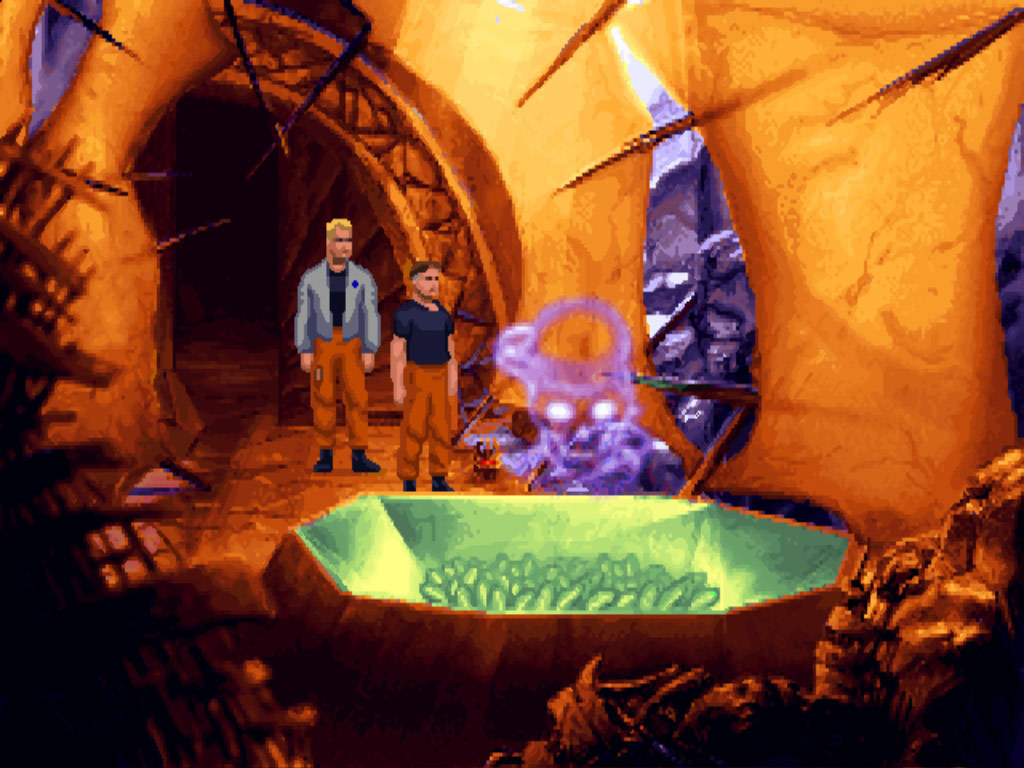
The hot potato rolled on. Barwood passed through briefly; Dave Grossman, a veteran of the first version, spent a few months as what he called a “hedge trimmer,” snipping at the design; then the game was shelved again while its team went off to make Full Throttle, a project the company actually loved. What saved The Dig from the bin was partly pride and partly protection: George Lucas insisted it be finished, and nobody fancied telling him they’d cancelled his best friend’s game. In late 1994 it was handed to Sean Clark, co-leader of Sam & Max Hit the Road, who took one look and recommended cancelling it outright. Management refused. So Clark did something nobody before him had managed: he finished it.
His method was triage. StoryDroid was scrapped and the game dragged back onto SCUMM. Moriarty’s plot and his three leads survived; the philosophy, the survival systems and anything too exotic to build did not. The interface became the streamlined one-click design LucasArts had been moving toward — point at a thing, and Low does the obvious thing with it. To dress the marquee, the studio hired Ender’s Game author Orson Scott Card to write the dialogue with Clark, and cast Robert Patrick — the T-1000 himself — as Boston Low, with Steve Blum as the German geologist Ludger Brink and Mari Weiss as journalist Maggie Robbins. Industrial Light & Magic contributed pre-rendered imagery for the cutscenes, and the end credits carried a quiet, extraordinary credit block: “Ghosts of Dig’s Past,” acknowledging the small army who had worked on the versions that died. In November 1995, six years after the earthquake meeting, The Dig finally shipped — promoted, with a straight face, as the studio’s “highest-profile product yet,” complete with a novelisation and audio drama by Alan Dean Foster.
Stranded on Cocytus
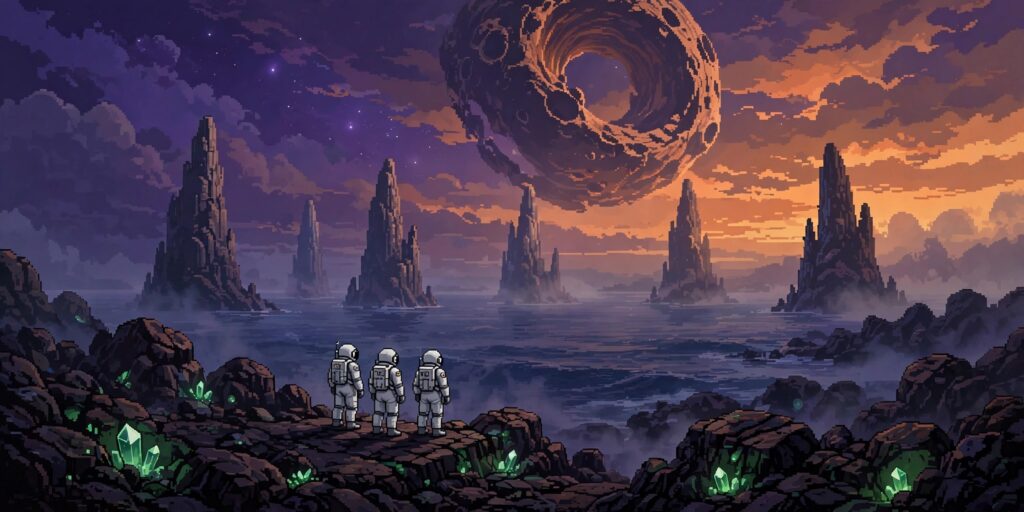
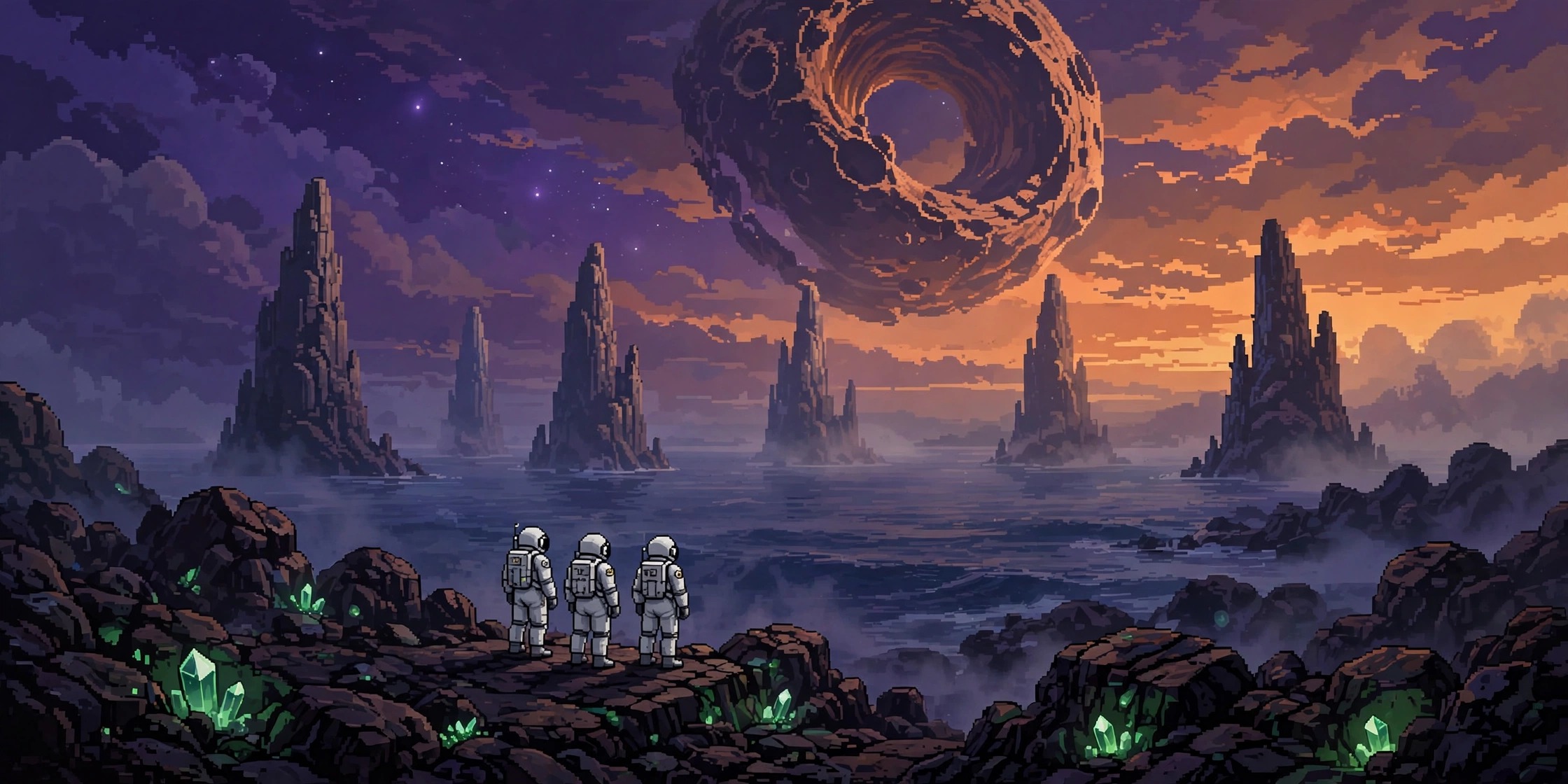
Strip away the legend and what’s left? A five-person shuttle crew diverts the asteroid; Low, Brink and Robbins step inside it; the rock unfolds into a dodecahedron and carries them to a world the Foster novel names Cocytus — a central island ringed by five spires, littered with the machinery of a species that vanished chasing eternal life. A tram network, a museum, ghostly guides that flicker at the edge of sight: the near two hundred hand-painted backgrounds Bill Tiller’s team produced remain the game’s glory, all violet dusk and melancholy scale.
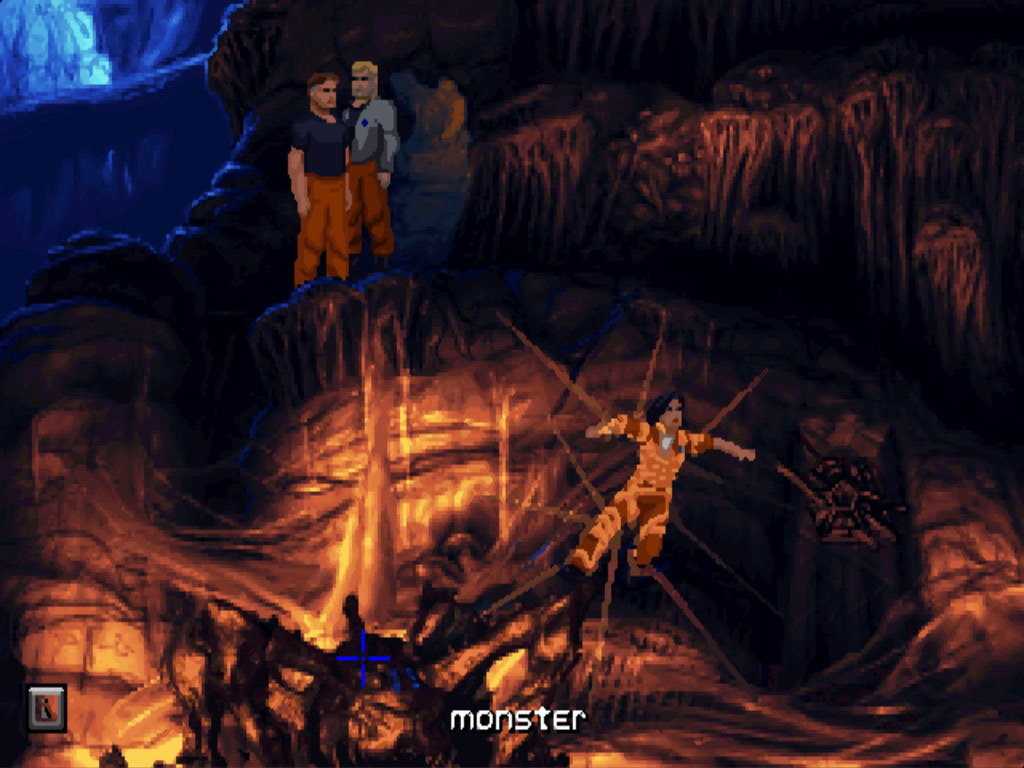
The story’s engine is the green life crystal. Brink falls to his death while digging; Low, having seen a museum display of resurrection, brings him back — and Brink returns wrong: stronger, euphoric, and soon hoarding crystals like a miser with gold. This is Spielberg’s Sierra Madre rot, preserved through every rewrite, and it gives The Dig its genuinely unsettling middle act, as the crew’s alliance curdles in paradise. Around that drama sits the eleventh SCUMM game and the last one the engine powered on DOS: full voice acting, a communicator device that doubles as a Lunar Lander minigame, and not a verb bar or a joke menu in sight. Where its siblings are comedies with puzzles, this is a somber science-fiction novel that happens to be playable.
Puzzles That Broke the House Rules
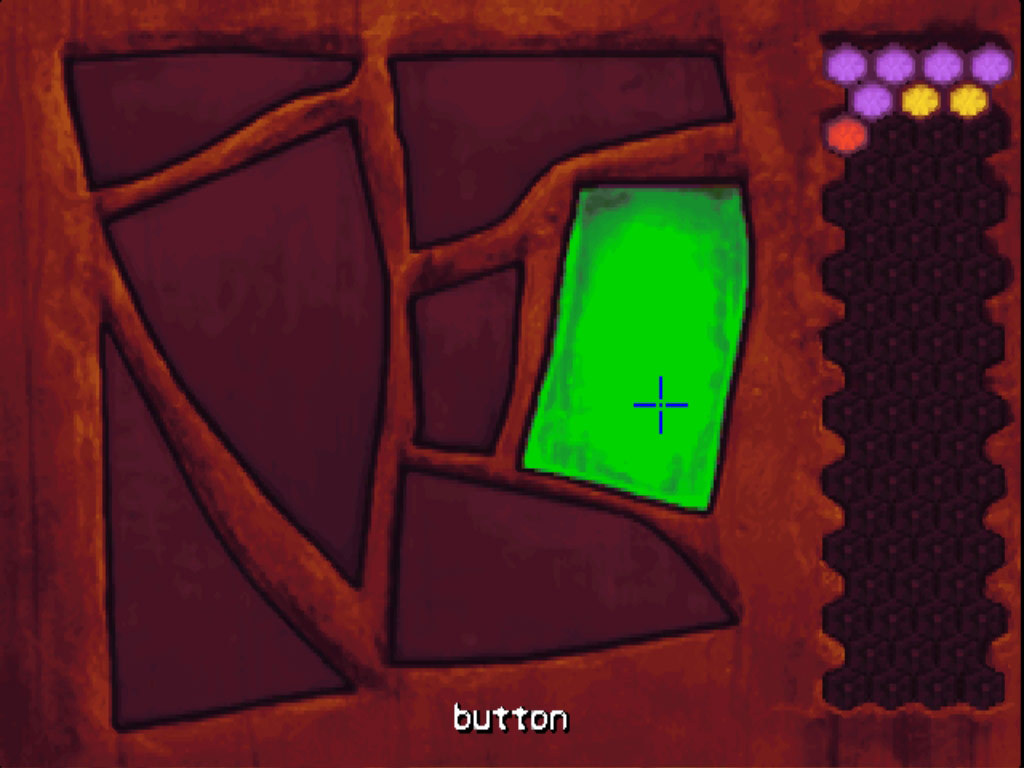
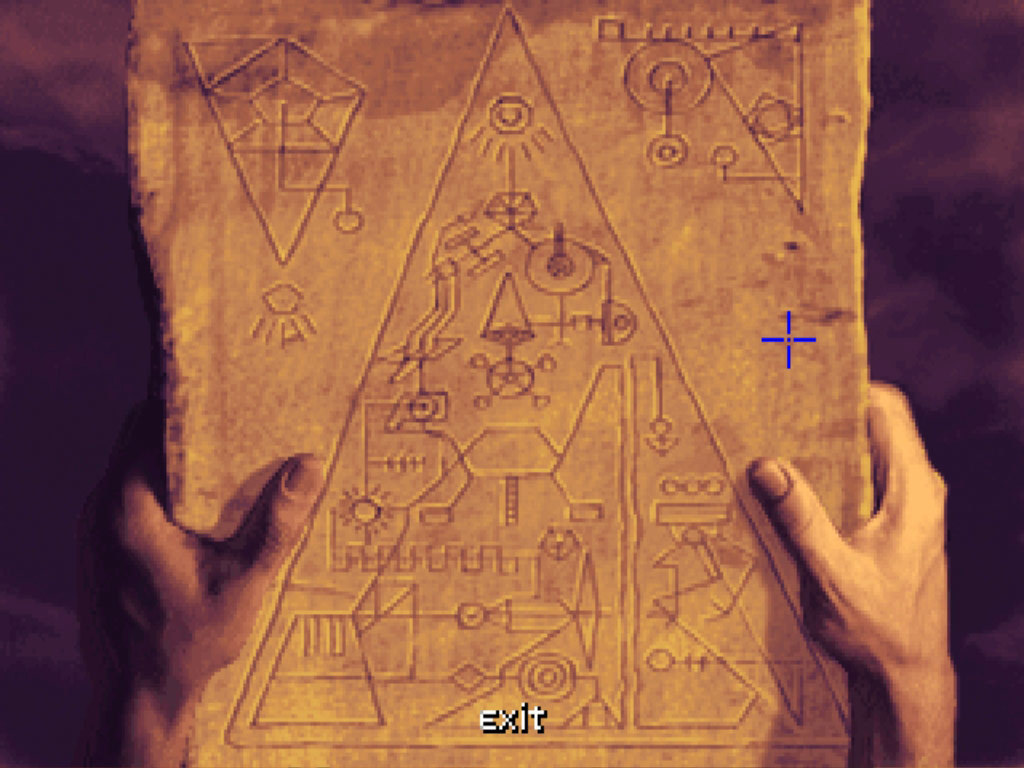
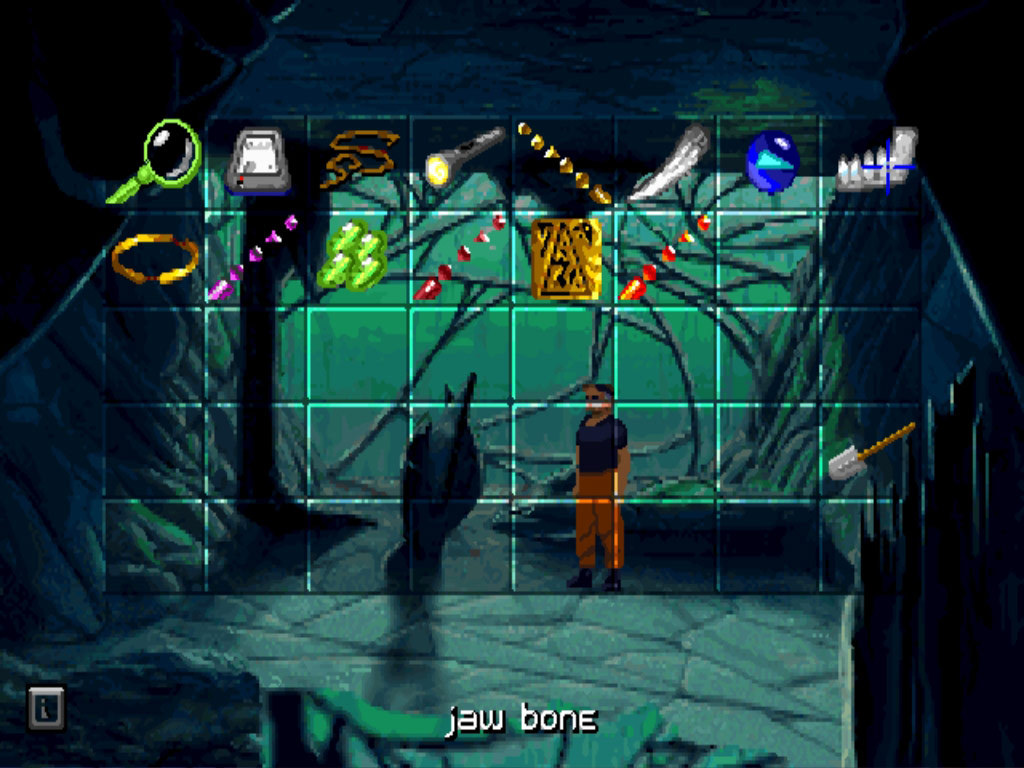
LucasArts built its name on mercy: no deaths, no dead ends, no punishment for curiosity. The Dig keeps the letter of that law and breaks its spirit. Its puzzles were divisive from the first reviews — Next Generation and GameSpot both complained that too many solutions came down to trial and error rather than logic, and two sequences entered folklore. In one, you must assemble an alien creature’s skeleton from scattered bones without ever having seen the creature whole. In another, a cryptic control panel guards progress behind symbology that generations of players have described with words unfit for print. The chastening detail, by Tiller’s own later admission, is that the team believed the panel puzzle was simple — because nobody had ever sat a fresh player down in front of the finished game before it shipped. For players of a certain temperament, this is now part of the appeal: real archaeology, after all, does not come with a hint system.
A Score Stranger Than the Story
If one element of The Dig escaped the wreckage unscathed, it is Michael Land’s music. LucasArts asked for something “Wagnerian,” and Land built the score on a Kurzweil K2000 synthesizer, layered with hundreds of short chord samples lifted from Wagner’s works — processed, stretched and occasionally run backwards until the result sounds, in Clark’s phrase, strange and yet slightly familiar. It hangs behind the exploration like weather: static, ambient, patient, then suddenly enormous when the story turns. Critics who savaged everything else in the game singled the score out for praise, and in January 1996 it became the first LucasArts soundtrack ever sold separately, issued on CD by Angel Records — a small, telling vote of confidence in the one part of the production everyone agreed on.
The Hit That Felt Like a Flop
The reviews, when they came, described two different games. PC Gamer gave it 88%, Edge 8 out of 10, Next Generation four stars; GameSpot, at the other pole, handed it 4.5 out of 10 and called it a leap backwards. The dialogue was cheered and jeered in roughly equal measure, the voice acting likewise, and the low-resolution VGA artwork — begun in an era before SVGA became standard — looked dated the day it launched. Then came the paradox that defines the game’s reputation. By LucasArts’ own accounting, The Dig sold some 300,000 copies worldwide by early 1998, making it the best-selling adventure the studio had released to that point. Inside the building, it was still talked about as a disappointment: six years of budget and Spielberg-sized hype had set a bar that merely leading the catalogue couldn’t clear. Posterity has been kinder and more curious. When Adventure Gamers assembled its Top 100 adventures in 2011, The Dig made the list at number 92, with the rueful note that players in 1995 hadn’t known what to make of it. Stripped of the hype that crushed it, a very good, very odd game was waiting underneath.
Playing It in 2026
You have easy options, and they’re cheap. The Dig returned to sale on Steam on July 8, 2009, in LucasArts’ first wave of digital revivals, and it’s also on GOG; it runs happily under ScummVM if you have an original copy. Go in knowing two things. First, it is a compact game — far shorter than its six-year gestation will lead you to expect. Second, its difficulty is honest-to-goodness 1995 difficulty: keep a notebook for the glyphs, save before you experiment, and let yourself be stuck for a while before you reach for a guide. The atmosphere rewards the patience. Thirty-one years on, The Dig is not the masterpiece its makers kept trying to build, nor the embarrassment its launch suggested. It is the LucasArts adventure that reached furthest beyond the house style — and the scars, unusually, are part of the exhibit.
Score: 7.5 / 10 — Too flawed to call a classic and too strange, sad and beautiful to dismiss: the least funny game LucasArts ever made, and in its best moments the most haunting.