
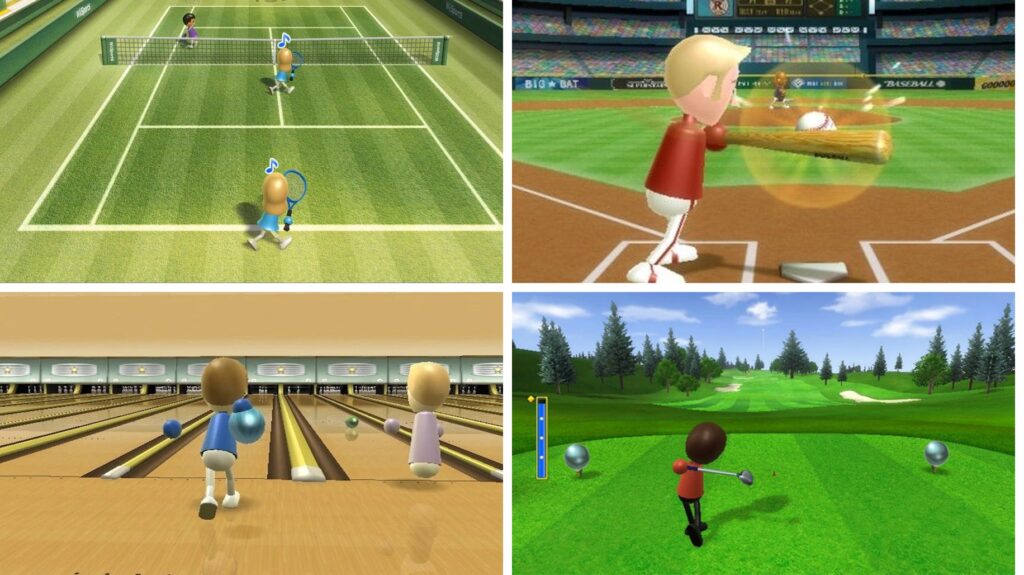
At a glance — Game: Wii Sports · Developer: Nintendo EAD · Publisher: Nintendo · Original release: November 19, 2006 · Original platforms: Wii · Genre: Sports compilation
Ask anyone who queued for a Wii on Sunday, November 19, 2006, what they played first, and the answer is rarely the launch game they had paid for. The Legend of Zelda: Twilight Princess was the heavyweight that day — we have reviewed that dark, strange epic on its own terms — but the disc that actually explained the Wii to the world was the free one. It came in a cardboard sleeve inside the console box, it held five little sports games, and most households had it on screen before the console’s clock was even set.
Twenty years on, Wii Sports is the rare pack-in that outgrew the hardware it was demonstrating. It was built as a tutorial. It ended up as Nintendo’s best-selling game of all time, the reason grandparents had opinions about bowling spin, and the first game a generation of families played standing up. This is the story of the game itself — five sports, a cast of rubber-faced avatars, and a giveaway that turned into a phenomenon.
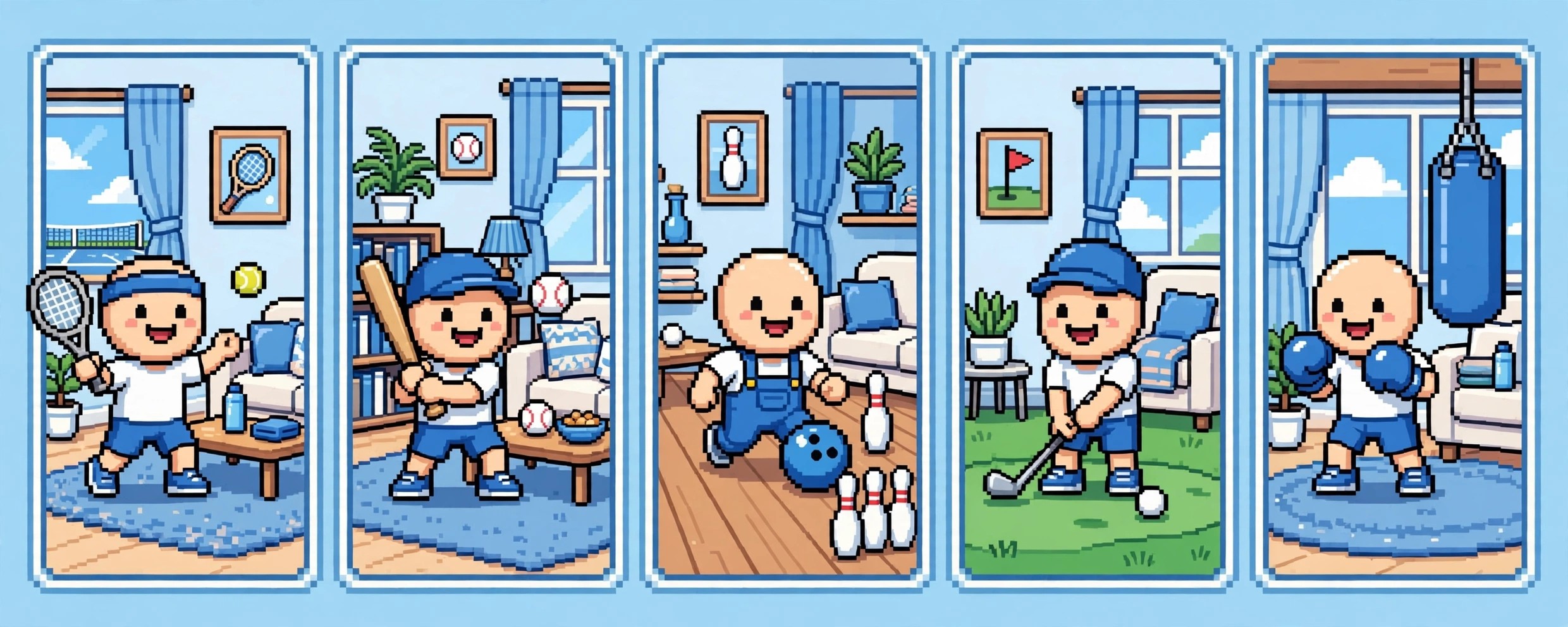
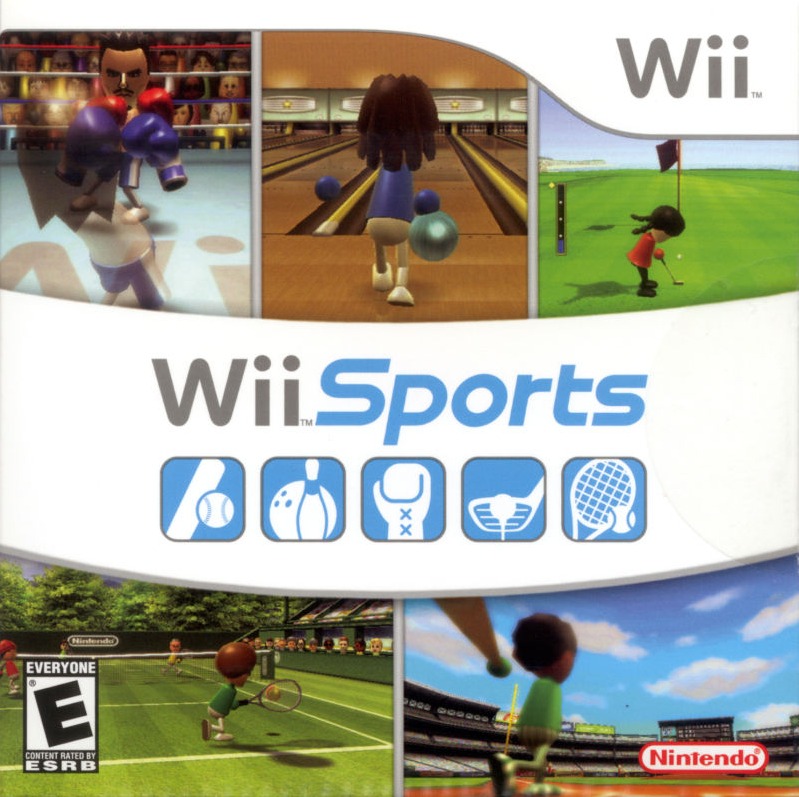
Wii Sports: Five Sports, No Manual Required
The design brief, from producer Katsuya Eguchi’s team at Nintendo EAD, was almost insultingly simple: make something a person who has never held a controller can play within a minute, and make it just deep enough that they come back tomorrow. Sports were the obvious vehicle. Everybody already knows the verbs. You swing a tennis racket, roll a bowling ball, throw a punch. The Wii Remote simply let the game take those verbs literally.
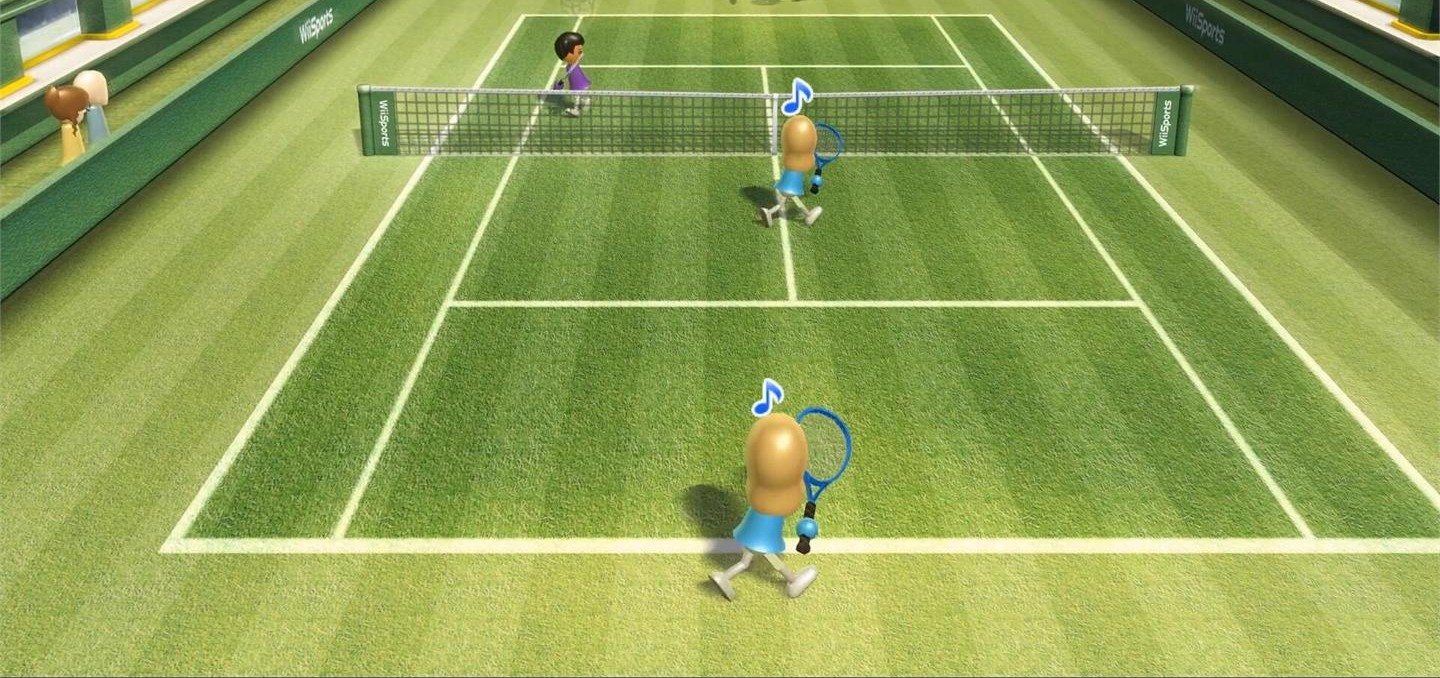
Tennis is the one Nintendo showed first — it was announced on its own, as Wii Sports: Tennis, before E3 2006 folded it into the package — and it remains the purest of the five. It is doubles only, your Mii drifts into position on its own, and your whole job is timing the swing: early, late, forehand, backhand, a flick of the wrist for spin. Stripping out the footwork sounds like a compromise until you play it with three relatives and realise the footwork was the barrier.Nintendo had road-tested that readability in public months earlier: at E3 2006, Satoru Iwata and Reggie Fils-Aimé played an on-stage doubles match against Shigeru Miyamoto and Scott Dyer, a contest winner — two executives, one fan, no tutorial, and the room understood the product before the match was over.
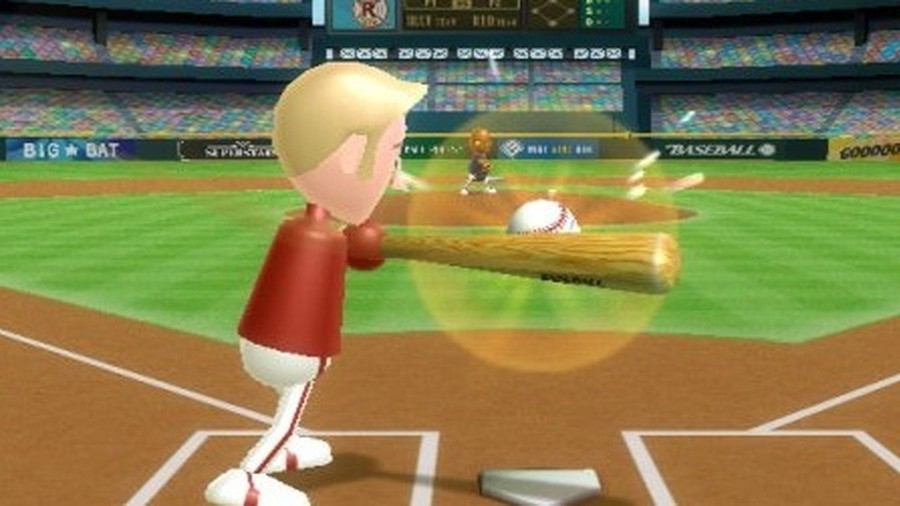
Baseball is the most ruthlessly edited of the set. Three innings. You bat and you pitch, and that is all — fielding and baserunning are handled by the game, because a fielder you cannot control is a fielder you cannot blame. Batting is a genuine read of your swing: check it, and the ball dribbles; commit, and a well-timed cut can leave the park. Pitching, with a flick and a button held, splits into fastballs and off-speed stuff. Critics at the time called it shallow. They were right, and it did not matter — a three-inning game is over before shallowness gets a vote.
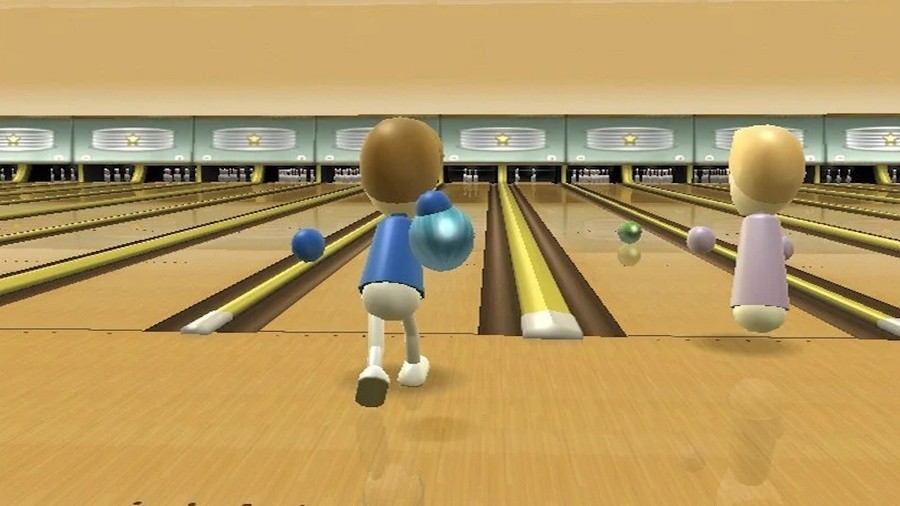
Bowling is the masterpiece, and most reviewers in 2006 said so at the time — IGN, which scored the package 7.5, ranked it the best of the five. Raise the Remote, swing, release the B button at the bottom of the arc, twist your wrist if you want the ball to bend. It runs a proper ten frames, up to four players can share a single Remote in turn, and the physics hold up embarrassingly well: leave the 7–10 split and you will feel it in your stomach exactly as you should. Bowling is also where Wii Sports left the hobby entirely. Retirement communities formed leagues around it. Bars ran tournaments. It is the sport that turned the Wii from a games console into furniture that entertained.
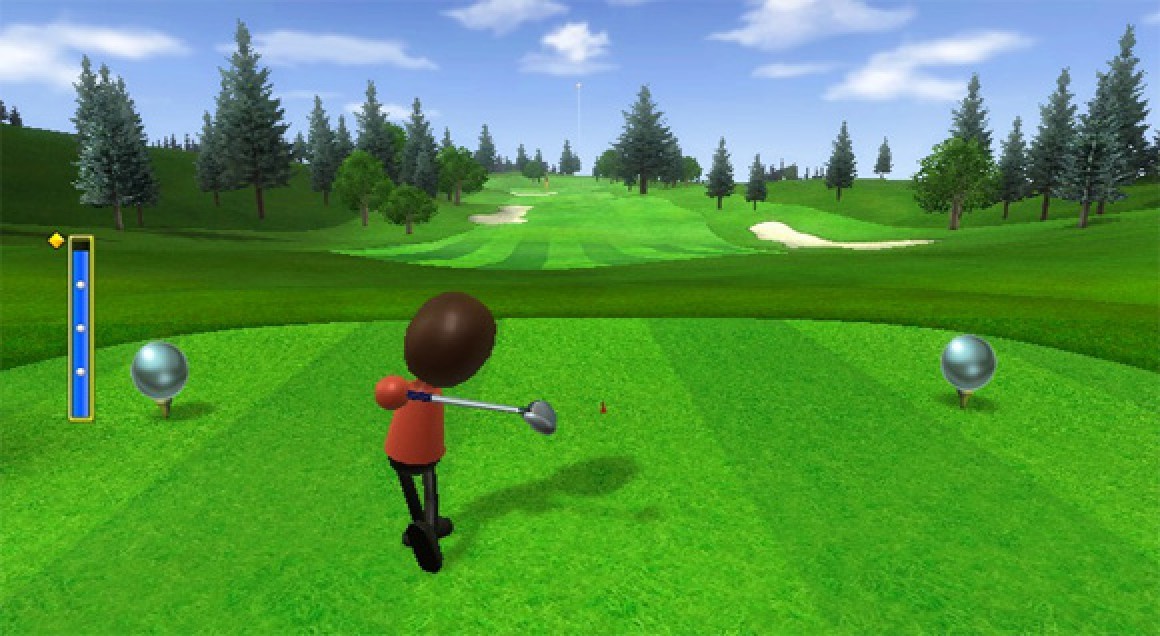
Golf is the connoisseur’s pick and the temperamental one. Nine holes — a layout with roots in Nintendo’s own Golf for the NES — played by addressing an imaginary ball and swinging the Remote like a club, with a power gauge that punishes greed: swing past the marker and the shot slices or hooks away. Putting, all touch and trembling wrists, is where rounds go to die. It is the deepest game in the package and the hardest to teach, which is probably why it is the one players argue about most fondly.
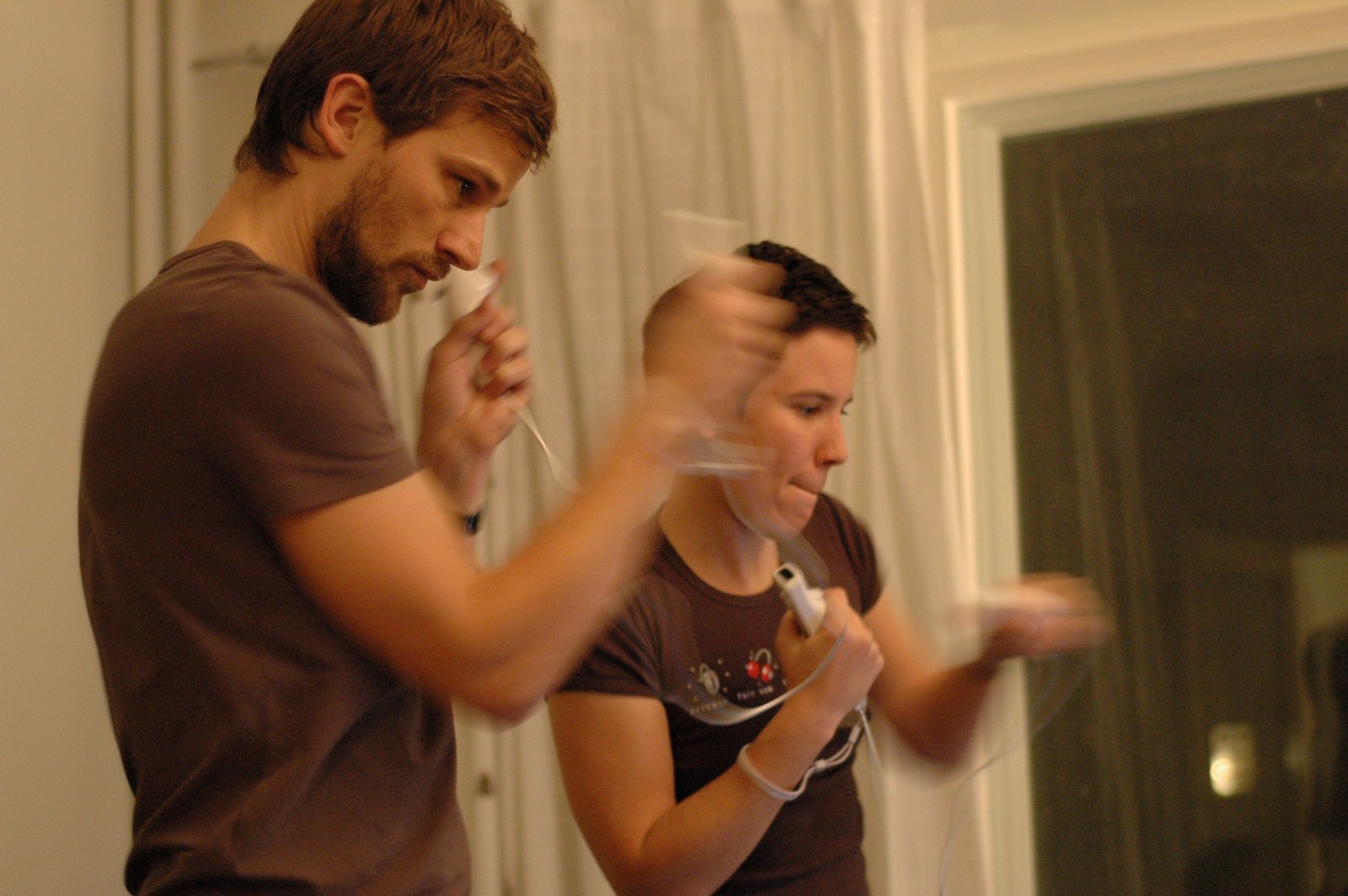
Boxing closes the set, and it is the only sport that uses both hands — Remote in one, Nunchuk in the other, jabbing, hooking, leaning and blocking through three rounds against a ladder of CPU Miis. It is sweaty, inaccurate and completely joyful, and somewhere near the top of that ladder waits Matt, the champion whose difficulty turned him into an internet legend years later. Boxing is also the sport that explains the era’s most famous accessory: the wrist strap. Two players, arms windmilling, in front of a television — the photograph below is not a posed advertisement. It is simply what living rooms looked like in 2007.
The Pack-In Play
None of this reaches a single living room without a fight inside Nintendo. Eguchi’s team designed Wii Sports as an introduction, on the honest assumption that nobody would buy a console for it — so the game had to go where the console went. Shigeru Miyamoto and company president Satoru Iwata were initially hesitant to give it away. Nintendo of America president Reggie Fils-Aimé argued the other side: the pack-in was the pitch, the thing that would make a sceptical household understand the machine in ninety seconds. He won.
The announcement came at Nintendo’s New York event on September 14, 2006, where Fils-Aimé confirmed all five sports and the bundle in one breath. Nintendo of America’s launch release put it in writing: the Wii’s $249.99 price “includes one wireless Wii Remote controller, one Nunchuk controller and the groundbreaking collection of five different Wii Sports games on one disc, which anyone can play using simple movements, experienced or not.” It was the first game packed in with a Nintendo system at launch since Mario’s Tennis rode along with the Virtual Boy in 1995 — and we have told the strange afterlife of that free-game decision before, because the industry has been charging for the same trick ever since.
One region ran the experiment the other way. In Japan, where the Wii launched on December 2, 2006, Wii Sports was not in the box; it was sold separately, like any other game. The result is the cleanest evidence that the game had legs of its own: Japanese players bought 176,167 copies in its first two days, a record for a seventh-generation game there, pushed it past a million by February 2007, and made it the best-selling game of 2007 in Japan. Everywhere else, the bundle did the persuading. In Japan, the game did — and the numbers came out enormous either way.
The Miis Move In
The other revolution on the disc is a face. Wii Sports was the first Wii game built around Miis, the little caricatures owners made of themselves in the Mii Channel — a nose, a haircut, a pair of eyes, and somehow unmistakably your uncle. Your Mii is your tennis player, your bowler, your boxer. Your friends’ Miis fill the opposing baseball team and the crowd behind the bowling lanes, and a Mii could ride inside a Wii Remote to a friend’s house, an idea that felt like magic in 2006.
Around that simple hook Nintendo built a quiet little metagame. Every performance earns or costs skill points, charted on a graph; reach 1,000 in a sport and your Mii turns Pro, with a small cosmetic reward and a message on the Wii Message Board to mark it. A training mode offers three drills per sport with medals running bronze to platinum. And once a day, the game will take three drills, grade your balance, speed and stamina, and assign your Mii a Wii Fitness Age somewhere between 20 and 80 — a number families quoted at each other like blood pressure. None of it is deep. All of it is yours, which turned out to be the point. Even the sound is a signature: composer Kazumi Totaka’s breezy title theme is the one that drifted from a million televisions while the family argued about whose turn it was.
82.9 Million Copies, and What the Number Really Says
Now the asterisk, because this game’s most famous statistic deserves an honest reading. Nintendo’s own count puts Wii Sports at 82.90 million copies by March 2021 — enough to pass Super Mario Bros., become Nintendo’s best-selling game ever, and stand as the best-selling game released on a single console. It had already reached 45.71 million by March 2009. But the great majority of those copies were counted the moment a Wii left a shop shelf with the disc inside it. The figure measures the console’s reach as much as the game’s demand, and pretending otherwise would be exactly the kind of inflation this site tries not to print.
Here is the thing, though: the bundle explains the number, but it does not explain the twenty years. Plenty of pack-ins have been counted and forgotten. Wii Sports got a sequel, Wii Sports Resort, in 2009; an HD remake, Wii Sports Club, on Wii U in 2014; and a successor in Nintendo Switch Sports in 2022. Critics in 2006 were measured — a 76 on Metacritic, praise for the accessibility, complaints about depth and graphics — yet in May 2023 the game was inducted into the World Video Game Hall of Fame, which is where measured reviews go to be overruled by history. The senior bowling leagues, the television segments, the broken-strap headlines: the culture kept the receipt.
What Wii Sports actually sold, in the end, was not units. It sold the idea that a video game could be a thing a whole room does together, standing up, badly, loudly. Every motion-control gold rush, every party game, every console pitched at people who “don’t play games” is downstream of a free disc in a cardboard sleeve. The machine that carried it has its own hub page here, and the little white console deserves it. But the disc came first in every sense that mattered. Twenty years later, it still takes about ninety seconds to understand. That was always the whole game.
— Chip
For more launches from this date, see This Day in Gaming History: November 19.