At a glance — Game: World of Warcraft · Developer: Blizzard Entertainment · Publisher: Blizzard Entertainment · Original release: November 23, 2004 (North America) · Original platforms: PC (Windows), Mac · Genre: MMORPG
Tomorrow marks twenty-two years since Blizzard Entertainment opened a world and started charging rent on it. World of Warcraft reached North American stores on Tuesday, November 23, 2004 — a decade after Warcraft: Orcs & Humans had introduced Azeroth as a map you commanded armies across. Now it was a place you lived in. The box cost $49.99. The first month was included. After that, staying cost $14.99 a month, every month, for as long as you wanted to keep your character’s life going. Millions of people did the arithmetic and paid.
That needs a moment’s pause, because in 2004 it sounded like a con. Online worlds existed — Ultima Online, EverQuest, Dark Age of Camelot — and they were respected, profitable and firmly niche. A monthly subscription for a video game struck most households as a cable bill too far. Games were things you bought once. Within a year of launch, though, World of Warcraft had not merely beaten the incumbents. It had made the whole genre before it look like a rehearsal. What follows is the story of that launch, the design that carried it, and the numbers it left behind.
The Street Date: November 23, 2004
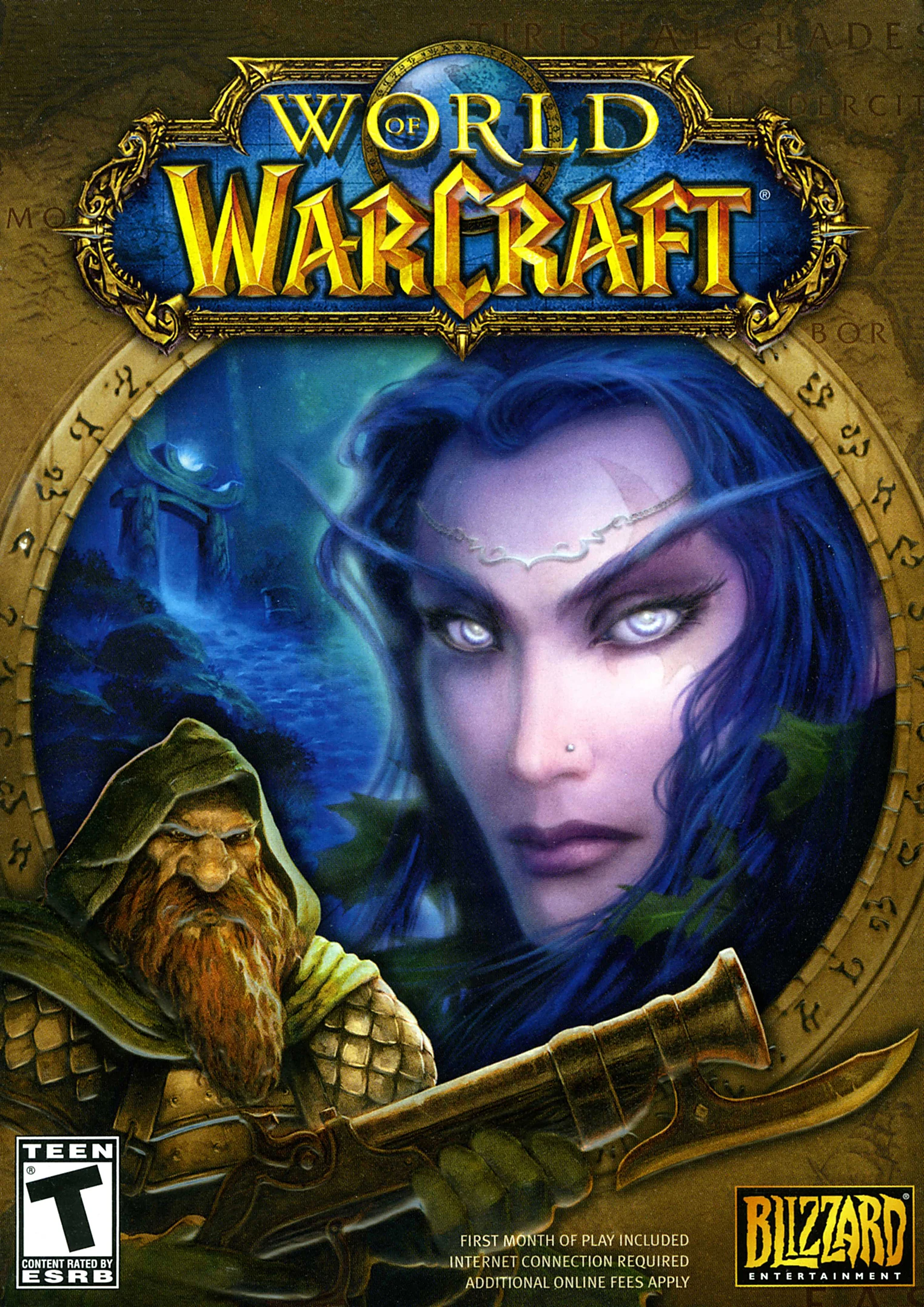
Blizzard set the date the way it set every date in that era. Late, and in a press release. On November 4, 2004, the company confirmed the game would be in North American stores on November 23, launching the same day in Australia and New Zealand, with Korea and Europe to follow. Europe’s turn came on February 11, 2005. Alongside the $49.99 standard edition sat a Collector’s Edition at $79.99: the game on both CD-ROM and DVD, a behind-the-scenes DVD, an exclusive in-game pet, a cloth map of Azeroth, a soundtrack CD and a coffee-table art book. The subscription came in three tiers — $14.99 month to month, $13.99 a month on a three-month plan, $12.99 a month on six months. Commit, and Blizzard would meet you partway.
Two things in that announcement deserve more credit than they get. First, the game shipped for Windows and Mac on the same day, in the same box. A Blizzard habit, easily missed, and it doubled the number of households where the game could simply be installed and played. Second, consider what was actually in the world on day one. Two continents — the Eastern Kingdoms and Kalimdor — and nothing beyond them. No Outland. No Northrend. Eight races: humans, dwarves, night elves and gnomes for the Alliance; orcs, trolls, tauren and the Forsaken undead for the Horde. Nine classes, with one deliberate asymmetry that players argued about for years — paladins fought only for the Alliance, shamans only for the Horde. The level cap was 60, and reaching it took weeks. For most players, in the winter of 2004, it took all winter.
A World of Warcraft Designed to Be Lived In
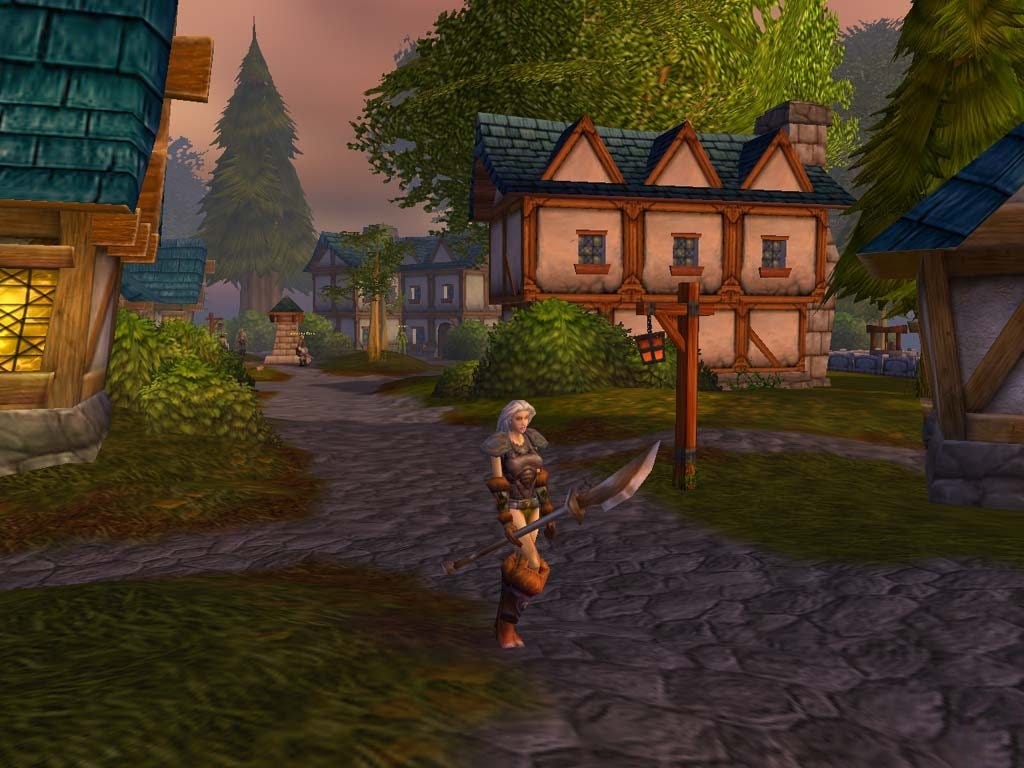
The older online worlds treated leveling as a toll road. You stood in a field with five strangers, killed the same monsters for hours, and occasionally the game let you feel clever. Blizzard’s break with that tradition was not really about technology. It was about manners. World of Warcraft organized itself around quests — thousands of them, written into every zone, walking you from a farmer’s pumpkin patch to the doorstep of places you were nowhere near strong enough to enter. And according to Eurogamer’s history of the game’s development, that was nearly an accident. The original plan used quests only to teach the starting levels; after that, players would graduate to the traditional grind. Testers found the grind boring. So the quests became the spine of the game, and the genre never went back.
The courtesies stacked up. Rest at an inn and your character earned bonus experience while you were logged out — the game rewarded you, in writing, for having a job and a bedtime. The two continents were seamless: with enough patience you could run the length of the Eastern Kingdoms without one loading screen, and Azeroth felt surveyed and settled rather than stitched together from a menu. All of it wore Warcraft III’s chunky, painterly look scaled up — bright, readable, and kind to the ordinary family PC that most of those $49.99 boxes were going home to. None of this was accidental generosity. It was a subscription game that understood its real product: not content, but a place people would keep paying to remain part of.
The Climb: 400,000 to 12 Million
The figures still read like a misprint, so take them slowly. Five weeks after launch, at the end of December 2004, World of Warcraft had 400,000 subscribers. By March 2005 it had 1.5 million. By the end of 2005, 5.6 million. The expansions then arrived like drumbeats — The Burning Crusade on January 16, 2007, Wrath of the Lich King on November 13, 2008, Cataclysm on December 7, 2010 — and each launch played less like a product release than a census event, with queues, midnight openings and server populations reported like election results.
On October 7, 2010, Blizzard announced the subscriber base had passed 12 million worldwide. That was the peak. It came with a Guinness World Record for the most popular subscription MMORPG, a category that by then effectively had one member. In January 2014 the company counted more than 100 million accounts created over the game’s lifetime, spread across 244 countries. Then the numbers stopped. After reporting 5.5 million subscribers in late 2015, Blizzard declined to publish the figure again, saying there were better ways to measure the game’s health. Fair enough, on its own terms. But the silence closed an era — the decade when one game’s population served as the weather report for an entire genre.
At 22, the Old World Is Still Open
The most telling part of the story is the recent part. In August 2019, Blizzard opened World of Warcraft Classic, a recreation of the game as it stood before any expansions — and the queues to get in ran for hours, fifteen years after the original launch produced exactly the same problem. In November 2024, fresh Classic realms opened for the 20th anniversary, and another wave of level 1 characters walked out of Northshire Abbey and the Valley of Trials into a world their players already knew by heart. This month, Blizzard went further still, launching World of Warcraft: Forever, a permanent branch of the game set in the original Azeroth. The 2004 world is no longer a memory the company maintains for goodwill. It is a platform the company builds on.
There is a neat symmetry in where things have landed. Writing recently about the upcoming Midnight expansion’s player housing, we noted that Azeroth had always asked its players to call it home; twenty-two years on, it is finally handing over a front-door key. The subscription that sounded outlandish in 2004 became the most ordinary purchase in gaming. The $49.99 box became a shelf artifact, fine print and all. And the world inside it — two continents, eight races, nine classes, one patient innkeeper at a time — never actually closed.
— Chip
For more launches from this date, see This Day in Gaming History: November 23.